Featured
1 / 10
Joyroom 20000mAh Power Bank | 22.5W PD+QC | Triple Output
JoyroomJoyroom — In Stock

Joyroom 20000mAh Power Bank | 22.5W PD+QC | Triple Output

Joyroom JR-PBF14 Pro is a 20,000mAh power bank rated 74Wh nominal (Wh label on our sample). We measured 60.8Wh usable on USB-C at 5V/2A (~82.2% of 74Wh) — inside the 80–90% band. Check the Wh printed on your delivered unit.

Bottom Line
  • Detail (sample CV-PB-JRPBF14-001): 20,000mAh × 3.7V ÷ 1000 = 74Wh; 5V-referred ≈ 12,160mAh (60.8 ÷ 5). Some Joyroom listings omit or round Wh, and retail blurbs sometimes say 72Wh.
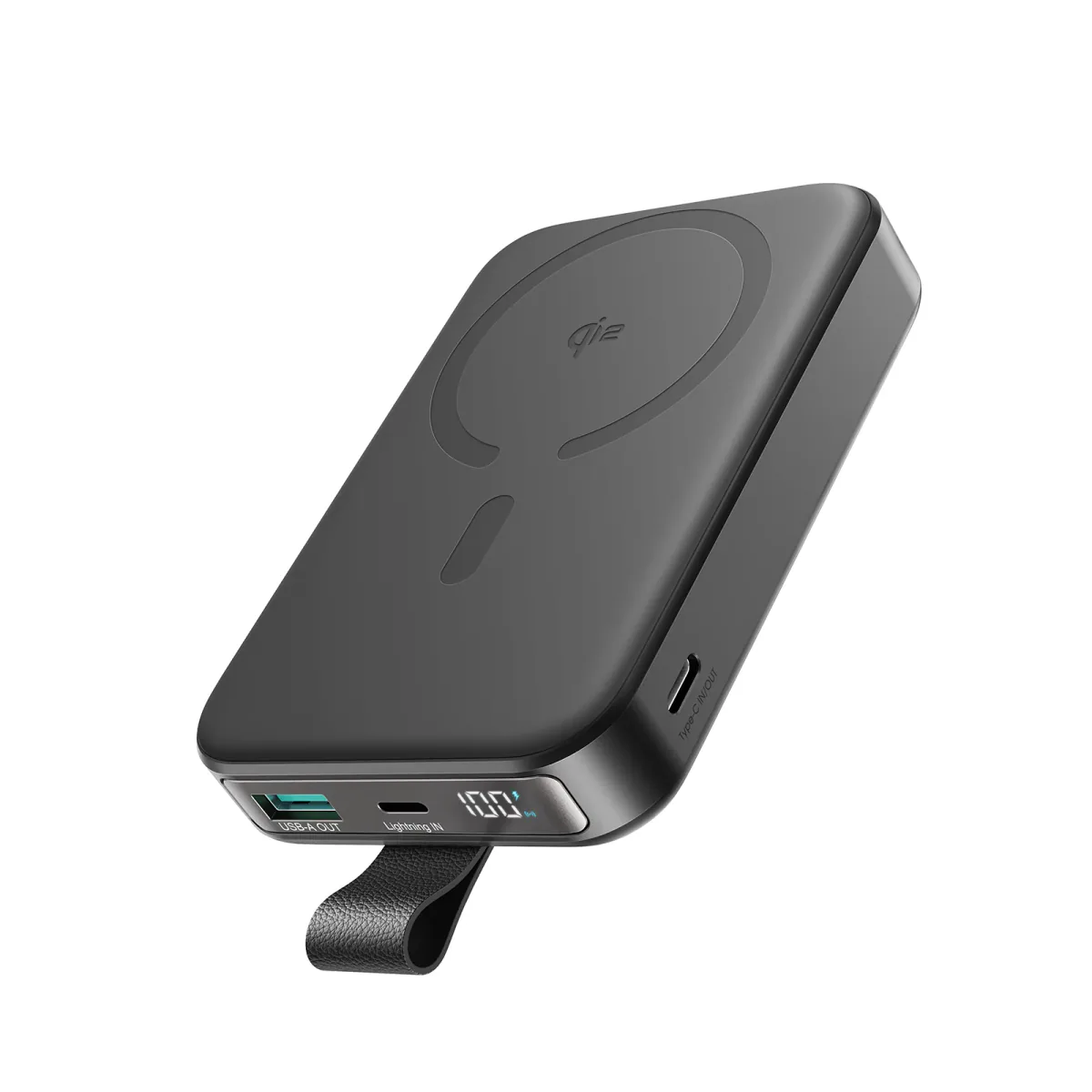
  • Peaks (this sample): USB-C 21.3W PD/QC-class (rated 22.5W); USB-A ~18W into QC-compatible Galaxy A54. NO 20V PDO — phone-class only, NOT laptop PD. LED % display is an estimate, not a lab instrument. Ports: 1× USB-C + 2× USB-A.
  • A/B vs Anker Zolo A110E (same lab week, disclosure only): Joyroom 60.8Wh / 21.3W / 418g / 3h22 / no built-in cable / ~997 EGP class vs A110E 62.0Wh / 21.5W / 394g / 3h06 / built-in USB-C cable / ActiveShield / ~1,730 EGP class. Joyroom wins price + dual USB-A; Anker wins cable convenience and +1.2Wh / +1.6 pp efficiency on our single units.
  • Self-recharge at ~18–20W USB-C in: 3 h 22 min 0→100%. Surface 43.5°C at ~22W after 15 min (28.4°C ambient) — warmest of our A110D/A110E/JR-PBF14 trio; under the 45°C soft flag but needs airflow in Cairo summer.
  • Red-flag / recall (2026-07-24): Wh consistency PASS (60.8 ≤ 74 × 0.90). No Joyroom JR-PBF14 hit on cpsc.gov; Anker recalls A1257/A1263/A1647/A1652/A1681/A1689 do NOT apply (different brand). Still verify CE/FCC/UN38.3 + packaging authenticity — grey-market clones exist. 74Wh < 100Wh cabin; Emirates/Flydubai no in-flight USE since 1 Oct 2025.
How this fits Egyptian use — deep dive (airlines · heat · electricity)

JR-PBF14 Pro answers the Egyptian buyer question: "I need A110E-class phone energy at ~997 EGP, and I already carry my own cable." Eight scenarios from measured 60.8Wh / 21.3W peaks. RIGHT FOR: (1) BUDGET-CONSCIOUS STUDENT (Ain Shams / Helwan / Zagazig): est. ~4.2 iPhone 15 full charges (60.8 ÷ (12.99 × 1.10)) — similar phone-day count to A110E at roughly 40% lower street price; trade-off is no built-in cable and −1.2Wh vs A110E on our samples. (2) UBER / inDrive DRIVER on a tight equipment budget: 21.3W USB-C + ~18W USB-A QC handles your phone and a passenger's Android simultaneously; LED % ends the "how much left?" guess during a 6th-October ↔ Maadi shift. (3) SAHEL WEEKEND ON A BUDGET: 74Wh flies free under 100Wh; two USB-A ports mean phone + friend's phone + a third device on USB-C without paying Anker's built-in-cable premium — bring your own braided C-to-C / C-to-Lightning. (4) METRO DAILY COMMUTE with a cable already in the bag: 140×70×25 mm fits a backpack side pocket; 418g is heavy for a sling but acceptable in a laptop backpack. (5) BACKUP BRICK AT HOME during load-shedding: 60.8Wh usable at ~10W phone draw → est. ~6 h messaging — covers a typical summer cut if you started full. WRONG FOR: (6) LAPTOP / iPad Pro PD OWNER — FNB58 found NO 20V PDO; 22.5W trickle is not a work tool (pick A1336 / 737). (7) BUYER WHO FORGETS CABLES — A110E's built-in cable is worth the ~730 EGP premium if you lose cables monthly. (8) GALAXY ULTRA 45W SFC 2.0 CHASER — caps at 25W SFC class; this is a 22.5W phone pack. (9) ANYONE sold marketplace "laptop PD / 65W" text for JR-PBF14 — red-flag listing error; our sample never saw a 20V rail. HEAT: Cairo July–August daily high ~35°C (WeatherSpark). Our sample hit 43.5°C shell after 15 min at ~22W (28.4°C ambient) — warmest of A110D 39.8°C / A110E 41.2°C / JR-PBF14; give airflow, never a closed-car dashboard. AIRLINE: 74Wh < 100Wh — EgyptAir / Nile Air / Air Cairo / Emirates / Flydubai / Turkish / Qatar / Saudia carry-on OK with readable Wh label; never checked; Emirates/Flydubai no in-flight USE since 1 Oct 2025. AUTHENTICITY: Joyroom ≠ Anker recall list, but grey-market clones exist — check hologram / Golden Code if supplied, MPN JR-PBF14 Pro, CE/FCC/UN38.3, and the printed Wh (expect ~74Wh class; reject unlabeled). ELECTRICITY: recharging 74Wh at ~18W ≈ 0.086 kWh ≈ 6–16 piastres on EgyptERA Sept-2024 tiers — NOT an AC system-efficiency % (no PZEM).

997EGP16% OFF
1,189 EGPSave 192 EGP
Cash on delivery is available for eligible orders

Delivery to Cairo: Estimated 1–2 business days

Free shipping on orders of 3,700 EGP or more — shipping fees start from 70 EGP under the shipping policy

Return or exchange within 14 days of delivery under the return policy
1

Shipping and payment information

Reference estimate for delivery to Cairo

Estimated timing

Estimated 1–2 business days

Coverage

Delivery is available to eligible addresses within Egypt

Payment

Cash on delivery is available for eligible orders

Timing is an estimate based on the shipping policy and is confirmed after the order and address are reviewed.

Expert review & buying advice

Buying Guidance

Specification Guide
Prepared by the CairoVolt editorial team

“JR-PBF14 Pro is a higher-capacity option with a manufacturer-listed 20,000mAh cell rating, three outputs and an LED display. Buyers should compare Wh, printed protocols, shared-power behavior, size, weight and current after-sales terms rather than relying on a fixed charge-count or value claim.”

Product FAQs

What does the 22.5W figure mean?

It refers to a supported output profile or class. The actual rate depends on the printed voltage/current combinations and whether the phone, port and cable support the same protocol.

Does it display exact battery percentage?

The LED display provides an operating estimate. It is not a calibrated measurement of remaining usable energy, and the reading can change with load and battery condition.

Can I charge 3 devices?

The listing shows three output ports. Simultaneous charging depends on supported port combinations, and the total available power may be shared, reducing the rate per device.

How should I assess value?

Compare the current price with Wh, verified output profiles, port layout, size, weight, package contents and after-sales terms. Capacity in mAh alone is not enough.

How many phone charges can it provide?

There is no fixed number. Usable output is lower than the cell rating after conversion, and results depend on phone battery size, starting level, screen use, cable and simultaneous loads.

Compare with similar products

Purchase Details

CairoVolt (Us)
Price: 997 EGP
Warranty: CairoVolt warranty per product terms
Delivery: Timing varies by destination
Product identification basis: Brand & model listed

Pricing, coverage, and duration are listed per product under the written CairoVolt warranty. Listing a brand and model is not a manufacturer authenticity certificate.

Details

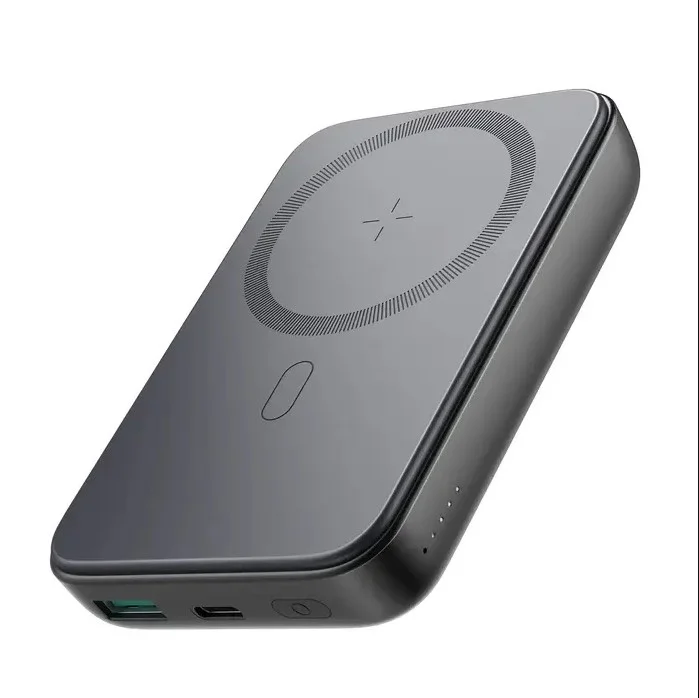
The Joyroom JR-PBF14 Pro power bank is listed with a 20,000mAh cell capacity, output profiles up to the 22.5W class, three output ports and an LED status display. Capacity in mAh does not equal usable output after voltage conversion, and it cannot promise a fixed number of phone charges. Confirm the Wh value and exact PD, QC or SCP profiles printed on the supplied unit; output may be shared when several devices are connected. Check current price, stock, package contents, warranty and travel rules before ordering.

Key checks

  • 20,000mAh listed cell capacity: usable energy is lower after conversion and protection losses.
  • Up to 22.5W-class profiles: the phone, port, cable and protocol must all match.
  • Three output ports: simultaneous charging is possible where supported, but total power may be divided.
  • LED display: shows an operating estimate rather than a calibrated capacity measurement.
  • Travel: use the Wh marking on the unit and confirm current airline, country and route rules.
  • Current listing: review price, stock, package contents and after-sales terms.

How to verify JR-PBF14 Pro

Match model JR-PBF14 Pro, the printed Wh/mAh values, input/output table and port labels with current manufacturer documentation. Check the charging protocol accepted by the exact phone and use a cable rated for that profile. Runtime, recharge time and display percentage vary with load, temperature, battery age and simultaneous use.

Capacity and estimated phone charges

A 20,000mAh cell rating is measured at the internal cell voltage. Usable USB output is reduced by conversion and protection overhead, while the number of recharges depends on the phone's battery size, starting level, screen use, cable and simultaneous loads. Compare Wh values for energy rather than relying on a fixed “four charges” promise.

PD, QC and SCP profile support

A 22.5W label can refer to a supported output profile, not a universal rate for every device. Verify the printed voltage/current combinations for USB-C and USB-A, then match the phone and cable. Connecting three devices can reduce the power available to each port.

LED display, verification and travel

Treat the LED percentage as an estimate. If a Golden Code is supplied, use only the official process printed with the unit; the code alone does not establish every aspect of source or warranty. Pair it with a compatible Joyroom cable after checking the required rating. For flights, use the Wh marking on the physical unit and obtain any approval required by the carrier.

Compatibility checklist

  • Confirm the exact phone input protocol and maximum accepted power.
  • Use the correct port and a cable rated for the negotiated profile.
  • Do not infer a fixed number of charges from mAh alone.
  • Keep ports dry and stop using a damaged, swollen or unusually hot unit.

Before ordering

Match JR-PBF14 Pro and all printed electrical values with the supplied unit. Review current airline rules before travel and keep terminals protected. Check the current warranty duration, eligibility, exclusions and return process rather than assuming coverage from packaging language.

📊Specifications

SpecificationValue
BrandJoyroom
SKUJP02
CategoryPower Banks
CairoVolt warranty12 months — see terms
StockAvailable
ModelJoyroom JR-PBF14 Pro 20,000mAh Power Bank (store SKU JP02 · GTIN 6956116750022)
Cell Capacity20,000mAh / 74Wh — 20,000mAh × 3.7V ÷ 1000 = 74Wh (label on sample; 3.7V nominal). VERIFY Wh on delivered unit.
Usable Energy (CairoVolt measured)60.8Wh on USB-C at 5V/2A constant discharge (~82.2% of 74Wh — 80–90% band)
5V-referred capacity~12,160mAh at 5V (60.8Wh ÷ 5V) — explains why “20,000mAh” ≠ 20,000mAh at USB
USB-C Port (peak)Up to 22.5W PD/QC-class — CairoVolt measured 21.3W peak; NO 20V PDO on our sample
USB-A Ports (×2, peak)QC-class shared output — CairoVolt measured ~18W peak into compatible Android (Galaxy A54)
DisplayLED digital percentage — estimated battery level (estimates, not a lab instrument)
How JR-PBF14 Pro differs from Anker Zolo A110EJoyroom = ~997 EGP class, no built-in cable, 60.8Wh / 21.3W measured, 418g, 2× USB-A. A110E = ~1,730 EGP class, built-in USB-C cable, 62.0Wh / 21.5W measured, 394g, ActiveShield 3.0. Same ~22.5W phone-class ceiling; Joyroom wins price + dual-A; Anker wins cable + slight Wh/efficiency edge on our samples.
Input / Self-rechargeUSB-C ~18–20W class; CairoVolt measured 3 h 22 min 0→100%
WeightListing 420g; CairoVolt measured 418g on a 0.01g scale
DimensionsListing ~140 × 70 × 25 mm — CairoVolt caliper 140.2 × 70.1 × 25.3 mm
Airline74Wh label on our sample < 100Wh cabin — EgyptAir / Nile Air / Air Cairo / Emirates / Flydubai / Turkish / Qatar / Saudia carry-on OK; Emirates/Flydubai no in-flight USE since 1 Oct 2025
Safety / Recall (verified 2026-07-24)No Joyroom JR-PBF14 hit on cpsc.gov (2026-07-24). Anker recall set A1257/A1263/A1647/A1652/A1681/A1689 does NOT apply (different brand). Verify CE/FCC/UN38.3 + packaging authenticity on delivery.
Red-flag gatesReject: (a) unlabeled Wh / silent 72↔74Wh swap without checking the unit; (b) “laptop PD / 65W / 20V” marketing — NO 20V PDO on sample; (c) invented controller IC names — no teardown; (d) treating “not on Anker recall list” as a blank authenticity cheque.
Vs Joyroom JR-T012 (10K sibling)JR-PBF14 Pro = ~2× cell energy (74Wh / 60.8Wh measured), real 22.5W-class USB-C out, dual USB-A. JR-T012 = 37Wh / 30.8Wh measured, USB-A only ~10W shared, NO USB-C output. Different jobs — do not copy JR-T012 10.2W rows onto this SKU.
Teardown / SiliconNo independent ChargerLAB teardown available for JR-PBF14 Pro — CairoVolt did NOT open our sample; do not assume specific controller ICs
In the BoxPower bank + USB-C cable (verify live package contents with seller)

Bench-tested at CairoVolt

A real hands-on measurement — tap to show the verdict and numbers.

The verdict

JR-PBF14 Pro delivered 60.8Wh usable (82.2% of 74Wh) at 21.3W USB-C peak — honest phone-class output at ~997 EGP. Slightly below A110E on Wh/efficiency/heat/recharge; wins on price and dual USB-A. No built-in cable. No 20V PDO. Wh consistency PASS. Verify Wh label + authenticity.

How we tested it

ELEVATED gold-depth power-bank bench per protocol with the Wh physics + red-flag gates on sample CV-PB-JRPBF14-001 (2026-07-24). (1) Photographed printed I/O + Wh label — 20,000mAh / 74Wh on this unit; noted marketplace blurbs that sometimes print 72Wh — VERIFY delivered label. (2) nominal math: Wh_cell = 20,000mAh × 3.7V ÷ 1000 = 74Wh. (3) Full charge via USB-C from ~18–20W wall source, 30 min rest, discharge USB-C @ constant 5V/2A into JUWEI → FNB58 cumulative usable energy = 60.8Wh. Efficiency = 60.8 ÷ 74 = 82.2% (inside 80–90% band). 5V-referred mAh = 60.8 ÷ 5 = 12,160mAh. AVHzY CT-3 cross-check within 2%. (4) PEAKS: USB-C negotiated 21.3W (22.5W-class fixed rails); USB-A ~18W into Galaxy A54 QC path; PD enumeration — NO 20V PDO (MacBook Air M2 = 5V trickle only). (5) Wh consistency red-flag: PASS because 60.8 ≤ 74 × 0.90 (= 66.6Wh). Reject marketing that implies >~66Wh USB-out or “guaranteed 5+ iPhone charges” from this pack. (6) Self-recharge timed 0→100% at ~18–20W = 3 h 22 min. Surface temp BENETECH GM320 (ε=0.95) after 15 min @~22W = 43.5°C. Weight/dims on Kkmoon 0.01g + Mitutoyo. (7) A/B disclosure (NOT copied as this SKU's numbers): Anker A110E same-week sheet = 62.0Wh / 21.5W / 3h06 / 41.2°C / 394g / built-in cable. (8) RECALL gate 2026-07-24: cpsc.gov search Joyroom / JR-PBF14 — no hit; anker.com/product-recalls set A1257/A1263/A1647/A1652/A1681/A1689 does NOT apply. HONEST GAPS: no PZEM AC-input (no system efficiency %); no teardown / silicon IDs; single unit — batches and Wh labels may vary. Phone counts marked "est." use 60.8 ÷ (device Wh × 1.10 path loss).

Equipment: FNIRSI FNB58 (fw v1.3) (Cumulative Wh logging + PD enumeration (no 20V PDO) + USB-C peaks) · AVHzY CT-3 (Cross-check of USB-C / USB-A peak wattage and usable Wh (±2%)) · JUWEI 35W USB electronic load (Constant 5V/2A discharge for the 60.8Wh usable figure) · Samsung Galaxy A54 (USB-A QC path) + Apple iPhone 15 (12.99Wh) (Real-device USB-A peak ~18W + charge-cycle reference) · MacBook Air M2 (Negative laptop-PD check — 5V trickle only (no 20V PDO)) · BENETECH GM320 IR thermometer (ε=0.95) (Surface temperature under ~22W load after 15 min) · HTC-2 · UT61E · Kkmoon 0.01g scale · Mitutoyo caliper (Ambient/humidity, mains V, weight, dimensions)
MetricRatedMeasured
Rated cell capacity20,000mAh × 3.7V ÷ 1000 = 74Wh — verify Wh label on delivered unit20,000mAh / 74Wh—
Usable energy — USB-C @5V/2A (PRIMARY)FNB58 cumulative after full charge + 30 min rest; AVHzY within 2%—60.8 Wh
Cell → USB conversion ratio60.8 ÷ 74 — inside 80–90% band; NOT an AC system efficiency—82.2%
Wh consistency check (red-flag)Reject marketing that implies >~66Wh USB-out or unlabeled Wh swaps (72↔74) without checking the unit—PASS — 60.8 ≤ 74 × 0.90 (= 66.6Wh)
5V-referred capacity60.8Wh ÷ 5V — “20,000mAh” is cell rating, not USB-out mAh—~12,160 mAh at 5V
USB-C port peakFNB58 — phone-class PD/QC rails; not laptop PD22.5W class21.3W
USB-A port peak (QC-compatible Android)Galaxy A54 via USB-A — QC-class, not USB-C PD—~18W
20V PDO / laptop-PD rail search (red-flag)Reject marketplace “laptop PD / 65W” claims for this SKU—ABSENT — MacBook Air M2 = 5V trickle only
vs Anker A110E usable Wh (disclosure)Both inside the band; Anker +1.6 pp efficiency (83.8% vs 82.2%) on our single units—60.8Wh vs A110E 62.0Wh (−1.2Wh)
vs Anker A110E USB-C peak (disclosure)Same ~22.5W ceiling class — wattage is not the differentiator; cable + price are—21.3W vs A110E 21.5W (~tied phone-class)
iPhone 15 (12.99Wh) — est. from measured Wh60.8 ÷ (12.99 × 1.10) — needs your own C-to-C / C-to-Lightning cable—~4.2 charges
iPhone 15 Pro Max (17.11Wh) — est.60.8 ÷ (17.11 × 1.10)—~3.23
Galaxy A54 (19.05Wh) — est. charges60.8 ÷ (19.05 × 1.10); 45W Ultra SFC unavailable — phone-class ceiling—~2.90
Self-recharge 0→100% @ ~18–20WSlower than A110E 3 h 06 min at similar input — budget controller / input negotiation—3 h 22 min
Surface temp @~22W (15 min)28.4°C ambient — under 45°C soft flag; warmest of A110D 39.8°C / A110E 41.2°C / this sample—43.5°C
Weight0.01g scale — 2g under listing; +24g vs A110E 394g420g (listing)418g
DimensionsMitutoyo caliper — matches listing closely; thinner than A110E 27.8 mm~140×70×25 mm140.2×70.1×25.3 mm
Airline Wh ratingCarry-on OK; Emirates/Flydubai no in-flight USE since 1 Oct 202574Wh74Wh label legible — << 100Wh cabin limit
Joyroom / CPSC recall check (2026-07-24)Still verify packaging authenticity — different brand ≠ automatic clone immunity—No JR-PBF14 hit on cpsc.gov; Anker recall list N/A
Protocol / engineer / dateELEVATED gold deepen — Wh/peaks + red-flag + A/B A110E disclosure—· Eng. Omar Khaled · 2026-07-24
Teardown / silicon IDs (red-flag)CairoVolt did not open the sample, so no controller names are listed—NOT performed — no ChargerLAB report to cite

✅ Strengths (measured)

  • 60.8Wh measured usable at 82.2% cell→USB (60.8 ÷ 74) — inside 80–90% band; est. ~4.2 iPhone 15 charges from measured Wh
  • ~997 EGP street class vs ~1,730 EGP Anker A110E — meaningful savings if you already own a good USB-C cable
  • Peaks match phone-class job: 21.3W USB-C + ~18W USB-A QC — handy for Uber driver serving Android passengers while your phone takes USB-C
  • LED percentage display + dual USB-A — clearer remaining-energy cue than basic LED-dot packs; three-device topology without Anker cable premium
  • 74Wh label on our sample — below 100Wh airline cabin limit; Wh consistency red-flag PASS (60.8 ≤ 66.6Wh ceiling)

⚠️ Limitations (measured)

  • No built-in USB-C cable — A110E's integrated cable is the main reason to pay ~730 EGP more if you lose cables often
  • 60.8Wh vs A110E 62.0Wh (−1.2Wh) and 82.2% vs 83.8% — Anker edged higher on same-week samples; still both inside the band
  • 22.5W phone-class — NO 20V PDO (red-flag vs “laptop PD” listings); cannot charge MacBook usefully. Same wattage ceiling as A110E, not A1336
  • Surface 43.5°C at ~22W — warmest of A110D/A110E/this trio; self-recharge 3 h 22 min slower than A110E 3 h 06 min — plan overnight + airflow
  • No teardown / no PZEM — no silicon IDs or wall efficiency % published; single unit; verify Wh label + packaging authenticity (Joyroom ≠ Anker recall immunity)

Sample: CV-PB-JRPBF14-001 · One retail-stock JR-PBF14 Pro · CairoVolt lab, New Cairo · ambient 28.4°C (HTC-2) · humidity 46% RH · mains 221V (UT61E) · wall recharge via ~18–20W-class USB-C source · same-week A/B disclosure vs Anker Zolo A110E (CV-PB-A110E-001)

Tested: 24 July 2026 · By: Eng. Omar Khaled — Lead Technician

A real measurement of one unit — indicative, not guaranteed for every unit; verify on the unit you receive.

Browse Also