
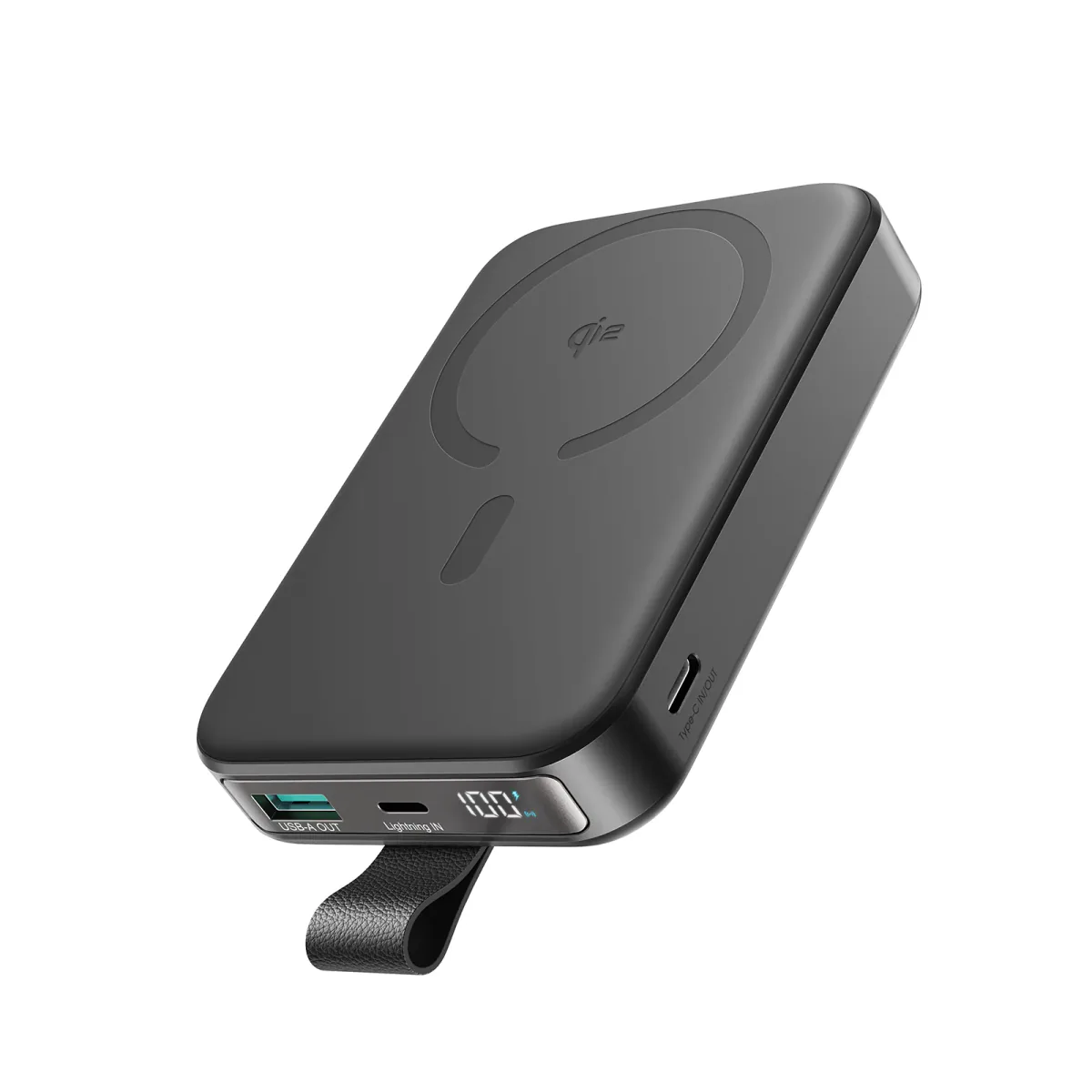
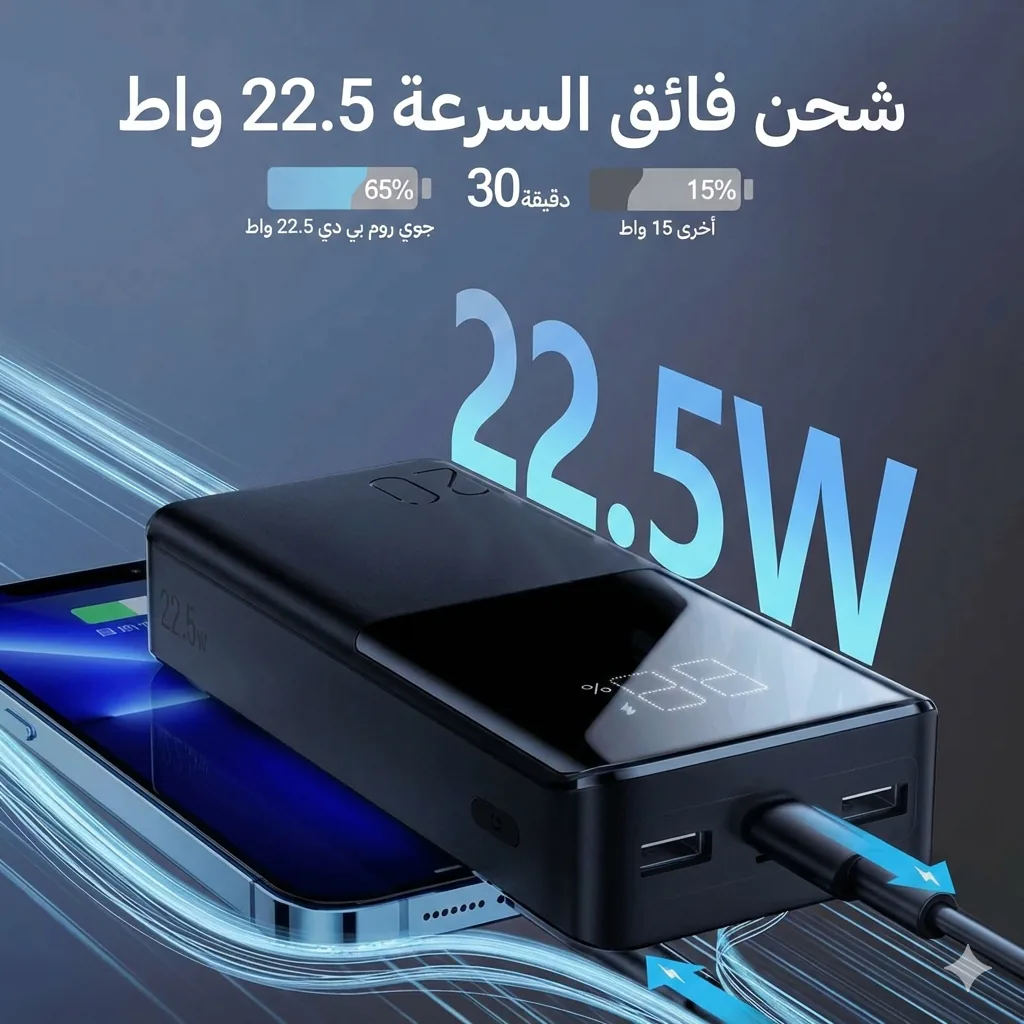
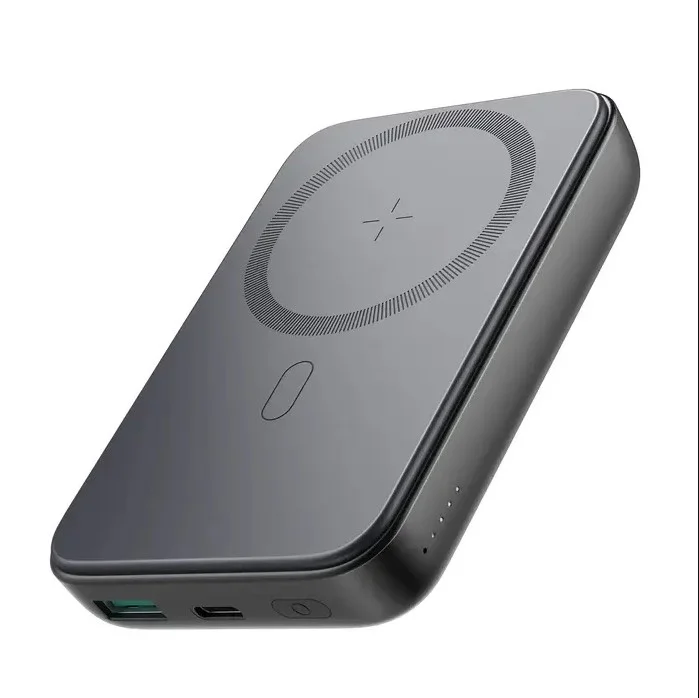
Joyroom power banks vary by capacity, output, port count, and charging method. Check each product page for nominal capacity, Wh rating, output per port, supported protocols, weight, and dimensions.
Phone charge count cannot be calculated from nominal mAh alone because voltage conversion, cables, and wireless charging all introduce energy loss. Use capacity to compare models, not as a guarantee of a fixed number of charges.
Smart Buying Guide
Choosing Capacity
•10,000mAh: Usually easier to carry for work, study, and everyday backup power.
•20,000mAh: Better for longer use or multiple devices, with greater size and weight.
•Magnetic model: Convenient for compatible phones and cases, usually with lower efficiency than wired charging.
Also compare the product's weight, dimensions, and printed Wh rating. Do not rely on a fixed charge count; results vary with phone-battery capacity, the condition of both batteries, and device use while charging.
Return to all Joyroom power bank models, then open the individual product page for current price, stock, and specifications.
mAh and Wh: Reading Capacity
The following figures are theoretical estimates, not performance measurements: nominal energy can be approximated as Wh ≈ (mAh ÷ 1000) × nominal cell voltage. If the cell is rated at 3.7V, the 10,000mAh class is about 37Wh in theory and the 20,000mAh class is about 74Wh in theory.
Always use the Wh value printed on the product or packaging as the model-specific reference. Energy delivered to a phone is lower and variable because of voltage conversion, the cable, the charging method, and device use. Read the guide to rated capacity versus usable energy without assuming a fixed loss percentage or charge count.
Ports, Protocols, and Cable Compatibility
A USB-C port may be input-only, output-only, or bidirectional depending on the model; USB-A and built-in-cable functions also vary. A connector or wattage figure alone does not confirm PD or Quick Charge support—the power bank, phone, and cable must share a compatible protocol.
Check each port's individual output and the power allocation used with multiple devices. Choose a connector- and power-compatible option from Joyroom cables, and pair it with a Joyroom wall charger compatible with the model's input. An incompatible cable or charger may reduce speed or prevent fast-charging negotiation.
Current Catalogue Model Comparison
•Joyroom 10,000mAh wired power bank: a daily-carry option; use the product page to confirm its current ports and protocols.
•Joyroom 20,000mAh wired power bank: a higher nominal-capacity option for longer use or multiple devices, usually with more size and weight.
•Joyroom magnetic 10,000mAh power bank: prioritizes magnetic attachment and wireless convenience with a compatible phone and case; confirm alignment and wired-charging options on the product page.
To compare another brand and more capacity or form-factor choices, browse Anker power banks using the same criteria: printed Wh, per-port output, protocol, weight, and cable compatibility. Final specifications and availability follow the current product page.
Safety and Care
Use an undamaged, compatible cable and charger, and keep the ports clean and dry. Charge the power bank in a ventilated place; do not cover it or put it under a pillow, and keep it away from direct sun, closed hot cars, and other heat sources.
Stop using it if the case swells, is damaged, or produces an unusual smell or heat. Do not open the case or attempt cell repairs. Avoid leaving it fully discharged for long periods, follow the model's storage instructions, and take it to an electronics-recycling service at end of life.
Frequently Asked Questions
How many times will it charge my phone?▼
There is no fixed number. It depends on the phone battery, conversion efficiency, cable, and charging method. Wireless charging usually loses more energy than wired charging.
Can it charge a laptop?▼
Only when the model's USB-C PD output meets the laptop power requirement. Check the specifications of the laptop, power bank, and cable.
Is it suitable for air travel?▼
Check the Wh value on the product and the airline policy. Power banks are normally carried in hand luggage only.
What is the warranty?▼
The product page and CairoVolt warranty policy list the duration, coverage, and terms for each model.