 CairoVolt Team
The 10,000mAh Myth: Why Your Power Bank Doesn't Charge Your Phone Twice (The Complete Physics)
The truth nobody tells you: a 10,000mAh power bank can't charge a 5,000mAh phone twice. Learn why — with real physics and real efficiency numbers.
Bottom Line: A 10,000mAh power bank charges a 5,000mAh phone about 1.3 to 1.4 times, not twice, because part of its 37Wh is lost in voltage conversion and in the phone's own charging circuit. On our bench the Anker Zolo A110D delivered 31.1Wh usable — about 1.4 charges of a 5,000mAh phone (est.: 31.1 × 0.85 ÷ 19.4Wh). Rule of thumb: capacity × 0.65 ÷ your phone's battery.
The Question Everyone Asks: "Why Doesn't My Power Bank Charge Twice?"
⚡ The Shocking Truth: A 10,000mAh power bank can never charge a 5,000mAh phone twice. Not Anker, not Samsung, not any brand in the world. This isn't a manufacturing defect — it's the laws of physics. Anyone who tells you otherwise is lying.
You bought a 10,000mAh power bank and your phone has a 5,000mAh battery. Simple math: 10,000 ÷ 5,000 = two full charges. But in reality, it only charges about 1.3-1.4 times. So you thought the product was defective or had fake capacity.
The truth? No power bank in the world — even one costing $500 — can deliver 100% of its capacity to your phone. The reason is the physics of electricity itself. In this article, we'll explain exactly what happens inside the power bank when you charge your phone, and give you the "Golden Formula" to calculate the real number of charges before you buy.
🔬 How We Actually Measure It: In the CairoVolt lab we charge the power bank to 100%, let it rest, then discharge it into a constant 5V/2A load while a USB meter logs the energy in Wh. That usable-energy figure is then divided by the phone battery's energy after allowing about 15% for losses in the phone's own charging circuit.
Lesson 1: The Difference Between mAh and Wh (The Most Important Thing to Understand)
Here's the core problem. When you read "10,000mAh" on the box, you interpret it as "10,000 units of charge." But mAh is not a unit of energy — it's a unit of current × time. To know the real energy, you need the Voltage too.
The Basic Formula:
Energy (Wh) = Capacity (mAh) × Voltage (V) ÷ 1000
Power bank battery cells operate at 3.7 volts (the nominal voltage of lithium cells). So:
- 10,000mAh power bank = 10,000 × 3.7 ÷ 1000 = 37 Watt-hours (Wh) stored energy
- 20,000mAh power bank = 20,000 × 3.7 ÷ 1000 = 74 Watt-hours (Wh)
This is the real number you should compare — and it's printed in small text on the power bank (check yours!).
Lesson 2: Where Does the Energy Go? (The Missing 35%)
When you connect the power bank to your phone, energy passes through 4 stages — and each stage has losses:
🔋 Stage 1: Voltage Conversion — 10-15% Loss
Power bank cells run at 3.7V, but USB cables output 5V (or 9V/12V for fast charging). The internal circuit (called a Boost Converter) raises the voltage — and this process converts part of the energy to heat.
Think of it like currency exchange — the bank takes a commission. The power bank takes a "physics commission" in the form of heat.
🔌 Stage 2: Cable Resistance — 3-8% Loss
The cable itself has electrical resistance. The cheaper or longer the cable, the higher the resistance and greater the loss. A poor cable wastes more — a good cable such as the Anker PowerLine III keeps the loss down.
📱 Stage 3: Phone Charging Circuit — 5-10% Loss
Your phone has a charging IC that converts incoming power from 5V to 4.2V (lithium cell charging voltage). This conversion also generates heat.
🌡️ Stage 4: Cumulative Heat — 2-5% Loss
All the heat generated in previous stages affects both batteries' efficiency. The hotter they get, the less efficient they become.
📊 Final Calculation:
Total loss = 10-15% (conversion) + 3-8% (cable) + 5-10% (phone) + 2-5% (heat) = 20-38%
A 10,000mAh power bank actually delivers 6,200 - 8,000mAh to your phone depending on quality.
The Golden Formula: Calculate Charges Before You Buy
✨ The Golden Formula from CairoVolt:
Charges = (Power Bank Capacity × 0.65) ÷ Phone Battery Capacity
* 0.65 is a conservative estimate. On our bench, Anker and Joyroom power banks delivered 82-86% of their rated energy as usable output; after the phone's own charging loss (about 15%) the result is about 0.7.
Real Energy by the Numbers: 6 Power Banks From Our Bench
Usable energy below is CairoVolt's own measurement of each model (discharged at 5V/2A). iPhone 16 Pro charges are estimates = usable Wh × 0.85 ÷ 13.9Wh (3,582mAh × 3.87V ÷ 1000).
| Power Bank | Rated Energy | Usable Energy (our measurement) | Ratio | iPhone 16 Pro Charges (est.) |
|---|---|---|---|---|
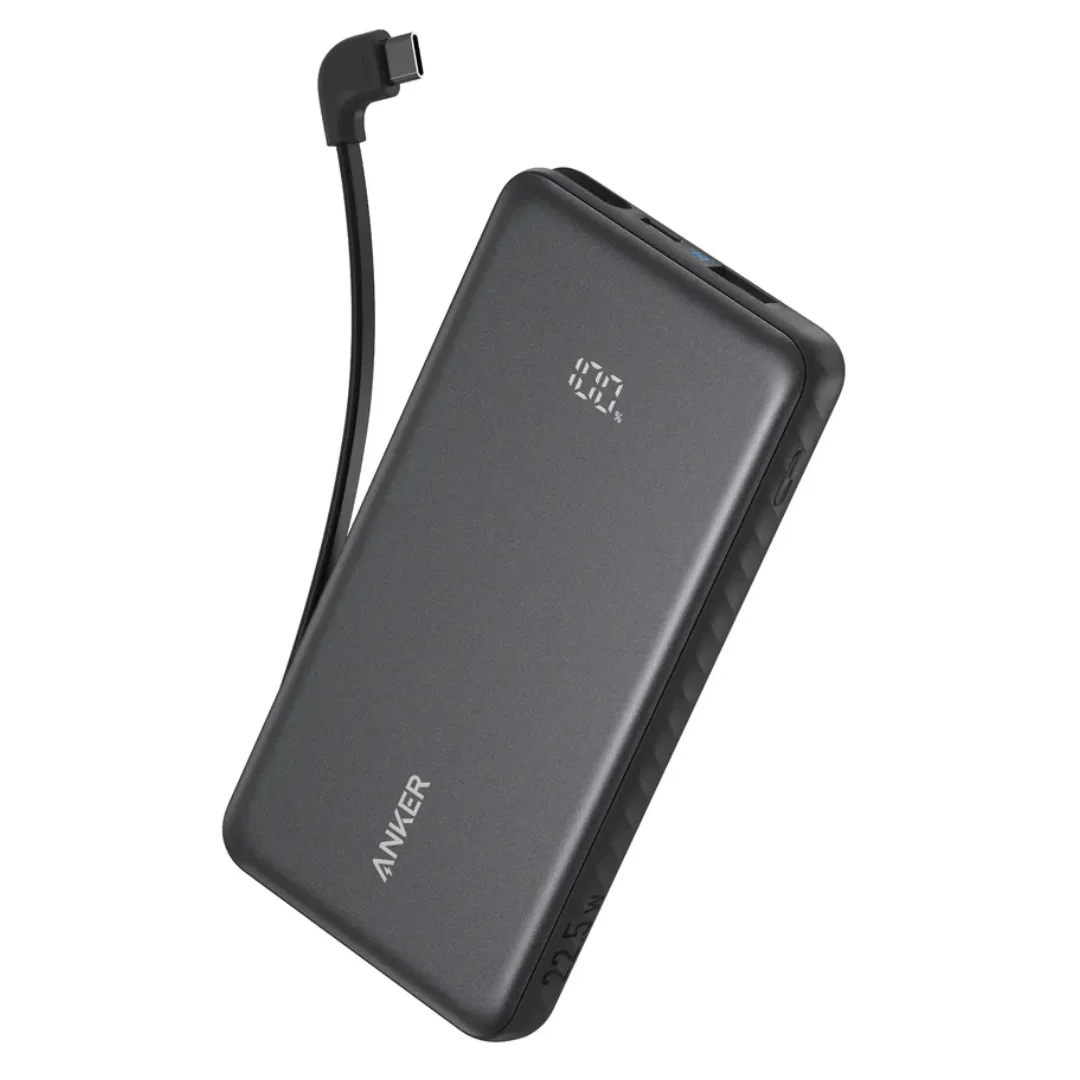
| Anker Zolo A110D 10,000mAh | 37Wh | 31.1Wh | 84% | 1.9 charges |
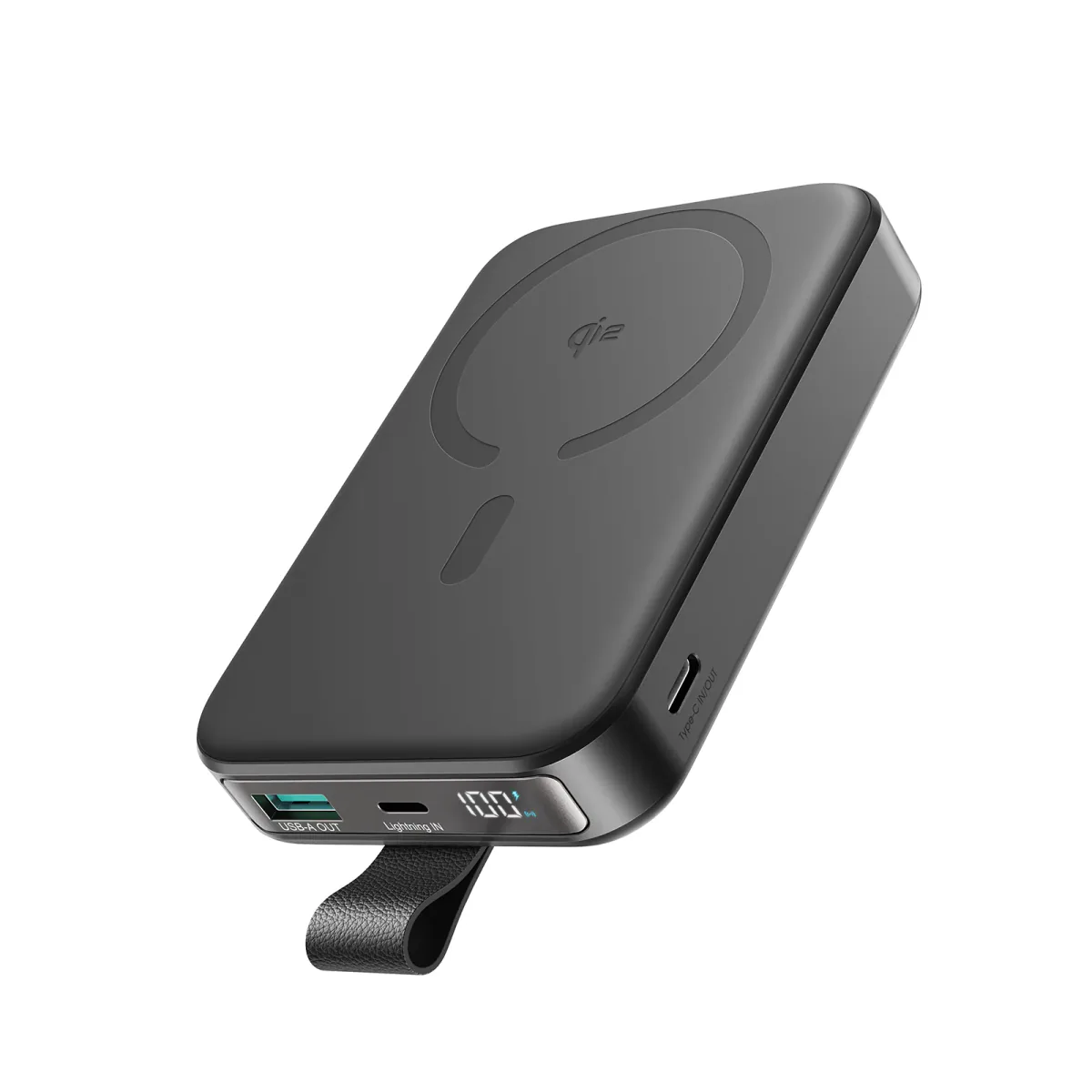
| Joyroom 10,000mAh (JR-T012) | 37Wh | 30.8Wh | 83% | 1.9 charges |
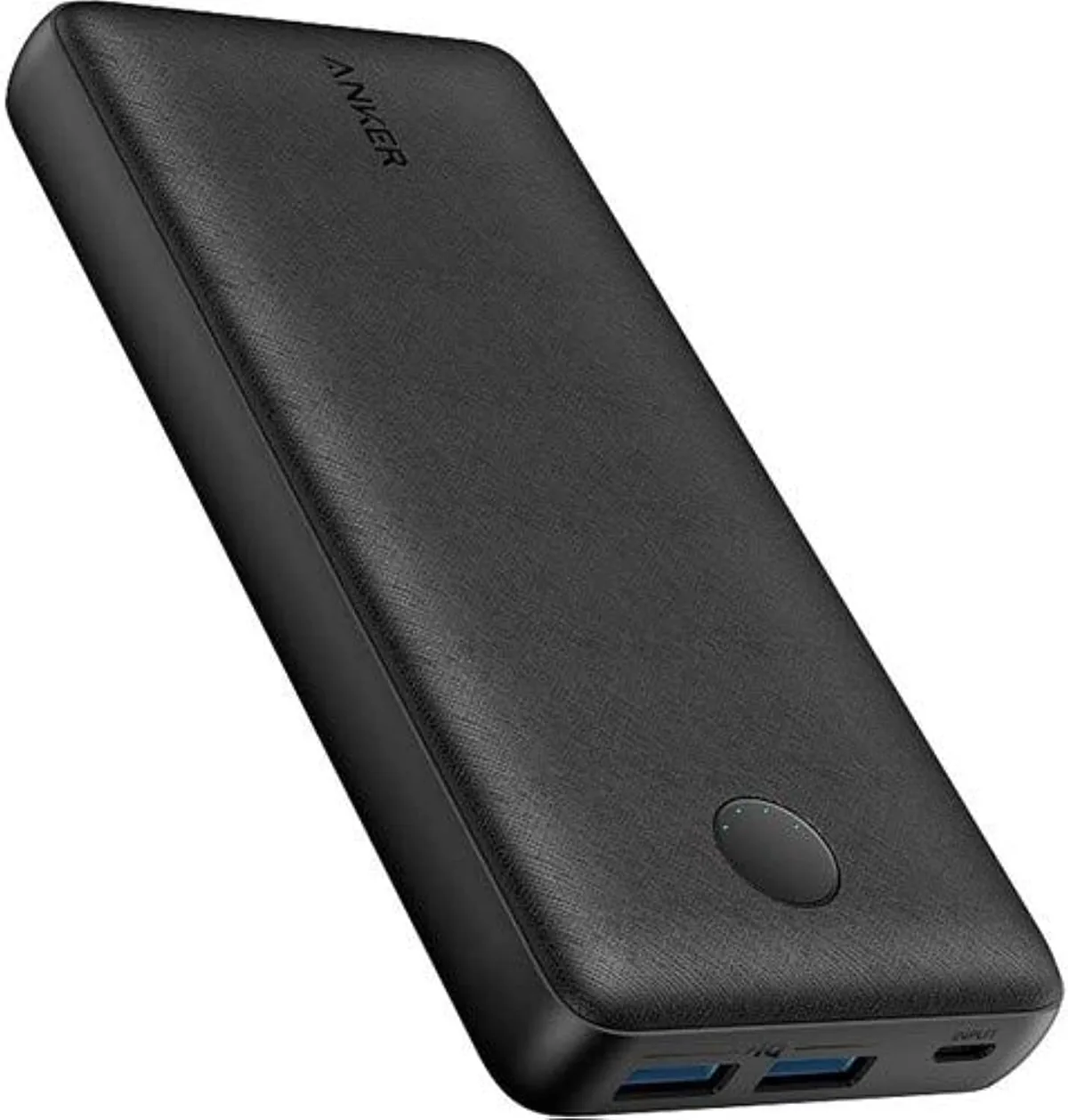
| Anker PowerCore 20000 (A1260) | 72Wh | 61.4Wh | 85% | 3.8 charges |
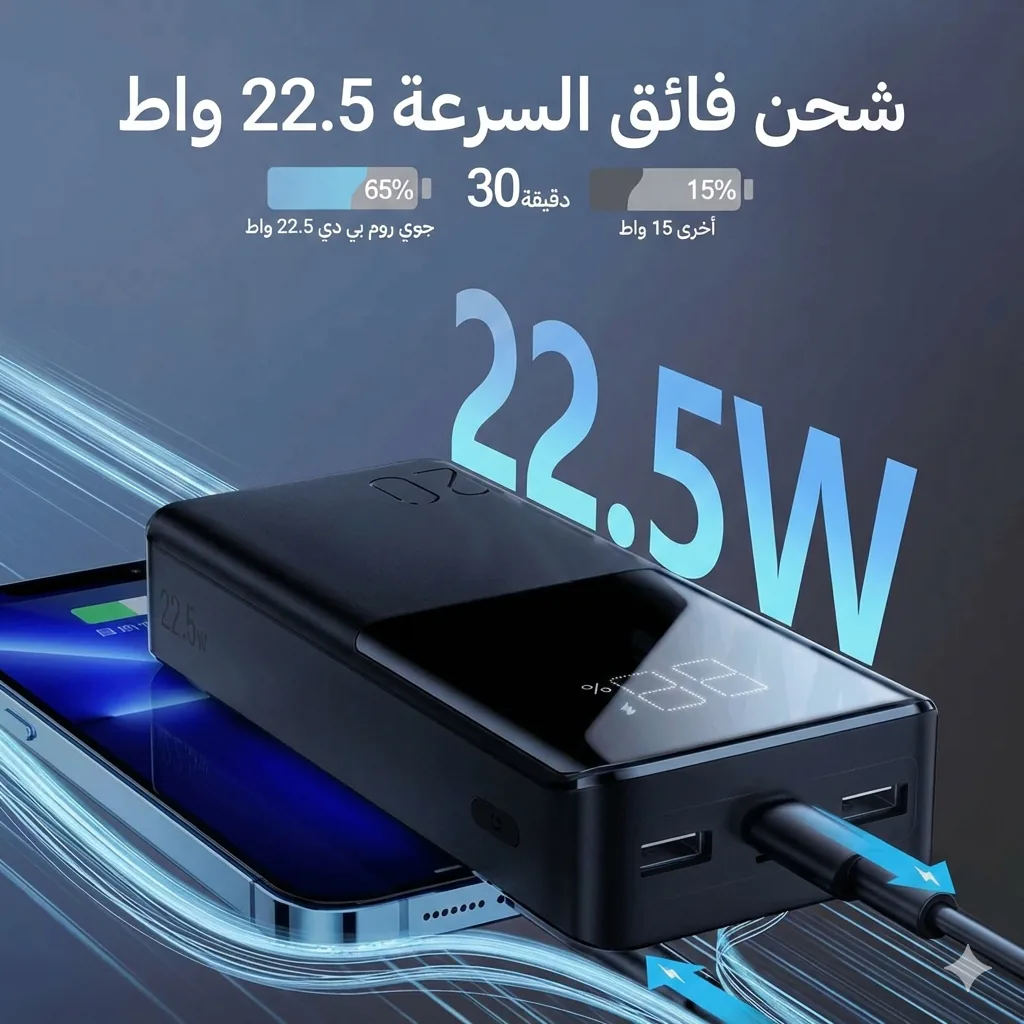
| Joyroom 20,000mAh | 74Wh | 60.8Wh | 82% | 3.7 charges |
| Anker Zolo A110E 20,000mAh | 74Wh | 62.0Wh | 84% | 3.8 charges |
| Anker 737 (24,000mAh) | 86.4Wh | 74.2Wh | 86% | 4.5 charges |
A genuine power bank with a printed Wh rating delivers a consistent share of that energy. Unknown-brand units can print a higher capacity than they hold, so they charge far less than expected — read the printed Wh and buy with an invoice and a written warranty.
Quick Reference: How Many Times Does Each Power Bank Charge? (Estimates)
Estimate = our measured usable Wh × 0.85 ÷ the phone battery's energy (mAh × 3.87V ÷ 1000).
| Power Bank | iPhone 16 Pro (3,582mAh) | Samsung S25 Ultra (5,000mAh) | Xiaomi 14 Pro (4,880mAh) |
|---|---|---|---|
| Anker Zolo A110D 10,000mAh | 1.9 charges | 1.4 charges | 1.4 charges |
| Joyroom 10,000mAh | 1.9 charges | 1.4 charges | 1.4 charges |
| Anker 20,000mAh | 3.8 charges | 2.7 charges | 2.8 charges |
| Joyroom 20,000mAh | 3.7 charges | 2.7 charges | 2.7 charges |
| Anker 737 (24,000mAh) | 4.5 charges | 3.3 charges | 3.3 charges |
The Bottom Line: It's Not a Scam — It's Physics
When a 10,000mAh power bank doesn't charge your phone twice, it doesn't mean it's defective. It means the laws of physics are working correctly. The difference between original and counterfeit is how much energy actually reaches your phone:
- Anker Zolo A110D: 31.1Wh usable of 37Wh on our bench (84%)
- Joyroom 10000: 30.8Wh usable of 37Wh on our bench (83%)
- Unknown brands: can print a higher capacity than they hold, so they charge far less than expected and run hotter
The Golden Rule: Multiply capacity × 0.65 = real capacity. That's all you need to know exactly how many charges you'll get before spending a single pound. Browse Anker power banks or Joyroom power banks — all original and covered by CairoVolt's written store warranty (duration shown on each product page).
CairoVolt Team
Tech Editor
Frequently Asked Questions
How many times does a 10000mAh power bank actually charge?▼
Why doesn't a power bank charge twice even though capacity is double the battery?▼
What's the difference between mAh and Wh in power banks?▼
Do counterfeit power banks have fake capacity?▼
How can I maximize my power bank efficiency?▼
How many times does a 20000mAh power bank charge?▼
Ready to Buy?
Browse available products and review specifications and CairoVolt warranty terms before ordering
Related products
Anker ZOLO Power Bank 10,000mAh (22.5W) | Built-in Cable
Joyroom 10000mAh Slim Power Bank | Dual USB | LED Display
Anker PowerCore 20000mAh | 72Wh | Dual USB-A
Joyroom 20000mAh Power Bank | 22.5W PD+QC | Triple Output
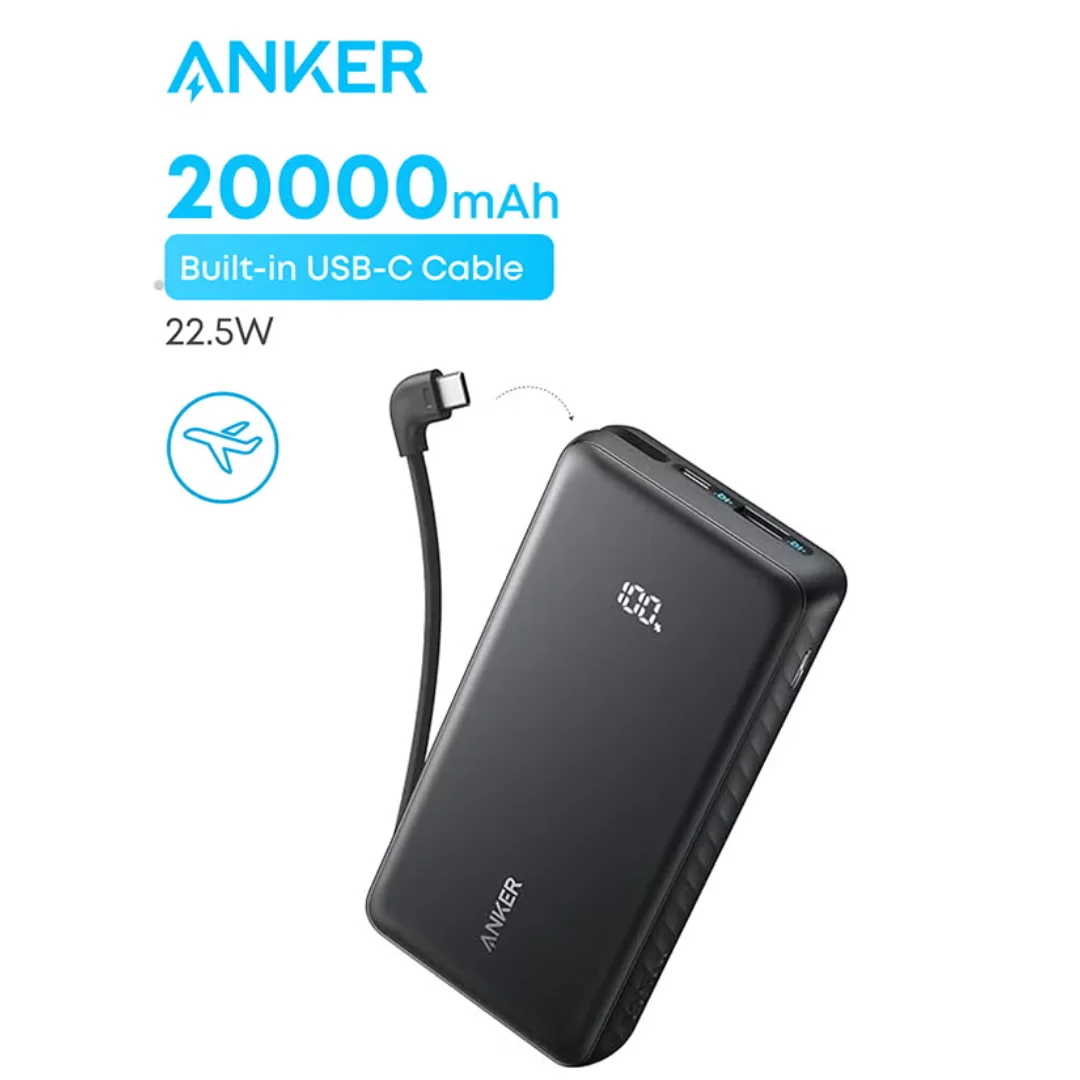
Anker ZOLO Power Bank 20,000mAh (22.5W) | Built-in Cable