
mAh vs Wh in Power Banks: Why mAh Alone is Not Enough
Ever wondered why airlines restrict power banks by Wh instead of mAh? Read our electrical guide explaining the physics of Watt-hours and milliampere-hours.
In short: Wh is the true measure of energy; mAh alone is misleading because it ignores voltage (Wh = mAh × volts ÷ 1000). A 10,000mAh power bank at 3.7V holds 37Wh, while a 10,000mAh laptop battery at 11.1V holds 111Wh — three times the energy. That is why airlines set their limits in Wh.
If you are traveling through Cairo Airport or any international airport with a portable charger, you might be surprised to see airport security officers inspecting the device's labeling to find its **Wh** rating instead of its **mAh** capacity. They may even confiscate the charger if this number is missing or exceeds limits. While you might argue that it is just a standard 20,000mAh power bank, security relies on electrical physics to evaluate aviation safety risks.
At CairoVolt, we like to simplify complex engineering concepts. Battery capacity is more than just marketing numbers; it involves precise calculations that dictate what devices a power bank can charge, at what speeds, and its safety parameters. In this guide, we will break down the differences between mAh and Wh, explain why mAh alone can be misleading, and teach you how to calculate your devices' energy capacity so you can pass airport checks easily.
1. The Problem with Milliampere-Hours (mAh)
The term **mAh** stands for **Milliampere-hour**. This unit measures **electric charge**, indicating the total number of electrons the battery can deliver over one hour. However, this metric is incomplete because electrons require a force to move them, which is **Voltage (V)**.
Think of electricity like water flowing through a hose. The mAh rating represents the volume of water, while Voltage represents water pressure. If you have a large volume of water but no pressure, you cannot spray a distant garden. Similarly, electric charge without voltage cannot do useful work.
Most internal lithium-ion cells used in portable chargers run at a nominal voltage of **3.7V**. When a manufacturer labels a device as 10,000mAh, they refer to the capacity at the internal 3.7V level. When charging a phone, the output voltage must be boosted to **5V** or higher (for fast charging), which automatically decreases the output mAh rating because total energy remains constant while voltage increases.
2. Understanding Watt-Hours (Wh)
The term **Wh** stands for **Watt-hour**, which measures **total energy**. This represents the actual amount of work the battery can perform and is calculated by multiplying charge capacity by voltage:
Let's apply this formula to compare two different batteries with the same mAh rating:
- 🔋 10,000mAh Power Bank (3.7V internal cells): (10,000 × 3.7) / 1000 = **37Wh**.
- 💻 10,000mAh Laptop Battery (11.1V internal cells): (10,000 × 11.1) / 1000 = **111Wh**.
Look at the difference: both devices are rated at 10,000mAh, yet the laptop battery contains **three times more energy** than the power bank because it operates at a higher voltage. This illustrates why mAh alone is an incomplete metric of capacity.
3. Airline Regulations and the 100Wh Limit
The International Civil Aviation Organization (ICAO) enforces strict rules on lithium-ion batteries due to fire hazards. The general rule is:
🚨 Lithium-ion batteries rated up to 100Wh are permitted in carry-on baggage. They are strictly prohibited in checked luggage.
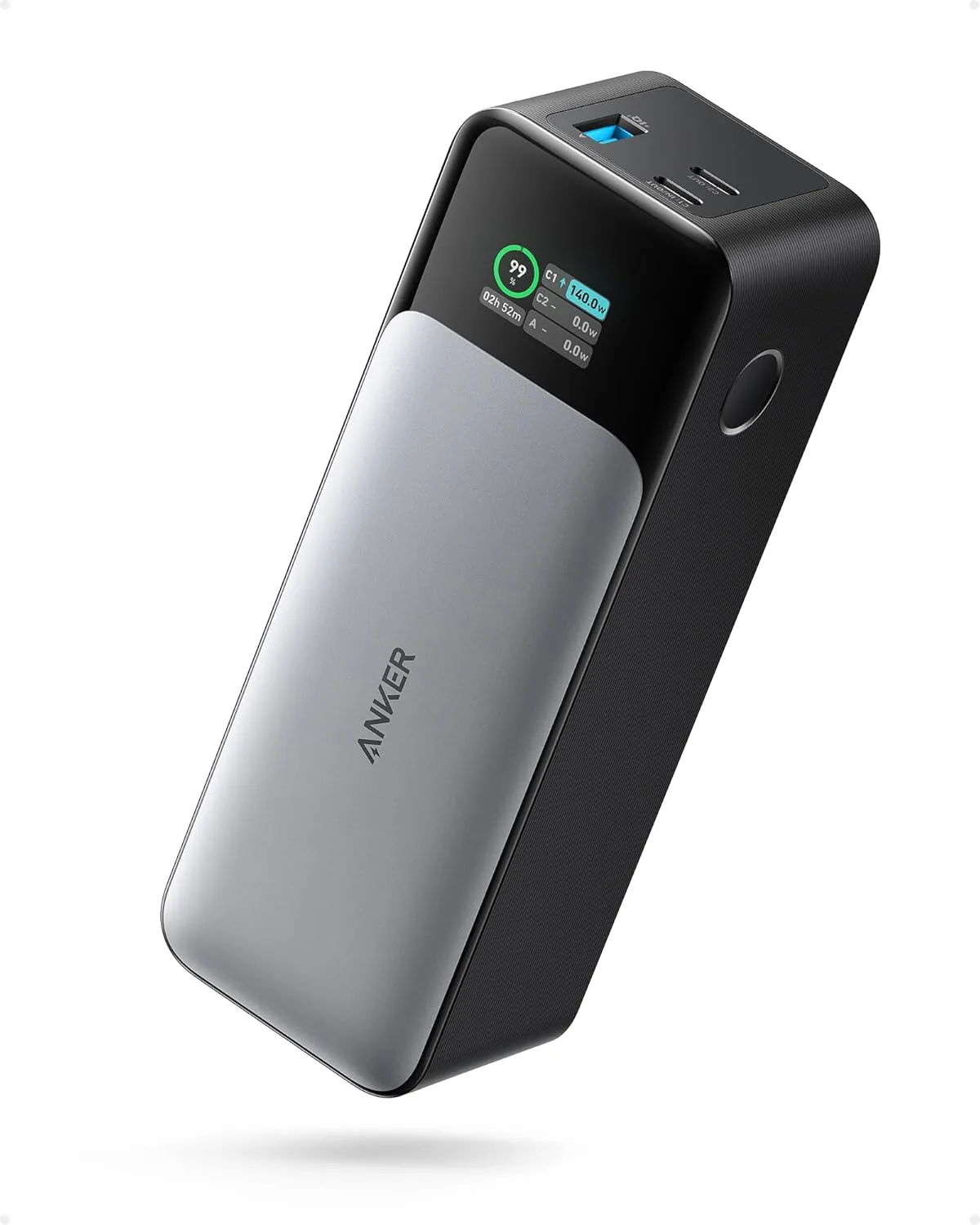
A standard 20,000mAh power bank running at 3.7V equates to **74Wh**, placing it safely under the airline limit. A high-end model like the Anker 737 Power Bank has an 86.4Wh capacity, which is also allowed in carry-on bags. However, a massive 40,000mAh battery equates to **148Wh**, which exceeds limits and will be confiscated by airport security.
4. Calculating Real-World Charging Efficiency
Many users expect a 10,000mAh power bank to charge a 5,000mAh phone battery exactly twice, and are disappointed when it only provides about 1.4 charges. This is not a manufacturing defect; it is a consequence of voltage conversion:
- The power bank stores 37Wh of energy at 3.7V.
- To charge a phone, it must boost the voltage to 5V to match the USB standard.
- The theoretical capacity at 5V is 37Wh / 5V = 7,400mAh.
- Accounting for 10% to 15% energy loss due to circuit resistance and heat, the actual usable capacity is around **6,300mAh**.
This thermal loss is normal and explains why both your phone and the power bank get warm during fast charging.
5. Capacity Comparison Reference
This table compares nominal mAh capacities with their corresponding Wh ratings for popular portable chargers:
| Capacity (mAh) | Nominal Voltage | Total Energy (Wh) | Airline Status |
|---|---|---|---|
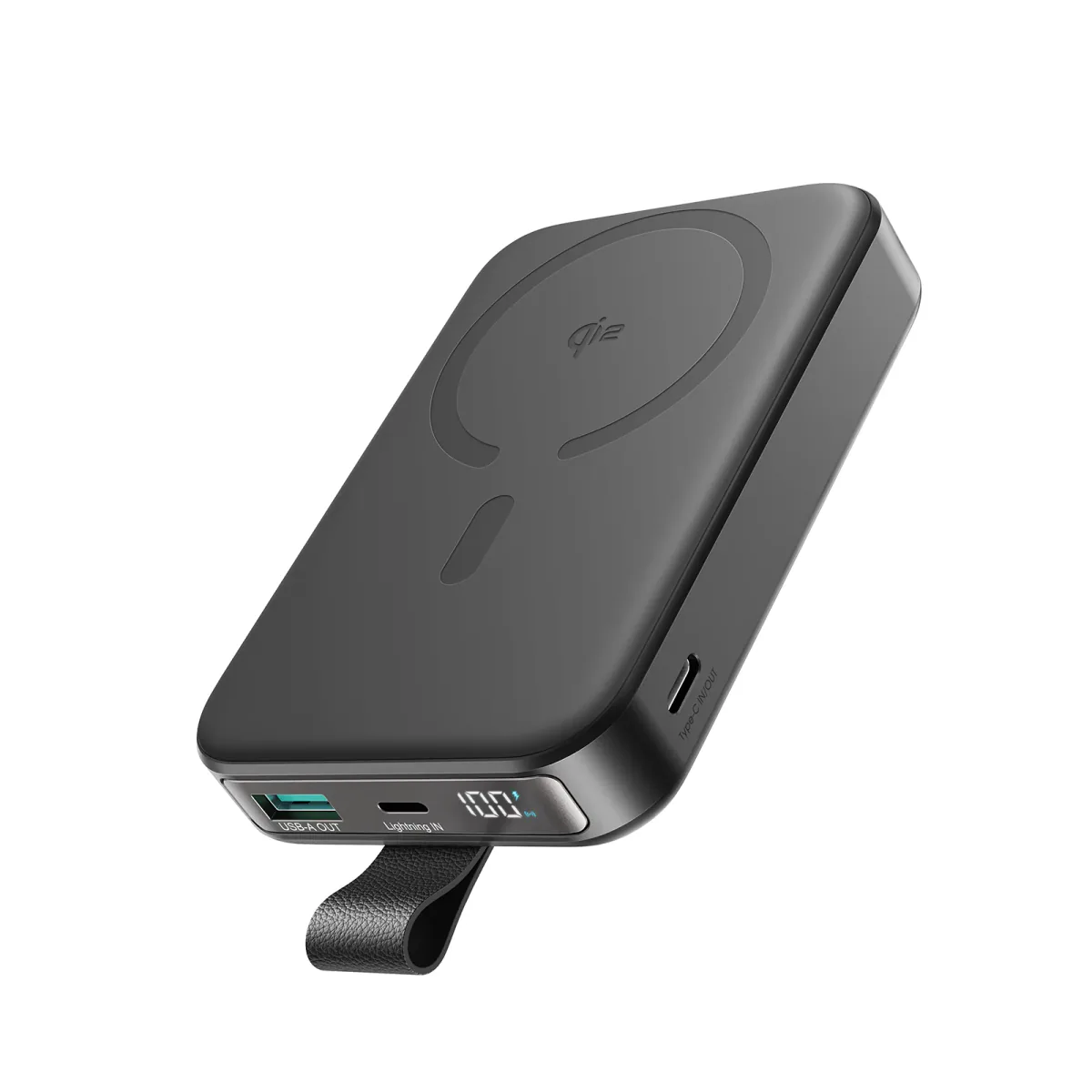
| 10,000mAh (e.g., Joyroom 10,000) | 3.7V | 37Wh | Allowed (Carry-on only) |
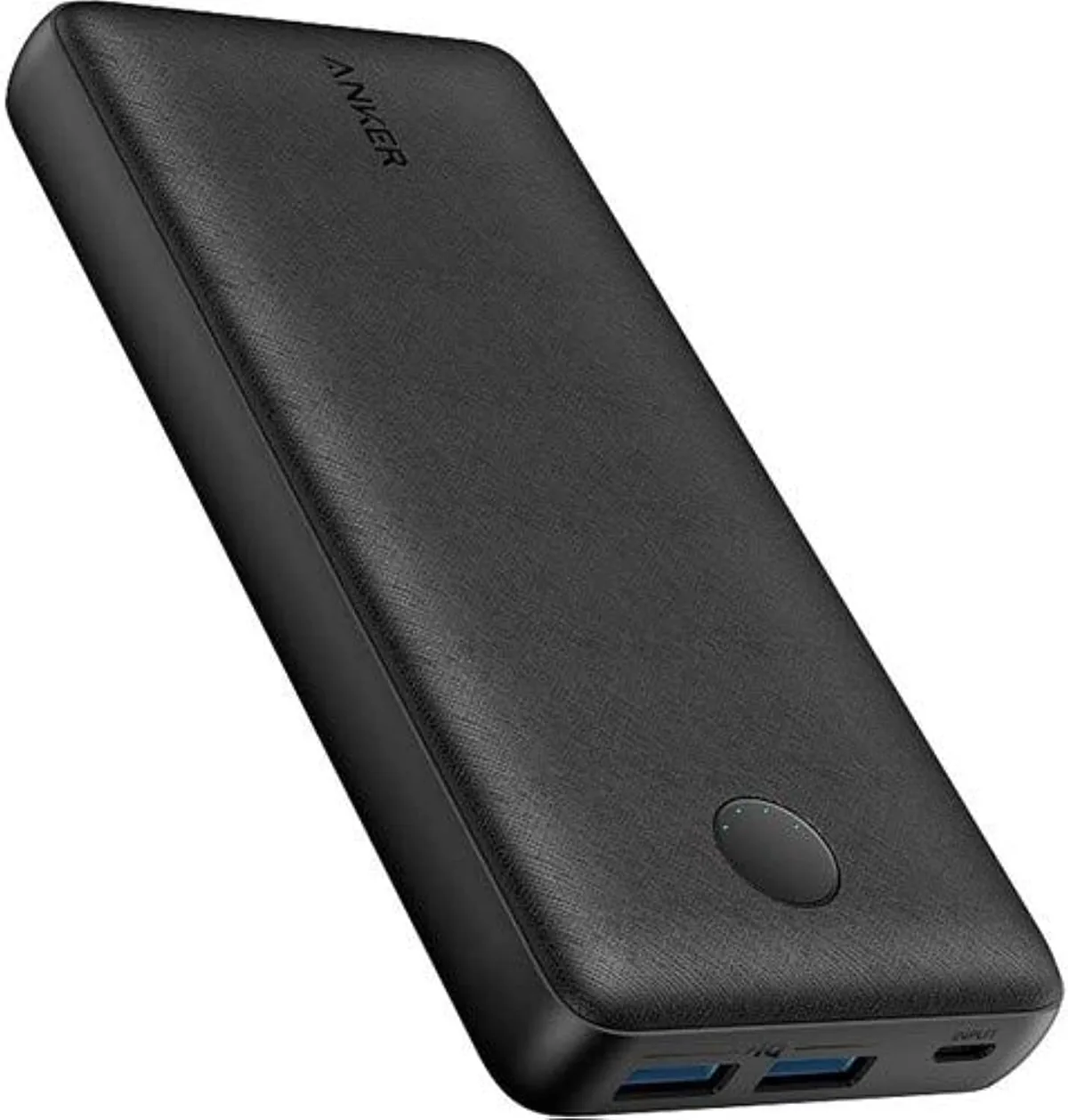
| 20,000mAh (e.g., Anker 20,000) | 3.7V | 74Wh | Allowed (Carry-on only) |
| 24,000mAh (e.g., Anker 737) | 3.6V - 3.7V | 86.4Wh | Allowed (Carry-on only) |
| 30,000mAh (High capacity blocks) | 3.7V | 111Wh | Subject to airline approval |
Understanding mAh and Wh helps you make informed purchasing decisions and avoid travel issues. Choose reputable brands that print these specifications clearly on the device casing to ensure hassle-free travel and reliable charging performance.
6. Reading Technical Specification Labels
Certified manufacturers print technical specification labels on the back of the power bank. Reading these specifications is the best way to verify authenticity:
- 🔍 Look for Certification Icons: Icons like CE, FCC, and RoHS confirm that the product adheres to global safety standards.
- ⚡ Verify Nominal Voltage: This should be clearly stated (typically 3.7V for lithium polymer cells).
- 📦 Confirm the Wh Rating: If the Wh value is missing or unreadable, the power bank may be counterfeit or restricted by international airlines.
Checking these technical details is the best way to protect your devices and your investment when purchasing portable power solutions. Having a clear understanding of voltage, Watt-hours, and chemical properties empowers you to avoid travel complications and ensure your devices perform optimally in all scenarios.
4.1. Why Wh and kWh are Crucial for Electric Vehicle (EV) Batteries
If you think the difference between mAh and Wh only matters for small smartphones, the reality is that the entire Electric Vehicle (EV) industry relies on this exact principle, albeit on a massive scale.
In the EV sector, you will never hear battery capacity measured in milliampere-hours. Instead, battery packs are rated in kWh (Kilowatt-hours), which equals 1,000 Watt-hours. Electric car motors require massive operating voltages, ranging from 400V to 800V, to deliver enough torque and horsepower to move heavy vehicles at highway speeds.
If we measured EV batteries in mAh, we would be dealing with astronomical, unreadable numbers in the hundreds of thousands or millions. For instance, a 75kWh battery pack operating at 400V is equivalent to 187,500mAh. Using Kilowatt-hours simplifies calculations, allowing consumers to compare energy capacities directly and compute driving range estimations with precision.
4.2. How Ambient Temperature Impacts Usable Wh Capacity
Lithium battery chemistry is highly sensitive to ambient temperatures. These thermal changes directly affect energy transfer efficiency and the actual Watt-hours delivered to your phone's battery cells.
In extremely hot environments (such as a typical Egyptian summer), the internal resistance of the lithium cells and the voltage-boosting circuits increases. This resistance forces a higher percentage of energy to dissipate as heat, reducing the end-to-end efficiency to 70% (down from 85%). This means less energy (fewer Watt-hours) actually reaches your smartphone.
Conversely, in freezing temperatures, the chemical movement of lithium ions slows down dramatically. This prevents the cells from discharging their full rated Watt-hour capacity. You might notice your power bank depleting rapidly without delivering its usual charge cycles. To secure the highest efficiency and protect your gear, always charge your devices in mild, temperature-controlled environments. Additionally, you should cross-reference the specifications detailed in the product user manual with the numbers engraved on the power bank's outer shell. Any discrepancies or vague formatting are immediate red flags indicating a counterfeit device that could damage your smartphone's delicate power manager. Investing in a certified, brand-name portable charger with verified specifications is essential to safeguard your expensive mobile hardware. Cheap generic batteries that lack proper labeling can lead to safety hazards, including short circuits or permanent motherboard failures. When comparing products, looking past the inflated milliampere-hour numbers to find the actual energy density is the best way to verify what you are paying for. Using only original and certified products is the safest path to enjoy peace of mind on the road.

CairoVolt Editorial Team
Content team reviewing specifications and buying guides
The CairoVolt team reviews model numbers, specifications, and compatibility, and updates information when better data is available. Estimates are labeled as calculations, and readers can report information that needs correction.
Frequently Asked Questions
How do I convert mAh to Wh for my portable charger?▼
Why do airlines ban power banks exceeding 100Wh?▼
Can I charge my laptop with a standard 20,000mAh power bank?▼
What is the actual usable capacity of a 10,000mAh power bank?▼
Ready to Buy?
Browse available products and review specifications and CairoVolt warranty terms before ordering