 CairoVolt Team
Latest 20000mAh Power Bank Prices in Egypt — Store Warranty Guide
Looking for a reliable 20000mAh power bank with a written store warranty in Egypt? We check current pricing, explain rated capacity, and show how to detect fake chargers.
In short: 20000mAh power bank prices on CairoVolt: Joyroom JR-PBF14 Pro at EGP 997, Anker PowerCore 20000 at EGP 1,550, and Anker Zolo A110E at EGP 1,730 — our pick, because it gives 22.5W through a built-in USB-C cable. Delivered energy is below the label: we measured 60.8 to 62.0Wh usable from 72–74Wh cells.
Frequent power outages (load-shedding) and long commutes in Egypt make owning a high-capacity power bank essential for smartphone users. A 20000mAh power bank represents the sweet spot for portable power: it provides enough capacity to charge multiple devices for days, remains compact enough to carry in a backpack, and complies with international aviation regulations (the 100Wh limit for lithium-ion batteries inside carry-on luggage).
However, the Egyptian retail market is flooded with counterfeit and unbranded products claiming astronomical capacities like 50000mAh at impossibly low prices. Substandard portable chargers not only fail to deliver their advertised capacities but also lack safety circuits, risking battery degradation or thermal accidents. In this detailed guide from the CairoVolt lab, we break down current retail pricing for genuine 20000mAh power banks, explain the physics behind "usable capacity," and provide parameters to detect counterfeit units.
💡 Tech Summary: When buying a 20000mAh power bank, focus on output speed (22.5W to 65W for laptops) and recharge input speed. Our pick for most people is the Anker Zolo A110E; buy from a seller that issues an invoice and a written warranty in its own name, and avoid unbranded products.
1. Why 20000mAh is the Ideal Capacity for Power Users
Most modern smartphones feature internal batteries ranging from 4000mAh to 5000mAh. A standard 10000mAh power bank can only charge these devices 1.5 to 2 times, which may not be enough for weekend travel or extended power cuts.
A 20000mAh capacity provides several key advantages:
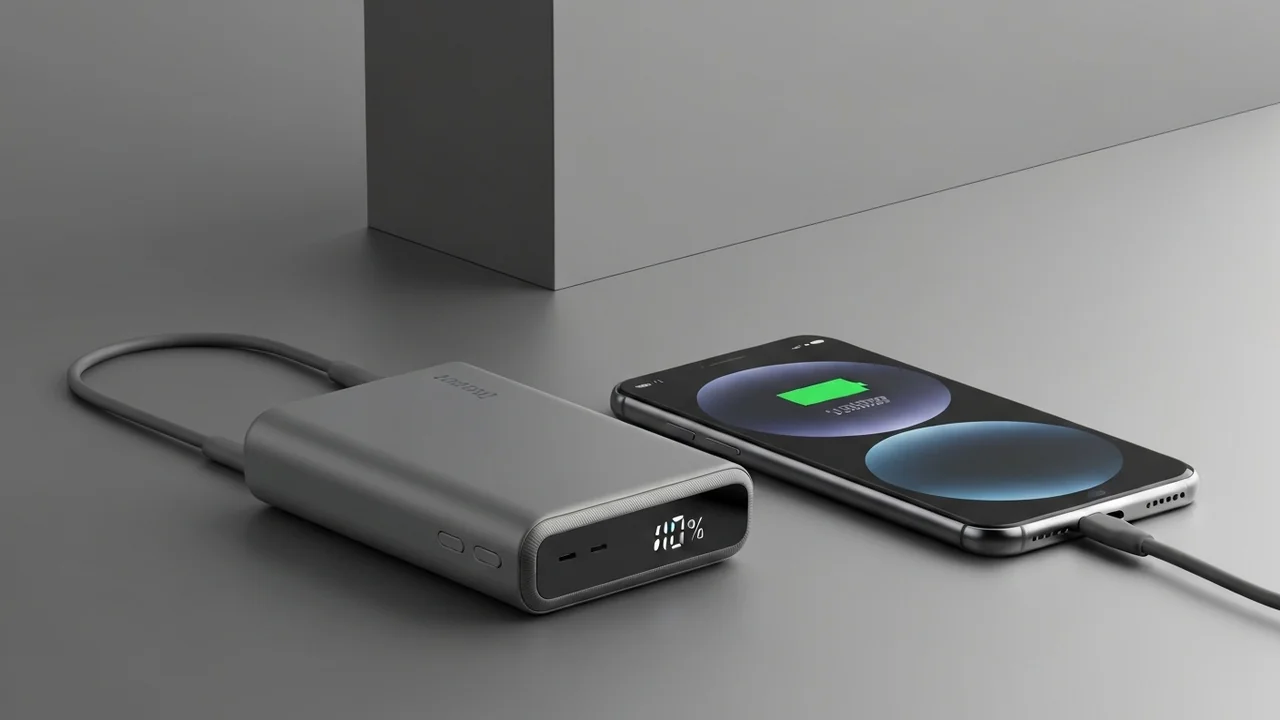
- Multiple Charges: Charges an iPhone 15 about 4 times (est.: 62.0Wh measured from the A110E × 0.85 ÷ 12.99).
- Tablet Charging: Safely charges larger devices like iPad Pro models, which require high-capacity cells (up to 10000mAh).
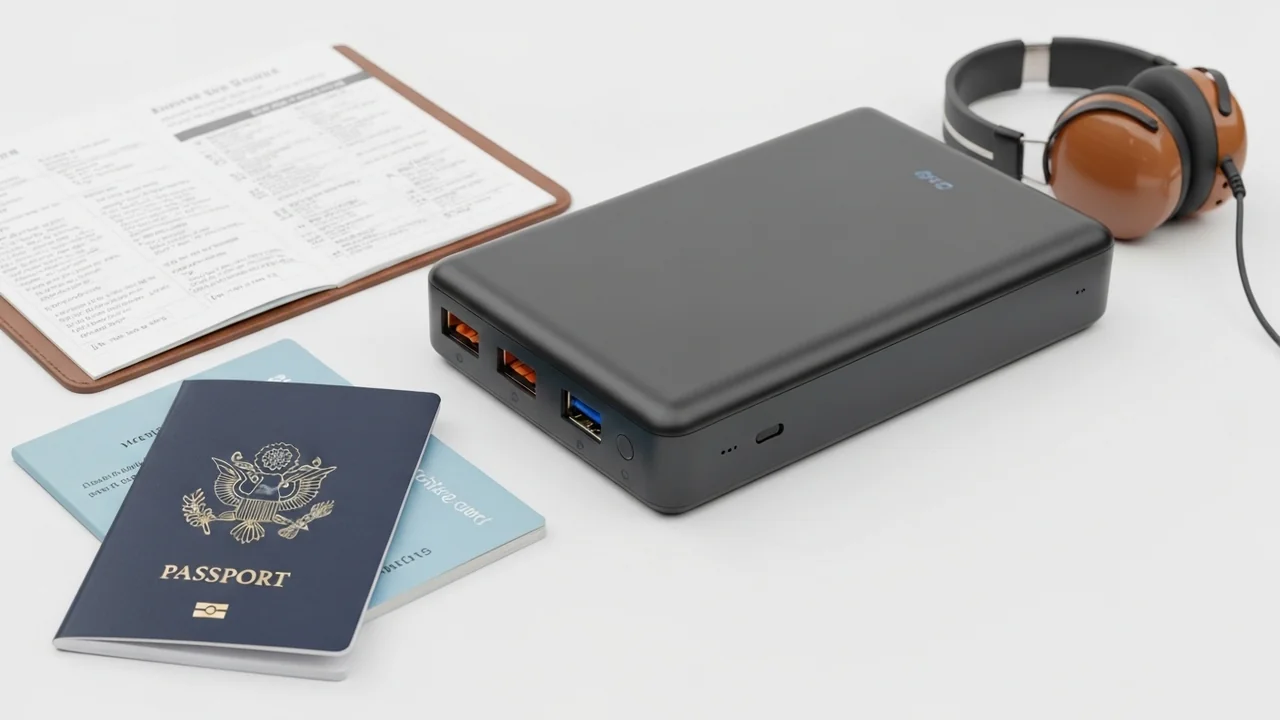
- Aviation Compliance: The TSA and international aviation organizations restrict carry-on lithium batteries to 100Wh. A 20000mAh battery operating at 3.7V equates to 74Wh, meaning it fits safely within carry-on limits for commercial flights.
2. Rated Capacity vs. Advertised Capacity: Understanding Conversion Losses
Many users are surprised when a new 20000mAh power bank only charges a 5000mAh phone 2.5 times before running dry. This is not a defect; it is a physical reality of DC-to-DC conversion:
- Voltage Discrepancy (3.7V vs. 5V/9V): The lithium-ion cells inside the power bank operate at a nominal voltage of 3.6–3.7V. However, smartphones charge over USB at 5V, 9V, or 12V.
- The Boost Converter: To transfer power, the power bank must boost its internal voltage from 3.7V to 5V or higher. The conversion process generates heat, resulting in energy losses.
- Real Usable Capacity Formula: Usable capacity (often printed on the back as "Rated Capacity") is calculated as follows:
Rated Capacity = (Cell Capacity 20000 × 3.7V) ÷ 5V × Efficiency (typically 80-85%)
This gives a nominal usable capacity of 12,000 to 13,000mAh at a standard 5V output (we measured 60.8–62.0Wh usable from 72–74Wh packs). If you use fast charging (9V or 12V), the conversion efficiency decreases slightly, resulting in fewer total charges.
3. 20000mAh Power Bank Pricing in Egypt
These are the 20000mAh models available on CairoVolt with current prices and specifications, all covered by CairoVolt's written store warranty (duration shown on each product page):
| Brand & Model | Max Output Power | Price on CairoVolt | Key Features |
|---|---|---|---|
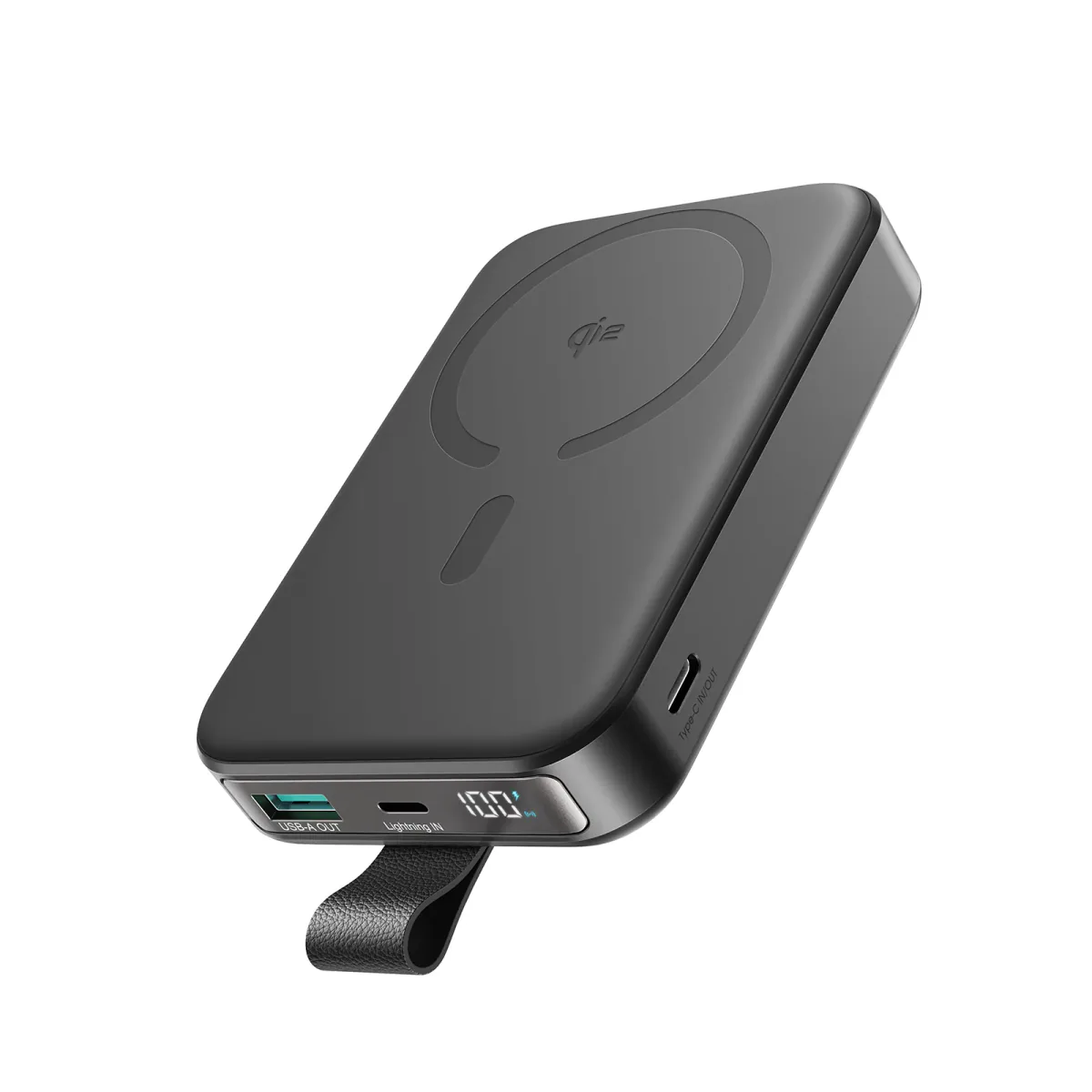
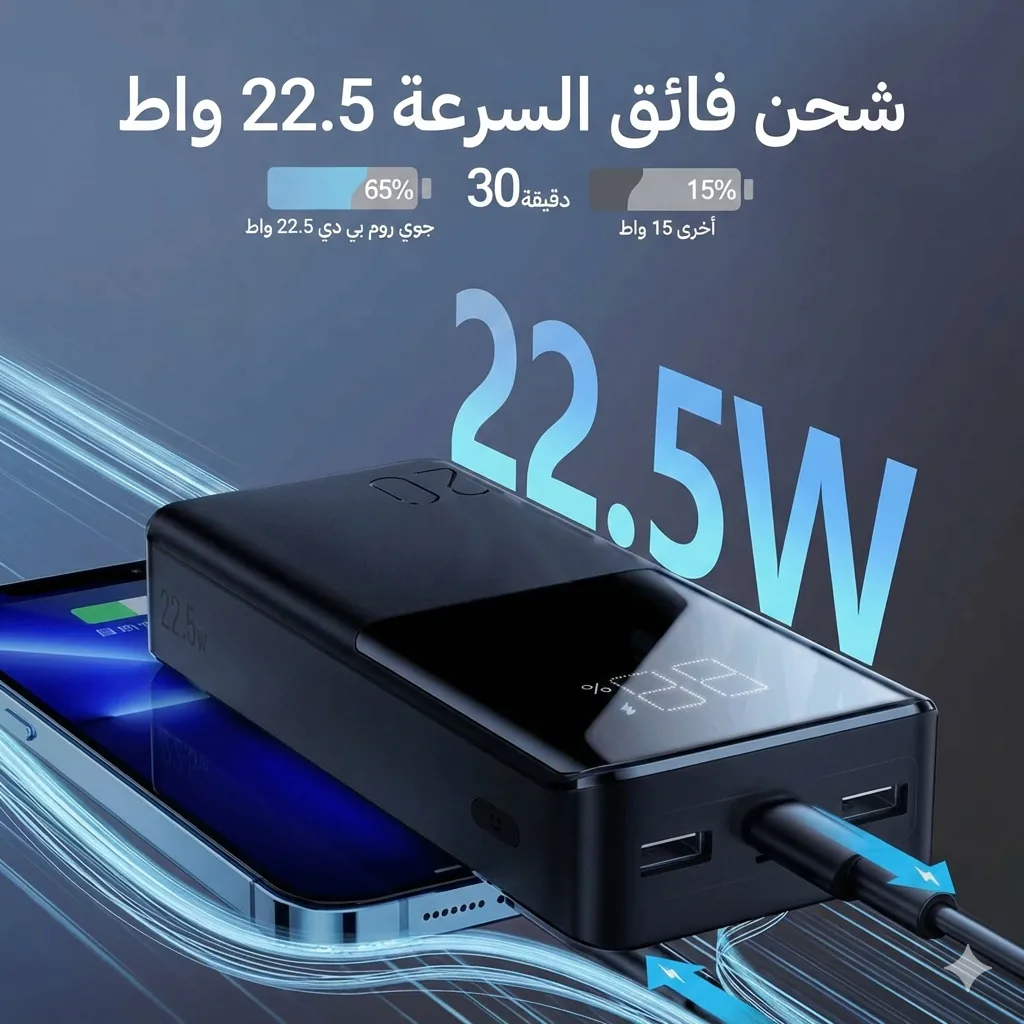
| Joyroom JR-PBF14 Pro 20000mAh | Up to 22.5W listed (21.3W USB-C peak measured) | EGP 997 | USB-C + two USB-A, estimated % display, 60.8Wh usable measured |
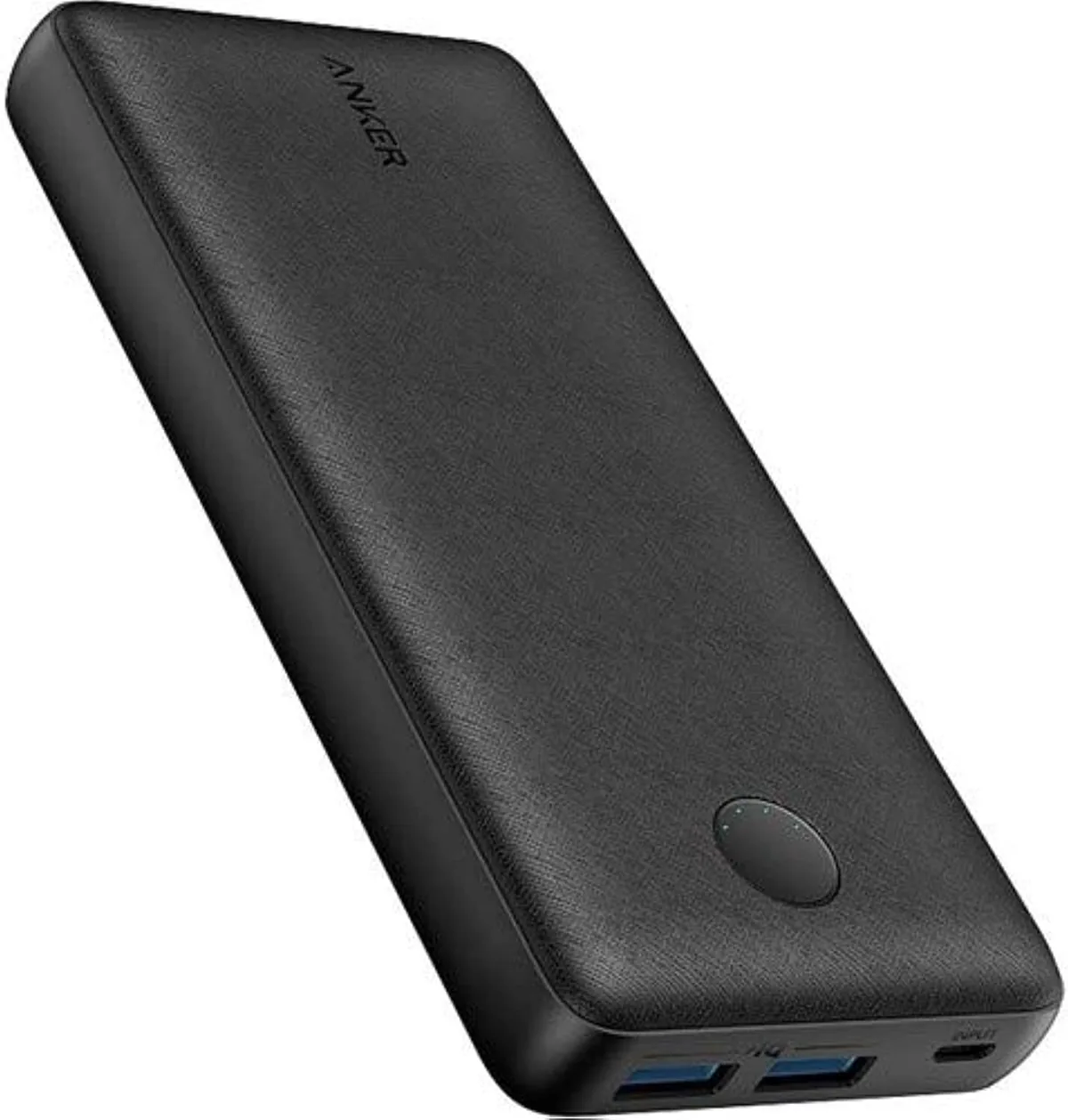
| Anker PowerCore 20000 (A1260) | Port 1 up to 18W QC, port 2 12W | EGP 1,550 | Two USB-A ports, Micro-USB input, 61.4Wh measured |
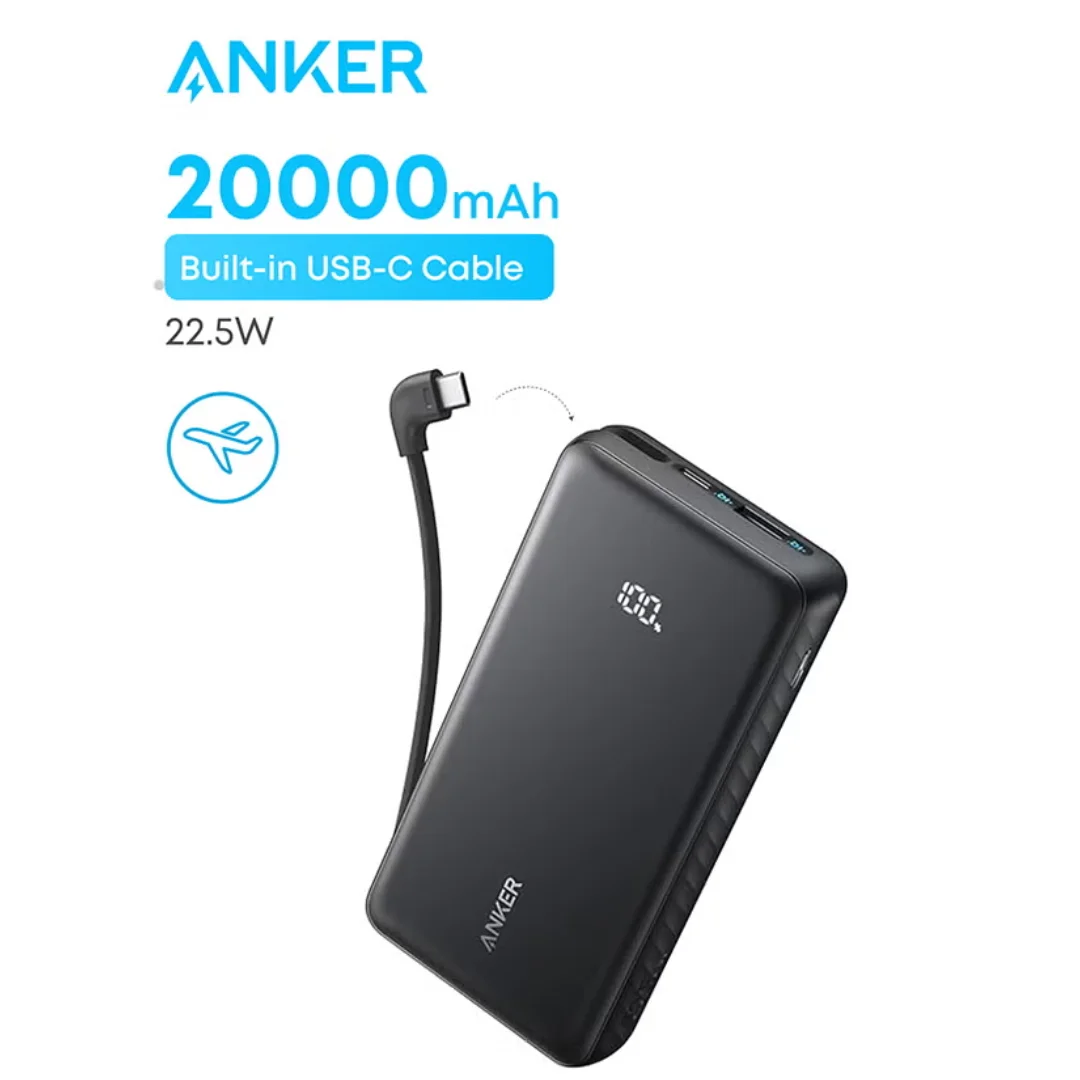
| Anker Zolo A110E 20000mAh | 22.5W listed | EGP 1,730 | Built-in USB-C cable, digital display, 62.0Wh measured, recharged in 3 h 06 min |
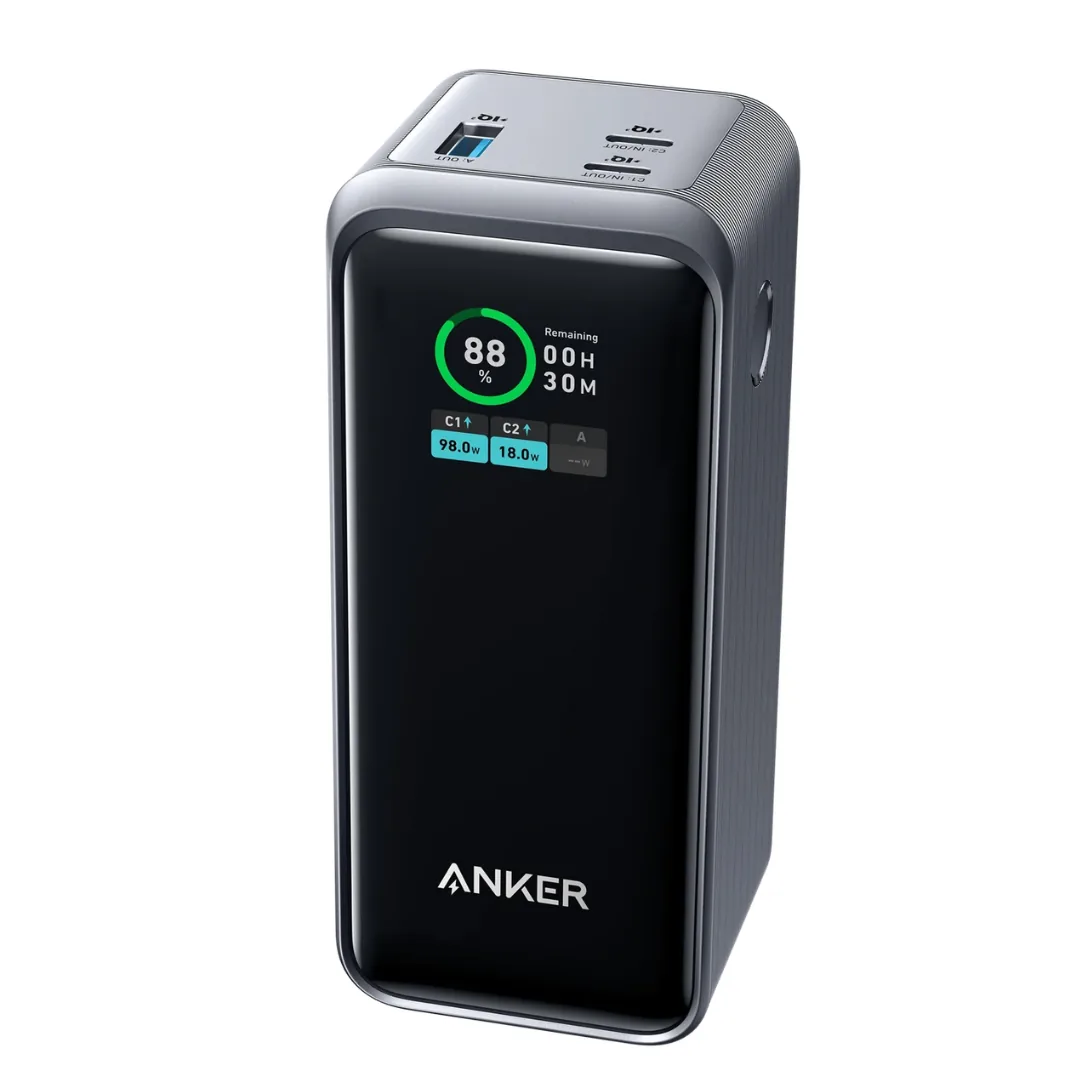
| Anker Prime 20000 (A1336) | Shared 200W ceiling (laptop class) | EGP 5,900 | Two USB-C ports at about 100W each, 61.8Wh measured |
4. How to Spot Counterfeit Anker and Joyroom Power Banks
Due to high demand, counterfeit power banks are common in Egypt. Use these tests to spot clones:
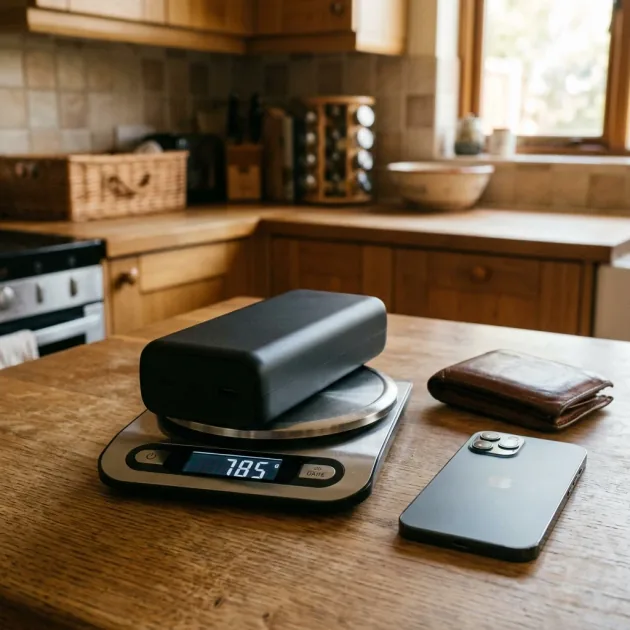
- The Weight Check: Cells are the heaviest part of a power bank, so a suspiciously light unit is a warning sign. For reference, we measured the PowerCore 20000 at 372g, the Zolo A110E at 394g and the JR-PBF14 Pro at 418g. A pack labelled 20000mAh that weighs far less than these probably holds less cell capacity than printed.
- Scratch Verification Code: Offline-sold Anker boxes carry a security label with a 16- or 20-digit code under a scratch-off coating — enter it at anker.com/verify. Anker says a missing label does not mean counterfeit, because only offline-sold units carry the code. Either way, buy from a seller that issues an invoice and a written warranty naming its legal identity, and match the model and ratings to the manufacturer's documentation — packaging or a barcode alone does not prove authenticity.
- Build and Port Quality: Authentic power banks feature clean USB ports with gold-plated contacts, and high-quality digital displays. Counterfeits often have crooked ports, dim LED indicators, and cheap plastic seams.
5. Crucial Buying Criteria: Input Speed & Ports
When selecting a 20000mAh power bank, look beyond cell capacity:
- Input Recharge Speed: Recharging a massive 20000mAh battery is time-consuming. Example from our bench: the PowerCore 20000 with a Micro-USB input took about 10 hours 35 minutes on a 5V/2A charger (about 5 hours on an 18W QC charger), while the Zolo A110E with a ~20W USB-C input recharged in 3 hours 6 minutes and the JR-PBF14 Pro in 3 hours 22 minutes.
- Protocol Support: Ensure the device supports USB-C Power Delivery (PD) for iPhones and Samsung devices, as well as Quick Charge (QC) for other Android devices.
- Output Port Layout: A mix of USB-C and USB-A ports is recommended to charge multiple generations of devices. Look for options with low-current modes for safe charging of accessories like wireless earbuds.
6. Head-to-Head Comparison: Anker PowerCore vs. Anker Zolo vs. Joyroom
Let's evaluate the three most common 20000mAh models available in the local Egyptian market:
- Anker PowerCore 20000 (A1260): two USB-A ports — the first up to 18W QC for older Samsung phones, the second 12W — and a Micro-USB input. We measured 61.4Wh usable. It has no USB-C, PD or PPS, so modern iPhones and Samsung Super Fast phones fall back to standard charging.
- Anker Zolo A110E: our pick for most people, because it delivers 22.5W through a built-in USB-C cable; we measured 62.0Wh usable and a 3 h 06 min recharge.
- Joyroom JR-PBF14 Pro: one USB-C and two USB-A ports, up to 22.5W listed (21.3W measured), and 60.8Wh usable on our bench. Its display shows an estimated percentage, and it has no built-in cable.
7. Lab Guidelines for Power Bank Longevity
To preserve battery chemistry and prevent cell swelling over years of use, follow these rules:
- Avoid 0% State of Charge: Fully discharging lithium cells degrades their longevity. Charge the power bank when it drops to 15% or 20%.
- Optimal Storage: If storing the power bank unused for several months, keep it at about 50% to 60% charge. Storing it fully discharged or fully charged accelerates cell aging.
- Keep Away from Heat: Never leave power banks inside a parked car dashboard under direct sunlight. Extreme heat can trigger thermal runaway and permanent capacity loss.
8. Rapid Charging Protocols Decoded (PD 3.0 vs. PPS vs. QC 4.0)
Modern fast charging is not just about raw wattage; it requires protocol matching. USB Power Delivery (PD) is the standard Apple devices use for wired fast charging. Samsung devices rely on Programmable Power Supply (PPS), where the phone requests voltage in fine 20 mV steps to reduce heat build-up. Ensure your 20000mAh power bank supports these standards so your devices charge at their maximum supported speeds.
9. USB-C Cable Resistance and Power Loss Dynamics
When charging at high currents (e.g., 3A or 5A), cable quality becomes critical. Thin, low-quality cables have high electrical resistance, causing a voltage drop along the cable. This drop means less power reaches your phone and more is wasted as heat. To maximize energy transfer, use a short (under 1 meter) cable with a thick wire gauge (AWG) certified for high wattage. This simple practice ensures you get the maximum possible charges out of your 20000mAh capacity.
10. Electrical Surges and MultiProtect Safeguards in Egypt
Egypt's electrical grid frequently experiences voltage surges when utility power is restored after a blackout. If you are recharging your power bank during a surge, a cheap clone lacks the protective varistors and thermal fuses needed to block the spike. Genuine power banks from known brands list over-voltage protection on the input, but it is still wise to unplug during outages and reconnect a few minutes after power returns.
11. USB Port Maintenance and Oxidation Prevention
In humid areas or coastal regions in Egypt (such as Alexandria, Port Said, or during high-humidity summer months in Cairo), the copper and brass contacts inside USB-A and USB-C ports can develop a thin layer of copper oxide. This chemical oxidation appears as a greenish or dark residue. This oxide layer acts as an electrical insulator, significantly increasing contact resistance, which slows down charging speeds or prevents fast charging protocols from negotiating successfully. To prevent this, periodically clean the ports with a dry, soft-bristled brush or compressed air, use anti-dust port plugs, and avoid storing the power bank in damp environments or alongside loose metallic items like keys or coins that can cause micro-shorts.
In conclusion, purchasing your power bank from a trusted retailer in Egypt is a reliable way to secure a genuine written warranty, ensure high-speed charging performance, and protect your expensive electronics from dangerous voltage fluctuations. Investing slightly more in an authentic power bank from Anker or Joyroom saves you from potential device damage and offers long-term reliability and peace of mind during daily load-shedding cycles.
CairoVolt Team
Tech Editor
Frequently Asked Questions
Can I charge a laptop with a 20000mAh power bank?▼
Why does my power bank take so long to recharge?▼
Are 20000mAh power banks allowed on commercial flights?▼
How do I know if my power bank is swollen or failing?▼
Ready to Buy?
Browse available products and review specifications and CairoVolt warranty terms before ordering
Related products
Anker ZOLO Power Bank 20,000mAh (22.5W) | Built-in Cable
Joyroom 20000mAh Power Bank | 22.5W PD+QC | Triple Output
Anker PowerCore 20000mAh | 72Wh | Dual USB-A
Anker Prime 20,000mAh Power Bank (A1336) — 200W 3-in-1 | Dual 100W USB-C