
 CairoVolt Team
Joyroom 10000mAh Power Bank Capacity Test — Real vs Market Capacity Explained
Bought a 10000mAh power bank and got barely one and a half charges? Let's break down the conversion math, the expected real capacity for Joyroom, and safety tips.
In short: A 10000mAh power bank does not give you 10000mAh at 5V. We tested the Joyroom JR-T012: 30.8Wh usable (about 83% of 37Wh), or roughly 6,160mAh at 5V — about 2 iPhone 15 charges or about 1.4 charges of a 5,000mAh phone (est.: 30.8 × 0.85 ÷ the phone's Wh). Its USB-A output is about 10W with no fast charging.
Imagine this common scenario: You are traveling on the Cairo-Alexandria train, running GPS and listening to a podcast, when your phone triggers the dreaded 15% low-battery warning. You pull out your brand new power bank marked with a bold "10000mAh" logo and plug it in. After a single full charge and a tiny bit extra, the power bank dies completely. You look at it in frustration: "Was I ripped off? My phone battery is only 4000mAh, this should easily charge it two and a half times!"
Actually, you probably weren't scammed (assuming you bought an authentic Joyroom device from a reputable seller). Instead, you fell into a common engineering misconception known as the gap between nominal battery capacity and actual rated capacity. In this academic guide, we will walk you through the math and physical limits of portable charging, lay out the expected real-world numbers for Joyroom's 10000mAh line based on its published specs, and give you practical tools to identify dangerous counterfeit devices in the Egyptian market.
💡 Quick Answer: A 10000mAh power bank cannot charge a 4000mAh phone 2.5 times. The advertised 10000mAh is the cell capacity at 3.7V; boosting to 5V and conversion heat losses leave less. On our Joyroom JR-T012 sample we measured 30.8Wh usable (about 6,160mAh at 5V).
1. The Physics of Voltage Boosting and Energy Conversion
The internal lithium cells of a power bank operate at a average nominal chemical voltage of 3.7V. When a brand prints "10000mAh", it is referencing the raw chemical capacity at this 3.7V potential. To find the total stored energy in Watt-hours (Wh), we multiply capacity by voltage:
However, phones charge over USB interfaces which require a minimum of 5V for standard charging, and up to 9V or 12V for USB Power Delivery (PD) fast charging. The power bank's internal circuit board must use a boost converter to elevate the cell's 3.7V to the required 5V output. Assuming a 100% efficient booster circuit (which is physically impossible under thermodynamics laws), the theoretical capacity at 5V is:
Therefore, even in a perfect vacuum without any power loss, the absolute maximum capacity you could draw at 5V is 7,400mAh. In the real world, boost converters generate heat due to resistance in the inductor and switching MOSFETs. High-quality power banks like Joyroom achieve conversion efficiency ratings between 82% and 88%. Factoring in an 85% real-world efficiency rate, we get:
This is the actual usable capacity, known as the "Rated Capacity". Reputable brands like Joyroom print this value in small text on the back (e.g., "Rated Capacity: 6000mAh"). If a brand does not print this rating, it is a significant red flag.
2. Joyroom 10000mAh Expected Real-World Numbers
To put these numbers in context, we measured the Joyroom JR-T012 (10000mAh, 37Wh nominal) — the model CairoVolt stocks — with a full discharge at 5V/2A:
- Usable energy (our test): 30.8 Wh — about 83% of 37Wh.
- Equivalent capacity at 5V: about 6,160 mAh (30.8 ÷ 5) — Joyroom lists about 5,800mAh "Rated" at 5V/2.1A.
- Outputs: two USB-A ports sharing 5V/2.1A (about a 10.5W class) — no USB-C output, no PD and no 9V fast charging on our sample.
🔬 Technical Note:
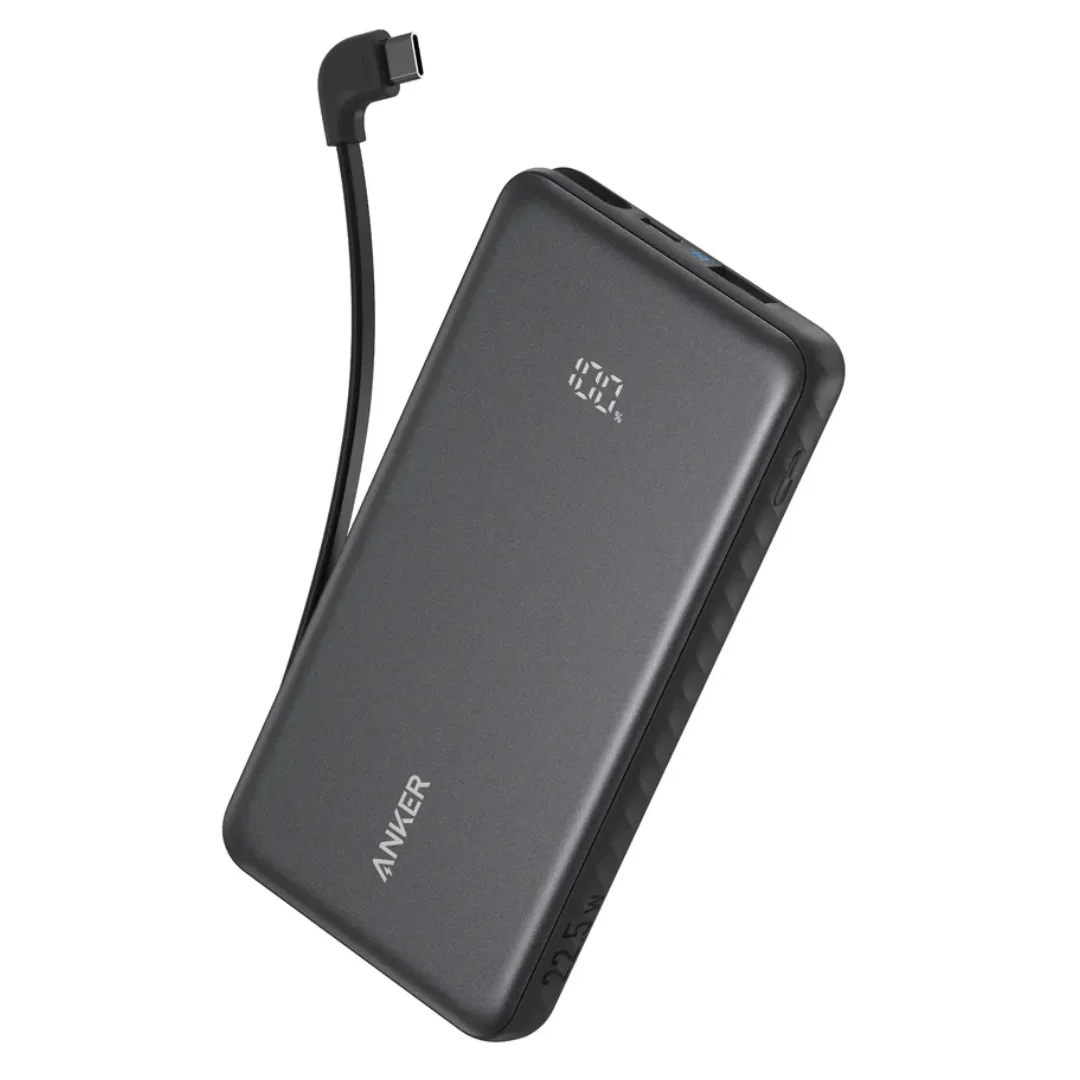
This model is about capacity, not speed: it has no fast charging. If you need 22.5W fast charging and a built-in cable in the same class (we measured 31.1Wh usable), compare it with the Anker Zolo A110D. In any power bank, fast charging adds a little more conversion loss as heat.
3. Cell Chemistry Integration: Lithium-Polymer (Li-Po) vs. Lithium-Ion
Inside Joyroom's 10000mAh chassis lies a Lithium-Polymer (Li-Po) pouch cell rather than cylindrical 18650 Lithium-Ion cells. This structural difference has direct engineering implications for your day-to-day charging:
- Form Factor and Portability: Li-Po cells utilize a flexible pouch enclosure rather than a rigid metal cylinder. This allows Joyroom to manufacture incredibly thin, flat power banks that fit comfortably behind your phone or inside a pocket.
- Safety Profiling: Pouch cells do not build up extreme pressure like sealed steel cylinders. Under severe failure or thermal runaway, a Li-Po cell swells up rather than instantly exploding. This warning sign gives you time to discard the unit safely.
- Electrolyte Degradation: Li-Po gel electrolytes are highly sensitive to thermal exposure. Operating the power bank in hot climates like Egypt accelerates the decomposition of the separator membrane, leading to cell expansion.
4. Charging Protocol Impact: Power Delivery (PD) vs. Programmable Power Supply (PPS)
Modern fast charging protocols dictate how much energy is lost during the transfer process. When charging an iPhone via USB Power Delivery (PD), the phone requests a fixed 9V profile. The phone's internal charging IC must step down this 9V to ~4.3V to charge the lithium cell, generating heat inside the phone. When charging a Samsung device, the power bank utilizes PPS (Programmable Power Supply). PPS allows the phone to dynamically adjust the output voltage of the power bank's PMIC in 20mV (millivolt) steps. This shifts the conversion workload and heat generation from the phone to the power bank, keeping your phone cooler during the fast charging cycle.
5. Real-World Phone Charging Count Table
The usable output from the power bank (about 6,160mAh in our test) is not the final amount that reaches your phone's battery. The phone's internal charging PMIC also suffers a 10% to 15% efficiency loss while stepping down the incoming 5V/9V voltage to the cell's internal voltage. The combined system efficiency (power bank conversion + phone charging circuit) ends up around 70% of the power bank's nominal capacity.
Estimate = our measured 30.8Wh × 0.85 ÷ the phone battery's energy (mAh × 3.87V ÷ 1000). Here is roughly how many times a Joyroom 10000mAh power bank can charge popular phones from 0% to 100%:
| Phone Model | Phone Battery Capacity (mAh) | Charges (est.) |
|---|---|---|
| iPhone 15 / 16 | 3,349 / 3,561 | About 2 / 1.9 (est.) |
| iPhone 15 Pro Max / 16 Pro Max | 4,441 / 4,685 | About 1.5 / 1.4 (est.) |
| Samsung Galaxy S24 / A55 | 4,000 / 5,000 | About 1.7 / 1.4 (est.) |
| Samsung Galaxy S24 Ultra | 5,000 | About 1.4 (est.) |
| Xiaomi Redmi Note 13 Pro | 5,000 | About 1.4 (est.) |
If you own a phone with a large 5000mAh battery, a 10000mAh power bank only guarantees a single complete charge. If you require multiple full charges for traveling or during long load-shedding periods in Egypt, you should choose a 20000mAh model instead.
6. How to Spot Counterfeit Joyroom Power Banks in Egypt
Due to local import restrictions and price hikes, counterfeit Joyroom power banks have flooded wholesale markets in Egypt (such as El-Ataba, Sharia Abdelaziz, and metro kiosk shops). These fake devices are often packed with recycled low-capacity cells or iron plates and sand to mimic authentic weight. Use these engineering checks before buying:
- The Weight Audit: Authentic lithium cells have fixed energy-to-mass densities. A genuine 10000mAh power bank must weigh between 180 and 230 grams. If the unit weighs less than 150 grams, it is counterfeit. Conversely, shake the power bank close to your ear; fake units weighted with sand or metal plates often exhibit a shifting center of gravity or rattling internal noise.
- Security Barcode Verification: Original Joyroom packaging features a scratch-off security label. Scratch the silver layer to reveal the verification QR code or serial number and verify it on Joyroom's official site. If the site warns that the code has already been queried multiple times, the product is fake.
- Non-Linear Battery Percentage Drops: An authentic power bank drains linearly (e.g., 99%, 98%, 97%). Counterfeits utilize basic circuit boards that fail to read cell internal resistance accurately, causing the percentage to plunge from 80% to 40% in minutes or shut down unexpectedly at 10%.
- Recharge Time Verification: A genuine Joyroom 10000mAh unit requires 3.5 to 4.5 hours to recharge fully using an 18W adapter. If it charges from empty to 100% in an hour, the internal capacity is tiny (likely under 3000mAh).
⚠️ Safety Warning: Avoid Cheap Wall Adapters for Power Bank Recharging:
Do not recharge a high-capacity power bank using cheap 20 EGP street-vendor wall adapters. Recharging a 10000mAh battery takes hours and requires continuous current draw. Low-quality adapters overheat, risking shorts that can damage the power bank's PMIC or trigger cell swelling. Always use certified chargers like Anker's 20W/30W Nano series.
7. Lab-Proven Guidelines to Extend Power Bank Lifespan
While all lithium batteries degrade, proper maintenance can double your power bank's operating lifespan:
- Avoid Deep Discharges: Lithium-polymer batteries degrade faster when drained to 0%. Recharge the power bank when it hits 15% to 20% to reduce chemical stress.
- Keep Away from Heat: Never leave a power bank in a parked car during Egyptian summer. Temperatures inside a closed vehicle can exceed 65°C, causing electrolyte breakdown, swelling, and permanent capacity loss.
- Minimize Pass-Through Charging: Charging the power bank while charging a phone simultaneously creates double the thermal load on the internal components. Avoid this practice unless absolutely necessary.
In short, the Joyroom 10000 (JR-T012) is a compact pack for simple everyday top-ups, without fast charging — about 6,160mAh at 5V in our test. If you need fast charging or a built-in cable, compare it with the Anker Zolo A110D, and to compare the whole Joyroom range see our Joyroom 10K and 20K roundup. Buy from a seller that gives you an invoice and a written warranty.
CairoVolt Team
Tech Editor
Frequently Asked Questions
Why does a 10000mAh power bank not charge my 4000mAh phone twice?▼
How can I check the rated capacity of a Joyroom power bank?▼
Does fast charging reduce power bank efficiency?▼
What should I do if my power bank starts to swell?▼
Ready to Buy?
Browse available products and review specifications and CairoVolt warranty terms before ordering
Related products
Anker ZOLO Power Bank 10,000mAh (22.5W) | Built-in Cable
Joyroom 10000mAh Slim Power Bank | Dual USB | LED Display
Joyroom MagSafe Power Bank 10000mAh | 15W Wireless + 20W Wired | Kickstand
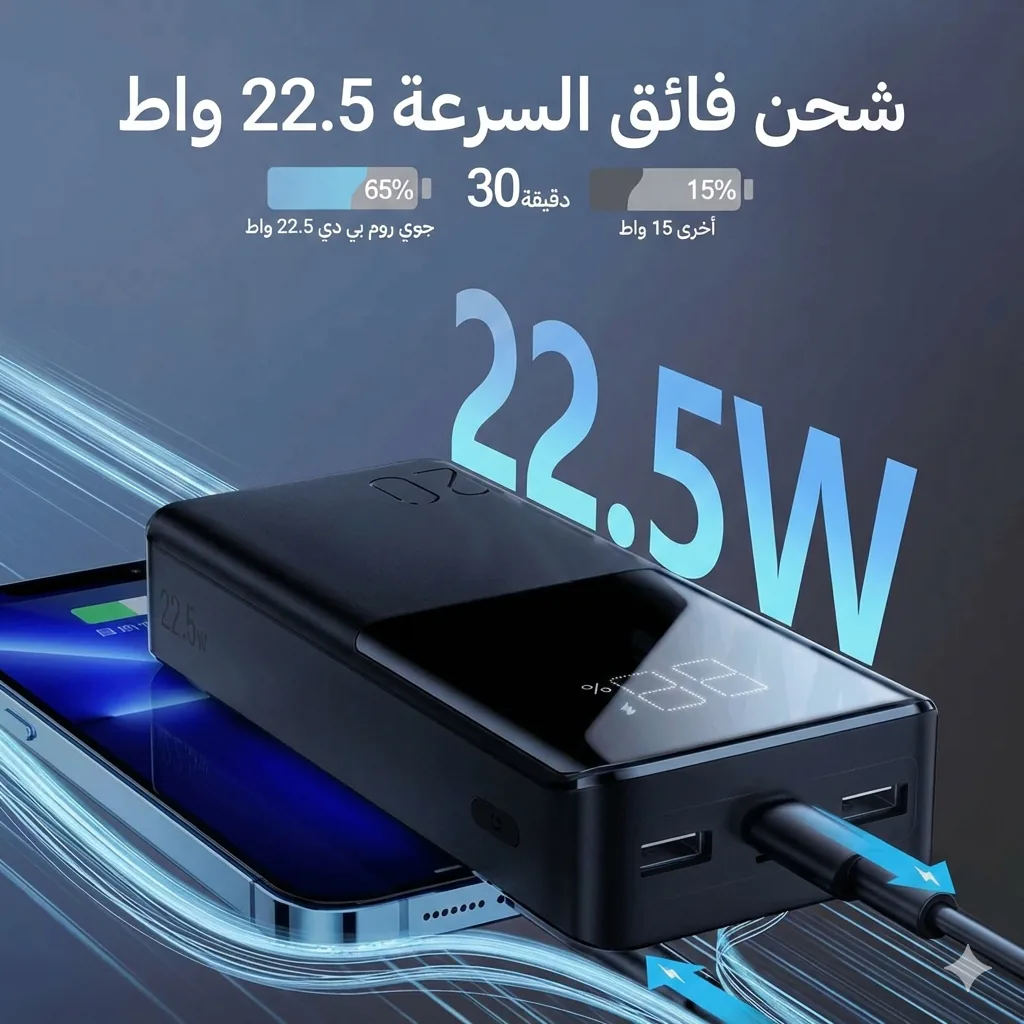
Joyroom 20000mAh Power Bank | 22.5W PD+QC | Triple Output
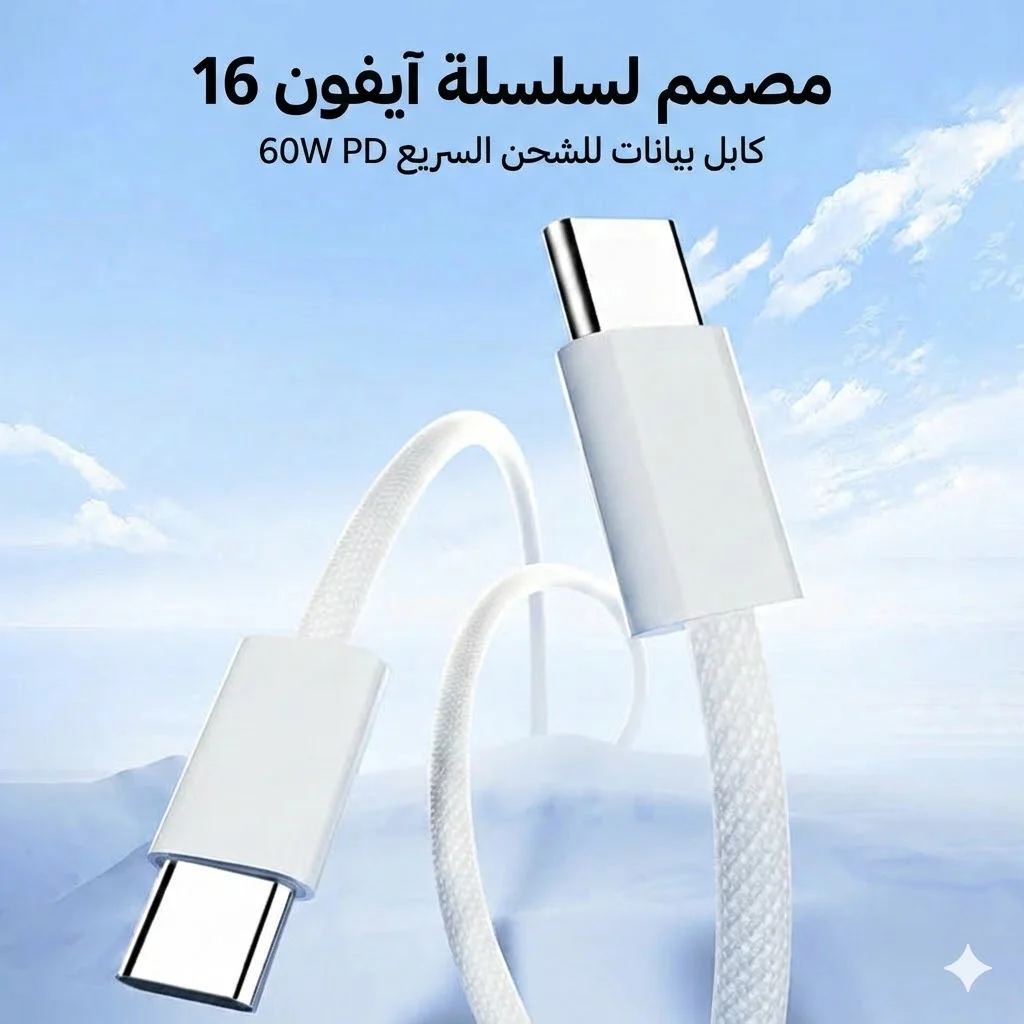
Joyroom 60W USB-C to USB-C Fast Charging Cable
Browse the categories this article covers
Related Articles
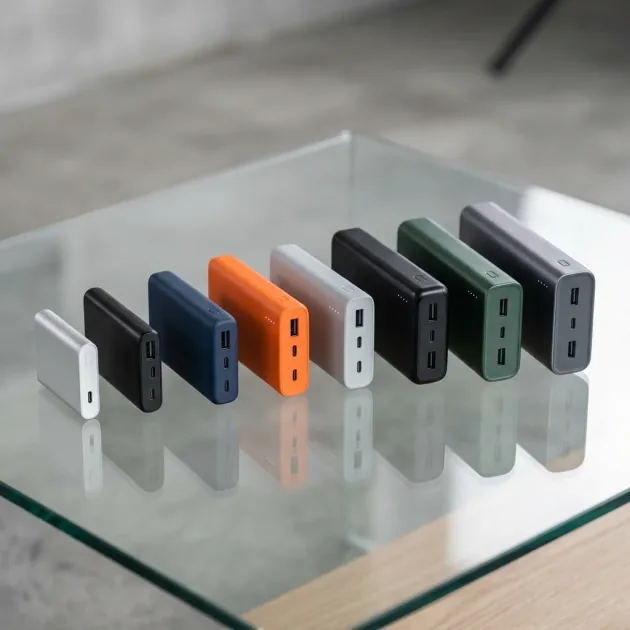
Joyroom Power Banks Review — 5 Models at 10,000 and 20,000mAh Capacities in Egypt
Read more →
Anker PowerCore 10000mAh Review — Why It's Still the Best Daily Power Bank Despite 20000mAh Options
Read more →