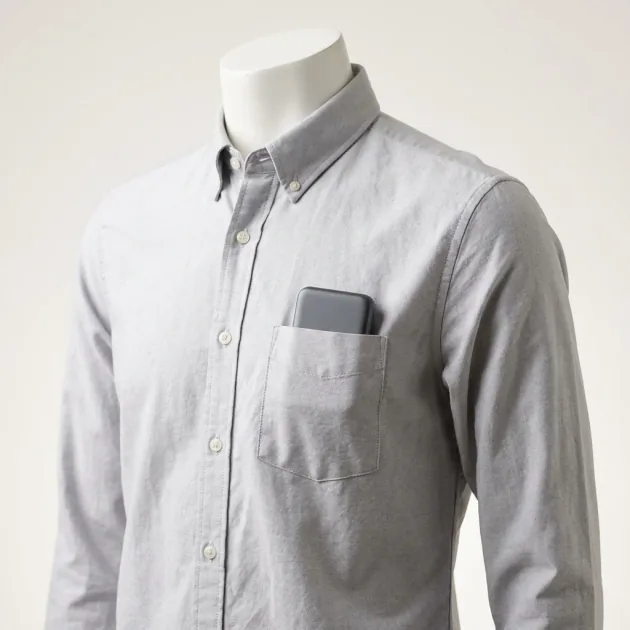
The question always comes up: "10,000 or 20,000?" And the answer that always comes back: "Get the bigger one, it is safer." But that is not always correct — and in many cases the 10,000mAh is actually the smarter choice backed by the numbers.
The Anker PowerCore 10000mAh (A1232) has existed for years and sells every single day. The question: why do people still buy it when larger, more powerful models exist? The answer is in the numbers.
💡 Quick Summary: 180g versus 447g for the 20,000mAh — a 267g difference, roughly the weight of a can of deodorant. If you charge your phone 1-2 times per day, the 10,000mAh is more than sufficient and significantly lighter in your bag and pocket.
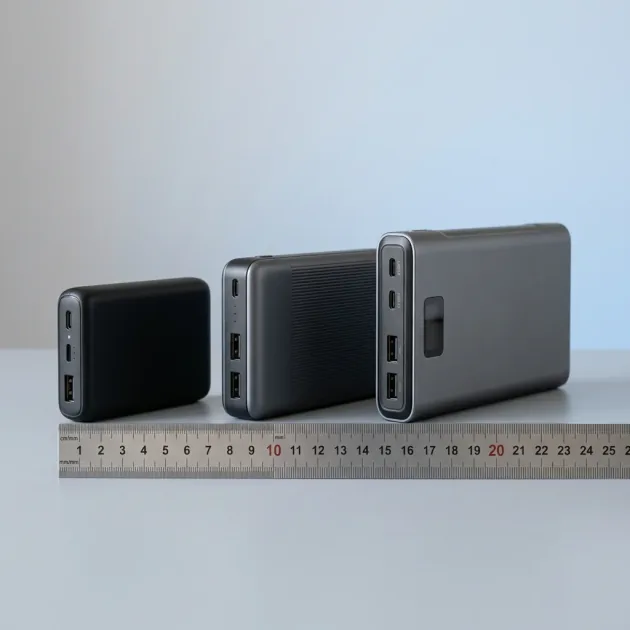
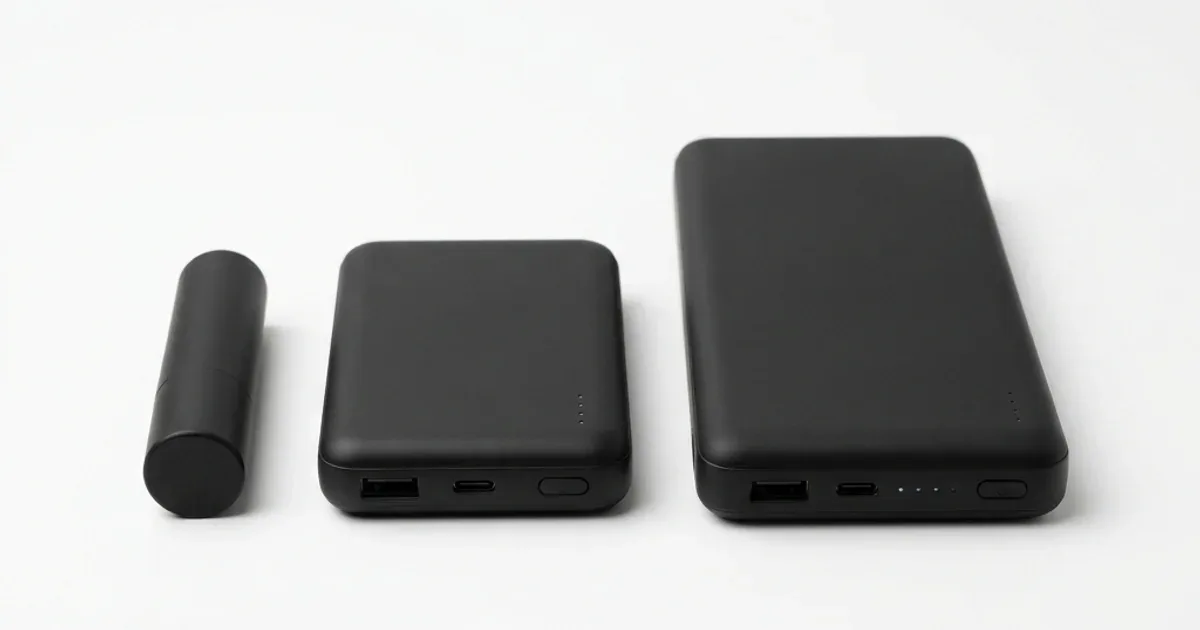
Weight and Size Comparison — Numbers That Matter in Real Life
| Spec | Anker 10,000mAh | Anker ZOLO 20,000mAh | Difference |
|---|---|---|---|
| Weight | 180g ⭐ | 447g | +267g |
| Dimensions | 60×93×22mm ⭐ | 72×138×25mm | Much larger |
| Fits in pocket? | ✅ Yes | ❌ Barely | — |
| Max output | 12W | 22.5W ⭐ | 20K is faster |
| iPhone 17 charges | ~1.9× | ~3.8× ⭐ | +1.9 charges |
| Recharge time | ~1.5 hours ⭐ | ~2.75 hours | 1.5 extra hours |
| Price | 1,300 EGP ⭐ | 1,730 EGP | +430 EGP |
University Scenario — Why the 10000 Is the Smarter Pick
A university student leaves at 8 AM and returns at 6 PM. Their phone starts at 100% and by 4 PM reaches 20-30%. One partial charge (from 25% to 80%) from the power bank is sufficient. The 10,000mAh covers this for 3-4 consecutive days before needing to recharge itself.
If they bought the 20,000mAh: the extra 267 grams in a bag are noticeable after 4 hours — especially in a bag already carrying a laptop and books. And the extra capacity only gets exercised once every 10 days or so. They pay for capacity they rarely need.
📊 From our own customers — how they actually use a power bank
When we asked customers who bought a power bank from us how often they top up their phone in a typical day, the large majority said once or less, roughly a quarter said twice, and only a small share said three times or more. In other words, for most people a 10,000mAh unit comfortably covers daily needs. Choose a larger capacity only if you genuinely recharge several times a day or spend long stretches away from a wall socket.
The Chemistry of Compactness: Cell Density and Safety Standards
Packing 10,000mAh of energy into a chassis no larger than a standard matchbox is a serious engineering challenge. Anker achieves this by leveraging premium high-density Lithium-Polymer (Li-Polymer) pouch cells. These cells exhibit exceptionally low internal resistance, minimizing energy dissipation in the form of heat during energy transfer cycles.
Additionally, the battery pack is secured by Anker's MultiProtect safety suite, which includes 10 active safeguards such as overcurrent prevention, output short-circuit protection, input overvoltage protection, and active temperature monitoring. This prevents battery swelling or degradation even after years of daily usage.
Understanding Input Charging Speeds and Adapter Compatibility
The Anker PowerCore 10000 accepts an input of up to 18W via its USB-C port to recharge itself. To achieve the fastest recharge cycle (roughly 90 minutes from 0% to 100%), you must pair it with a wall charger supporting USB Power Delivery (PD) rated at 20W or higher, using a certified USB-C to USB-C cable.
If you connect it to an older 5W wall adapter (like the classic small Apple charger), refilling the battery will take over 6 hours due to the limited current. Using a 10W standard charger will take roughly 3.5 hours. Thus, we strongly advise using a modern GaN charger (such as 30W or higher) to recharge both your phone and the power bank efficiently.
Travel Friendliness: FAA and Cairo Airport Regulations
An extremely important detail that many travelers overlook at Cairo International Airport is the strict regulation regarding portable lithium batteries. Civil aviation authorities completely ban power banks in checked baggage to prevent potential fires caused by short circuits in the hold. All power banks must be transported in your carry-on luggage inside the passenger cabin.
Furthermore, international rules set a maximum limit of 100 Watt-hours (Wh) per passenger battery. The Anker PowerCore 10000mAh has a rating of just 36.3Wh, which is far below this limit. This makes it 100% compliant with FAA and local airport rules, allowing you to pass through security checkpoints smoothly without any risk of confiscation.
How to Calibrate Your Power Bank After Months of Usage
Over time, frequent partial charges and discharges can cause the power bank's LED charge indicators to drift and show inaccurate levels. This happens because the internal gas gauge IC loses sync with the battery's chemical capacity. To recalibrate the system, you must perform a complete calibration cycle.
Simply discharge the power bank fully until the LEDs turn off completely and the device no longer powers any connected smartphones. Then, recharge it continuously to 100% using a stable wall adapter without interruption. Leaving it plugged in for an extra hour after it finishes ensures the internal metrics are accurately reset.
Long-term Storage and Maintenance Tips for Power Banks
To preserve the chemical lifespan of the lithium cells, follow a few simple maintenance protocols. First, if you plan to store the power bank without usage for more than a month, do not store it at 100% full capacity or 0% empty capacity. The chemically optimal state of charge for storage is between 40% and 60% (typically 2 LED lights illuminated). This minimizes stress on the internal plates and prevents self-discharge degradation.
Second, never leave your power bank inside a parked vehicle during hot summer days in Egypt. In-car temperatures under direct sunlight can quickly exceed 60°C, which poses severe safety risks and can permanently degrade the battery pack's chemical capacity.
Work Commute Scenario — Office Worker and Freelancer
An office worker commuting across Cairo — metro, minibus, taxi. Starts the day at 100%, ends a full day at 30-40%. One charge from the power bank is enough. The 10,000mAh covers two full work days before needing to recharge.
A freelancer working from cafés — outlets may be inaccessible. If they use the phone heavily (calls, WhatsApp, social media), they might charge twice per day. The 10,000mAh handles one day with two partial top-ups. If they are streaming video heavily or gaming, then the 20,000 makes sense.
When Should You Upgrade to 20000mAh?
Four clear situations:
- Travel lasting more than one night — road trips or flights where you have no outlet access for 24+ hours.
- Charging multiple devices — phone + earbuds + smartwatch daily, the 20,000 is more convenient.
- Large battery phone — S26 Ultra with a 5,000mAh battery only gets two full charges from the 10,000.
- Very long days — beach or resort trips, full days from 8 AM to midnight.
Outside those situations? The 10,000mAh is sufficient and saves you both weight and money.
The 12W Output — Is That a Problem?
The Anker PowerCore 10000 maxes out at 12W (5V/2.4A). It does not support true fast charging. Charging time for an iPhone 17 from 0% to 100% via this power bank: about 2 hours 50 minutes — compared to 1 hour 35 minutes with a 20W fast charger.
Is that a problem? In most use cases: no. People place their phone on a portable charger while doing something else. They are not sitting and watching it fill up. But if you need a rapid charge in a short window (only 30 minutes available), consider the Joyroom 10,000mAh which outputs 22.5W.
Why People Still Buy This Model
Simple reason: the form factor. The Anker PowerCore 10000 measures 60×93×22mm — smaller than most phones. It slides into a pants pocket easily, fits in a small bag alongside a wallet and keys. The 20,000mAh needs a backpack or travel bag. We reach for the 10,000mAh for "light" outings — a couple of hours out, a quick errand, an afternoon at the mall. Situations where we do not need 20,000mAh and do not want the weight.
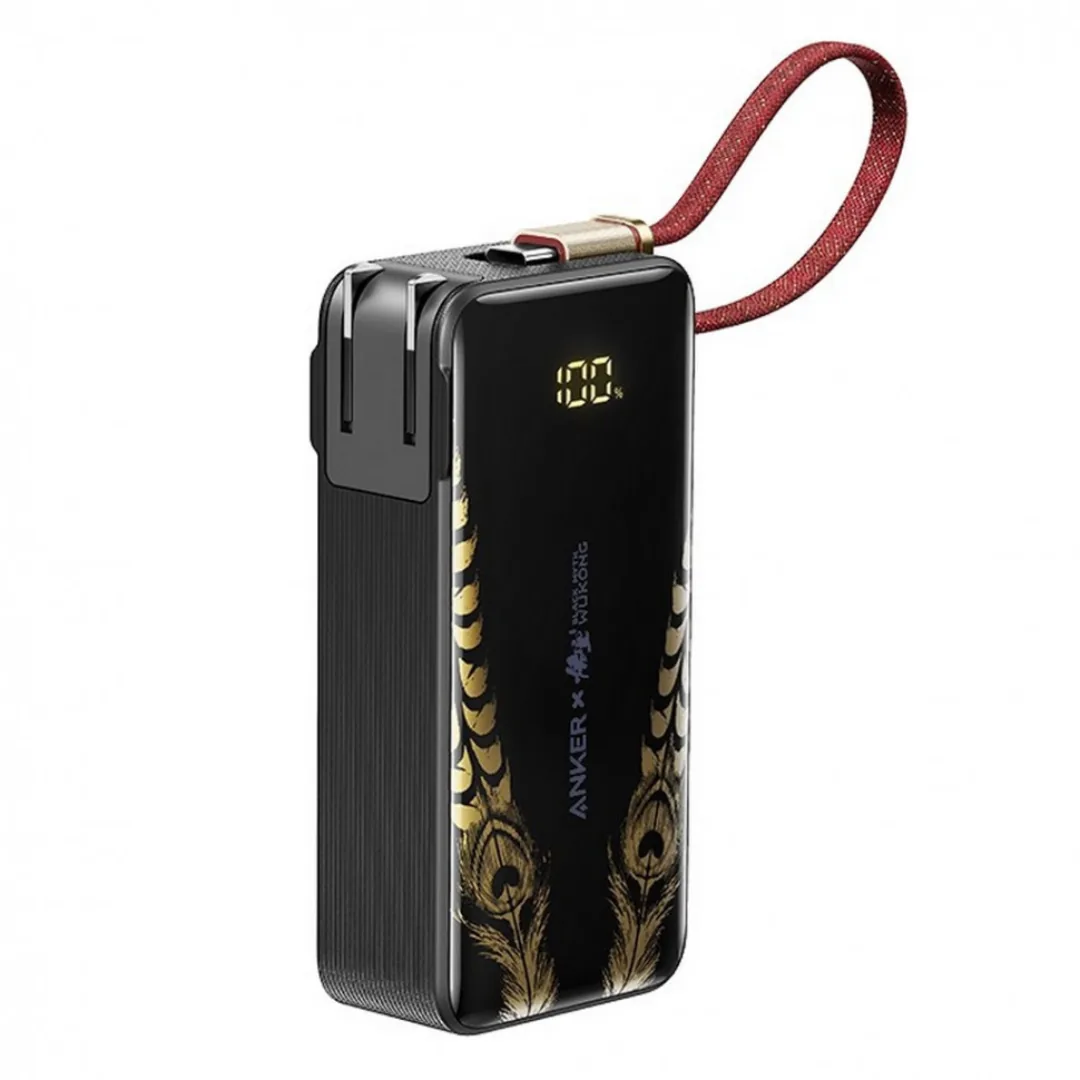
And if your real problem is not the weight but forgetting the cable itself, a new arrival solves exactly that: the Anker × Wukong 3-in-1 at 2,999 EGP keeps the same 10,000mAh capacity but adds a built-in USB-C cable and a built-in wall plug — power bank, wall charger, and cable in a single unit, with nothing extra to forget.
✅ Anker PowerCore 10000 Available on CairoVolt
Anker PowerCore 10000mAh — 1,300 EGP with 18-month warranty and verification code. 100% authentic. Need bigger capacity: ZOLO A110E 20K at 1,730 EGP. Delivery across all governorates.

CairoVolt Team
Tech Editor
Frequently Asked Questions
How many times does the Anker PowerCore 10000 charge an iPhone 17 Pro Max?▼
Does the Anker PowerCore 10000 support fast charging?▼
Can I charge two phones at the same time from this power bank?▼
How long does the power bank itself take to recharge from empty?▼
Ready to Buy?
Browse available products and review specifications and CairoVolt warranty terms before ordering
Products Mentioned in This Article
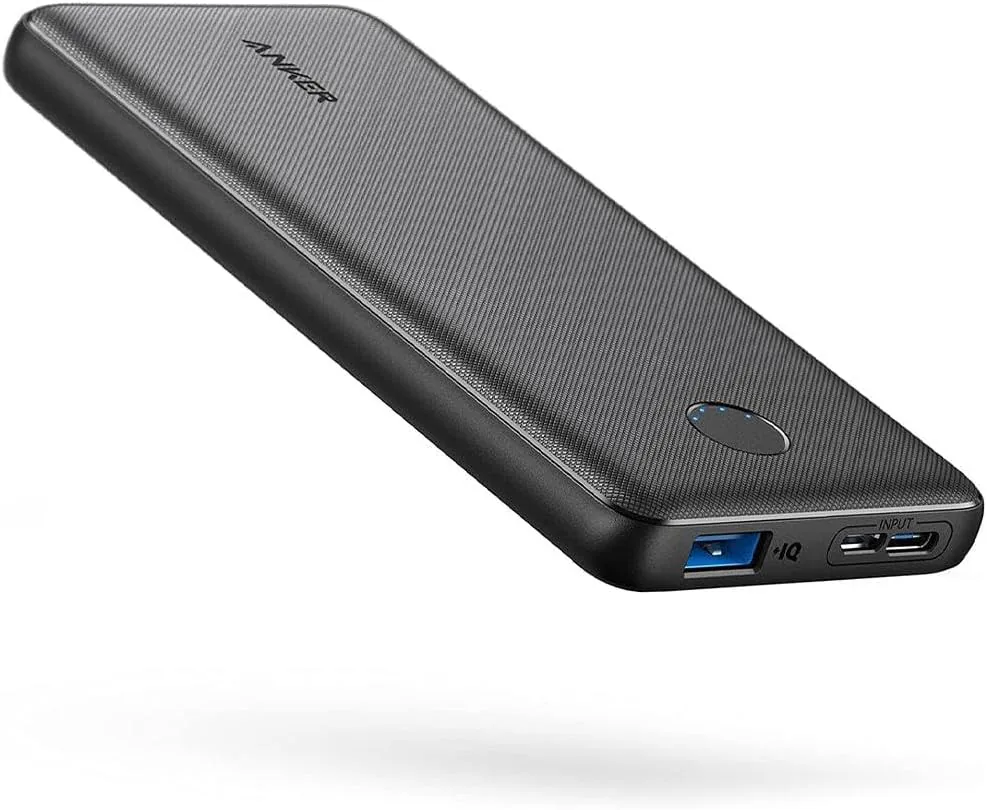
Anker PowerCore 10000mAh Power Bank
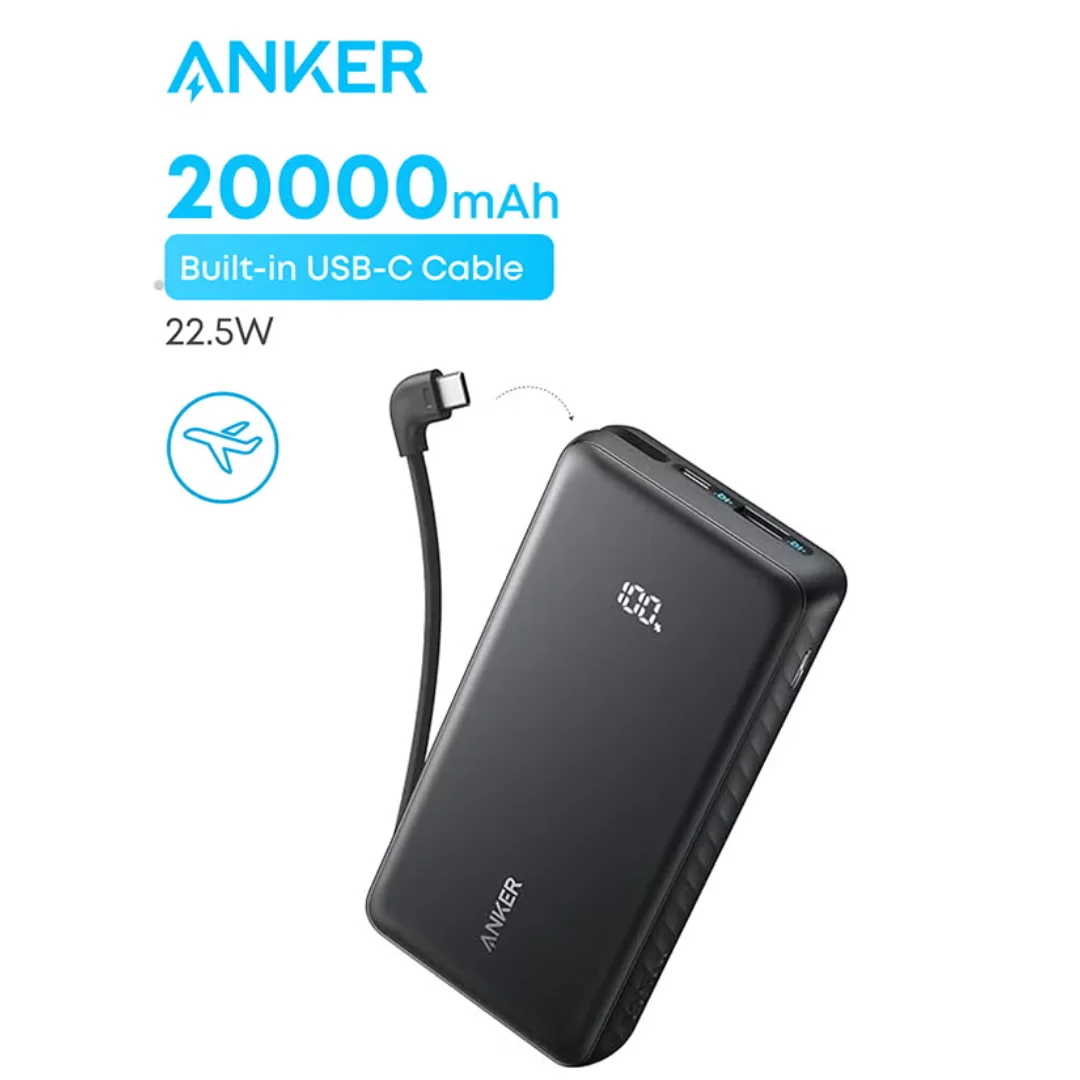
Anker ZOLO Power Bank 20,000mAh (22.5W) | Built-in Cable
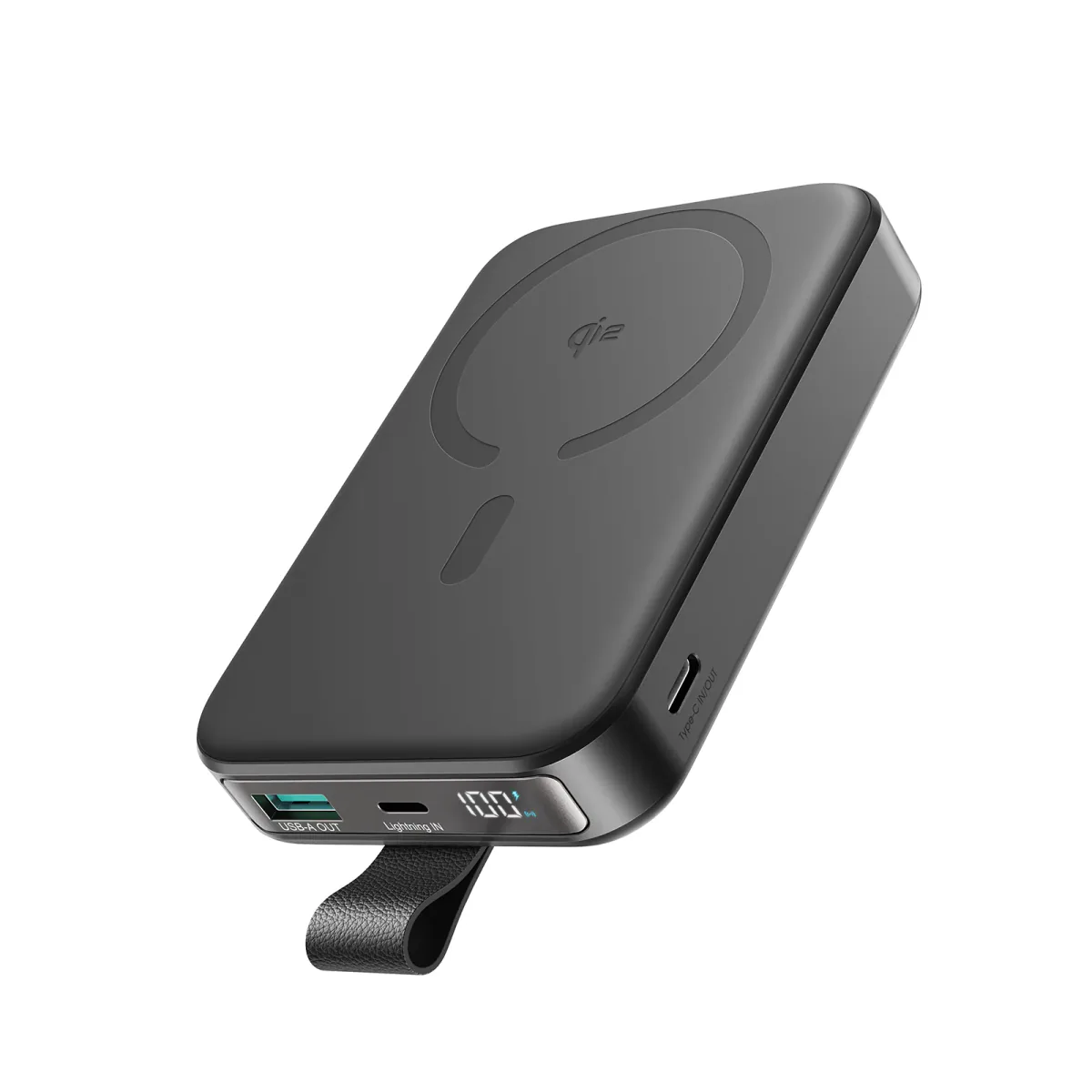
Joyroom 10000mAh Slim Power Bank | Dual USB | LED Display
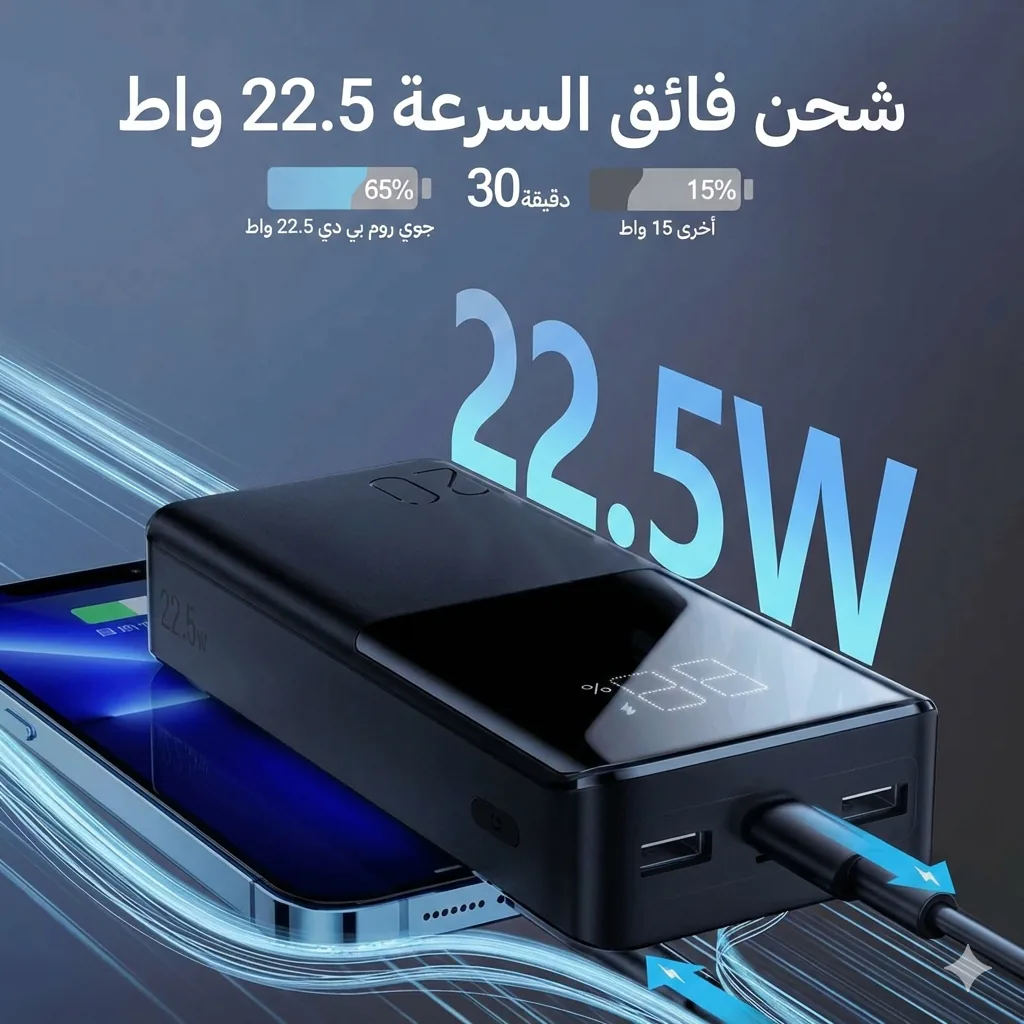
Joyroom 20000mAh Power Bank | 22.5W PD+QC | Triple Output
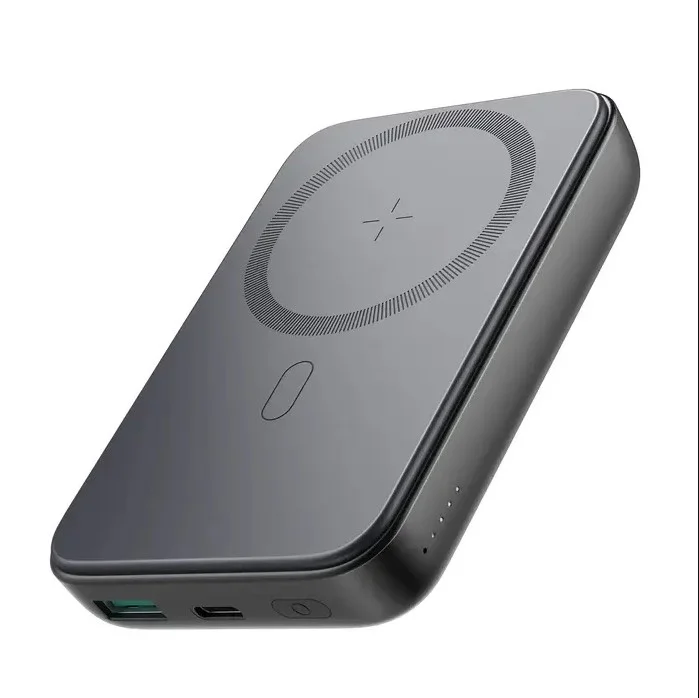
Joyroom MagSafe Power Bank 10000mAh | 15W Wireless + 20W Wired | Kickstand