Reverse Wireless Charging — Lifesaver or Battery Waste?
Draining your phone's battery to charge a friend's device? Let's break down the electromagnetics of reverse charging losses and how to use it safely.
Quick Take: Reverse wireless charging (e.g., Wireless PowerShare) is an inherently inefficient feature (losing 40% to 50% of energy as heat). This makes it extremely wasteful for charging other smartphones. However, it is highly useful in emergencies for low-power accessories like wireless earbuds (e.g., Joyroom JR-T03) and smartwatches, or as an overnight wireless charging pad when your phone is plugged into a wall outlet.
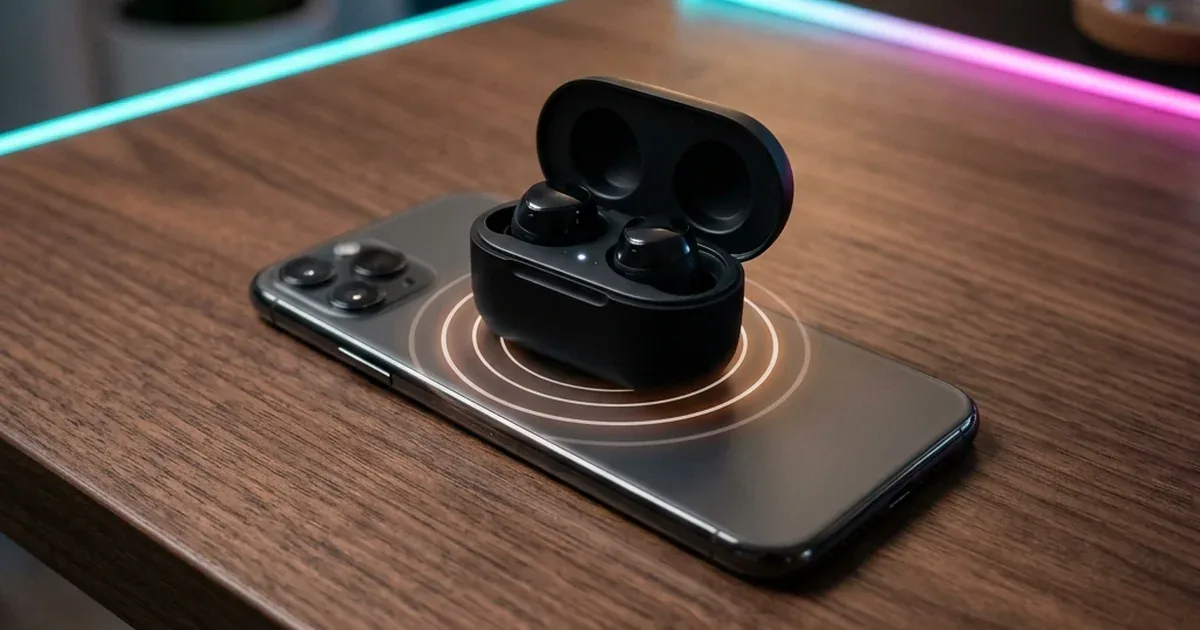
You are sitting with a friend at a local cafe in Shubra or El-Hussein. Your friend pulls out his wireless earbuds to listen to an important audio note, only to find them completely dead. He gets frustrated. In that moment, you look at him with the confidence of a university engineering professor and say: "Don't worry, my friend. I will revive your earbuds right now from the back of my phone!" You flip your flagship phone face down, enable Reverse Wireless Charging (Wireless PowerShare), place the earbud case on the back, and it starts charging. Your friend is amazed, viewing you as a magician. But is this feature practical? Or is it just a marketing gimmick that wastes your phone's battery and generates excessive heat? As an electronics engineer, I will explain the physics, the energy losses, and how to use this feature correctly.
1. The Physics of Double Conversion and Heat Losses
As an engineering professor, let's look at the science. Reverse wireless charging suffers from a physical limitation known as **Double Conversion Losses**. Energy does not transfer magically; it undergoes a complex path where efficiency is lost at every step:
- 🔋 First Conversion (Host Phone): Direct Current (DC) from your phone's lithium battery (typically 3.8V) is boosted and converted by an inverter circuit into high-frequency Alternating Current (AC) to drive the copper transmitter coil. This step loses about 15% of energy as heat.
- ⚡ Air and Case Gap Transmission: The magnetic field passes through the air gap and the phone case to reach the receiver. This gap results in flux leakage, costing another 15% in efficiency.
- 🔌 Second Conversion (Receiver Device): The receiver's coil captures the AC signal and passes it through a rectifier circuit to convert it back to DC at the appropriate voltage to charge the battery. This loses another 15%.
When summing up these efficiency losses, the **overall system efficiency peaks at just 50% to 60% terminally**. Mathematically, if the receiver device gains **1000mAh** of charge, your host phone drains by at least **2000mAh**! The remaining 50% of the energy is completely converted into heat radiating between the two touching devices.
The Role of the Qi Standard and LC Resonant Circuits in Reverse Power Regulation
Reverse wireless charging leverages the universal Qi standard to ensure safety and cross-brand compatibility. The transmitter coil in the host phone emits periodic electromagnetic ping signals to detect any nearby receiver coils. Once a compatible accessory or smartphone is placed on the back glass, the LC resonant circuit establishes mutual inductance.
The host phone's microcontroller dynamically modulates the transmission frequency (typically ranging from 110 kHz to 205 kHz) based on digital feedback packets sent by the receiver. This closed-loop regulation prevents overcurrent and maintains stable voltages. However, due to the tight space constraints inside smartphones, there is no room for active cooling or heat sinks. The heat generated by the resonance remains trapped, leading to high thermal losses compared to desktop charging stands with active cooling fans.
2. When is Reverse Wireless Charging Actually Useful?
Despite the high losses, reverse wireless charging is not useless. It is highly practical in specific scenarios where battery sizes are small:
Charging Smart Accessories
An individual earbud battery is typically rated at 30mAh to 45mAh, while its companion charging case holds a capacity between 300mAh and 450mAh. Providing a full charge to these micro-batteries represents a negligible load on your host smartphone's large lithium pack. For instance, if your phone has a 5000mAh battery, fully charging a dead earbud case will only deplete your phone's power by roughly 8% to 10% after accounting for induction and conversion losses. This makes the feature highly practical for travelers, outdoor runners, and professionals who need a quick emergency top-up for their smartwatches and audio accessories during their daily commutes.
Batteries inside wireless earbud cases like the Joyroom JR-T03 Wireless Earbuds or smartwatches are tiny, ranging between **250mAh and 400mAh**. Fully charging these accessories from your host phone (with a 5000mAh battery) will only drain your phone's battery by **8% to 10%** only (with full thermal offset). In this scenario, the feature is highly practical and convenient.
Power Pass-Through Mode While Traveling
When traveling, you can plug your host phone into a wired wall charger overnight, flip it over, and enable reverse wireless charging for your smartwatch or earbuds. The phone acts as a smart wireless charging pad powered directly by the wall outlet, saving you from carrying extra charging docks in your suitcase.
3. When is Reverse Wireless Charging a Waste of Battery?
The biggest engineering mistake is attempting to charge **another smartphone** wirelessly. Modern phone batteries are huge (4500mAh to 5000mAh). Since the maximum output of reverse wireless charging is capped at just **4.5W to 5W**, giving a friend's phone a 20% boost will require:
- ⏱️ Over two hours of keeping both phones perfectly aligned and untouched.
- 🥵 Significant thermal buildup in both devices, which degrades battery chemistry.
- 🔋 Draining **40% to 50%** of your host phone's battery just to deliver a 20% charge to the receiver.
This is an extremely inefficient use of stored energy, and you should use a physical cable instead.
Thermal Battery Degradation Risks
During reverse wireless charging, the host phone's internal inverter circuits work at maximum capacity to generate the magnetic field. This continuous draw heats up the motherboard and battery. Sustained temperatures above 42°C degrade the active materials within lithium cells, accelerating battery health decay and shortening the overall lifespan of both devices.
4. Alignment Challenges and Air Gaps
Unlike desktop wireless chargers that feature alignment magnets (MagSafe/Qi2), the back of your smartphone is flat and lacks magnets to align accessories. This presents a physical alignment challenge. Any minor offset of the earbud case from the exact center of the charging coil drops efficiency to **20%** or less, converting almost all power into heat. The devices must be placed on a completely flat surface and left undisturbed.
Mechanical Stability and the Impact of Motion on Reverse Inductive Coupling
Attempting to use reverse wireless charging while traveling in a car, train, or bus is mechanically impractical. The constant motion and road vibrations cause the small accessory, like an earbud case, to slide across the smooth glass back of the host phone. This continuous sliding breaks the magnetic alignment, forcing the controller chips to repeatedly restart the digital handshake every few seconds. These frequent connection resets draw high current spikes to re-establish the induction field, causing rapid thermal spikes in the phone's motherboard. Engineering-wise, charging reverse-wirelessly during motion or vibration degrades the circuitry and should be avoided in favor of wired or stationary options.
5. More Efficient Alternatives
If you travel frequently, relying on reverse wireless charging is not a sustainable solution. Better alternatives include:
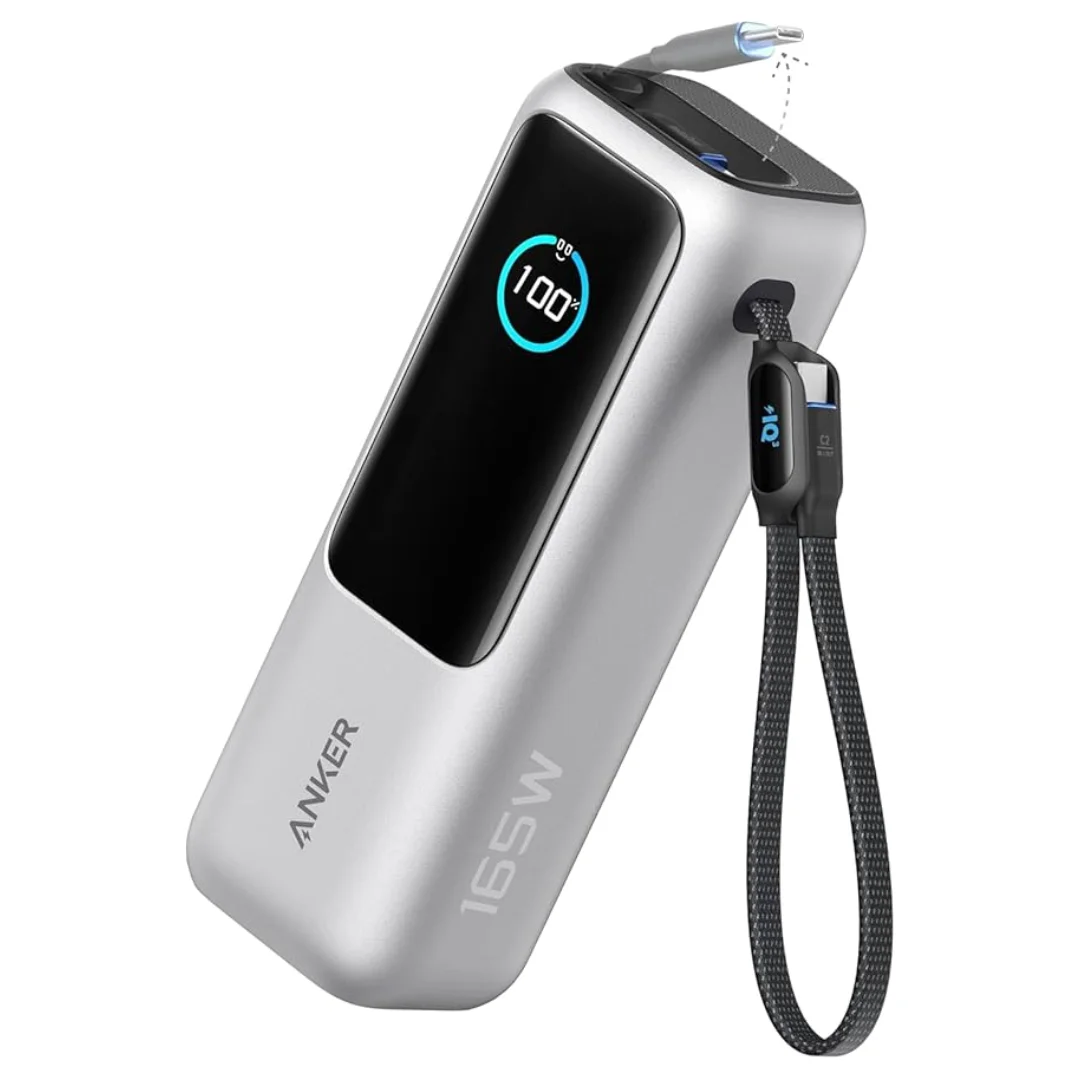
- 🧲 Slim Magnetic Power Bank: Such as the Joyroom Magnetic Power Bank 10000 or Anker 622 MagGo, which offer dedicated coils for efficient charging.
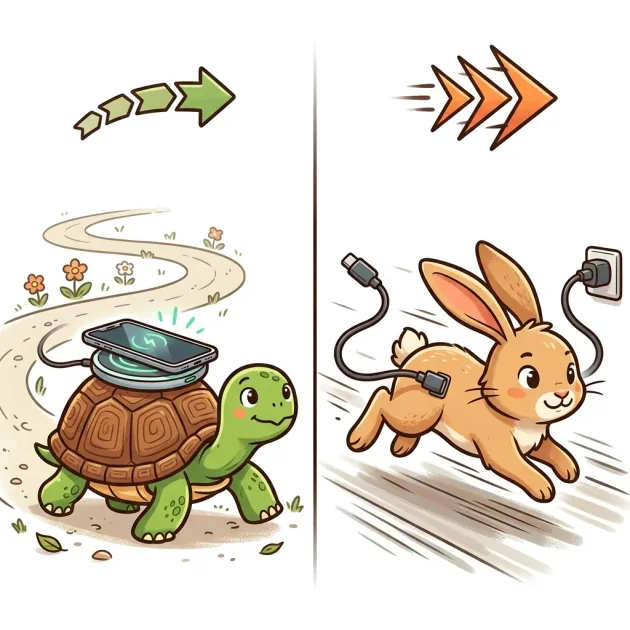
- 🔌 Wired Reverse Charging: Connecting the two devices directly with a USB-C to USB-C cable. This delivers over **90% efficiency** and up to 10W of power with virtually no heat.
6. Efficiency Table by Device Type
| Receiver Device Type | Approximate Battery Capacity | Host Phone Drain Rate | Practicality Rating |
|---|---|---|---|
| Wireless Earbuds Case | 300 - 400 mAh | ~ 6% to 8% | Excellent & Highly Practical |
| Smartwatch | 250 - 350 mAh | ~ 5% to 7% | Excellent & Highly Practical |
| Another Smartphone | 4000 - 5000 mAh | ~ 80% to 100% | Poor & Wasteful |
7. Verdict and Final Advice
Reverse wireless charging is a technologically impressive feature, but it is bound by the laws of thermodynamics. Its low efficiency and high heat generation make it suitable only for small accessories like smartwatches and earbuds in emergency situations. For daily charging, a portable power bank or a wired connection remains the smarter and safer choice for your battery.
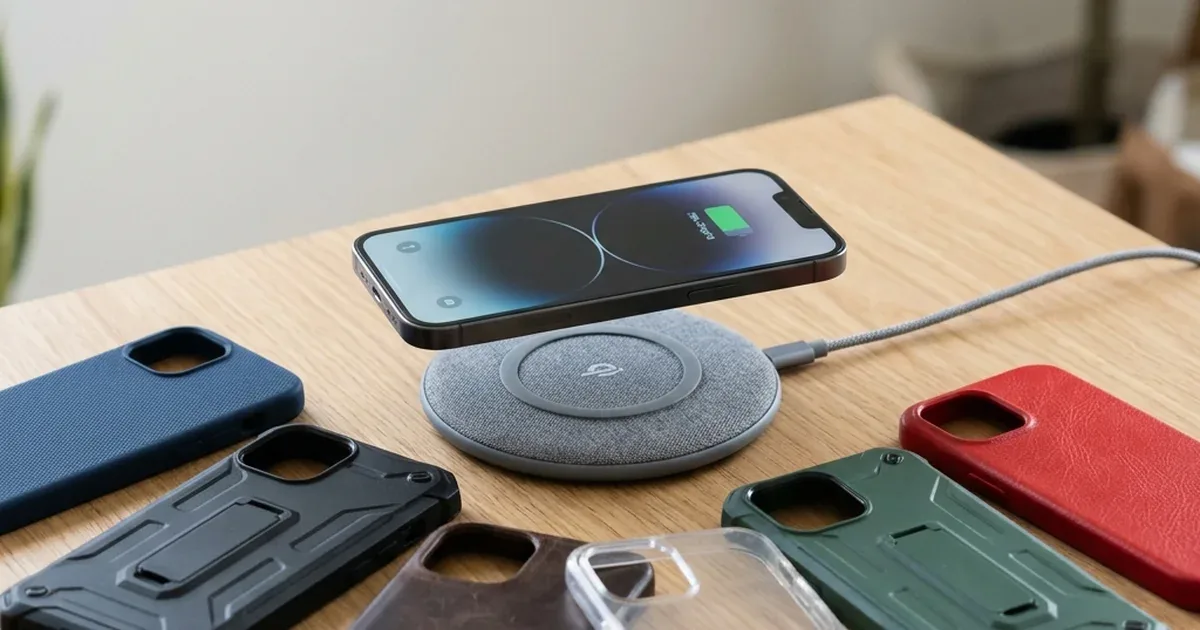
To learn more about how cases and metal rings affect wireless charging efficiency and Foreign Object Detection, read our guide on how phone cases affect wireless charging performance to keep your hardware running safely.

CairoVolt Editorial Team
Content team reviewing specifications and buying guides
The CairoVolt team reviews model numbers, specifications, and compatibility, and updates information when better data is available. Estimates are labeled as calculations, and readers can report information that needs correction.
Frequently Asked Questions
Does using reverse wireless charging damage my phone's battery?▼
Why does reverse wireless charging turn off automatically at 30%?▼
Can I charge two wireless accessories on the back of my phone simultaneously?▼
Is wired reverse charging through a cable more efficient?▼
Ready to Buy?
Browse available products and review specifications and CairoVolt warranty terms before ordering
Related products
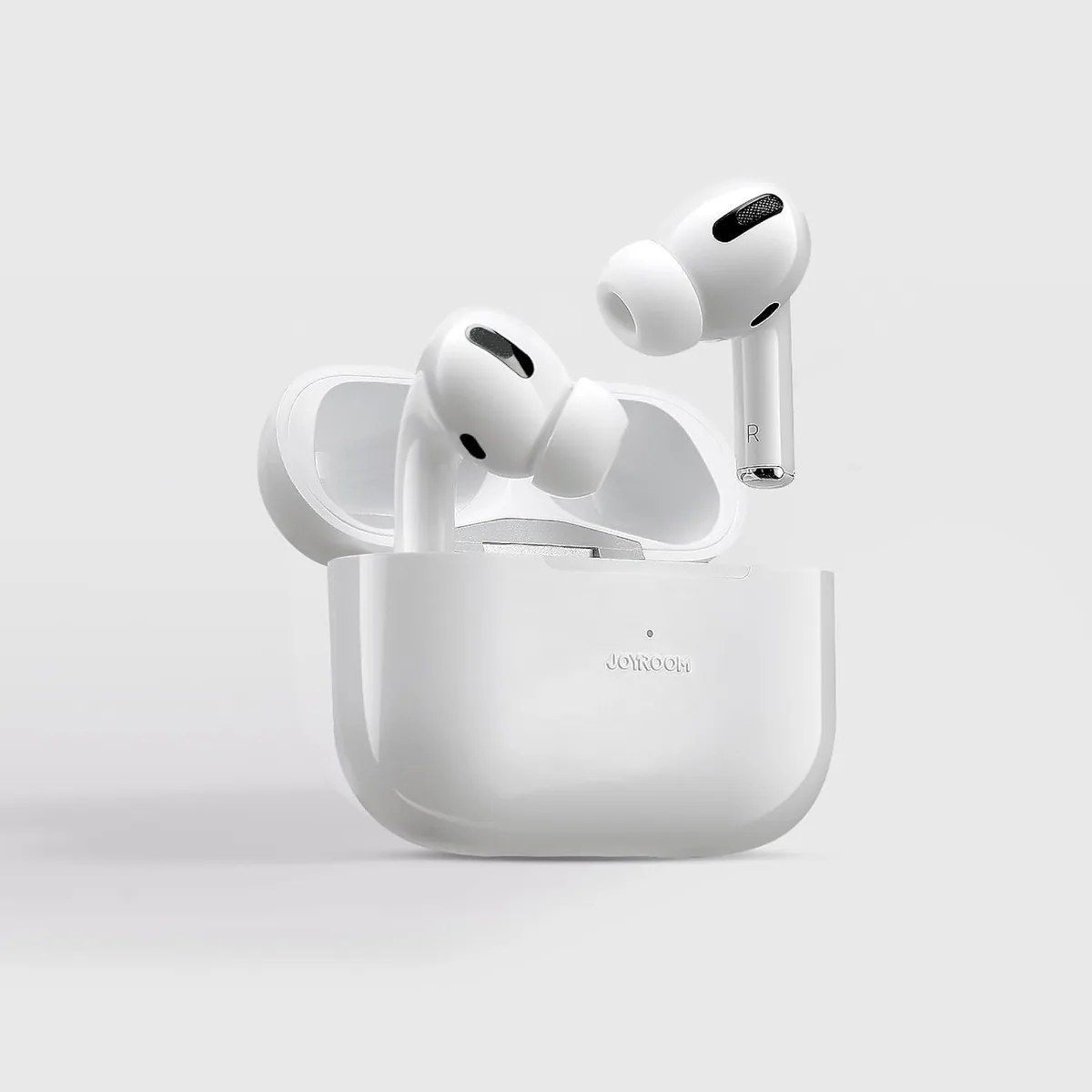
Joyroom JR-T03 Wireless Earbuds | 20H Battery | Bluetooth 5.0
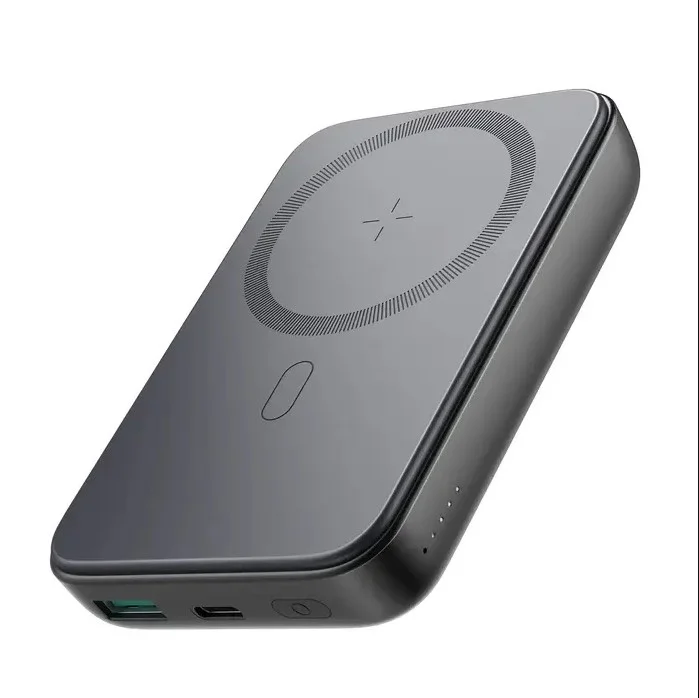
Joyroom MagSafe Power Bank 10000mAh | 15W Wireless + 20W Wired | Kickstand
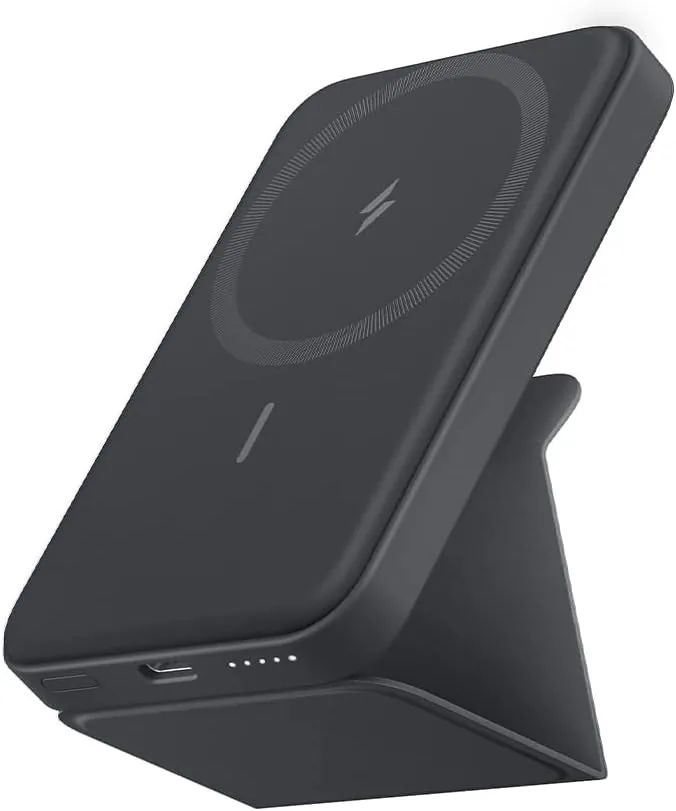
Anker 622 Magnetic Battery (MagGo) | MagSafe | Foldable Stand
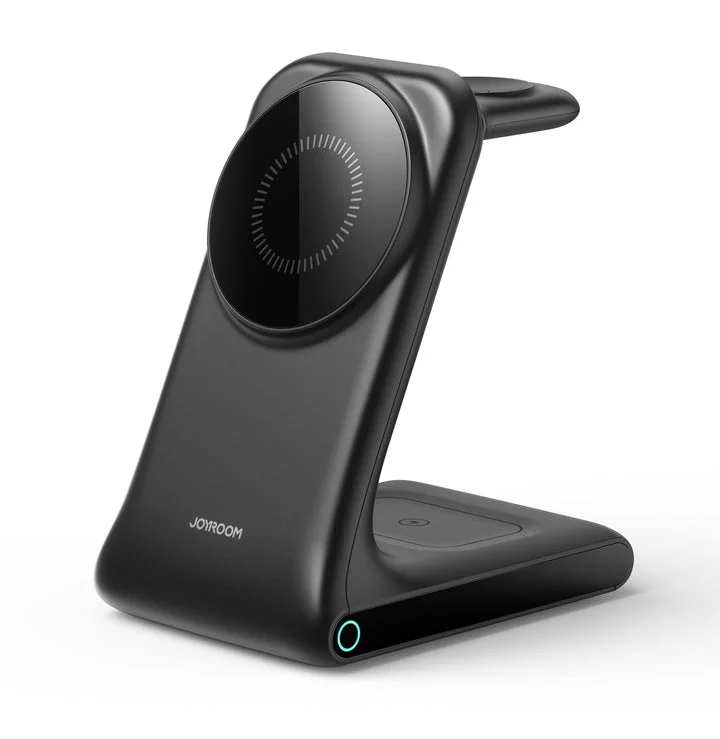
Joyroom 3-in-1 MagSafe Station | iPhone 17 + Apple Watch + AirPods | 15W | Aluminum
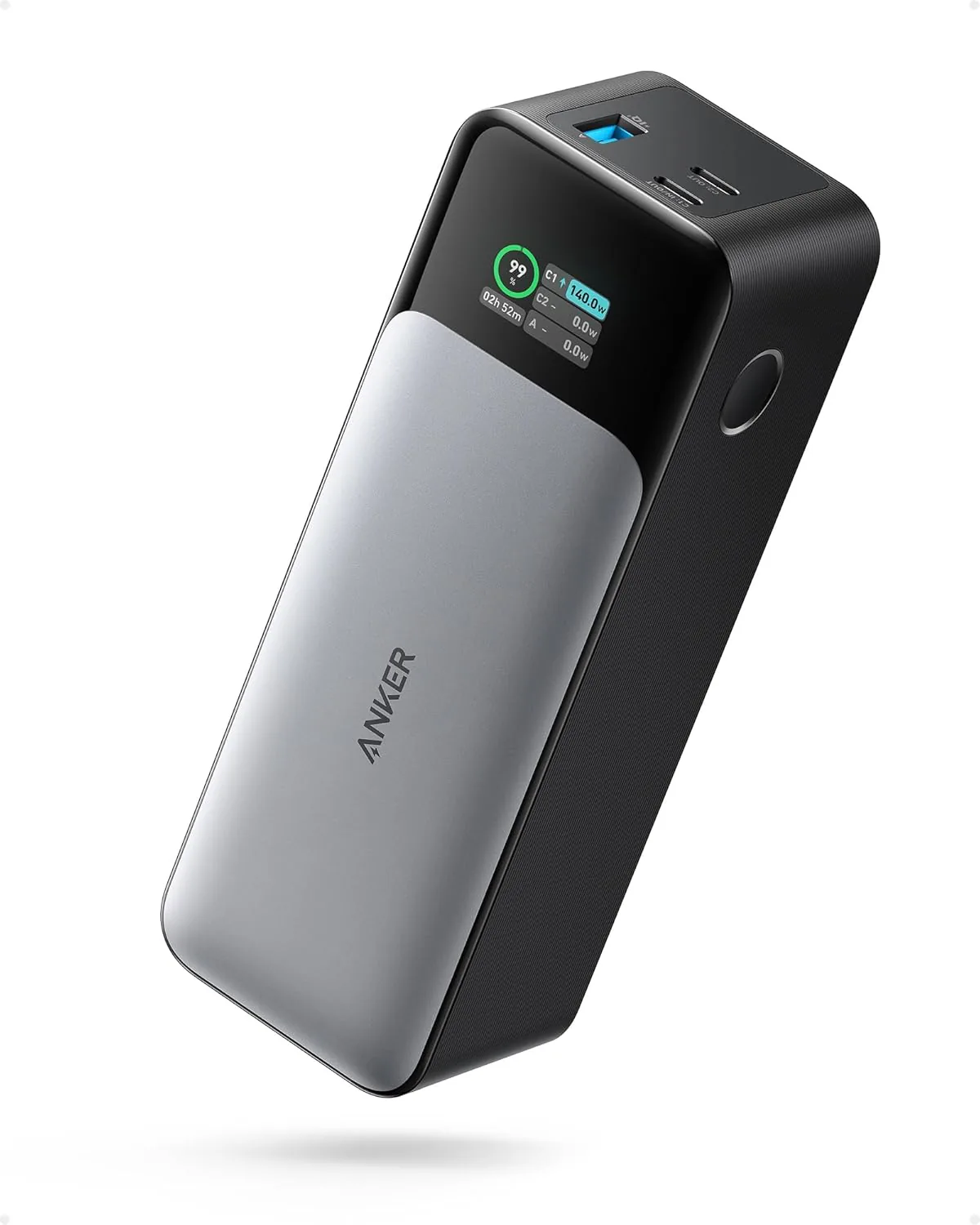
Anker 737 Power Bank (PowerCore 24K, A1289011) | Listed 140W PD 3.1 | 24,000mAh