
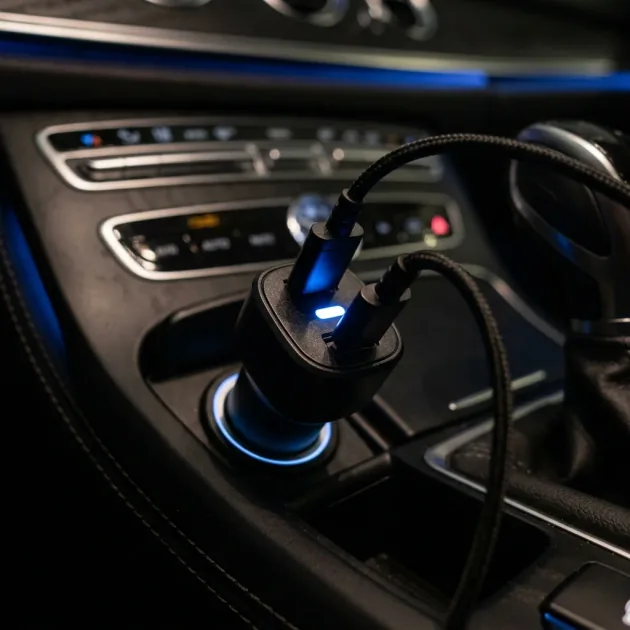
 CairoVolt Team
Dual USB-C Car Chargers — Anker PowerDrive & PowerIQ Fast Charging Review
Searching for a reliable dual USB-C car charger? We review the Anker PowerDrive series with PowerIQ 3.0, covering its safety features and manufacturer-rated charging speeds.
TL;DR: A car charger with a USB-C PD port is what fast-charges modern phones in the car, and the ports share power when two devices are connected. Example: the Anker A2741 (USB-C up to 30W PD/PPS + USB-A) at EGP 530 — in our test it peaked at 29.3W on USB-C. Anker lists MultiProtect against over-current and overheating.
Many drivers in Egypt spend hours commuting daily through Cairo and Alexandria's congested streets. During these long drives, a car charger serves as the primary lifeline for smartphones running GPS navigation and media streaming apps. However, using legacy USB-A car chargers often results in extremely slow charging speeds. In fact, if the phone is running demanding navigation apps, a low-power charger may only slow down the battery drain rather than actually recharging the device.
To solve this, a new generation of dual USB-C car chargers has emerged. Anker is one of the well-known brands in this segment, with its PowerDrive chargers and PowerIQ technology. Charging a phone inside a car, however, is fundamentally different from charging it at home; vehicle electrical systems are highly unstable, and low-quality chargers can cause permanent damage to your devices. In this comprehensive review from CairoVolt, we analyze Anker's charging tech, highlight the dangers of cheap unbranded car adapters, and compare the options available in the Egyptian market based on their published specifications.
💡 Quick Answer: A car charger with a USB-C PD port is what fast-charges modern phones, and the ports share power when two devices are connected. Example: the Anker A2741 (USB-C up to 30W PD/PPS + USB-A) at EGP 530 — in our test it peaked at 29.3W on USB-C.
1. The Need for Dual USB-C Port Architecture in Modern Vehicles
Traditional USB-A car adapters are typically limited to a fixed 5V/1A (5W) output. This is insufficient to charge modern smartphones while they are actively running GPS and cellular data. Modern USB-C ports utilize the USB Power Delivery (PD) standard, which operates at higher voltages (9V or 12V), enabling output levels of 20W up to 45W per port.
Having a dual USB-C layout provides several technical benefits:
- Power Budget: Two devices can charge at once, but check the total rating, not just each port. Some chargers split one budget between the ports (the Anker A2741 shares 30W in total), while others list a fixed split (the Anker A2732 lists 20W USB-C + 15W USB-A).
- Compatibility: It matches the modern USB-C to USB-C and USB-C to Lightning cables bundled with new phones.
- Elimination of Port Bottlenecks: Older mixed chargers (USB-C + USB-A) often disable fast charging entirely when both ports are occupied, splitting a single 15W rail between the two devices.
2. Decoding Anker's Technologies: PowerIQ 3.0 & VoltageBoost
Anker integrates several safety and efficiency features into its automotive charging accessories:
- PowerIQ 3.0 (PIQ 3): A custom controller chip that negotiates the optimal charging profile for any connected device. It supports USB Power Delivery, Qualcomm Quick Charge, and Samsung PPS under a single port.
- VoltageBoost: Long cables or poor-quality conductors suffer from line resistance, which drops the charging voltage at the phone's port. VoltageBoost compensates for this resistance by slightly raising the output voltage, maintaining fast charging rates over long distances.
- MultiProtect System: Anker's multi-layer safety system, which includes input over-voltage protection, output current limiting, and temperature controls to prevent overheating inside the dashboard.
3. The Technical Dangers of Counterfeit Car Chargers
A car's electrical system is a noisy electrical environment. The alternator's output voltage fluctuates dynamically between 12V and 14.8V depending on engine RPM and auxiliary loads like air conditioning. In addition, starting the engine produces massive voltage spikes. Cheap counterfeit chargers sold by street vendors lack voltage regulation circuitry, passing these electrical spikes directly to the connected smartphone.
This leads to several failure modes:
- Motherboard Power IC Burnout: The sudden voltage spike that occurs when starting the engine (ignition surge) can instantly damage the phone's charging circuitry, preventing the device from charging or powering on.
- Dashboard Fire Hazard: Cheap clones are built with low-grade plastics that melt easily under high thermal loads, which can bridge the 12V input rails and spark fires inside the cigarette lighter socket.
- Cell Degradation: Unfiltered electrical noise damages the battery chemistry, leading to swelling and shortened lifespans.
4. Technical Specs Comparison Table
Here is how the car chargers compare, based on published specifications and CairoVolt bench measurements:
| Specification | Anker A2741 (30W) | Joyroom JR-CCL05 (4-in-1) | Generic Counterfeit Charger |
|---|---|---|---|
| Output | USB-C up to 30W PD/PPS + USB-A up to 22.5W (Anker-listed), with 30W shared in total when both ports are used — we measured 29.3W on USB-C | Retractable USB-C cable up to 30W + Lightning cable + USB-C port + USB-A port; the listed 69W is the sum of outputs — we measured 29.1W on the USB-C cable | Not measured — often far below the label |
| Protection | MultiProtect per Anker — we measured over-current cut-off above 3.5A | We measured over-current cut-off above 3.5A on the USB-C cable | Often no real protection |
| Price | EGP 530 | EGP 513 | 80–150 EGP (approximate market range, varies by seller) |
5. How to Spot Counterfeit Car Chargers in the Egyptian Market
Preserving your vehicle's wiring harness and your mobile phone starts with avoiding fake adapters. Check these indicators before purchasing:
- Weight and Structural Solidity: Genuine car chargers (even plastic models) use heavy internal copper inductors and thick spring contacts. They should feel solid and dense. Clones feel hollow and light.
- Spring Tension of Side Contacts: The positive and negative spring contacts must be rigid and require firm pressure to compress. This ensures a tight fit in the cigarette lighter socket, preventing arcing (electrical sparking) over bumpy roads. Fake units feature weak springs that rattle, causing the charging connection to drop repeatedly.
- Verification Code: offline-sold Anker products may carry a scratch-off security code (16 or 20 digits) that you can check at anker.com/verify; Anker says a missing label does not mean a product is counterfeit. Buy from a seller that issues an invoice and a written warranty in its own name — packaging or a barcode alone does not prove authenticity.
6. Practical Guidelines for Safe Car Charging
To maximize safety and battery lifespan while charging on the road, follow these practices:
- Unplug Before Engine Start: Avoid plugging your phone into the charger before turning the ignition key. Starting the engine draws massive current, prompting the alternator to spike, which can bypass the charger's safeguards. Start the car first, then connect the phone.
- Do Not Expose to Summer Heat: Never leave charging phones or power banks on the dashboard under direct sunlight during Egypt's summer days. Dashboard temperatures can exceed 70°C, causing battery swelling and wire insulation failure.
- Use Short Cables: Restrict cable lengths to 0.9m to minimize resistance and prevent cord clutter near the gear shifter.
7. Understanding the Heat Dissipation Mechanisms in Metal Car Chargers
Car chargers are inserted into a cigarette lighter socket, which is an enclosed, unventilated space behind the center console. At the same time, the charger may be delivering 40W to 60W of continuous power to charge two devices, which generates a large amount of heat on the small internal PCB. Silicon-based, low-grade chargers trap this heat inside, leading to component failure. Chargers with a metal housing use the casing as a heat sink, absorbing heat from the internal MOSFETs and dissipating it into the metal socket housing. This ensures that the charger operates within safe temperature limits, maintaining maximum charging speeds without thermal throttling.
8. Voltage Ripple Suppression and Alternator Noise Filtration Heuristics
A vehicle's electrical grid is flooded with electrical noise caused by the alternator, spark plugs, and air conditioning compressor. This noise manifests as voltage ripples on the 12V DC line. In low-quality chargers, these ripples pass directly into the phone's charging circuit. Authentic chargers from Anker and Joyroom utilize large electrolytic capacitors and high-frequency inductors to filter out this noise. This voltage ripple suppression ensures that the DC voltage delivered to your phone is flat and stable, protecting the delicate PMIC from electrical wear.
9. Vehicle Battery Life and Smart Power Management Guidelines
Some drivers worry that charging multiple mobile devices can place an excessive burden on the vehicle's battery. In reality, charging two flagships at a combined rate of 40W draws roughly 3.3 Amps from a 12V car battery. This is a negligible load that the vehicle alternator can easily handle while the engine is running. However, charging devices while the engine is turned off is a different matter. If the vehicle is parked for several hours, leaving devices connected to an active cigarette lighter socket can drain the starter battery, potentially leaving you stranded. Always disconnect your devices once the vehicle engine is turned off.
10. Electromagnetic Interference (EMI) with Car Radio and Keyless Entry Systems
A common but rarely discussed issue with cheap car chargers is the radio static or interference that occurs when you tune into FM/AM stations. In some modern vehicles, poor-quality chargers can even interfere with keyless entry systems, causing the key fob's wireless signals to be blocked or weakened. This can be extremely frustrating, especially if you rely on the radio for traffic updates during your morning commute or if your vehicle fails to unlock when you approach it with the key fob in your pocket. This happens because low-cost DC-to-DC buck converters operate at variable switching frequencies without any electromagnetic shielding, emitting radio frequency noise. High-quality car adapters from brands like Anker and Joyroom are built with metal shields and internal inductors designed to suppress electromagnetic interference (EMI), ensuring your radio reception remains crystal clear and your keyless entry system works reliably.
In conclusion, choosing a high-quality dual USB-C car charger from Anker or Joyroom is a vital step to ensure fast charging speeds and protect your phone's battery health. Avoid generic street adapters to guarantee safety. And if you would rather skip cables in the car entirely, we have just stocked the Anker Magnetic Wireless Car Charger at EGP 1,200 — a magnetic mount with built-in wireless charging and a detachable pad that keeps charging your phone even after you step out of the car.
CairoVolt Team
Tech Editor
Frequently Asked Questions
Can leaving the car charger plugged in drain my car battery overnight?▼
Why does my car charger disconnect over bumps?▼
Can I charge a laptop using a dual USB-C car charger?▼
Does fast charging in the car overheat the phone more than home charging?▼
Ready to Buy?
Browse available products and review specifications and CairoVolt warranty terms before ordering
Related products
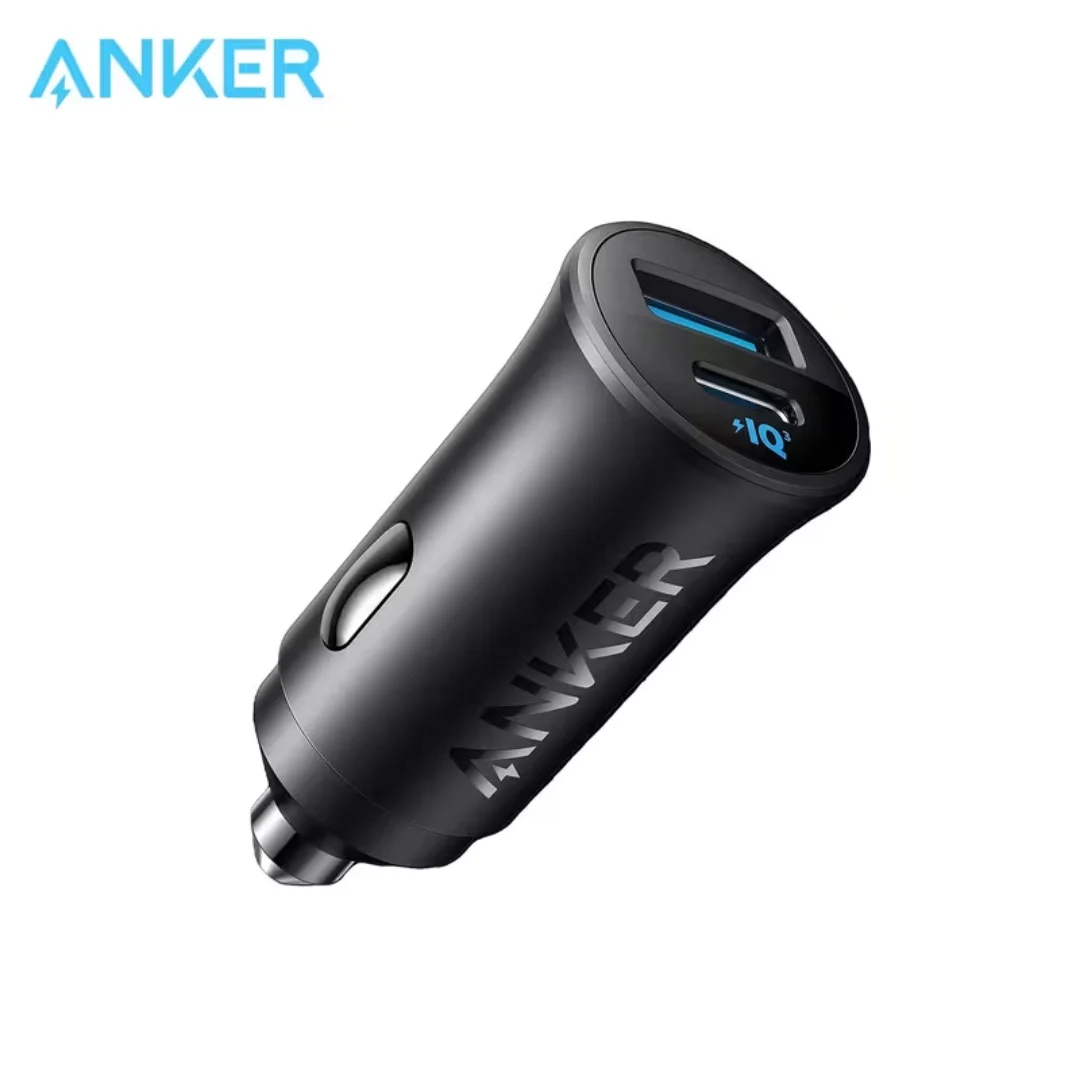
Anker 30W Mini Car Charger (A2741) | USB-C 30W PD + USB-A 22.5W | Ultra-Compact
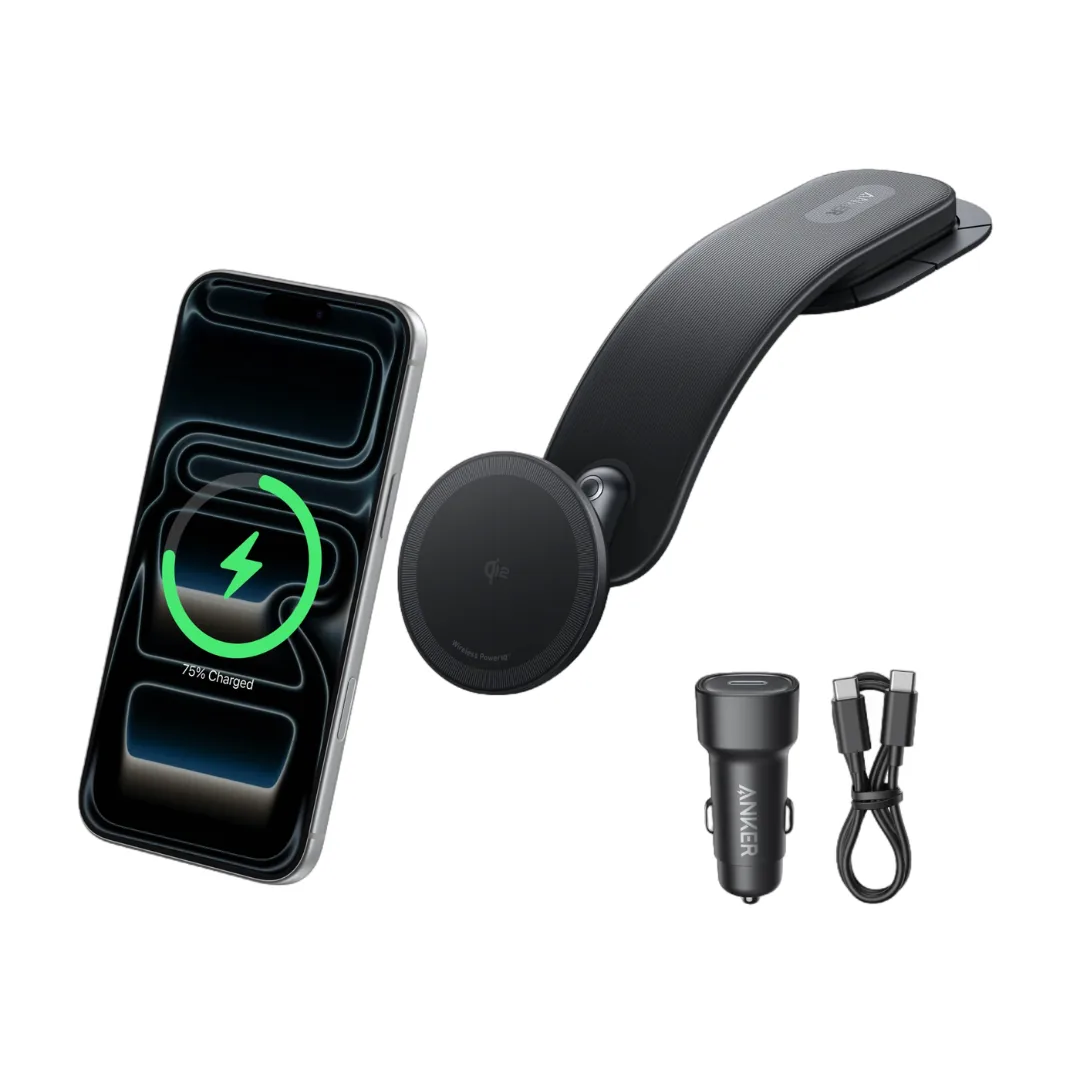
Anker Nano Magnetic Wireless Car Charger (A2216) | Qi2 15W | 14N Bendable Dashboard Mount
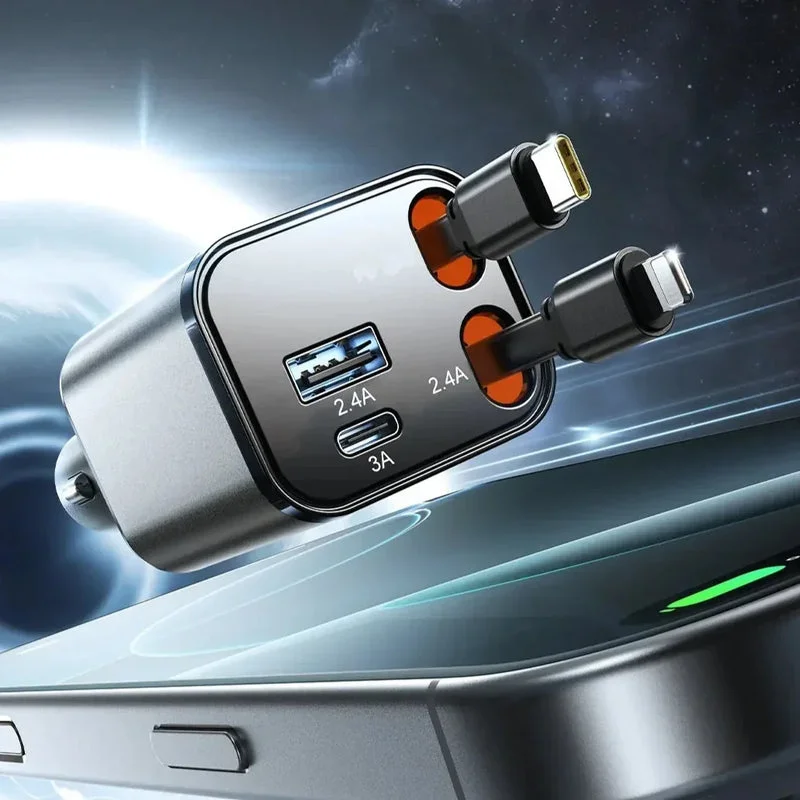
Joyroom JR-CCL05 Retractable 4-in-1 Car Charger 69W | 2 Cables + 2 Ports
Related Articles
Best iPhone Charger Guide — MFi Certified vs Non-Certified & Real Charging Speeds
Read more →
45W Charger Guide — Anker Nano 45W vs Samsung Original: Which is Better?
Read more →