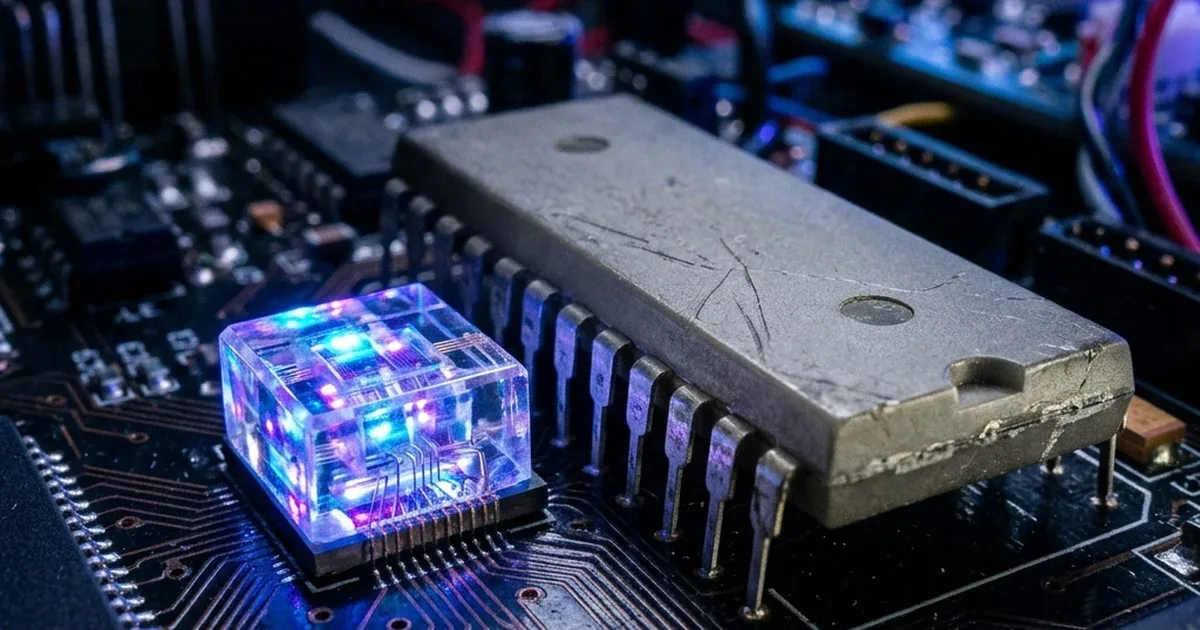
What is GaN (Gallium Nitride) Simply Explained: The Future of All Chargers
Keep hearing about GaN chargers but do not know what it means? We explain the science behind Gallium Nitride and why it shrunk our power bricks.
Quick Take: A GaN charger uses gallium nitride instead of silicon in its power-conversion parts, which allows a smaller adapter at the same wattage: GaN has a bandgap of about 3.4 eV versus 1.1 eV for silicon, so it handles higher voltage with less heat loss. Actual heat and efficiency vary by model, so compare chargers by measurements, not material alone.
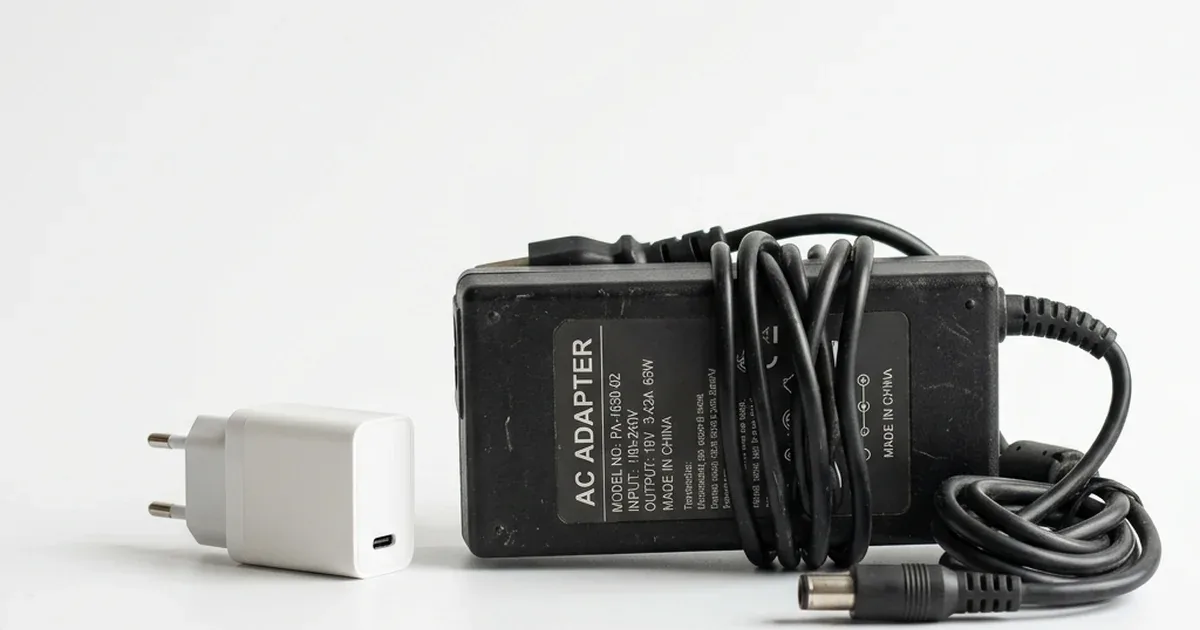
If you take a look at the drawer where you keep your old charging accessories at home, you will likely find it filled with heavy, bulky black plastic bricks. The laptop charger that looks like a brick, the massive tablet adapter, and the phone chargers that get so hot you could practically fry an egg on them. For years, we accepted this as a simple fact of tech life: "If you want a powerful charger, you must carry a brick in your backpack." But in recent years, a new hero has emerged in the electronics industry, completely rewriting the rules. Suddenly, we are seeing tiny power adapters, no larger than a key fob or a lemon, delivering 65W or even 100W of power, charging your laptop, phone, and earbuds simultaneously without overheating.
The secret behind this technological revolution is not magic; it comes down to three letters printed on the charger's box: GaN. This material has arrived to end the era of silicon, which reigned supreme for over 70 years, and open the door to a new era of charging speed and efficiency. Here at CairoVolt, today's explainer is titled: "The Beautiful Physics Behind Your Pocket's Magic Charger." We will explain in simple terms, without complex engineering jargon, what Gallium Nitride actually is, why silicon is retiring, and the incredible benefits you get when you invest in a quality GaN charger to protect your expensive devices and clean up your backpack.
💡 Quick Technical Summary: GaN chargers use gallium nitride as the semiconductor instead of traditional silicon. GaN has a wider bandgap (3.4 eV versus 1.1 eV for silicon), which lets it handle higher voltages with less heat loss — so manufacturers can fit the same wattage into a smaller adapter. Actual heat and efficiency vary by model and design.
1. The Silicon Crisis: Why Traditional Power Adapters Are So Bulky
Since the early dawn of modern solid-state consumer electronics in the 1950s, Silicon has been the dominant material of the global semiconductor industry. It remains the foundational element of almost all modern microelectronics, from supercomputer processors and CPU chips to the simple power transistors inside your smartphone charger. Silicon has served our technology incredibly well: it is highly abundant, cheap to manufacture in factories (being derived from pure desert sand), and extremely reliable. However, as modern mobile devices demanded faster fast-charging speeds (rapidly climbing from 5W to 45W, 65W, and even 120W), traditional silicon began hitting a strict physical and thermal wall.
Silicon's primary limitation lies in its internal resistance and switching efficiency. When you attempt to pass high electrical currents and high voltages through silicon transistors at rapid frequencies, the material begins losing a substantial portion of that energy as waste heat. The maximum efficiency of standard silicon chargers ranges between 80% to 85%. The remaining 15% to 20% of the electrical energy is converted entirely into heat, causing the charger casing to heat up significantly.
To prevent a silicon-based charger from melting or catching fire under these thermal loads, engineers had to make two compromises:
- 📐 Increase Casing Size: Expanding the physical surface area of the charger and adding heavy metal heatsinks to disperse the internal heat.
- 🛡️ Throttle Charging Speeds: Limiting charging wattage to maintain a safe operating temperature.
This created a bottleneck: to get faster charging speeds, consumers had to carry heavier, bulkier chargers. The industry needed a semiconductor material with superior physical properties, which led to the adoption of Gallium Nitride.
2. The Physics of GaN: What Makes It a Superior Semiconductor?
Gallium Nitride (GaN) is a binary semiconductor crystal composed of gallium and nitrogen atoms. The physical secret behind its exceptional performance is a concept known as a Wide Bandgap.
In materials science, the "bandgap" is the energy required for electrons to jump from a bound state (valence band) to a free, conducting state (conduction band) to conduct electricity. Traditional silicon has a narrow, limited bandgap of 1.1 electron-volts (eV), whereas Gallium Nitride (GaN) possesses a much wider and highly stable bandgap of 3.4 eV.
Here is what this wide bandgap means in practice:
- ⚡ Higher Voltage and Field Tolerance: GaN tolerates much stronger electric fields than silicon before electrical breakdown, which suits compact high-voltage designs.
- ⚡ Ultra-Fast Switching Frequencies: Electrons travel through GaN crystals much faster than they do through silicon, allowing the internal transistors to switch on and off millions of times per second. This high-frequency switching means the internal copper coils and capacitors can be shrunk to a fraction of their traditional size.
- ⚡ Higher Conversion Efficiency: GaN chargers lose a smaller share of power as heat than comparable silicon chargers; the exact figure varies by model and load — which is what helps the charger stay cooler in a smaller body.
Read our detailed technical guide comparing GaN vs. Silicon chargers to explore these efficiency curves in detail, and see also why GaN matters for chargers and our GaN charger technology guide for Egypt.
3. Head-to-Head Comparison: Silicon vs. Gallium Nitride
Based on published lab measurements, we summarized the physical and operating differences in this table:
| Technical Metric | Traditional Silicon Charger | Gallium Nitride (GaN) Charger |
|---|---|---|
| Bandgap Energy | 1.1 eV (Narrow) | 3.4 eV (Wide) |
| Switching Speed | Slow (limits component shrinking) | Faster (allows smaller components) |
| Power Conversion Efficiency | Lower (more heat loss) | Typically higher (less heat loss — the figure varies by model) |
| Operating Temperature | High (gets hot under heavy loads) | Relatively cooler at the same wattage — but still warms up under full load |
| Physical Size & Weight | Large and heavy | Compact and ultra-lightweight |
4. How Brands Like Anker and Joyroom Harness GaN Technology
Leading accessory brands have leveraged GaN to design an entirely new class of smart chargers. For example, Anker developed a proprietary technology suite called GaNPrime. This suite does not just use GaN transistors; it combines them with advanced power control microchips to distribute wattage dynamically among connected devices.
Imagine plugging a laptop, phone, and wireless earbuds into a single 65W GaNPrime charger. The adapter utilizes PowerIQ 4.0 to measure each device's power requirements. If your laptop needs 45W to charge at full speed, the charger allocates 45W to it and channels the remaining 20W to the phone and earbuds. As the laptop battery fills up, the charger dynamically reallocates more power to your phone, charging it faster.
Additionally, premium GaN chargers include active thermal monitoring systems like Anker's ActiveShield 2.0. This safety system monitors the charger's temperature millions of times a day. If it detects any abnormal heat buildup (due to poor ventilation or power line issues), it automatically throttles the power output to protect your devices. Learn more in our detailed analysis of how fast charging impacts battery health.
🔬 From CairoVolt's measurements
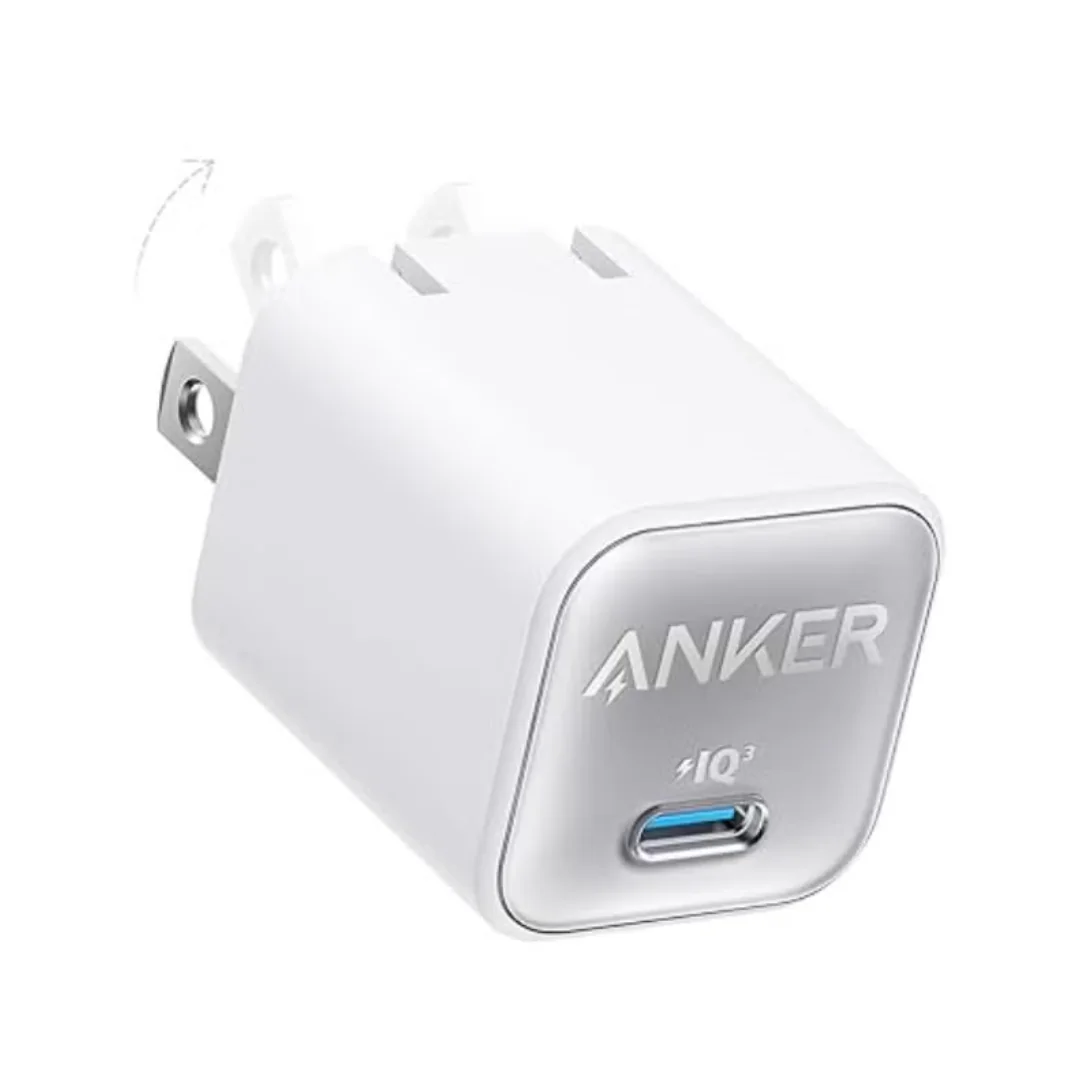
On our Anker GaN 30W charger (A2147) sample (CV-CH-A2147-001) the charger held 29.6W for 5 minutes on PPS, its surface reached 53.8°C after 15 minutes at about 29W (ambient 28.3°C), and it charged an iPhone 15 from 0 to 50% in about 27 minutes. We did not run a direct heat comparison against a silicon charger, so we do not publish a temperature-difference figure.
5. Five Reasons to Switch to a GaN Charger Today
If you are still using older silicon adapters, here are 5 practical reasons to upgrade to GaN:
- 🎒 One Universal Charger for All Your Devices: A multi-port 65W or 100W GaN charger can easily power your power-hungry laptop, tablet, smartphone, and portable accessories simultaneously, completely eliminating backpack clutter and messy cables.
- 🎒 Travel-Friendly and Lightweight Dimensions: Its ultra-compact form factor and remarkably low weight make it incredibly easy to carry in a standard pants pocket, laptop sleeve, or small travel handbag without adding any noticeable bulk.
- 🛡️ A Cooler Charger: Lower heat loss keeps the charger itself cooler. Your phone battery's lifespan, however, depends more on the phone's own temperature and charging habits (such as charging in the heat or under a pillow) than on the charger material alone.
- ⚡ Universal Protocol Support: Modern GaN chargers support advanced fast-charging standards like Power Delivery (PD) 3.0 and PPS, enabling Samsung's Super Fast Charging 2.0.
- 🔌 Reduced Standby Energy Waste: Higher efficiency means less electricity is lost as phantom load, as detailed in our guide on leaving chargers plugged in empty.
6. CairoVolt Purchase Recommendations
To choose the right GaN charger for your specific needs, consider these guidelines:
- 💡 For Phones and Accessories Only: The Anker Nano GaN 30W offers maximum charging speed for iPhones and Galaxy phones in the smallest possible form factor.
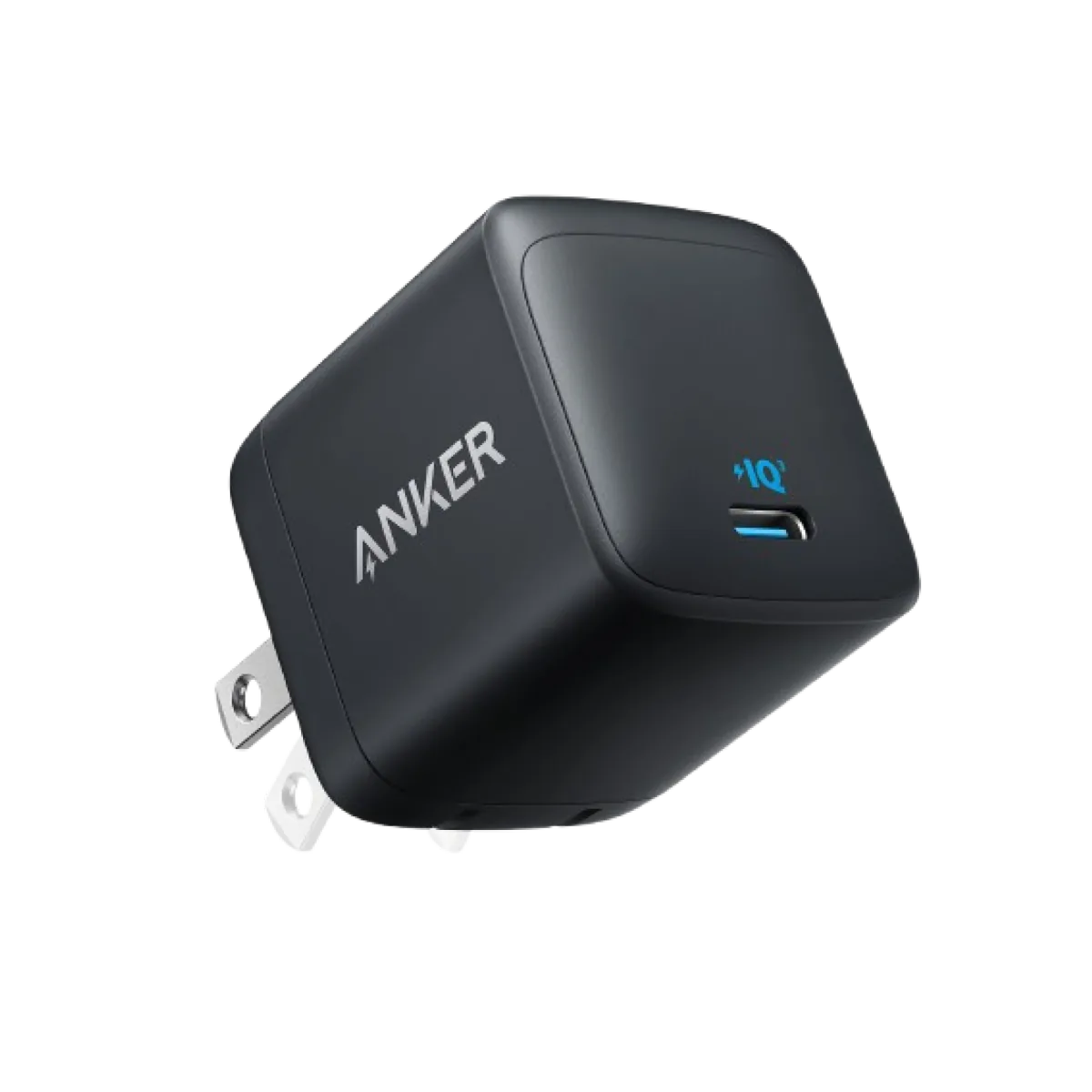
- 💡 For Phones and Thin Laptops (e.g., MacBook Air): Opt for a 45W charger like the Anker Nano 45W, which balances power and size perfectly.
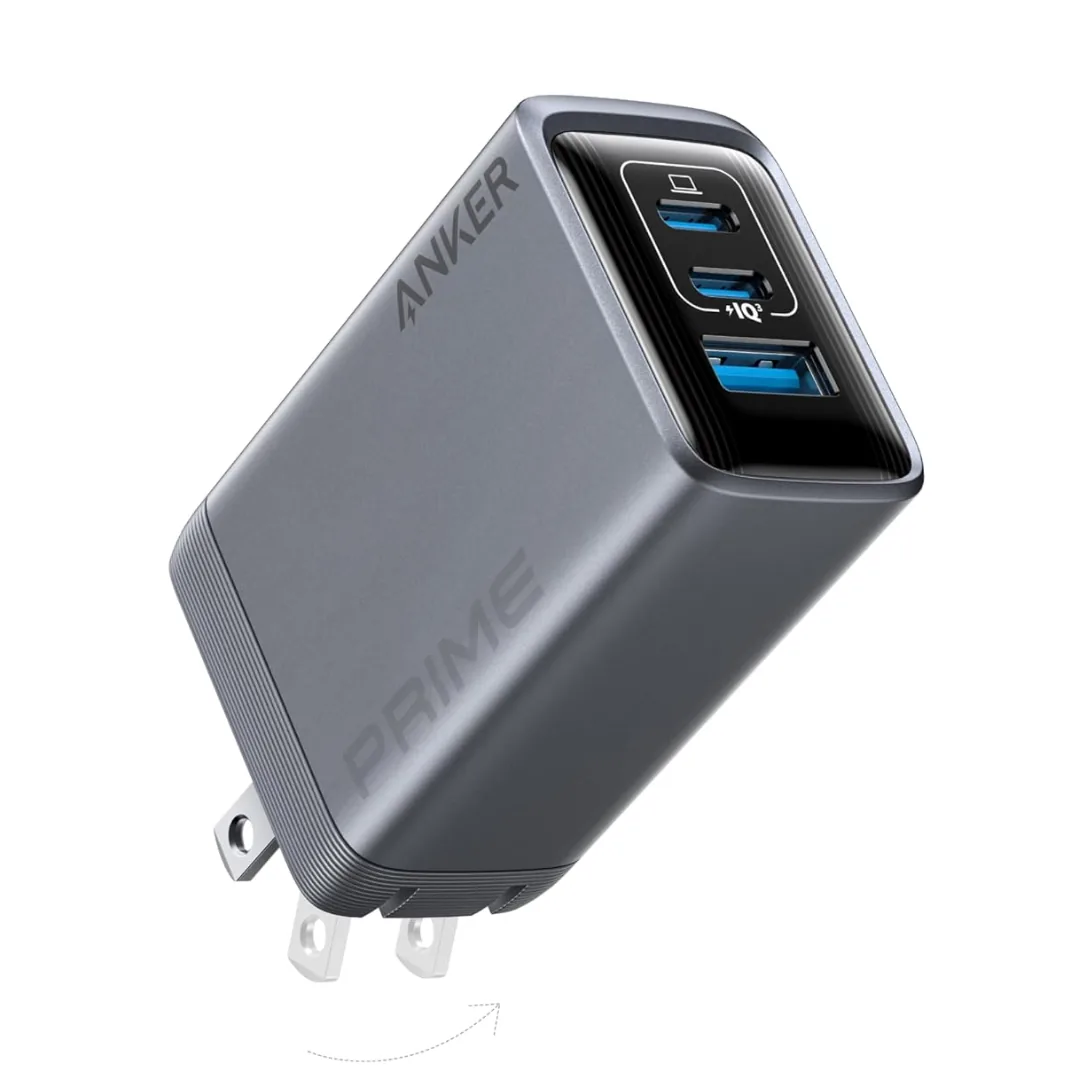
- 💡 For Power Users with Multiple Devices: Invest in a multi-port 65W or 100W GaN charger to serve as an all-in-one charging hub for your workspace and travels. Our top pick here is the newly stocked Anker Prime 100W (1,999 EGP) — a full 100W of GaN power across three ports, enough to charge a laptop plus two phones simultaneously.
GaN is not a passing trend; it is the new global standard for charging technology. Older silicon bricks take more space and run warmer at the same wattage. Make the switch and experience the future of power delivery today.

CairoVolt Editorial Team
Content team reviewing specifications and buying guides
The CairoVolt team reviews model numbers, specifications, and compatibility, and updates information when better data is available. Estimates are labeled as calculations, and readers can report information that needs correction.
Frequently Asked Questions
What is Gallium Nitride (GaN) in simple terms?▼
Are GaN chargers better for my phone's battery health?▼
Are GaN chargers worth the extra cost?▼
How do I know if a charger uses GaN technology?▼
Ready to Buy?
Browse available products and review specifications and CairoVolt warranty terms before ordering
Related products
Anker 511 Nano 3 GaN Charger 30W (A2147) | USB-C PD | IQ3
Anker Nano 45W GaN USB-C Charger | MacBook Air + iPhone 17
Anker Prime A2688 100W 3-Port GaN Charger — 2 USB-C + 1 USB-A | Check Port Allocation
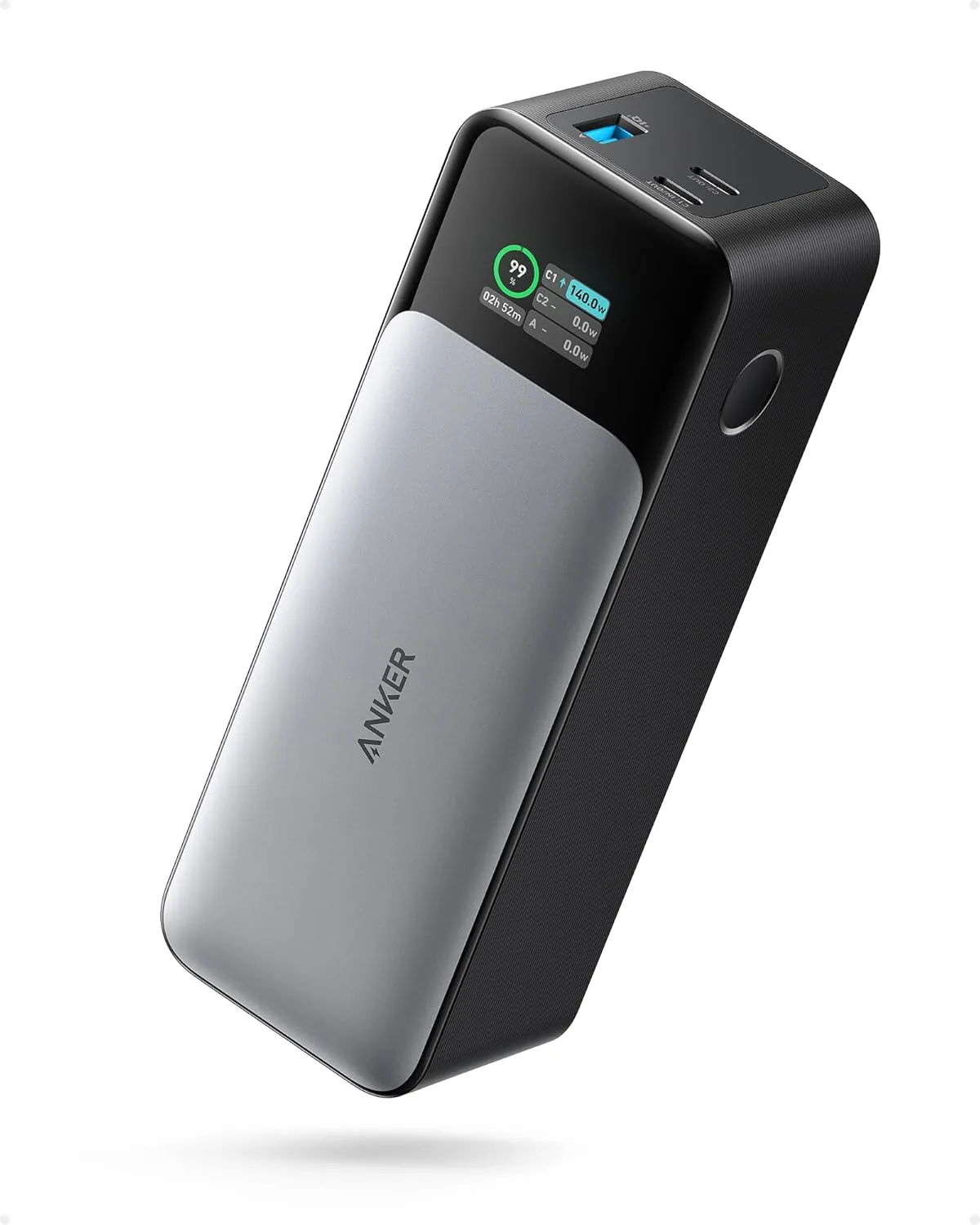
Anker 737 Power Bank (PowerCore 24K, A1289011) | Listed 140W PD 3.1 | 24,000mAh
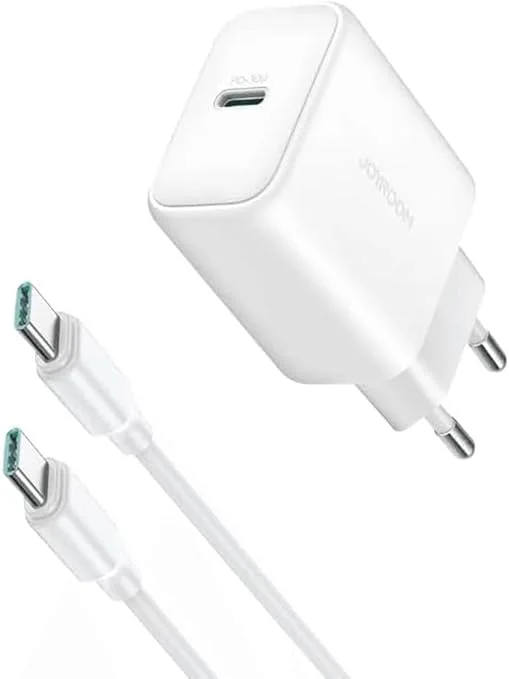
Joyroom 30W PD+QC Wall Charger | Dual USB-C and USB-A Ports