
The Silicon Illusion: Why GaN Technology is the Decade's Most Vital Evolution
Behind every charger you use is a complex battle of physics. Why did engineers abandon Silicon for GaN? Here is the deep technical truth they rarely explain.
Bottom Line: GaN (gallium nitride) chargers allow a smaller adapter at the same wattage: GaN has a bandgap of about 3.4 eV versus 1.1 eV for silicon, so the circuitry loses less energy as heat in a tighter space. Actual heat and efficiency vary by model, and the charger alone does not extend your phone battery's lifespan.
Introduction: The Physics Dictating Your Smartphone
For decades, "Silicon" was the absolute monarch of the electronics industry. Every charger we relied on was built upon it. But Silicon has officially reached its maximum physical limit. When you demand high power delivery (like 45W or 65W) from it, it essentially turns into a miniature electric heater.
In this detailed analytical piece for CairoVolt, we explain why you should retire your old Silicon bricks, and why GaN (Gallium Nitride) is an important shift in charger design.
🧠 Scientific Breakdown: Gallium Nitride is a semiconductor with a "Wide Bandgap" of 3.4 eV, compared to Silicon's 1.1 eV. This grants it a much higher capacity for electron mobility without losing that energy as wasteful heat.
1. The Thermal Dilemma: The Battery's Enemy
When you plug your flagship phone into a standard high-wattage Silicon charger, you notice both device and charger getting alarmingly warm. Repeated high heat accelerates the wear of the Lithium-Ion cells inside your phone.
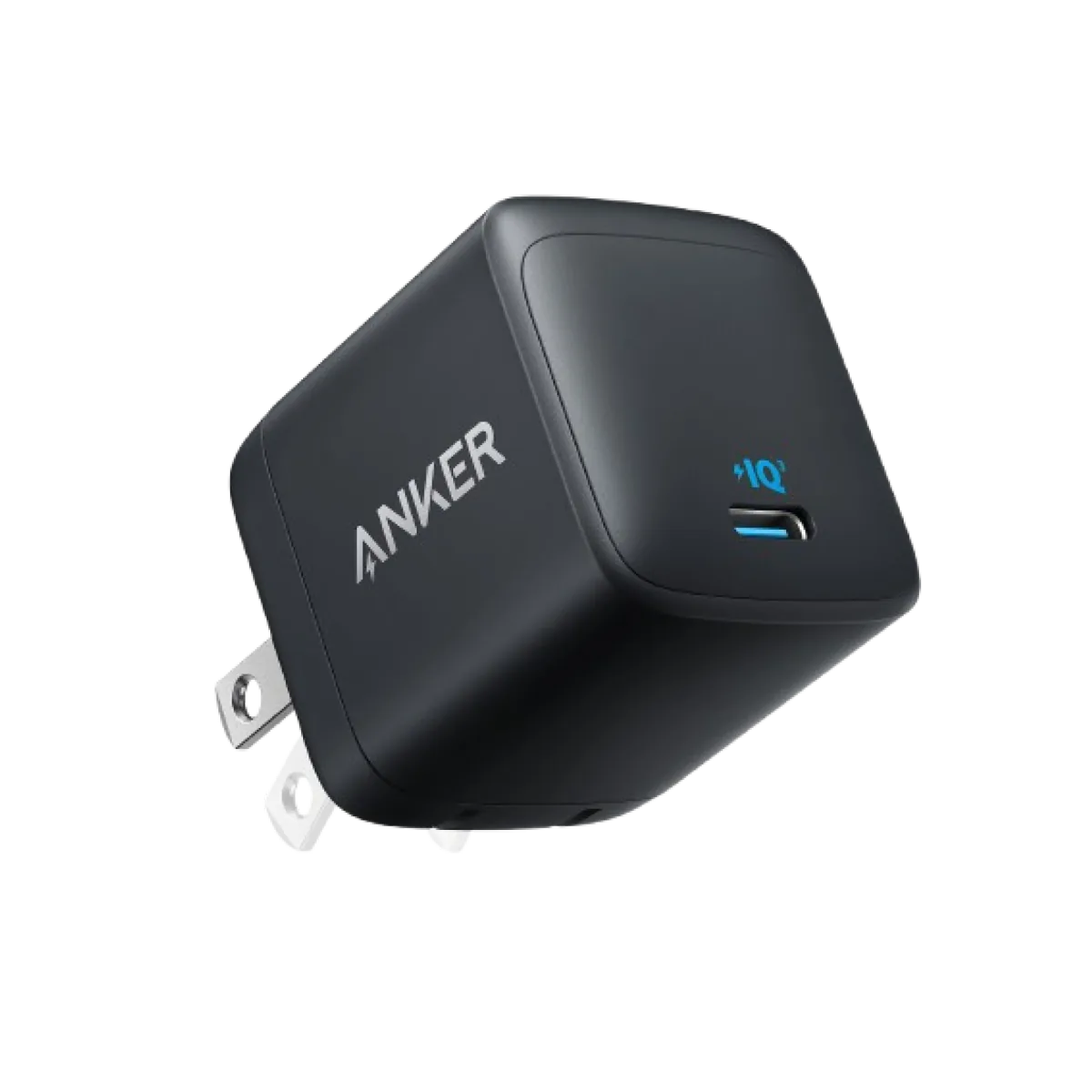
GaN chargers (like the Anker Nano II series) have inverted this equation. Thanks to GaN's conductive efficiency, a larger share of wall power goes straight into the battery and less is lost as heat compared to Silicon. The outcome? A cooler charger in a smaller body — while the phone's own temperature still depends on its battery and the charging speed it accepts.
2. Spatial Engineering: Density over Volume
Because GaN chargers do not require massive internal thermal sinks to cool components, engineers can shrink the circuitry to much tighter tolerances.
This is why you see a 45W charger from Anker small enough to fit in a pocket. It is not marketing magic—it is the Power Density that Gallium Nitride affords us.
3. A Long-Term Asset, Not Just an Accessory
We are living in an era where flagship smartphones cross the EGP 60,000 threshold. Relying on an outdated or counterfeit Silicon charger is akin to pumping adulterated fuel into a hypercar.
Conclusion 💡
GaN chargers give you more power in a smaller body with less heat lost in the charger itself. Choose a GaN charger from a known brand with protection circuits — but remember that your phone battery's lifespan depends more on the phone's temperature and charging habits than on the charger material alone.
Read more in GaN chargers explained simply, our complete GaN technology guide and does fast charging damage your battery? on the CairoVolt blog.
🛒 Related Products from CairoVolt:
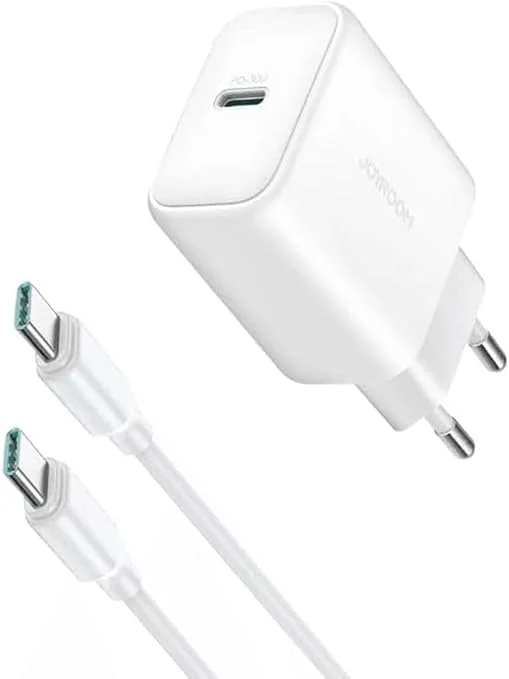
Based on this article, here are our picks: Anker Nano 45W Charger · Joyroom 30W Charger.

CairoVolt Editorial Team
Content team reviewing specifications and buying guides
The CairoVolt team reviews model numbers, specifications, and compatibility, and updates information when better data is available. Estimates are labeled as calculations, and readers can report information that needs correction.
Frequently Asked Questions
What is the core difference between GaN and Silicon?▼
Are GaN chargers safe for older phones?▼
Why is a GaN charger smaller than a silicon charger of the same wattage?▼
What does it mean that GaN is a wide-bandgap material?▼
Ready to Buy?
Browse available products and review specifications and CairoVolt warranty terms before ordering