
Realme Accessories Buying Guide: Selecting Compatible Fast Chargers
Lost your original Realme charger? We explain the electrical details behind SuperVOOC protocols and how to choose compatible 7-pin USB cables in Egypt.
Bottom Line: Realme smartphones utilize proprietary SuperVOOC / Dart Charge protocols that rely on low-voltage, high-current electrical designs. To charge at full speed (33W or 67W), you must pair a SuperVOOC-certified wall adapter with a custom 7-pin Realme USB cable. Legacy USB-PD chargers will fallback to slow 10W charging.
Realme (operating under the BBK Electronics umbrella alongside Oppo and OnePlus) has captured a significant portion of Egypt's smartphone market. This success is driven by budget C-series models (such as the C53, C55, and C67) and mid-range devices like the Realme 11 and 12 Pro. A core feature of these phones is their high charging speeds at affordable prices. However, this performance relies on proprietary charging protocols: **SuperVOOC** and **Dart Charge**. This closed ecosystem presents challenges if you lose the original accessories; using a standard charger or generic USB-C cable—even one rated for 65W or 100W—will result in slow charging speeds capped at 10W. In this guide, we will analyze the electrical engineering of Realme's charging system and show you how to select compatible accessories in Egypt.
1. The Architecture of Realme Charging: Dart vs. SuperVOOC
Unlike most modern smartphones that use the standardized **USB-PD (Power Delivery)** protocol (which increases voltage to transfer power, e.g., 9V/3A), Realme uses a low-voltage, high-current design (such as **5V/6A** or **11V/3A**).
This design moves the heat generated by voltage conversion out of the phone and into the wall charger block itself. This keeps the smartphone cool during fast charging cycles. However, if you connect a standard USB-PD charger, the phone cannot convert the high voltage efficiently. To prevent overheating, it defaults to a safe, slow charging rate of 10W.
2. Charge Pump Technology & Dual-Cell Battery Architecture
On advanced Realme devices that support higher wattages (like the 67W Realme 11 or 100W Realme 11 Pro+), the company employs a high-efficiency electrical design known as a **dual-cell battery**. Instead of charging one single cell, the battery capacity is divided into two separate, identical batteries connected in a series array.
During the fast charging cycle, the wall brick delivers high voltage like 11V. An integrated chip called the **Charge Pump** functions as a high-efficiency DC-DC step-down converter inside the phone. It converts the incoming 11V/6A input into a parallel 5.5V/12A stream, charging both cells simultaneously. This step-down process keeps the internal resistance low and avoids thermal buildup inside the phone. PD chargers cannot trigger this Charge Pump module, forcing standard linear charging which results in thermal limits capping speeds at 10W-18W.
3. Hardware Constraints of the Custom 7-Pin USB Cable and Resistance Detection
Looking closely inside the USB-A connector of an original Realme cable (distinguished by its orange or yellow plastic spacer), you will see extra pins that are absent on standard USB cords. Realme uses a **custom 7-pin USB connector** instead of the typical 4-pin configuration.
These extra pins allow the phone's processor to communicate directly with the charging block during a **hardware handshake**. The phone's charging microcontroller continuously monitors the voltage drop across the VBUS and GND power lanes.
If you use a thin, cheap aftermarket cable, the high electrical resistance creates a noticeable voltage drop. The phone immediately instructs the charger to throttle down current (from 6A to 3A or 2A) to prevent melting the cable. If you use a standard cable, the charger cannot complete this handshake, restricting output to 2A.
4. Multiple Protection Levels Embedded in SuperVOOC Chargers
Realme and Oppo chargers incorporate five tiers of active hardware protection to maintain safe high-amperage current flows:
- 🔋 Overload Protection: Instantly disconnects power if the current draw exceeds 6.5A.
- 🔌 USB Connector Thermistors: Measures the connector's operating temperature in real-time. If it surpasses 55°C (due to debris or moisture), charging rates drop.
- ⚡ Overvoltage Protection: Insulates the internal components of the motherboard from high voltage spikes.
5. Thermal Throttling Curves During Hot Summer Months
Given the high summer temperatures in Egypt, which frequently cross 40°C, Realme's fast charging algorithm enforces strict thermal safety profiles. The phone uses a multi-stage charging curve to monitor battery health.
When charging begins in a hot room, the phone will only draw the full 67W power for the first 5 minutes. As soon as the internal battery temperature approaches 43°C, the system throttles down the current to 4A or 3A to limit heat emission and prevent battery swelling. To maintain peak speeds, we recommend charging the phone in air-conditioned rooms or placing it on cool ceramic tiles with a fan directed at the chassis.
6. Mechanical Wear of Type-C Ports Under High Current Demands
Delivering a high 6A current requires stable, low-resistance contact points inside the Type-C port. The port's center plastic tongue holds 24 microscopic copper contacts.
Using cheap cables with rough metal housings can scrape and bend these contacts. This mechanical damage increases resistance and prevents the phone from triggering SuperVOOC mode, limiting charging to standard speeds permanently. Ensure you use precision-machined cables to protect your port.
7. Decimal Charging Animation lockscreen Notifications
When you plug a compatible SuperVOOC charger into a Realme phone, the lock screen displays a unique charging animation showing decimals counting up in real-time, accompanied by the text 'SuperVOOC' or 'Dart'. If you only see 'Charging' or a generic double-bolt lightning icon, the phone is charging at standard 10W-18W speeds. This visual indicator provides immediate feedback to verify if your charger and 7-pin cable are negotiating the protocol correctly.
8. Optimizing Battery Lifespan via Realme UI Software Settings
Realme UI contains excellent integrated power management tools to extend the lifespan of your lithium-ion cells:
- ⚙️ Smart Charging Mode: Stops charging at 80% overnight, completing to 100% roughly half an hour before you wake up.
- ⚙️ Charge Speed Limit Toggle: Allows you to disable high-speed charging in settings to charge the device at a cool 10W-15W when fast charging is not needed.
9. Headphone Jacks and Audio Output Routing on Realme
Realme retains the legacy 3.5mm headphone jack on budget models like the C53 and C67. Higher-end models rely entirely on the USB-C port for audio. Realme devices are more permissive than Samsung, supporting passive Type-C analog audio adapters as well as active digital **DAC** adapters. However, we still recommend active DAC adapters for superior audio amplification and a lower noise floor.
10. Guide to Selecting Protective Cases for Realme in Egypt
Many Realme models feature large, prominent camera modules. This makes the camera lenses highly susceptible to direct surface scratches when placed on rough surfaces.
CairoVolt recommends avoiding cheap, rigid plastic cases that trap sand grains, which scratch the painted plastic frames. Opt instead for flexible TPU cases with raised lips around the camera bump to protect your lenses.
11. Recommended Compatible Charger Replacements in Egypt
To ensure safe and reliable charging for your Realme device, we suggest these certified accessories available in Egypt:
Multi-Protocol Wall Chargers
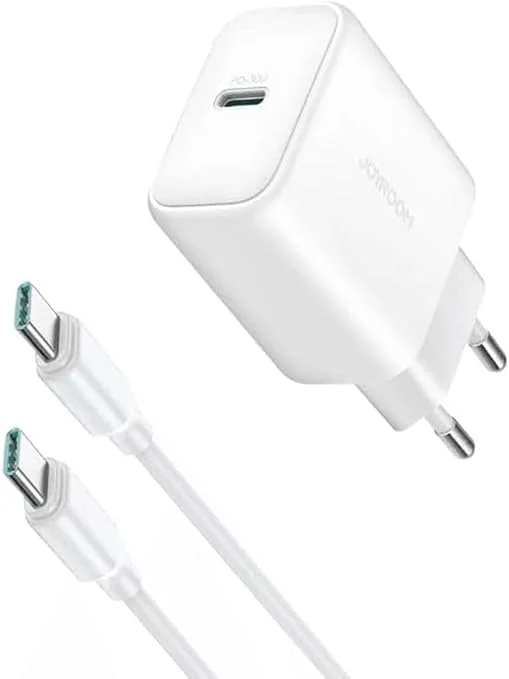
- ⚡ Joyroom 30W Fast Charger: The Joyroom 30W Fast Charger supports multiple fast-charging standards. When paired with a standard cable, it provides a safe 18W output for Realme C53 or C55 devices, serving as a reliable backup option.
Insulated USB-C Cables
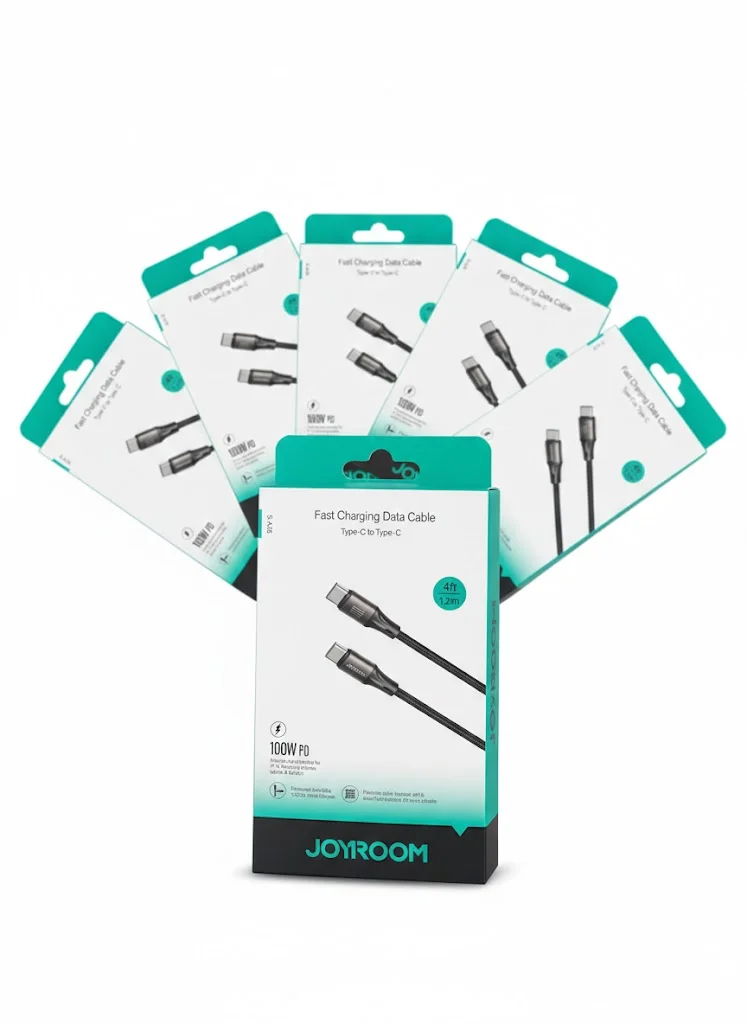
- 🔌 Joyroom Type-C Cable: We recommend the Joyroom Type-C to Type-C Cable. Its heavy-gauge copper cores handle high currents safely without overheating the port.
Compatible Wireless Earbuds
- 🎵 Joyroom Wireless Buds: Consider the Joyroom JR-T03S Pro Wireless Earbuds for excellent sound quality and stable Bluetooth integration with Realme devices.
12. Realme Model Comparison & Charging Specifications
| Model | Max SFC Wattage | Protocol Type | Full Charge Duration | PD Adapter Fallback |
|---|---|---|---|---|
| Realme C53 | 33W | SuperVOOC (11V/3A) | ~70 mins | 10W-18W (Slow) |
| Realme C67 | 33W | SuperVOOC (11V/3A) | ~72 mins | 10W-18W (Slow) |
| Realme 11 (4G) | 67W | SuperVOOC (11V/6.1A) | ~45 mins | 10W-18W (Very Slow) |
13. Verdict and CairoVolt Recommendation
Realme devices offer fast charging speeds through SuperVOOC technology, but this requires using original accessories or certified compatible alternatives. CairoVolt recommends handling your original 7-pin Realme cable carefully to prevent internal wire breakage. If you need a secondary charger for travel or office use, the Joyroom 30W PD wall block provides a safe backup charging solution.
To prevent charging port issues caused by pocket lint and dust, check out our guide on how to safely clean your charging port to save on repair costs.

CairoVolt Editorial Team
Content team reviewing specifications and buying guides
The CairoVolt team reviews model numbers, specifications, and compatibility, and updates information when better data is available. Estimates are labeled as calculations, and readers can report information that needs correction.
Frequently Asked Questions
Can I charge my Realme phone with an Anker or Joyroom 30W charger?▼
What is the difference between Dart Charge and SuperVOOC?▼
Why does my Realme C53 charge slowly with a standard Type-C cable?▼
Do Realme C-series smartphones support wireless charging?▼
Ready to Buy?
Browse available products and review specifications and CairoVolt warranty terms before ordering
Related products
Joyroom 30W PD+QC Wall Charger | Dual USB-C and USB-A Ports
Joyroom USB-C to USB-C Cable JR-S-CC100

Joyroom JR-T03 Wireless Earbuds | 20H Battery | Bluetooth 5.0
Joyroom 20000mAh Power Bank | 22.5W PD+QC | Triple Output