 CairoVolt Team
Short 30cm Cable for Power Banks — The Hidden Secret to Extending Battery Life
A 30cm short cable reduces resistance, heat, and mechanical stress on your power bank — potentially extending its lifespan by 30-40%. Here's the physics and best picks.
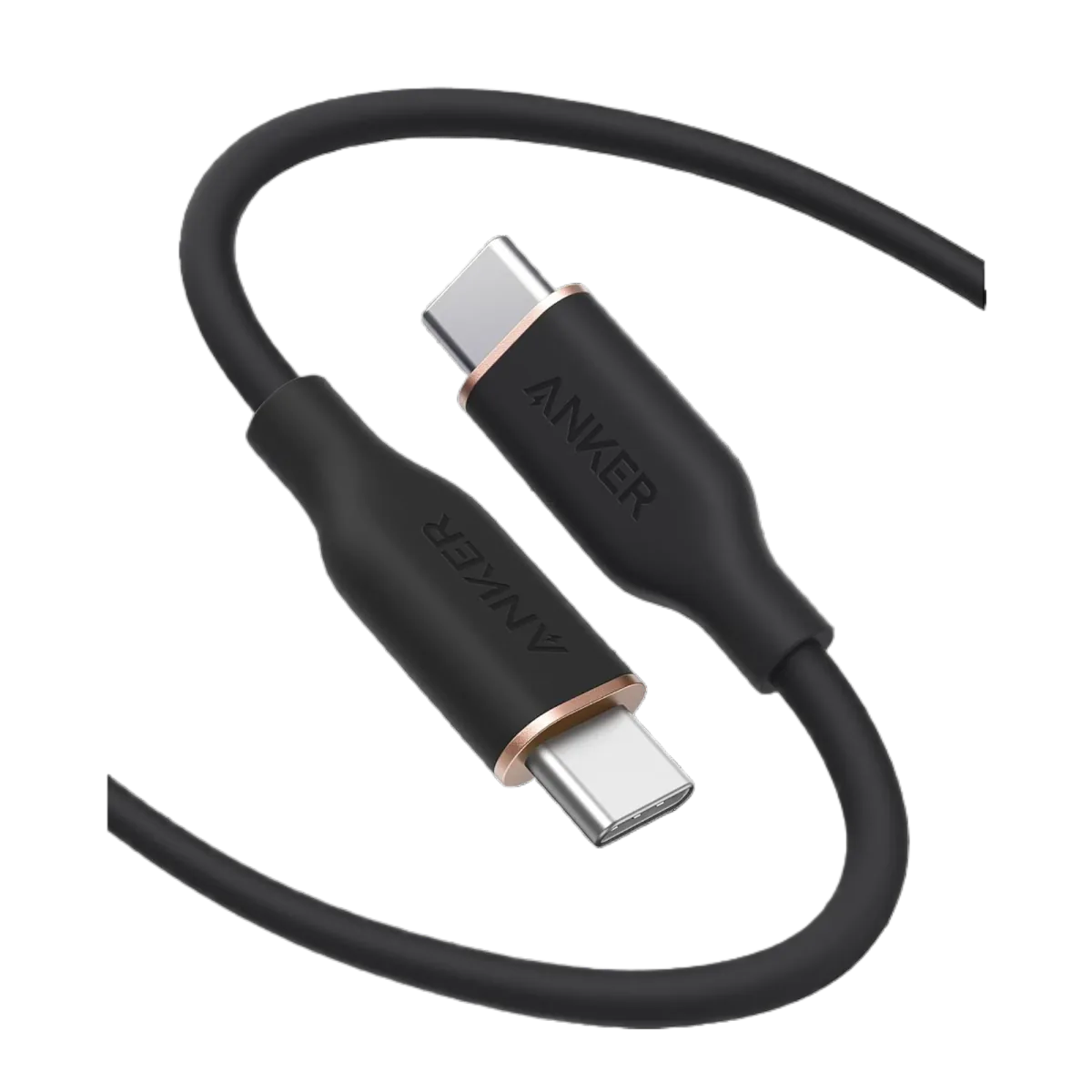
In short: A shorter cable suits a power bank for 3 reasons: (1) less wire resistance = less heat lost in the cable, (2) less coiling in your bag = slower wear, (3) less weight and clutter. But copper thickness matters as much as length: at 3A we measured a 0.18V drop on the 93.4cm Anker PowerLine III and only 0.20V on the 152cm Anker Zolo (thicker copper). Pick the shortest suitably rated cable.
My friend asked me: "Why did you buy a 30cm cable? That's barely useful for anything." I told him: "You see a short cable. I see less heat and less tangling for my power bank." He stared at me the way you stare at someone who quotes physics at a coffee shop. Then I explained the science — and five minutes later, he ordered one too.
💡 Quick Answer: A shorter cable suits a power bank for 3 reasons: (1) less wire resistance = less heat lost in the cable, (2) less coiling in your bag = slower wear, (3) less weight and clutter. But copper thickness matters as much as length: at 3A we measured a 0.18V drop on the 93.4cm Anker PowerLine III and only 0.20V on the 152cm Anker Zolo (thicker copper). Pick the shortest suitably rated cable.
The Physics Behind Why Cable Length Matters
You might remember from school physics: V = IR (voltage = current × resistance). And the power dissipated as heat: P = I²R. Cable resistance is calculated as: R = ρL/A — meaning resistance increases proportionally with cable length (L).
A 2m wire has roughly 6-7 times more resistance than a 30cm wire of the same gauge and material (that is the wire itself — connector resistance stays roughly the same).
To understand the physics in greater detail, we must look at the internal copper wire gauge. Wire thickness is measured internationally using the AWG (American Wire Gauge) scale. Interestingly, the AWG scale is inverse: the smaller the gauge number, the thicker the copper wire and the lower its electrical resistance. For instance, a 20 AWG wire is thick and optimized for high-power transmission, while a 28 AWG wire is thin as a thread with high resistance.
Cheap, unbranded cables use very thin copper wires (28 AWG or worse) to save manufacturing costs. This creates massive electrical resistance, even in short runs. According to Ohm's Law, high resistance leads to a significant voltage drop. If your charger or power bank outputs 5.0V, but the cable's resistance is high, the voltage reaching your phone can drop to 4.7V or less. When your phone sees this low voltage, it may draw less current or never enter fast-charging mode at all, so charging takes much longer — and a longer charge means more time spent warm. You can lose speed and convenience in one go.
| Cable Length | Illustrative Resistance (good USB-C) | Power Lost as Heat (at 3A) |
|---|---|---|
| 30cm | ~30 mΩ | 0.27W |
| 1m | ~100 mΩ | 0.9W |
| 2m | ~200 mΩ | 1.8W |
These figures are illustrative, from P = I²R. Most of that extra heat is released in the cable and connector, and part of it reaches the power bank at the port. Battery chemistry has a common rule of thumb (based on the Arrhenius equation): the hotter the cell, the faster it ages. But keep it in proportion: the loss in the cable itself is under 2W in the table, so the biggest heat sources for a power bank are its own charging and discharging and the ambient temperature.
3 Real Benefits of a Short Cable for Your Power Bank
- 🔋 Benefit #1 — Less heat at the connector: Lower resistance = less heat lost in the cable and port, which means slightly less thermal stress on the power bank. The gain is not a fixed number of months — it depends on the current, the cable quality and the ambient temperature — but it points the right way.
- 🔄 Benefit #2 — The cable itself lasts longer: A short cable experiences fewer bending cycles and smaller bend angles. A 30cm cable in a bag gets coiled far less than a 1.5m cable. Published bend-test figures (such as 25,000 bends for the Anker PowerLine III) come from a specific lab test, not a guaranteed lifespan in years.
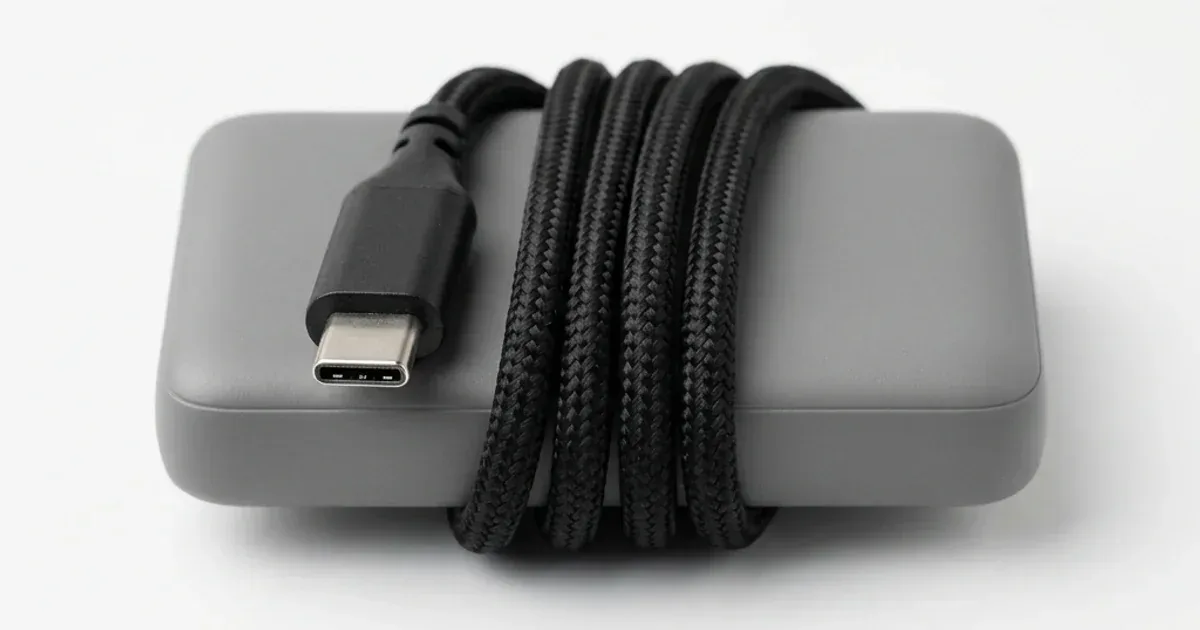
- ⚖️ Benefit #3 — Less weight and tangle: On our scale, the 93.4cm Anker PowerLine III weighs 26.8g and the 152cm Anker Zolo weighs 43g. In a bag, the short cable stays neat, doesn't tangle with other items, and doesn't create stress loops that lead to internal wire breaks.
Our Measurements: Length Is Not Everything
We measured 3 of our USB-C to USB-C cables the same way: voltage drop at a steady 3A/5V load, and mid-cable temperature while passing about 58W for 5 minutes:
| Cable | Length (measured) | Voltage Drop at 3A | Mid-Cable Temperature |
|---|---|---|---|
| Anker PowerLine III (A8852) | 93.4 cm | 0.18V | 38.2°C |
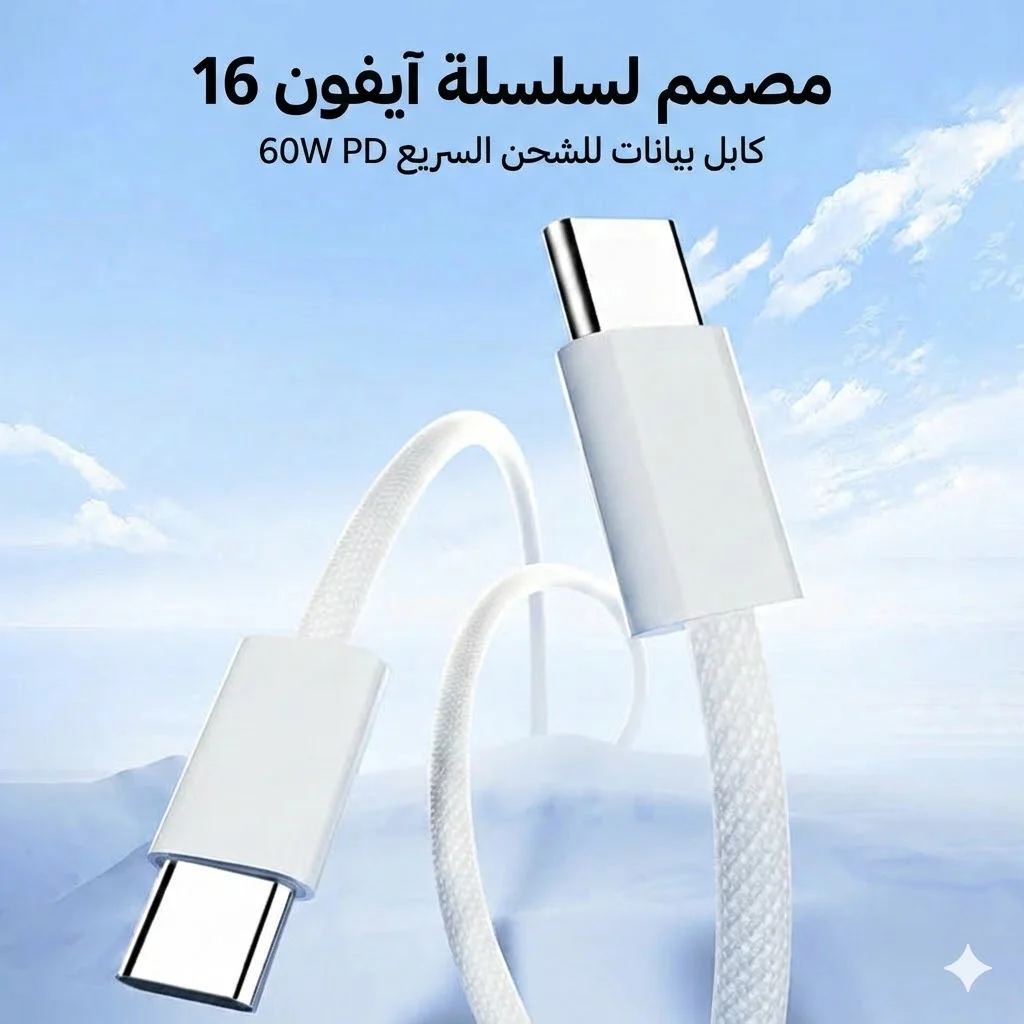
| Joyroom USB-C 60W (JR-S-CC60) | 122 cm | 0.22V | 39.7°C |
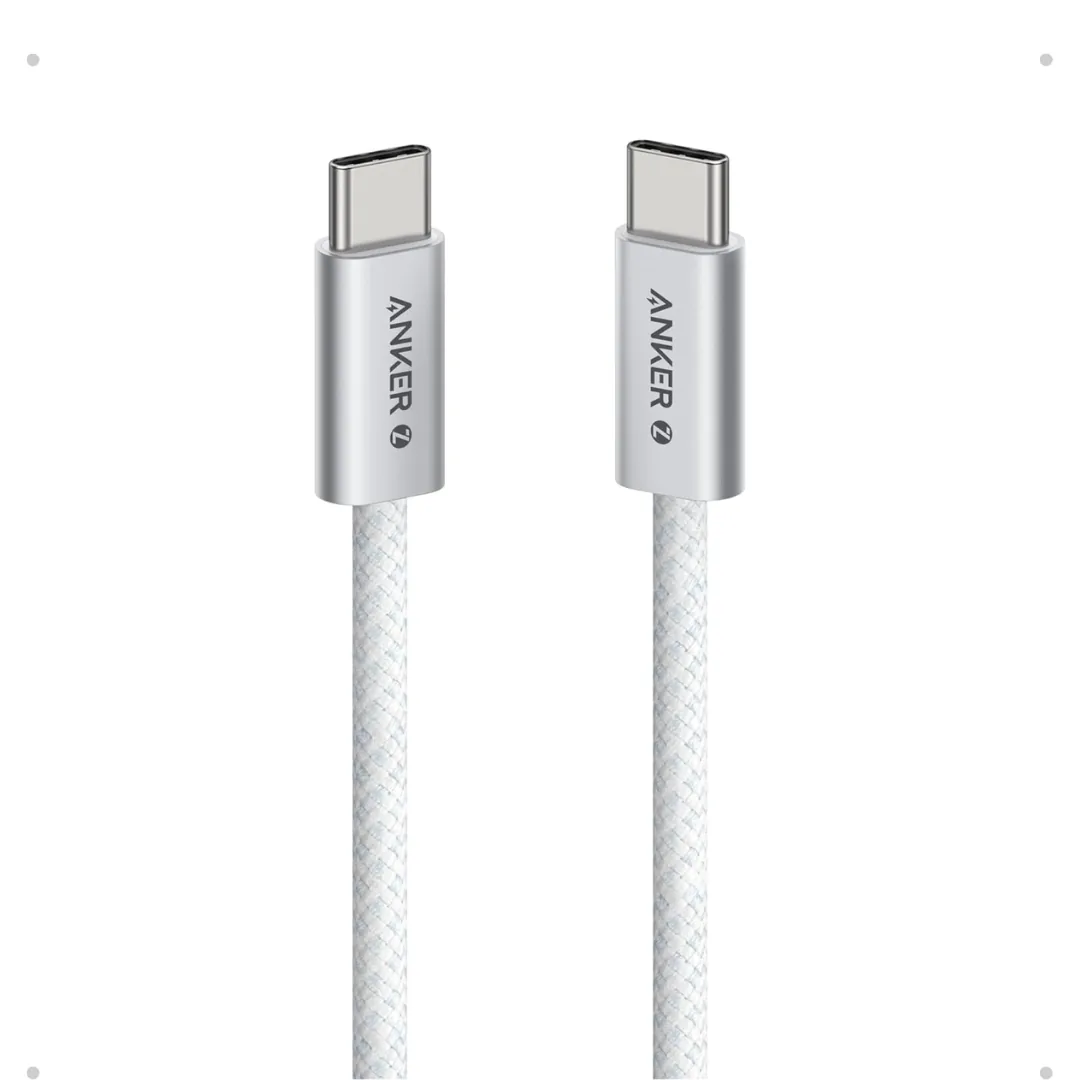
| Anker Zolo (A8060) | 152 cm | 0.20V | 36.8°C |
Notice: the Zolo is about 60cm longer than the PowerLine III, yet its voltage drop is very close and it runs cooler — because its copper is thicker. A short cable helps when the quality is the same, but a cheap short cable with thin copper can be worse than a good longer one. All three are within the acceptable band (under 0.30V at 3A).
When to Use Short vs Long Cable — Quick Decision Guide
| Situation | Ideal Cable | Why |
|---|---|---|
| Charging phone from power bank in bag | 30cm ✅ | Both devices are close together |
| Charging the power bank itself from wall | 30cm ✅ | No distance needed |
| Using phone while charging from power bank | 1m-1.5m ✅ | Need freedom of movement |
| Desk charging from wall outlet | 1m ✅ | Outlet to desk distance |
| Bedside charging with distant outlet | 2m-3m ✅ | Large distance requires longer cable |
The Shortest Cables We Stock for Power Banks
30cm cables are not common in most shops, and CairoVolt does not currently list one. Our shortest options:
- ⚡ Anker PowerLine III USB-C to USB-C (EGP 590): 0.9m, up to 60W, braided nylon. We measured a 0.18V drop at 3A.
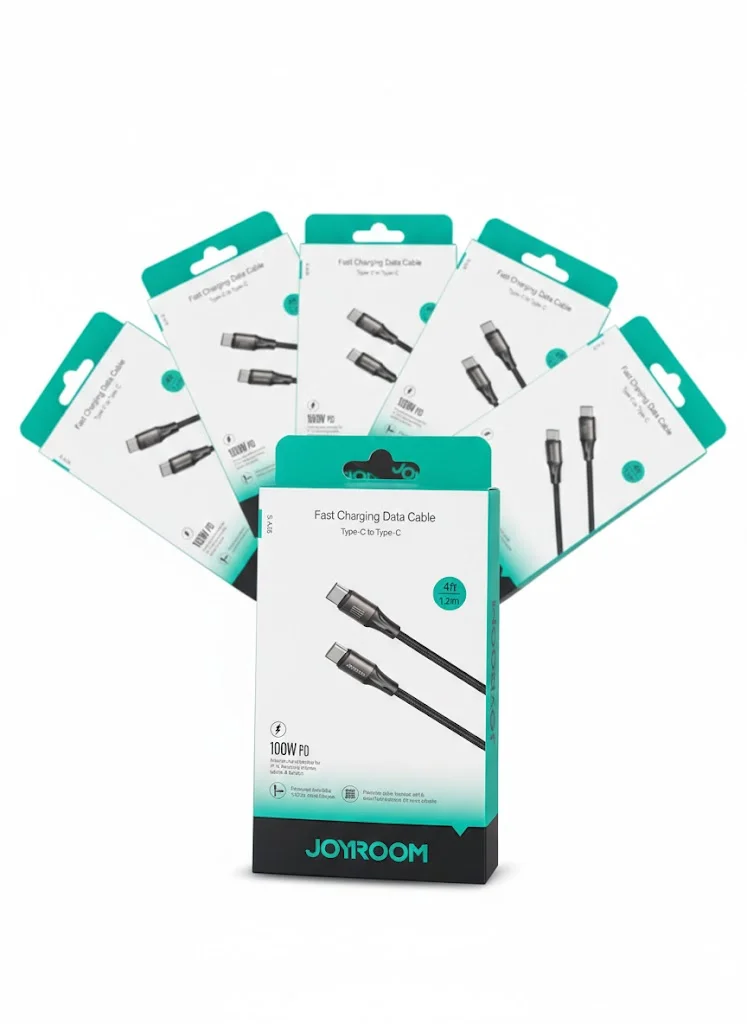
- 🛡️ Joyroom USB-C 60W (EGP 123): the same 60W class for less — we measured 122cm and a 0.22V drop at 3A.
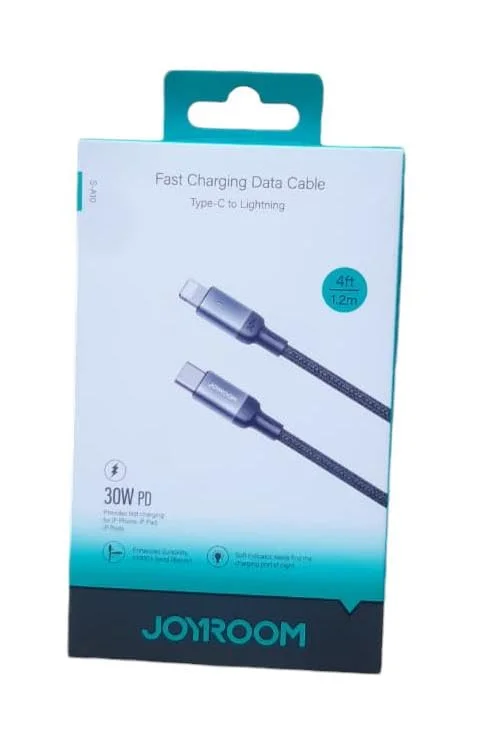
- 🔌 Joyroom 30W PD (EGP 94): 1.2m, fine for charging a phone from a power bank if you do not need more than 30W.
Pro tip: carry two cables — the shortest one that suits you for power bank use and a 1.5m for wall outlet charging. The cost is small, and you get less coiling and clutter.
Why This Matters More in Egypt Than Anywhere Else
In Egypt, a power bank isn't a luxury — it's a necessity due to frequent summer power outages. This means your power bank may go through more charge/discharge cycles than it would in a country with a stable grid.
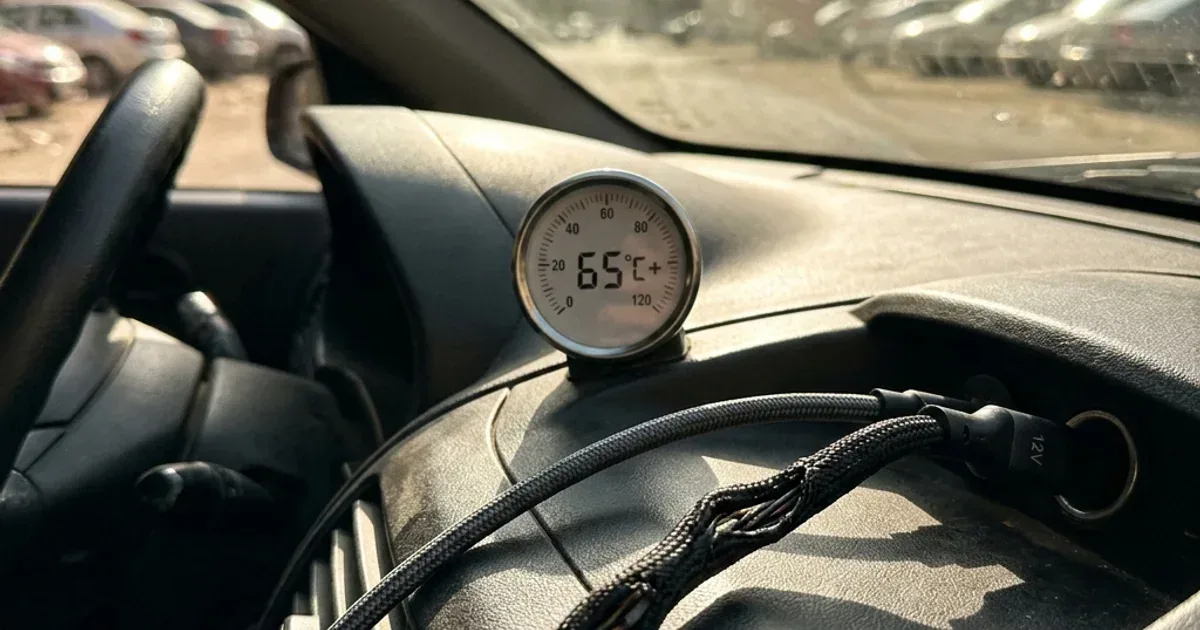
Combined with Egypt's summer heat (40°C+ outdoors), your power bank faces compounded stress. In this context, any heat you can avoid — from the cable or from where you charge — works in the battery's favour.
The math: a good cable such as the Anker PowerLine III (EGP 590) costs far less than a power bank such as the Anker PowerCore 20000 (EGP 1,550). Nobody can promise a set number of extra months of battery life from a cable, but the right cable cuts heat and coiling for a small cost.
Battery Chemistry — Why Heat is the Enemy of Lithium
Lithium-ion batteries rely on delicate chemical movements to transfer ions and store energy. These reactions are highly sensitive to thermal conditions:
- 🔋 Above 30°C: The chemical degradation rate of the cathode and electrolyte materials begins to rise. Every charge cycle above this threshold leaves an irreversible mark on battery capacity.
- 🔋 Above 40°C: Degradation accelerates sharply. The battery's internal protective layer (SEI layer) forms too quickly, permanently trapping active lithium and reducing capacity.
- 🔋 Above 50°C: Serious risk of thermal runaway and physical swelling occurs. This is why high-quality power banks have thermal sensors to cut power automatically at 50°C+.
The cable alone does not decide how long the battery lasts. What you control: a suitably rated cable, never leaving the power bank in the sun or a closed car, and never charging it under a pillow or inside a closed bag.
Common Mistakes That Shorten Power Bank Lifespan in Egypt
Here are five common habits that accelerate power bank wear:
| Mistake | Impact on Battery | Solution |
|---|---|---|
| Charging to 100% in high heat | High voltage stress + accelerated chemical aging | Charge to 80-90% during summer months |
| Draining completely to 0% | Deep discharge damages copper anode structure | Recharge once battery drops to 20% |
| Using a 2m cheap cable in a bag | Extra resistance + trapped heat + port stress | Use a 30cm premium cable for on-the-go charging |
| Leaving power bank charging overnight | Continuous high-voltage float charge stress | Unplug once charging is completed |
| Using cheap PVC cables for fast charging | Poor conductance limits PD speed, generating heat | Invest in high-purity copper core cables |
Buying Guide — 4 Criteria Before Choosing a 30cm Cable in Egypt
Short cables are not widely stocked by average street vendors, leading to a market flooded with poor quality versions. When shopping, check these 4 metrics:
- 🔌 Core Material: Insist on high-purity oxygen-free copper, not copper-clad aluminum (CCA). Pure copper has an electrical resistivity of 0.017 Ω·mm²/m, compared to 0.028 for aluminum. A cheap cable that combines aluminium with thin wire can have higher resistance than a longer pure-copper cable.
- 🔌 Wire Gauge (AWG): Look for 24 AWG or 22 AWG power wires. Lower-quality cables use thin 28 AWG wires, which choke charging currents. If the gauge is not printed, the cable's printed rating (60W / 100W) is the clearest guide.
- 🔌 USB Power Delivery (PD) Support: Ensure the cable contains an e-marker chip if rated above 60W, and supports CC lines for proper PD negotiation. Without it, your power bank will fall back to standard slow 5W charging.
- 🔌 USB-IF Certification: USB-IF certified cables carry the certification logo and power rating. Not every branded cable is certified, so look for the logo on the box.
The Two-Cable System — A Practical Setup for Every Situation
You do not have to compromise. The most practical approach is maintaining a dedicated two-cable setup:
👜 The Ideal Two-Cable System:
• 30cm Cable: Stays in your bag — exclusively for power bank use, in-car charging, and quick transfers.
• 1.5m or 2m Cable: Stays at home/office — for bedside wall outlets, desk outlets, and long-range convenience.
The cost: two cables with a printed rating — for example the Anker PowerLine III (EGP 590) for your bag and a longer cable for home. Every cable we sell comes with CairoVolt's written store warranty (duration shown on each product page) and delivery across Egypt.
CairoVolt Team
Tech Editor
Frequently Asked Questions
Does a short cable actually charge faster than a long one?▼
Can I use a 30cm cable to charge a power bank from a wall outlet?▼
What are the disadvantages of a 30cm cable?▼
What's the best short 30cm cable for power banks in Egypt?▼
Ready to Buy?
Browse available products and review specifications and CairoVolt warranty terms before ordering
Related products
Anker PowerLine III USB-C to USB-C | 60W | iPhone 17 & Samsung S26
Joyroom 60W USB-C to USB-C Fast Charging Cable
Anker Zolo USB-C to USB-C Braided Cable (A8060) — 240W PD 3.1, 1.5m | 240W-Grade 8-Core Wire
Joyroom 30W PD Fast Charging Cable 1.2m