 CairoVolt Team
Car Charging Cables Melting in Cairo's Heat? 5 Smart Protection Tips for 70°C
Cairo car interiors reach 70-80°C in summer — and regular PVC cables start degrading at 60°C. Learn the science and 5 proven protection strategies.
Bottom Line: Car interiors in Cairo's summer reach 70-80°C near the windshield. Regular PVC cables start degrading at 60°C. The fix: (1) Use nylon braided cables not PVC, (2) Never leave cables coiled in direct sunlight, (3) Store in the glove box not on the seat. Recommended: Anker PowerLine+ and Joyroom Speedy Series.
It's 2 PM. Your car has been sitting in direct sunlight on the Nile Corniche. You open the door and it feels like stepping into an oven. You reach for your white cable — the one you bought for 25 EGP from a street vendor — and find its insulation is cracking and the tip is separating. That's not bad luck. That's physics.
💡 Quick Answer: Car interiors in Cairo's summer reach 70-80°C near the windshield. Regular PVC cables start degrading at 60°C. The fix: (1) Use nylon braided cables not PVC, (2) Never leave cables coiled in direct sunlight, (3) Store in the glove box not on the seat. Recommended: Anker PowerLine+ and Joyroom Speedy Series.
Why Cars Are Uniquely Destructive to Cables — The Physics
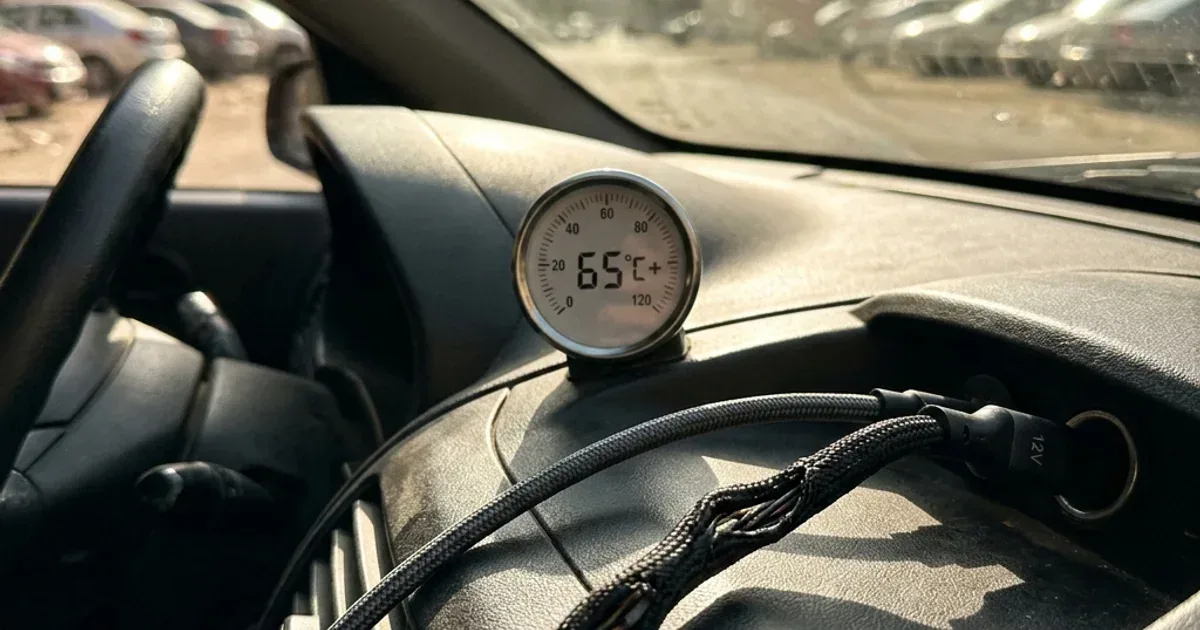
A parked car in Egyptian sunlight isn't just warm — it creates a complete Greenhouse Effect. Glass allows UV radiation in but prevents reflected infrared from escaping. The result is extreme heat accumulation that far exceeds outdoor air temperature.
| Location in Car | Temperature (42°C Outdoor) |
|---|---|
| Dashboard (direct sun) | 80-85°C |
| Front seat (sunny side) | 72-78°C |
| Interior air temperature | 65-70°C |
| Glove box (shade) | 55-60°C |
Standard PVC (Polyvinyl Chloride) cables have a softening point of 60°C. If you leave your cable on the seat or near the dashboard, it's in the critical zone every single summer day — not after years, every day.
Cable Types and Their Heat Resistance — Scientific Comparison
Not all cables are equal when it comes to heat tolerance. Three main insulation types dominate the Egyptian market:
- 🔴 PVC (Cheapest — 20-60 EGP): Softens at 60°C, cracks at 70°C, peels within 2-4 months in Cairo summers. Every budget Chinese cable uses PVC.
- 🟡 TPE (Mid-range — 80-200 EGP): Thermoplastic Elastomer — stays flexible up to 80°C, significantly better than PVC. Used in some mid-range Joyroom cables.
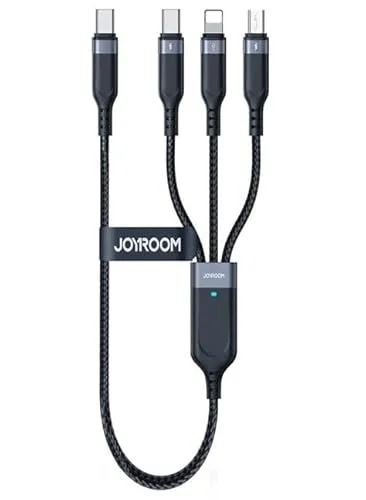
- 🟢 Nylon Braided (Best — 150-350 EGP): Nylon weave over the core — resistant to both heat and bending stress. Won't soften, won't crack. Used in Anker PowerLine+ and Joyroom Speedy Series.
🔬 How the Materials Behave in Summer Sun — Per Their Ratings
Based on each material's published thermal properties: PVC insulation begins softening at 60°C, and in a car parked in sunlight exceeding 70°C it cracks within weeks of continuous exposure. TPE tolerates up to ~80°C but gradually softens at the connectors with repeated heat cycles. Nylon Braided holds its structure under the same conditions without cracking. Nylon's higher reflectivity also keeps its surface a few degrees cooler in direct sun than dark plastic insulation — a small difference that compounds over time.
5 Practical Solutions to Protect Your Cable from Egypt's Heat
Beyond cable type, daily habits either multiply damage or prevent it — most are free or nearly free:
- 🌡️ Tip #1 — Keep cables out of direct sunlight: Store your cable in the glove box, not on the seat. The difference: 75°C vs 55°C — that's the difference between failure after 6 months versus 3 years of reliable use.
- 🔄 Tip #2 — Never leave it tightly coiled: A cable wound around the gear shift or tangled in itself creates mechanical stress + heat = hidden internal fractures. Coil it loosely.
- 🛡️ Tip #3 — Use a Velcro Cable Organizer: For 15-25 EGP, Velcro organizers keep your cable properly coiled without compression stress. Available at Carrefour Egypt and on Jumia.
- ⚡ Tip #4 — Use a short cable for the car: A 30-50cm cable for car charging beats a 2m cable — less coiling, less friction, less surface area exposed to heat.
- 🔌 Tip #5 — Always pull from the head, not the cable: 92% of cable damage starts within 2cm of the connector. One reason: people pull the cable body instead of the plastic connector head. One habit change saves hundreds of EGP.
Why Egyptian Summers Destroy Cables Faster Than Anywhere Else
The same cable that lasts 3 years in London lasts 8 months in Cairo. The reason is cumulative thermal cycling — a phenomenon that's far more severe in Egypt's climate than in any temperate country. The numbers tell the full story:
- 🌡️ London: Summer outdoor temp 22-26°C → car interior peaks at 45-50°C → cable maximum exposure: 50°C.
- ☀️ Cairo: Summer outdoor temp 38-44°C → car interior peaks at 70-80°C → cable maximum exposure: 80°C.
- 🔁 Accumulation: Each heat/cool cycle breaks polymer chains gradually. 150+ cycles in an Egyptian summer = guaranteed degradation for PVC cables — equivalent to 3 years of normal wear in a temperate climate, compressed into one season.
Additionally, Egypt's notorious voltage fluctuations create irregular current through the cable → additional resistive heating on top of ambient heat. Your cable faces dual heat sources simultaneously: the environment and the electrical current itself. This combination is particularly brutal for the connector junction — the most vulnerable point in any cable.
Warning Signs — When to Replace Your Cable Immediately
You don't need to wait for complete failure. These early warning signs indicate a cable in the danger zone — one that could cause a short circuit or electrical fire in a hot car:
| Warning Sign | What It Means | Action |
|---|---|---|
| Cracking or peeling insulation | Thermal degradation — PVC reached structural failure | Replace immediately |
| Cable warm during charging | High internal resistance — damaged wires | Replace immediately |
| Charging cuts in and out | Intermittent internal break at connector | Replace immediately |
| Charging noticeably slower | Partial wire damage increasing resistance | Plan replacement soon |
| Discoloration or yellowing | Thermal oxidation — PVC beginning chemical decomposition | Replace within weeks |
⚠️ Safety Warning: A cracked cable isn't just "broken" — it's a genuine fire risk, especially in a car sitting in the Egyptian sun. 80°C ambient heat + electrical current + cracked insulation = potential ignition. Never continue using a visibly damaged cable even if it "still charges."
The Egyptian Market Trap — Spotting Fake "Nylon Braided" Cables
Counterfeit cables in Egypt have become sophisticated enough to fool visual inspection. A large share of cables marketed as nylon braided turn out to be either counterfeit or significantly below spec. Here's what to watch for:
- 🎭 Nylon exterior + aluminum wire interior: The braiding is decorative only — tensile strength of 3kg instead of 25kg. Identification: unusually light and over-flexible for its stated specs.
- 🎭 Plastic "nylon" instead of fabric: Genuine nylon has a soft, fabric-like feel. If the surface feels like polished plastic, it behaves like PVC under heat.
- 🎭 Plastic connector head instead of metal: Quality cables use metal connector housings that handle heat better than plastic. A fully plastic connector head = lower overall quality.
- ✅ Markers of genuine quality: Noticeable weight in the hand, solid metal connector, tight and silky fabric weave, printed warranty card in the packaging.
On OLX and Facebook Marketplace Egypt, the risk of receiving a counterfeit or misrepresented cable is high. The only reliable protection: purchase from a trusted store like CairoVolt's Anker cables section or Joyroom cables section covered by CairoVolt's written store warranty (duration shown on each product page).
True Cost Analysis — The Cheap Cable Is the Expensive Choice
A 2-year total cost calculation under Cairo's summer conditions reveals a counterintuitive truth:
| Cable Type | Unit Price | Lifespan in Egypt | Total Cost / 2 Years |
|---|---|---|---|
| Budget PVC | 25-50 EGP | 2-4 months | 150-300 EGP (6+ replacements) |
| Mid-range TPE | 100-180 EGP | 8-14 months | 200-360 EGP (2-3 replacements) |
| Quality Nylon Braided | 180-320 EGP | 24-36 months | 180-320 EGP (one cable) |
The 25 EGP cable isn't saving money — it's a down payment on buying 6 cables over 24 months. The quality cable at 250 EGP is the most economical option over two years: 50-80 EGP cheaper than the budget alternative, with better safety, consistent performance, and zero mid-season failures.
Seasonal Care Routine — 5 Minutes Every April Protects Your Cables All Summer
Before each Egyptian summer season (April/May), run through this quick inspection routine for all your car cables:
- 🔍 Visual inspection: Check every cable for cracking, yellowing, or peeling. Any visible damage means replace before summer arrives — not after the first 45°C day.
- 📦 Storage upgrade: Move cables to a small fabric pouch inside the glove box. The pouch provides thermal insulation from the drawer surface and prevents friction damage.
- 🌡️ Eliminate dashboard storage: If you habitually leave cables on the dashboard or front seat, this single change — moving them to the glove box — can double their lifespan.
- ⚡ Bi-monthly charging speed test: Charge from 20% to 80% and time it. If the same charger and cable combination is taking more than 20% longer than it used to, the cable is degrading internally even if it looks fine externally.
- 🔄 Proactive PVC replacement: If you're still using PVC cables in your car, replace them before summer — not during. The cost of a mid-summer breakdown (missed appointment, stranded with a dead phone) far exceeds the price of a quality replacement cable.
The smart investment: one quality nylon braided cable (Anker A8050 or Joyroom 60W USB-C), five daily habits, and a five-minute annual inspection — and you're set for 2-3 summers without a cable failure. Available at CairoVolt with CairoVolt's written store warranty (duration shown on each product page) and nationwide delivery across Egypt.
CairoVolt Team
Tech Editor
Frequently Asked Questions
Can a cheap charging cable survive Cairo's summer car heat?▼
What damages car cables fastest in Egyptian summer heat?▼
Is there a cable that can handle 80°C car temperatures?▼
Can I continue using a cable that got damaged by heat?▼
Ready to Buy?
Browse available products and review specifications and CairoVolt warranty terms before ordering
Related products
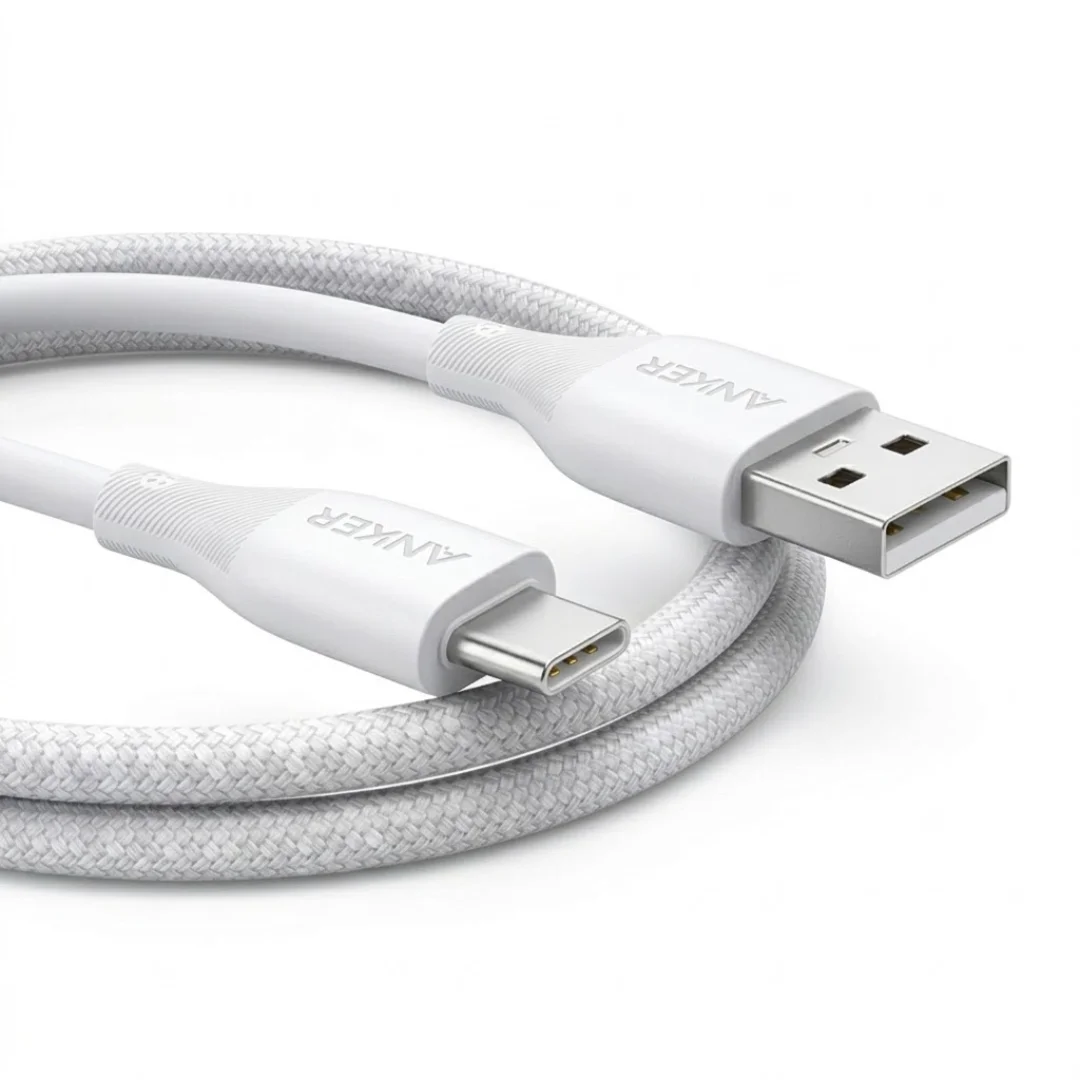
Anker USB-A to USB-C Cable (A8050) | Braided Nylon 1.8m | Fast Charging
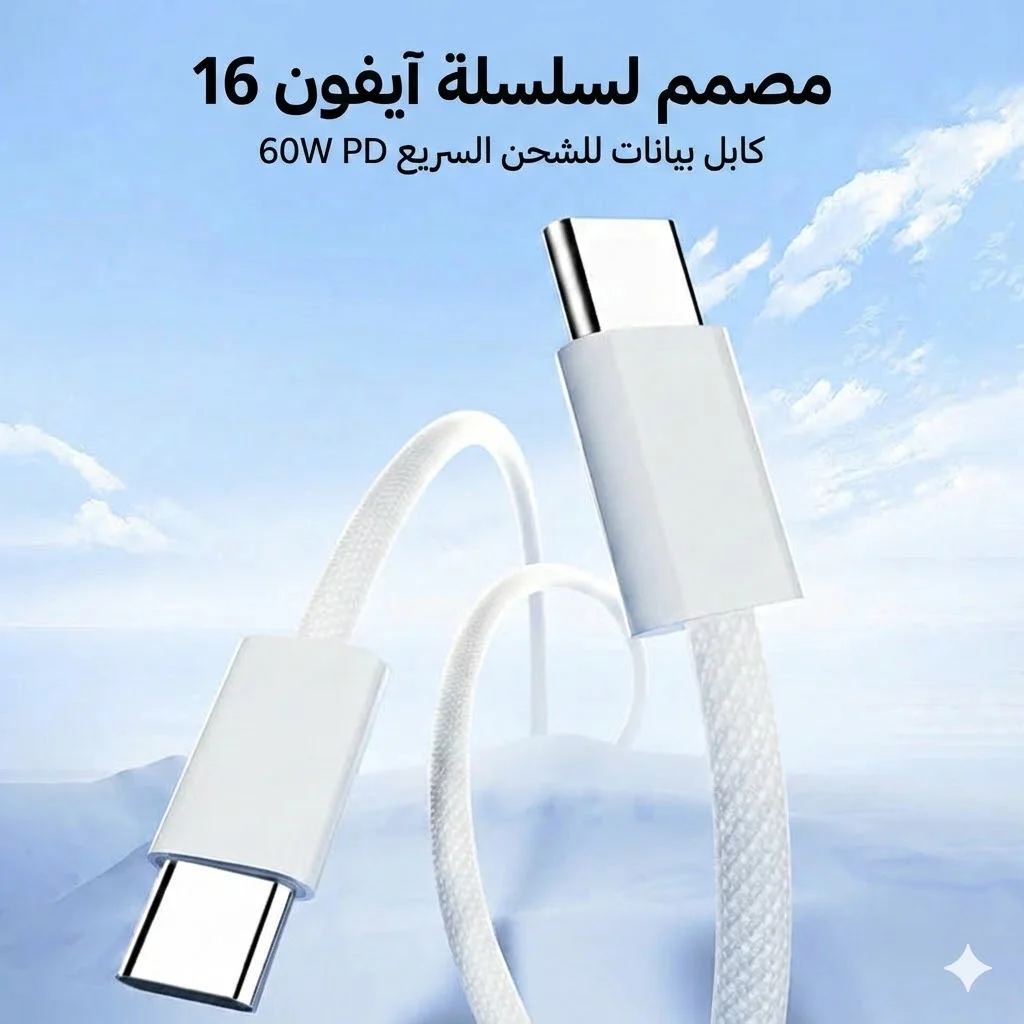
Joyroom 60W USB-C to USB-C Fast Charging Cable
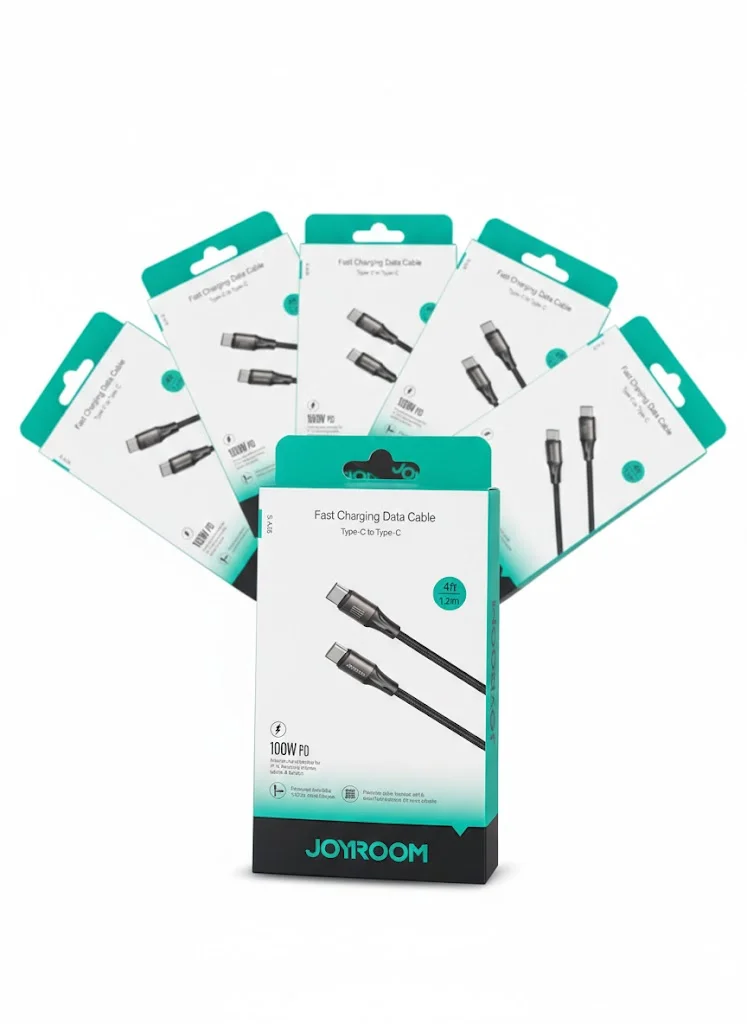
Joyroom USB-C to USB-C Cable JR-S-CC100
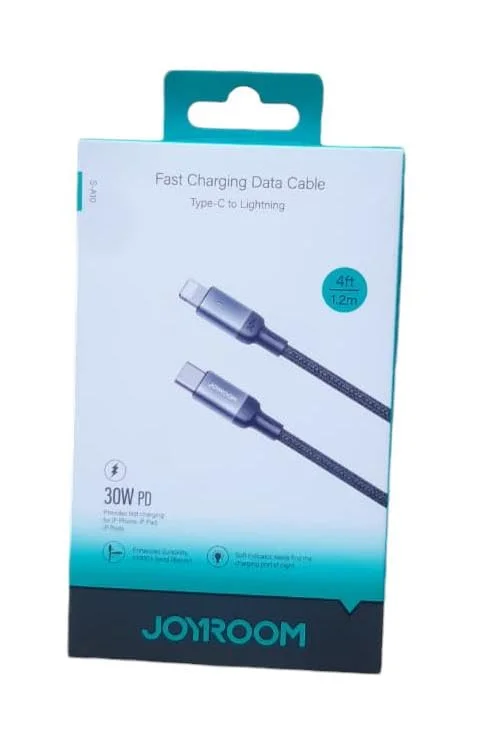
Joyroom 30W PD Fast Charging Cable 1.2m
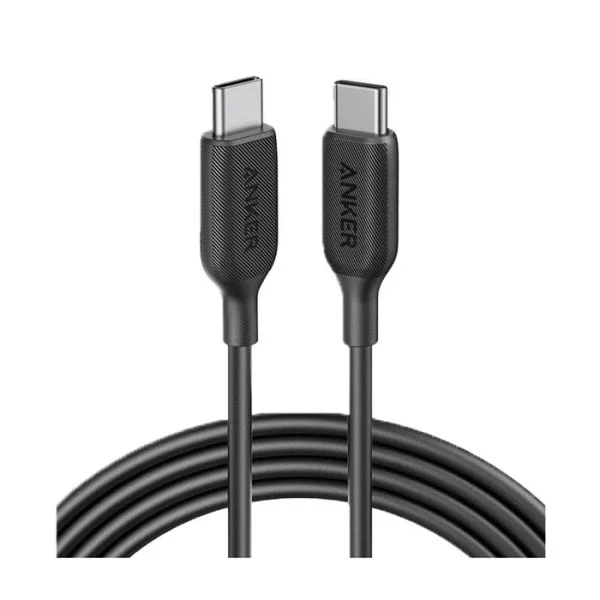
Anker SureIStrong USB-C to Lightning Cable