 CairoVolt Team
Why Your Power Bank Dies After 6 Months: 5 Daily Mistakes Egyptians Make
Bought a power bank 6 months ago and it barely gives one charge now? 5 daily mistakes that kill lithium batteries — and how to avoid them.
In short: A power bank usually loses capacity early because of habits, not the unit itself: the worst is heat (such as a parked car in summer), followed by draining it to 0% repeatedly, storing it empty for months and charging it with a counterfeit charger. The fix: recharge before it is empty, store it at about 50% if unused for a while, and keep it away from sun and parked cars.
You bought a power bank 6 months ago and it used to fully charge your phone twice. Now it barely manages one charge — and does not even complete it. Before you say "the product is defective" or "this cheap brand is trash," it is worth knowing that a large share of premature power bank capacity loss comes from everyday usage habits, not manufacturing defects — a pattern well documented in lithium-battery research and manufacturer care guidelines.
⚠️ Quick Warning: A power bank usually loses capacity early because of habits, not the unit itself: the worst is heat (such as a parked car in summer), followed by draining it to 0% repeatedly, storing it empty for months and charging it with a counterfeit charger. The fix: recharge before it is empty, store it at about 50% if unused for a while, and keep it away from sun and parked cars.
🔬 It comes down to habits:
Whether a power bank lasts for years or dies within 6 months rarely comes down to the unit itself — it comes down to habits. What published lithium-cell research shows: partial discharges and avoiding heat clearly extend cell life, while repeated full drains and high heat speed up capacity loss (Battery University figures below).
Mistake #1 — Draining the Power Bank to 0% Every Time
This is the most common mistake in Egypt. You use the power bank until it shuts off completely — then charge it. "I like to use every last drop first." The problem? Lithium cells hate extremes — neither 0% nor 100%.
The science is straightforward: every lithium-ion cell has a lifespan measured in cycle count. One cycle equals draining from 100% to 0% and charging back. But — and this is crucial — if you drain from 100% to only 20% and recharge, that counts as 0.8 cycles, not a full cycle. You gain 20% extra lifespan with every use.
| Discharge Pattern | Expected Cycles |
|---|---|
| 100% → 0% every time | about 300 cycles |
| 80% → 20% (ideal) | about 600 cycles |
| 100% → 50% | about 600–1,000 cycles |
Golden Rule: Recharge your power bank when it hits 20% — do not wait until it dies. Per Battery University's BU-808 table for NMC cells, approximate cycles to 70% capacity rise from about 300 with full drains to about 400 if you recharge at 20%, and to about 600 if you keep it between 80% and 20% — roughly double. If you want to understand why your power bank does not charge your phone as many times as expected, read The Truth About 10,000mAh Real Capacity.
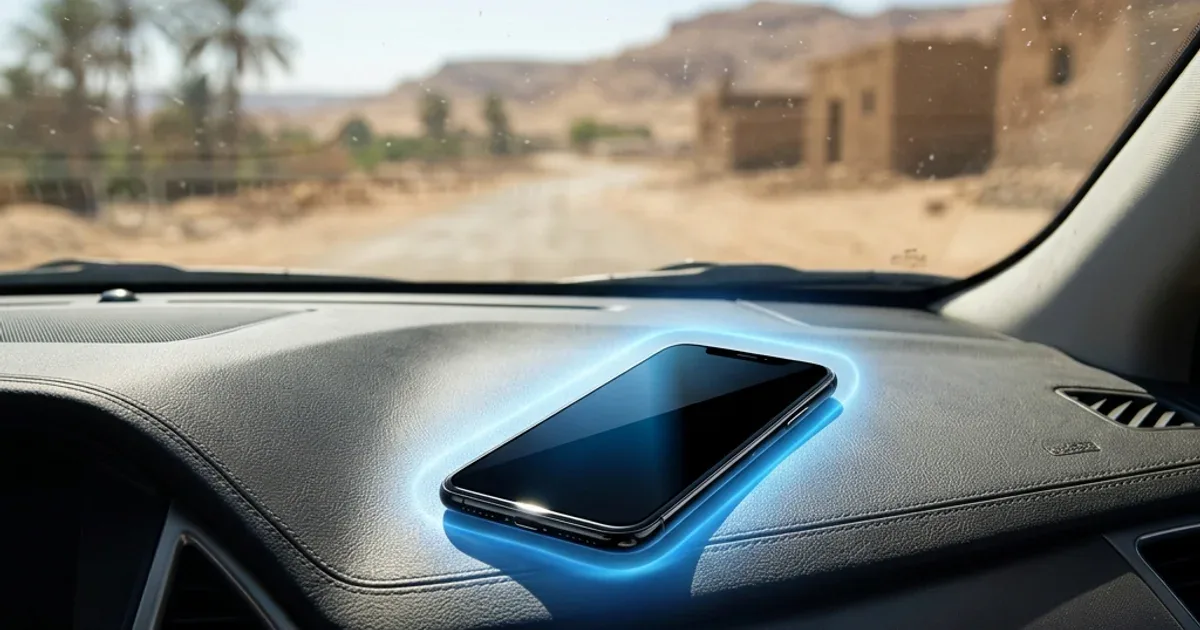
Mistake #2 — Leaving the Power Bank in a Parked Car During Summer
During Cairo's summer, a parked car's interior gets extremely hot. A power bank sitting in the center console or glove box is literally being cooked.
Lithium cells begin permanent degradation above 45°C. They do not fail suddenly — they lose capacity gradually. According to Battery University's BU-808 table, storing a lithium battery at 100% charge at 40°C loses about 35% of its capacity in a year, and at 60°C it loses about 40% in just 3 months.
- 🔥 Symptoms: The power bank heats up more than usual during charging, shows slight swelling, or shuts off suddenly at 15-20% instead of draining to 5%.
- 🛡️ Solution: Remove it from the car every time you exit. If you must leave it — store it in the trunk (the coolest spot), not on the dashboard.
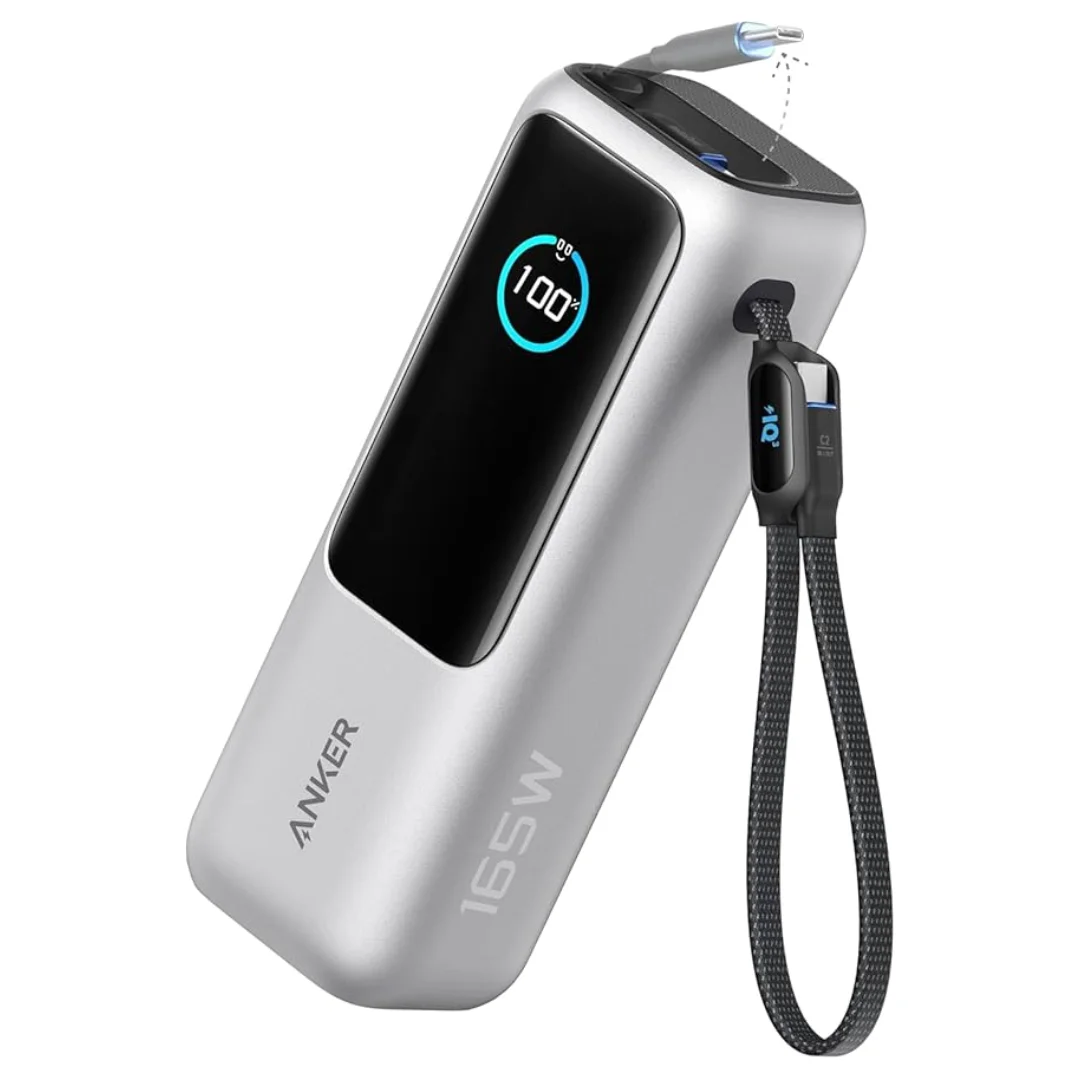
- ⚡ Exception: Power banks like the Anker Zolo A1695 feature smart displays showing internal temperature — so you can monitor before things get dangerous.
For more tips on protecting your devices in the Egyptian summer, read Protecting Your Phone from Egypt's Summer Heat.
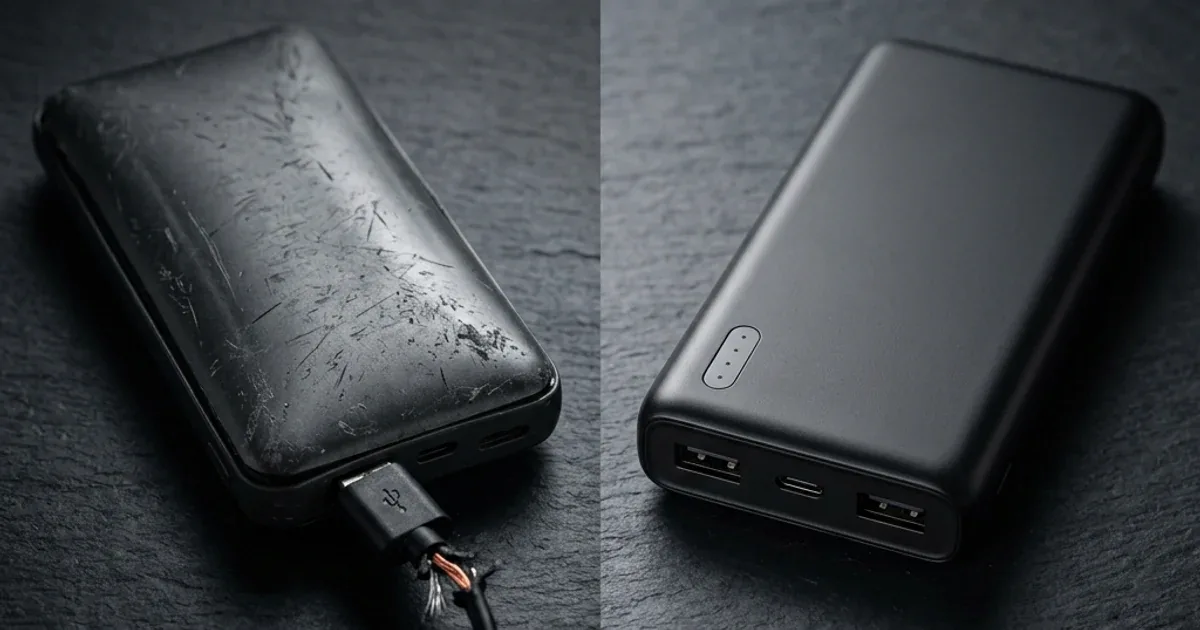
Mistake #3 — Charging with a Counterfeit or Damaged Charger
A counterfeit charger is not just slow — it is dangerous. The problem is not wattage; it is voltage stability. A genuine charger delivers a steady 5V/3A or 9V/2A. A counterfeit fluctuates between 4.2V and 5.8V — like giving a patient random electric shocks instead of regular heartbeats.
Every voltage fluctuation causes localized heat inside the lithium cells. With daily repetition, the cells lose their ability to hold charge. Over time, a power bank can lose a noticeable share of its capacity — even if the bank itself is genuine.
⚠️ Warning: Many chargers on OLX and Facebook Marketplace are counterfeit — even if labeled "original" — and a price far below the genuine one is a warning sign. Use a charger from a trusted brand with a real warranty.
Mistake #4 — Using Pass-Through Charging Daily
Pass-through means charging your power bank from the wall while simultaneously charging your phone from it. Convenient — but it kills the battery.
The reason is physical: when a power bank receives current (input) and delivers current (output) simultaneously, internal heat rises. Lithium cells are very heat-sensitive, so the extra heat shortens their life.
- ❌ Not once or twice: If you do this once a week in emergencies, the impact is minimal. But as a daily habit, you will notice it losing capacity faster.
- ✅ Smart alternative: Charge the power bank first until it completes → unplug it from the wall → then connect your phone. One extra step — but it adds a full year to the battery's lifespan.
The complete correct charging method is detailed in How to Charge a Power Bank Correctly.
Mistake #5 — Storing the Power Bank Empty for Months
You bought a power bank for a trip. Used it in Marsa Alam, came back, and tossed it in a drawer — empty. Four months later, you pull it out and it will not charge at all. What happened?
Lithium cells have self-discharge — they lose a small amount every month even when disconnected. If you leave a power bank at 5% and store it, after two months it reaches true 0% — below the safe threshold. When voltage drops below 2.5V per cell (Deep Discharge), the cells can suffer permanent damage and refuse to accept a charge again.
- 🔋 The Rule: Before storing any power bank for any period, charge it to 50%. This is the ideal level — not 100% (stresses cells) and not 0% (risks Deep Discharge).
- 📅 Every 3 Months: Pull out the power bank and check its level. If it has dropped below 30%, charge it back to 50%. Five minutes every 3 months protects your investment.
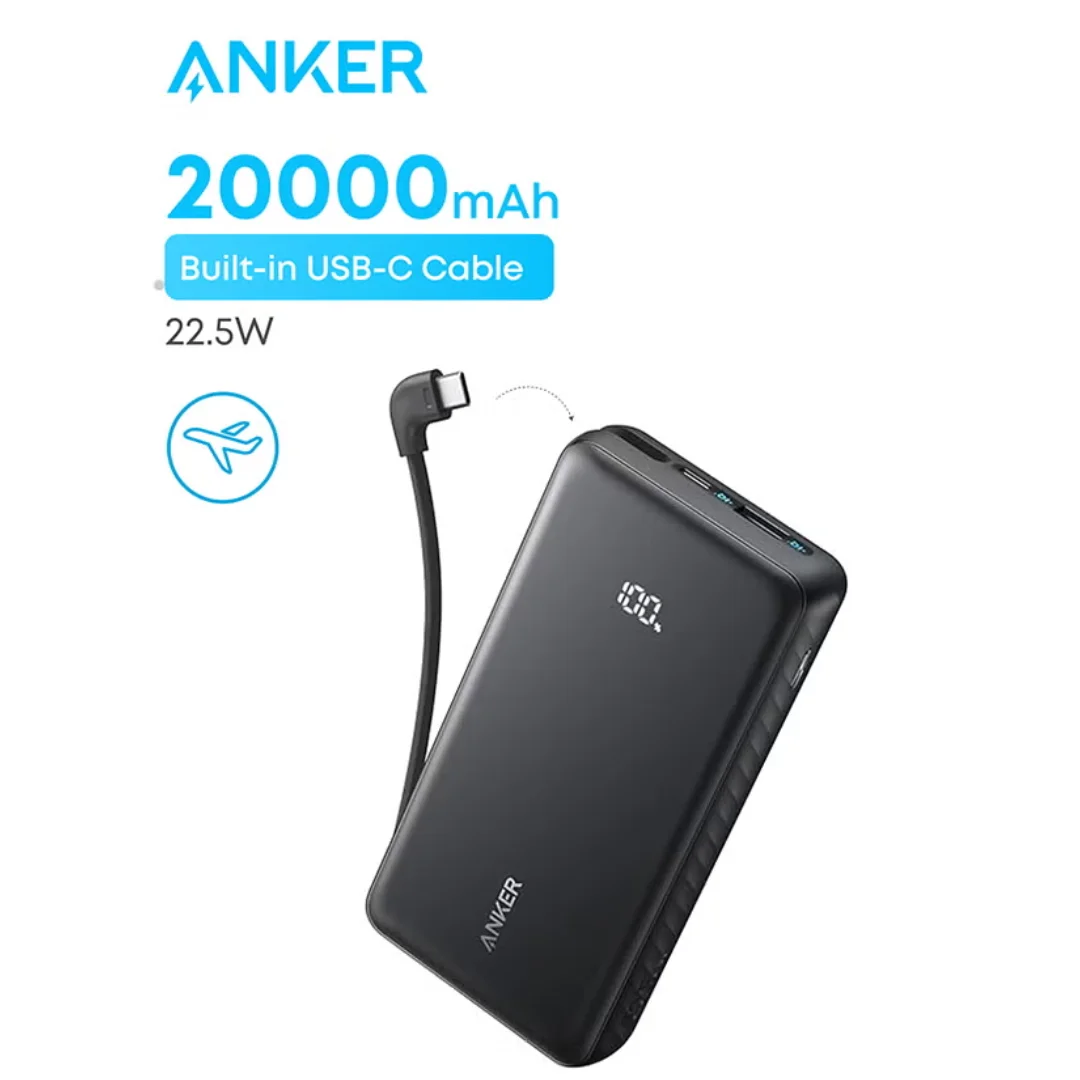
- ⚡ Advantage: The Anker ZOLO A110E (1,730 EGP) has a digital display — you can see the percentage instantly without needing to plug it in.
How to Tell If Your Power Bank Battery Is Dying
| Symptom | What It Means | Action |
|---|---|---|
| Charges phone once instead of twice | Effective capacity dropped 40-50% | ⚠️ Still usable — change your habits |
| Gets very hot during charging (over 50°C) | Degraded cells or weak protection circuit | 🔴 Stop using immediately |
| Swelling (case bulging) | Internal gas buildup — explosion risk | 🔴 Dispose of safely immediately |
| Shuts off suddenly at 20-30% | Uncalibrated Fuel Gauge or weak cells | ⚠️ Try recalibration (one full charge + drain cycle) |
| Charging time doubled | High internal resistance | 🔴 Replace it — it will not improve |
✅ Authentic Power Banks with Real Warranty on CairoVolt
All listed power banks are genuine, sold with an invoice and CairoVolt's written store warranty (duration and terms shown on each product page). Delivery to every governorate, commonly 1–6 business days depending on governorate, with cash on delivery.
CairoVolt Team
Tech Editor
Frequently Asked Questions
Can a power bank explode if left in a car?▼
If my power bank lost half its capacity, can I restore it?▼
How many years should a power bank last?▼
Does fast charging damage the power bank battery?▼
Ready to Buy?
Browse available products and review specifications and CairoVolt warranty terms before ordering
Related products
Browse the categories this article covers
Related Articles

How to Charge a Power Bank Correctly: 7 Tips for Longer Battery Life
Read more →
The 10,000mAh Myth: Why Your Power Bank Doesn't Charge Your Phone Twice (The Complete Physics)
Read more →