LED Light-Up Charging Cable — Nice Look, but Does It Affect Charging Speed and Safety?
They look stunning at night and bring a festive mood to your commute, but is a glowing LED charging cable safe for your phone? Here is the engineering truth.
TL;DR: Full-length glowing charging cables (LED/EL) negatively affect charging speed and safety. Electronically, these cables divert a portion of the charging current to power the lighting strip and lack protection chips like E-markers, capping charging speed at 5W-10W. Additionally, the glowing circuitry generates excess heat, accelerating battery degradation and increasing short-circuit risks.
Picture this: you're sitting in a microbus at night heading home after a long, exhausting workday. Suddenly, the person sitting next to you pulls out a charging cable that starts flashing bright red, green, and blue. For a second, you might think you've wandered into a street wedding in Shubra or that Ramadan decorations have arrived early! The glowing effect is undeniably eye-catching and a fun departure from standard, boring black or white charging cords. These LED light-up charging cables have flooded the Egyptian retail market, sold cheaply at metro stations and street kiosks alike. But behind this colorful show, from an electronics-engineering standpoint, we must ask: does all this light affect your phone's charging speed? Does the extra energy required to run the lights heat up the cable or damage your battery? Today, we will decode the engineering behind glowing cables to find out if they are a harmless novelty or a technological disaster waiting to happen.
1. How Do Glowing Charging Cables Work? (The Physics of the Light)
To understand the electrical impact of these cables on your smartphone, we must look at what is happening inside them. A light-up cable is not just insulated copper wire; it features a complex internal structure. To make the cable illuminate along its entire length, manufacturers rely on two primary technologies:
- 💡 Electroluminescent (EL) Wire: This is the older, cheaper technology. It consists of a central copper wire coated with phosphor. Two very thin hair-like copper wires are wrapped around it, and the entire assembly is enclosed in a transparent, colored plastic sleeve. When high-frequency, high-voltage alternating current (AC) passes through, it excites the phosphor to produce a continuous glow. This requires a tiny inverter chip built into the USB plug to convert your charger's direct current (DC) into AC, which is why you might hear a faint buzzing sound if you hold the plug close to your ear. The scientific secret behind Electroluminescent (EL) wire is that it requires a relatively high alternating voltage (around 90 to 110 Volts) at a high frequency (around 1000 Hz) to excite the phosphor atoms and make them emit light continuously. Consequently, the tiny electronic circuit inside the USB connector is not just a simple controller; it acts as a step-up voltage converter and a frequency oscillator. This process produces a high-frequency sine wave that generates the faint high-pitched buzz you hear in quiet environments. Running this oscillator continuously drains power and reduces the overall electrical efficiency of the cable.
- 🌈 Flexible LED Ribbon: This is the modern method. A thin ribbon of microscopic LED bulbs is embedded along the length of the cable, managed by an integrated circuit (IC) controller in the connector head. This controller creates a "flowing water" or chasing light effect. In advanced models, the speed of the flow corresponds to the current draw—flowing faster when the battery is low and slowing down as the charge nears completion.
The core problem here is that both technologies require constant electrical power to run. This power does not appear out of thin air; it is drawn directly from the charging current supplied by your wall charger that would otherwise go to your phone.
2. The Impact of Lighting on Charging Speed (Why Your Phone Charges Slowly)
From an electrical engineering standpoint, modern fast charging relies on digital negotiation protocols between the charger and the phone (such as USB Power Delivery or Qualcomm Quick Charge). These protocols use the USB-C data pins to negotiate higher voltages and currents (like 9V/3A for 27W charging) to fill your battery quickly.
Cheap glowing cables disrupt this process due to several design flaws:
- 🚫 Missing or Poor Data Lines: To save costs, many generic light-up cables completely omit the internal data wires or use unshielded, low-grade wiring. Without stable data paths, your phone cannot "talk" to your charger. As a safety default, the charger reverts to the slowest, legacy charging speed—capping your charging rate at a frustrating 5W or 10W.
- ⚡ Thin Power Conductor Gauge: To fit the LED ribbon or EL wire within a standard cable diameter, manufacturers reduce the thickness of the copper power conductors (high wire gauge). In basic physics, a thinner wire has higher resistance, which causes a significant voltage drop. This translates to slower charging speeds and energy lost as waste heat.
- 📉 Current Diversion: The lighting circuitry and controller chip draw between 100mA and 300mA of current. If you plug the cable into a standard 1A charger, you lose up to 30% of the available charging current just to keep the cable glowing.
3. Is a Glowing Cable Safe? (Heat, Electromagnetic Interference, and Short Circuits)
Safety is the most critical concern when dealing with uncertified charging accessories. An engineering look at how cheap, unbranded light-up cables are constructed reveals several hazard risks:
1. Thermal Build-up: The tiny inverter or LED controller chip in the connector head gets quite warm during operation. This heat transfers directly into your phone's USB-C charging port. Continuous exposure to elevated temperatures accelerates chemical aging inside your lithium-ion battery, leading to premature capacity loss and bloating.
2. Electromagnetic Interference (EMI): Converting DC to AC for EL wire or pulsing current to LEDs generates high-frequency electromagnetic noise. Lacking proper shielding, these cheap cables act as antennae, emitting interference that can disrupt your phone's internal digitizer. This is why your touchscreen might lag, ghost-touch, or become unresponsive while plugged into a cheap glowing cable.
3. Short-Circuit and Fire Risks: Glowing cables are bent and flexed constantly. Over time, the internal LED ribbon or EL wire can break and short-circuit against the main power wires. The low-grade plastic insulation used in cheap cables melts easily. Combined with the voltage fluctuations common in the Egyptian grid during hot summer months, this creates a real risk of short circuits that can destroy your phone's charging IC or cause electrical sparks at the wall outlet. The hazard escalates when using these cheap cables with high-power fast chargers (like Xiaomi or Oppo 67W or 120W bricks). These chargers pump massive currents through the line. When forced through a high-resistance, low-quality cable, it triggers rapid Joule Heating (thermal buildup). This heat can melt the cable's copper conductors and insulation, causing a direct short-circuit. This short-circuit can send unregulated high-voltage spikes straight into your phone's motherboard, destroying the primary charging IC chip and rendering the entire device completely dead.
If you want a safe, high-speed connection, you should stick to a certified, heavy-duty braided cable like the Anker PowerLine series, which avoids flashy, unsafe visual additions in favor of pure performance.
4. Reputable LED Indicators vs. Unbranded Street Cables
Does this mean any cable with a light is dangerous? Not at all. We must distinguish between two categories:
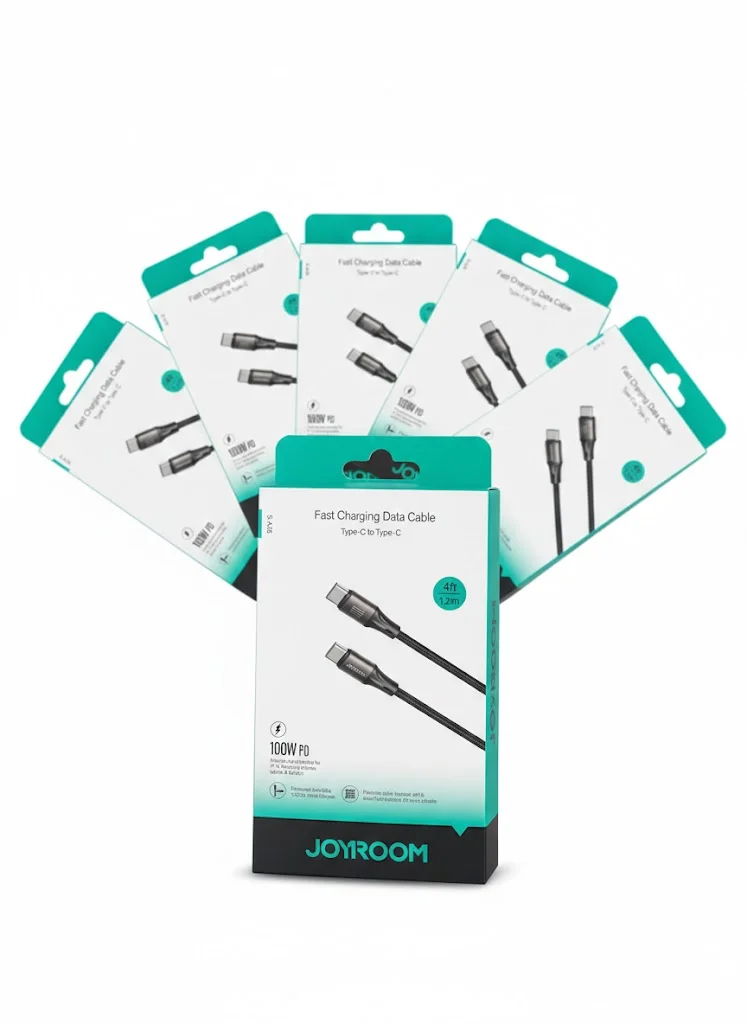
- 💡 Reputable Status Indicator Cables: Reputable brands (like Anker or Joyroom) produce cables with a single tiny LED at the connector tip to help you find your phone in the dark or show charging status. Some even include a small digital display showing real-time wattage, like the Joyroom 30W Smart Cable. These are 100% safe. The single LED draws negligible power, there is no lighting circuitry inside the wire to crowd out the copper, and the cable is built to strict safety standards.
- ❌ Unbranded Full-Length Glowing Cables: These are the cheap novelty cables that glow along their entire length and are sold in unmarked plastic baggies. They lack safety certifications (like Apple MFi or USB-IF) and represent a genuine hazard to your devices.
5. Technical Comparison Table (Glowing Novelty vs. Certified Cable)
Here is a technical comparison to help you understand the differences between a generic glowing cable and a certified option:
| Technical Specification | Glowing Cable (Generic) | Certified Cable (Anker/Joyroom) |
|---|---|---|
| Max Real Charging Current | 1.0A - 2.0A (Slow) | 3.0A - 5.0A (Supports 100W/240W) |
| PD / QC Fast Charge Support | No (Standard 5W-10W charging) | Full fast-charge support |
| Heat Generation Levels | High (From inverter & LED strip) | Very low (Normal operation) |
| Copper Conductor Quality | Thin, low-grade copper alloyed with iron | Thick, oxygen-free pure copper |
| Safety Certifications | None (Unregulated manufacturing) | MFi, USB-IF, CE, FCC, RoHS |
| Expected Lifespan | A few weeks (Lights or wire will fail) | Years (Tested up to 30,000 bends) |
6. Troubleshooting and Common Issues (CairoVolt Charging Clinic)
If you already own a glowing cable and are experiencing issues, here is the technical guidance:
- 🔌 The cable charges but no longer glows: This indicates the internal LED ribbon or EL wire has fractured or the controller chip has burned out. The cable has lost its novelty and will continue to charge slowly. It is best to discard it, as a damaged lighting circuit can short-circuit and send high voltage to your phone.
- 🔄 The phone keeps connecting and disconnecting: This indicates that the cable cannot maintain a stable voltage due to high resistance or worn connector pins. Stop using it immediately. Rapidly cycling the power connection can damage your phone's power IC (U2 chip).
- 🌡️ The USB connector plug gets hot to the touch: The internal inverter chip is failing or drawing too much power. Never leave a hot cable plugged in overnight or while you are away from home, as it could melt and spark a fire.
7. Verdict and Practical Advice
There is a well-known Egyptian saying: "The cheap option costs you more in the end." A glowing cable bought for 30 EGP because it looks flashy can end up costing you thousands of EGP in charging port repairs or battery replacements. A flashy light is not a substitute for proper electrical engineering.
To protect your device and get the fastest, safest charge, invest in a premium, certified cable. Nylon-braided cables are built to last and deliver the clean power your phone needs. For more details on protecting your accessories, check out our guide on why charging cables break quickly and how to protect them in Egypt.

CairoVolt Editorial Team
Content team reviewing specifications and buying guides
The CairoVolt team reviews model numbers, specifications, and compatibility, and updates information when better data is available. Estimates are labeled as calculations, and readers can report information that needs correction.
Frequently Asked Questions
Why does my LED glowing cable charge my phone much slower than a regular cable?▼
Does an LED light-up cable cause my phone or the cable itself to overheat?▼
Are cables with a small LED indicator light at the tip safe?▼
What is a safe, fast, and durable alternative to glowing cables in Egypt?▼
Ready to Buy?
Browse available products and review specifications and CairoVolt warranty terms before ordering
Related products
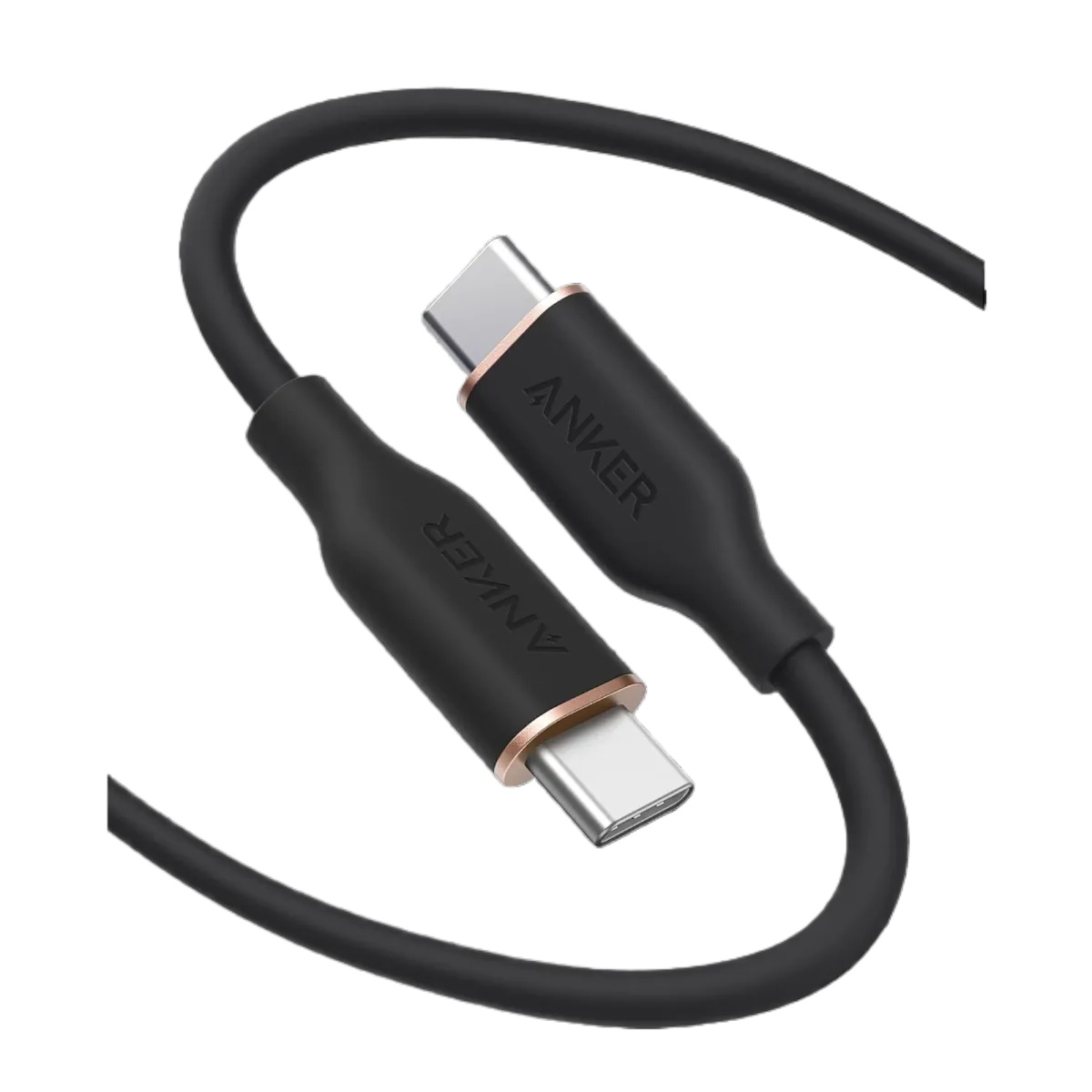
Anker PowerLine III USB-C to USB-C | 60W | iPhone 17 & Samsung S26
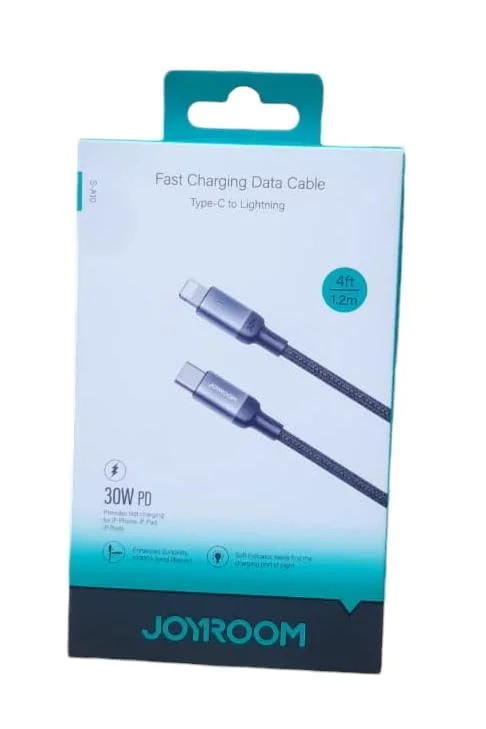
Joyroom 30W PD Fast Charging Cable 1.2m
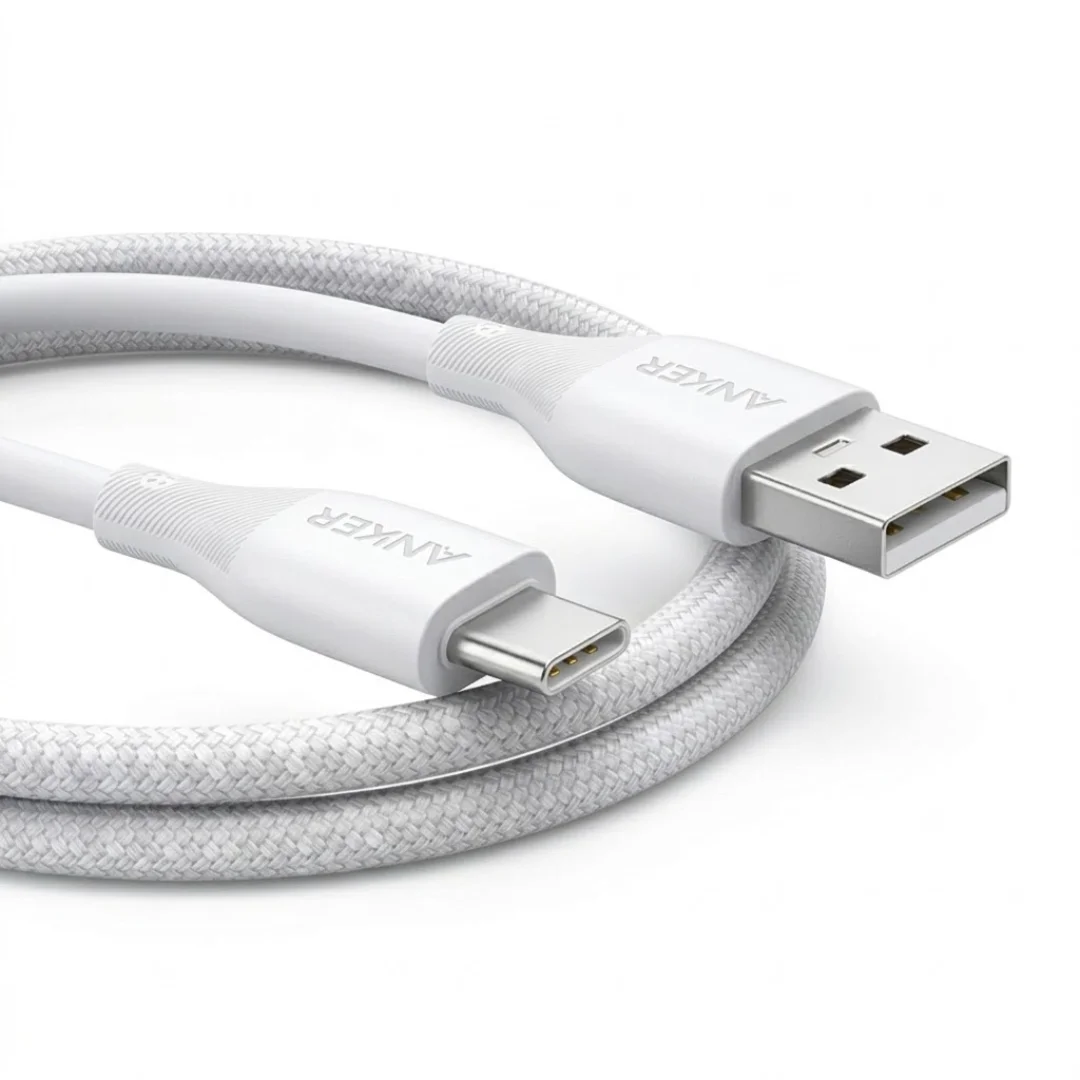
Anker USB-A to USB-C Cable (A8050) | Braided Nylon 1.8m | Fast Charging
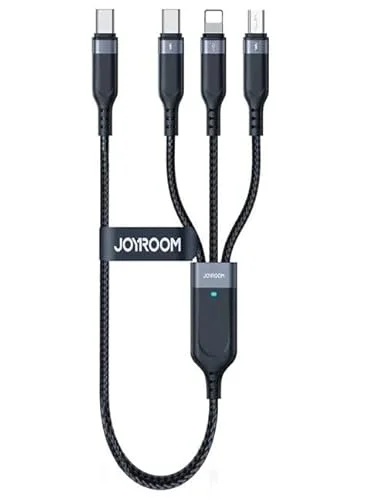
Joyroom 3-in-1 Multi-Connector Charging Cable
Joyroom USB-C to USB-C Cable JR-S-CC100