Best Car Charger for Your Vehicle: Corolla, Tucson, & Cerato Guide
How to choose the ideal car charger compatible electrically and mechanically with your specific vehicle model (Corolla, Tucson, Cerato) to protect your wiring and charge devices safely.
Bottom Line: Choose by socket shape and space: a Toyota Corolla suits a small flush-fit charger like the 30W Anker A2741, a Hyundai Tucson suits the Joyroom JR-CCL05 (4-in-1) with two built-in cables and two ports since its built-in USB ports are slow, and a Kia Cerato needs a charger that grips its deep socket. Unplug the charger while cranking the engine.
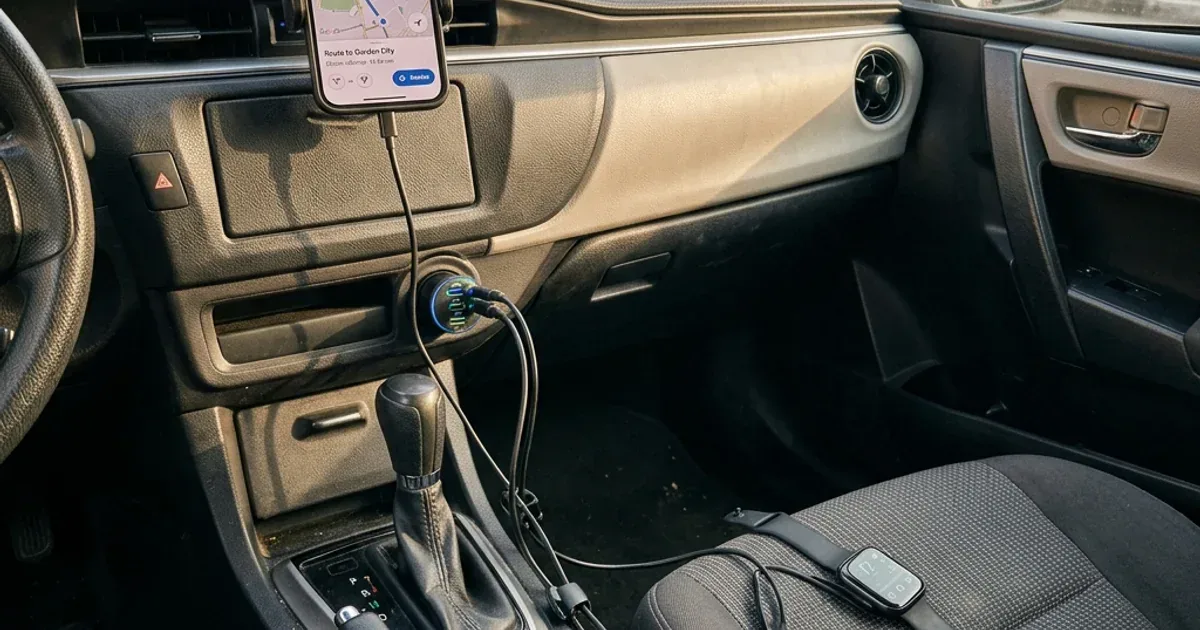
Imagine this scenario: It is 2:00 PM in the middle of a scorching Egyptian summer. You are leaving your home in 6th of October City, rushed for an extremely important meeting in New Cairo. The usual traffic on the Mehwar corridor is already greeting you from the Sheikh Zayed exit. Google Maps is running on a windshield-mounted phone, draining the battery aggressively, and your battery percentage is down to a critical 8%. With absolute confidence, you reach out and plug your car charger into the cigarette lighter socket, connecting the cable to your phone... and nothing. You start jiggling the charger left and right, pushing it inward, even trying to wedge a folded piece of paper beside it (the legendary Egyptian DIY solution for loose items 😅), but to no avail. The potholes on the Wahat Road or the joints of the 6th of October Bridge are enough to break the electrical contact every two minutes. In this moment, the issue is likely not with your phone, nor is it a manufacturing defect in the charger itself. The secret lies in a single concept: the mechanical and electrical compatibility between the charger and your specific car model. Yes, a Toyota Corolla's socket is not the same as a Hyundai Tucson's, and a Kia Cerato's electrical system has its own distinct characteristics.
In the world of electronics and automotive engineering, we view the cigarette lighter socket not just as a simple power outlet, but as a highly challenging, dynamic electrical environment. This socket was originally designed in 1920 to heat up a thermal coil for lighting cigarettes, and its creators never anticipated it would power smart devices drawing negotiable current via modern fast-charging protocols like USB Power Delivery or Quick Charge. Different car models like the Corolla, Tucson, and Cerato have different physical socket dimensions, completely different wiring and fuse layouts, and distinct alternator voltage behaviors. In this article, we will break down the physics behind it and show you how to choose the perfect car charger that is fully compatible mechanically and electrically with your specific vehicle model. This will protect your car's wiring from damage, prolong your phone's battery life, and eliminate the frustration of a loose charger that disconnects at every speed bump.
💡 Quick Answer: Choose by socket shape and space: a Toyota Corolla suits a small flush-fit charger like the 30W Anker A2741, a Hyundai Tucson suits the Joyroom JR-CCL05 (4-in-1) with two built-in cables and two ports since its built-in USB ports are slow, and a Kia Cerato needs a charger that grips its deep socket. Unplug the charger while cranking the engine.
The Science of the Cigarette Lighter Socket: Why Car Models Differ Electrically
To understand these variations, we must revisit the fundamentals of electrical engineering. The alternator is the primary power generator in a vehicle while the engine is running. Electricity generated by the alternator flows to the battery, through the fuse box, and finally to the cigarette lighter socket. Ideally, this electricity should be direct current (DC) at a stable 12.6V when the engine is off, rising to 14.2V or 14.8V when the engine is running. However, real-world conditions in Egypt—traffic jams, extreme ambient heat, and constant AC usage—create significant voltage fluctuations, known as voltage spikes and dips.
When you turn the key to start your car, the starter motor draws a massive current from the battery in a fraction of a second (often 200 to 300 Amps). This causes a temporary voltage dip, pulling the system voltage down to 8V or lower. As soon as the engine catches and the alternator kicks in, a massive inductive spike (known as a load dump spike) occurs, which can exceed 40V for a few milliseconds. If your car charger is a cheap generic unit lacking a robust voltage regulator, this spike passes straight through to your phone, potentially frying the charging controller or destroying the charger itself. Korean vehicles like the Tucson and Cerato feature power management systems that differ from Japanese vehicles like the Corolla, directly affecting fuse sensitivity and charger thermal protection response times.
Mechanically, socket dimensions are not 100% standardized across all manufacturers. Some Japanese cars design sockets with an internal diameter that is slightly wider (by fractions of a millimeter) than Korean or European counterparts. This tiny difference, unnoticeable to the naked eye, is the reason why a charger might fit snugly in one car while remaining completely loose in another, breaking electrical contact with every engine vibration or road bump.
Toyota Corolla: Spacing Constraints and the Console Drawer Challenge
The Toyota Corolla, across its popular generations in Egypt (especially from 2010 to 2026), is a legendary vehicle. While Corolla owners appreciate its reliable build, the central console design poses a unique challenge for car chargers. The cigarette lighter socket is situated inside a small drawer or compartment that closes with a mechanical cover. If you buy a long or bulky car charger, you won't be able to close this cover. You will be forced to leave the drawer open permanently, ruining the clean look of the dashboard and risking cable entanglement with the gear shifter.
Mechanically, the Corolla's socket is slightly wider at the base. Cheap plastic chargers with weak side contact springs tend to wiggle outward due to engine vibrations and road bumps, eventually losing contact with the positive terminal at the bottom. Therefore, the Corolla requires a flush-fit charger that sits level with the socket rim, leaving only the USB ports visible.
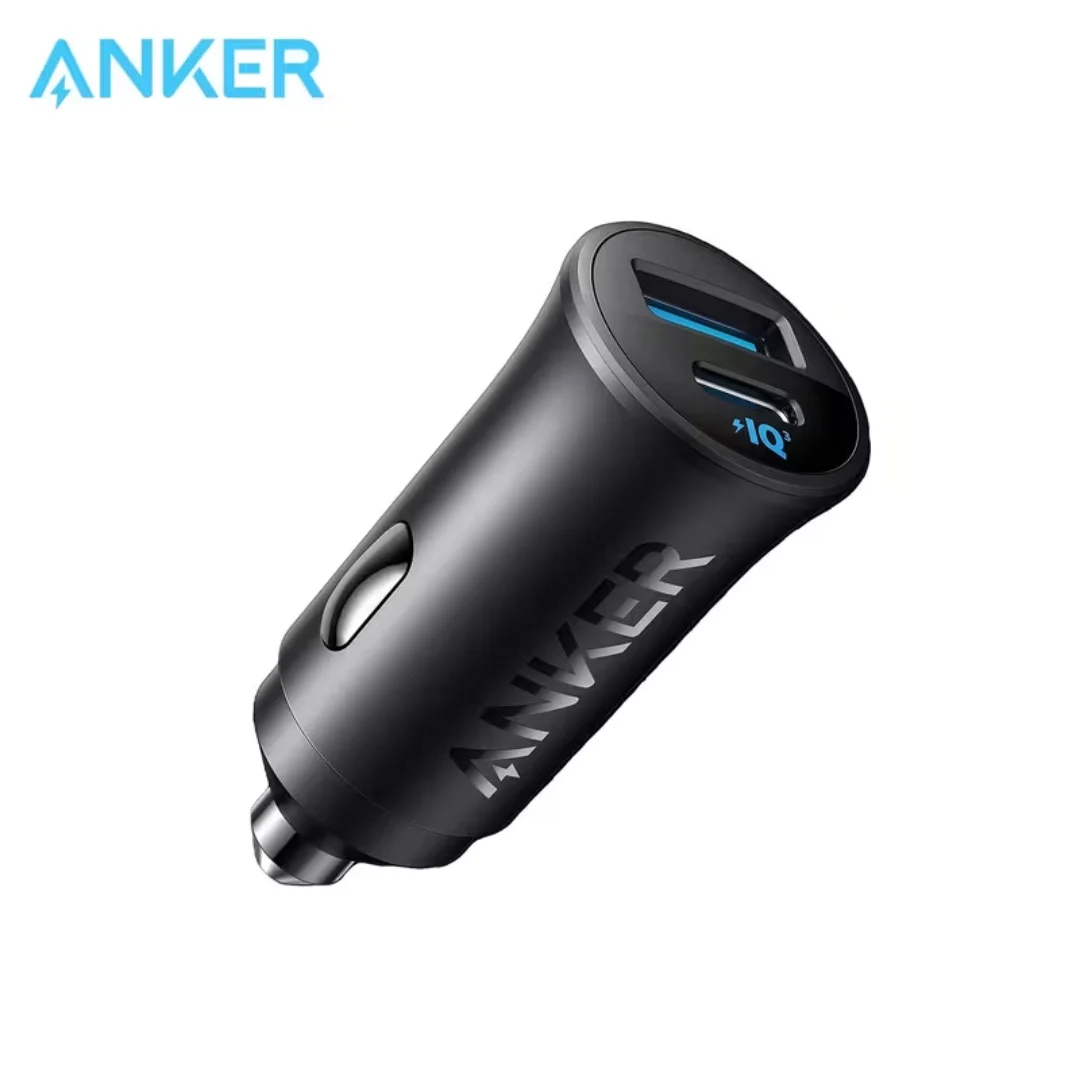
Engineering Recommendations for the Corolla: The Anker A2741 (30W) and the Anker 35W Charger are good choices for the Corolla. We measured the A2741 protruding just 30 mm from the socket in a 2018 Corolla, so the console cover can close, and it delivered 29.3W on USB-C — enough to fast-charge an iPhone or Samsung. The A2732 delivers about 20W on USB-C and 15W on USB-A at the same time.
Corolla Console Evolution (2010 - 2026)
In the Corolla models from 2010 to 2013, the socket was prominent and easy to access but positioned close to the gear shift, meaning angled cables could interfere with manual gear shifts. In the 2014-2019 generation, the socket moved inside the front sliding compartment, where the vertical clearance is restricted to exactly 4.5 cm. In the newest 2020-2026 models, the socket is tucked deep under the dashboard angle, making a compact charger necessary to avoid bending cables at sharp angles, which causes internal copper fatigue.
Hyundai Tucson: Smart Alternators and Summer AC Voltage Dips
The Hyundai Tucson (particularly the modern NX4 generation from 2021 to 2026 and its popular predecessors) features a tech-forward dashboard equipped with multiple integrated USB ports. However, Tucson owners quickly discover that these built-in USB ports are incredibly slow (outputting just 5W/1A). They are designed for data transfer (Apple CarPlay and Android Auto) rather than fast charging. If your phone is at 10% and you are running navigation, plugging it into these ports will only maintain the percentage or discharge slowly because the phone consumes more power than the port provides.
Electrically, the Tucson utilizes a smart alternator that dynamically varies output voltage based on engine load and AC compressor state. In Egypt's intense summer heat, when the AC compressor cycles on and off, it creates sudden voltage drops followed by inductive kickback spikes. Under these conditions, low-quality chargers overheat rapidly, often blowing the car's 15A cigarette lighter fuse (located in the cabin fuse panel beneath the steering wheel on the driver's side).
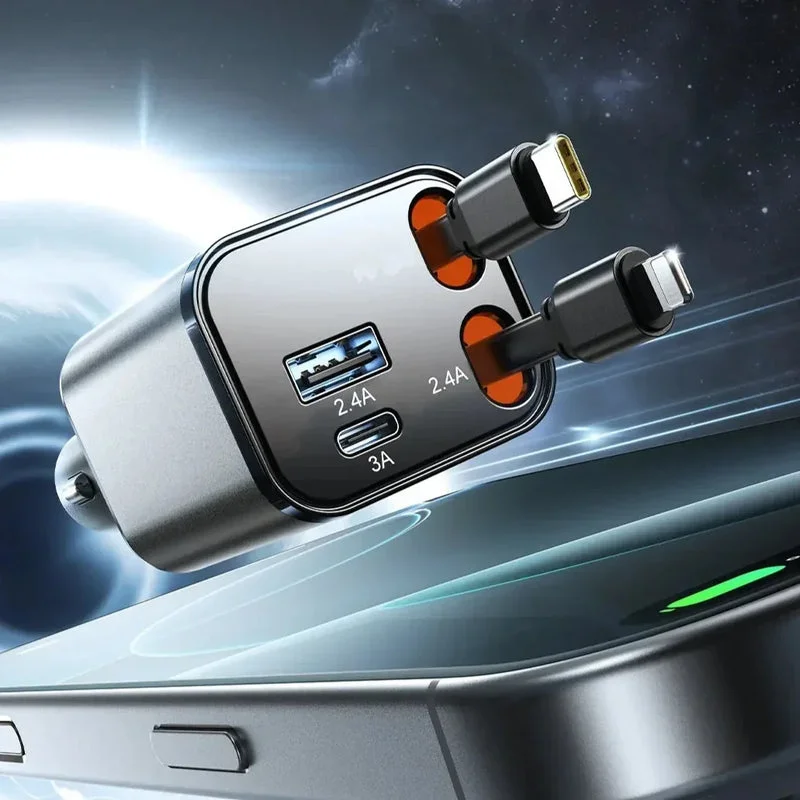
Engineering Recommendations for the Tucson: The Tucson requires a high-power, multi-port charger to utilize its spacious cabin and accommodate family members or passengers. The Joyroom JR-CCL05 (4-in-1) fits well here: two retractable built-in cables (USB-C and Lightning) + a USB-C port + a USB-A port, rated 69W total. We measured 29.1W on the built-in USB-C cable and a highest simultaneous load of 51.4W across all four outputs — the power is shared, not 69W into one phone.
Why Plastic Chargers Fail in the Hyundai Tucson
As a family SUV, the Tucson is often charging multiple high-drain devices simultaneously (e.g., driver's phone, passenger's phone, and a tablet in the back). This dual-port loading generates substantial heat inside the charger's circuit board. Plastic chargers are poor thermal conductors, trapping heat inside and causing components to melt or triggering the thermal shutdown protocol. So leave space around the charger, do not cover it, and remember that power on a multi-output charger is shared between devices.
Kia Cerato: Deep Sockets and Mechanical Vibration Stability
The Kia Cerato (ranging from the Forte K3 generations to the 2026 models) features a highly practical cabin layout. However, its cigarette lighter socket is designed deeper than usual and is surrounded by raised plastic console trim. The main issue Cerato owners face is that chargers with short positive pins fail to reach the positive contact at the bottom, or their side springs do not grip the deep socket walls securely, leading to constant charging disconnections over Cairo's speed bumps.
Furthermore, engine vibrations over time transfer directly to the dashboard in the Cerato. Lightweight plastic chargers eventually wiggle free and pop out of the socket. Electrically, the Kia Cerato's wiring harness is sensitive to short circuits, and its 15A lighter fuse is quick to blow if a low-grade charger experiences internal shorting, requiring a trip to an auto electrician.
Engineering Recommendations for the Cerato: The Cerato needs a charger with precise physical dimensions and long, high-tension steel side springs to ensure a constant connection. The Anker 35W Charger is the smart solution. It features a long positive pin and a robust spring mechanism that guarantees a solid connection in deep sockets. Additionally, it features Anker's MultiProtect safety suite, which cuts off power if it detects any dangerous voltage fluctuations in the Cerato's electrical system, protecting the vehicle's fuses and wiring.
Speed Bump Impact on Cerato Chargers
When driving on uneven pavement or negotiating sharp speed bumps, the charger is subjected to vertical g-forces and vibrations. In the Kia Cerato, because the socket angle is tilted in some models, gravity and road vibrations work against the electrical connection. Only a charger with a sturdy brass contact pin and high-quality stainless steel springs can withstand these forces and remain firmly seated without moving a single millimeter.
Detailed Comparison of the Top 4 Car Chargers in Egypt
To help you choose, here is an engineering comparison of the four best car chargers available in the Egyptian market, backed by a full warranty:
- 🥇 Joyroom JR-CCL05 (4-in-1): two built-in cables (USB-C and Lightning) and two ports for EGP 513. It suits the Hyundai Tucson and Kia Cerato when you charge several devices, with power shared between outputs (highest simultaneous load measured: 51.4W).
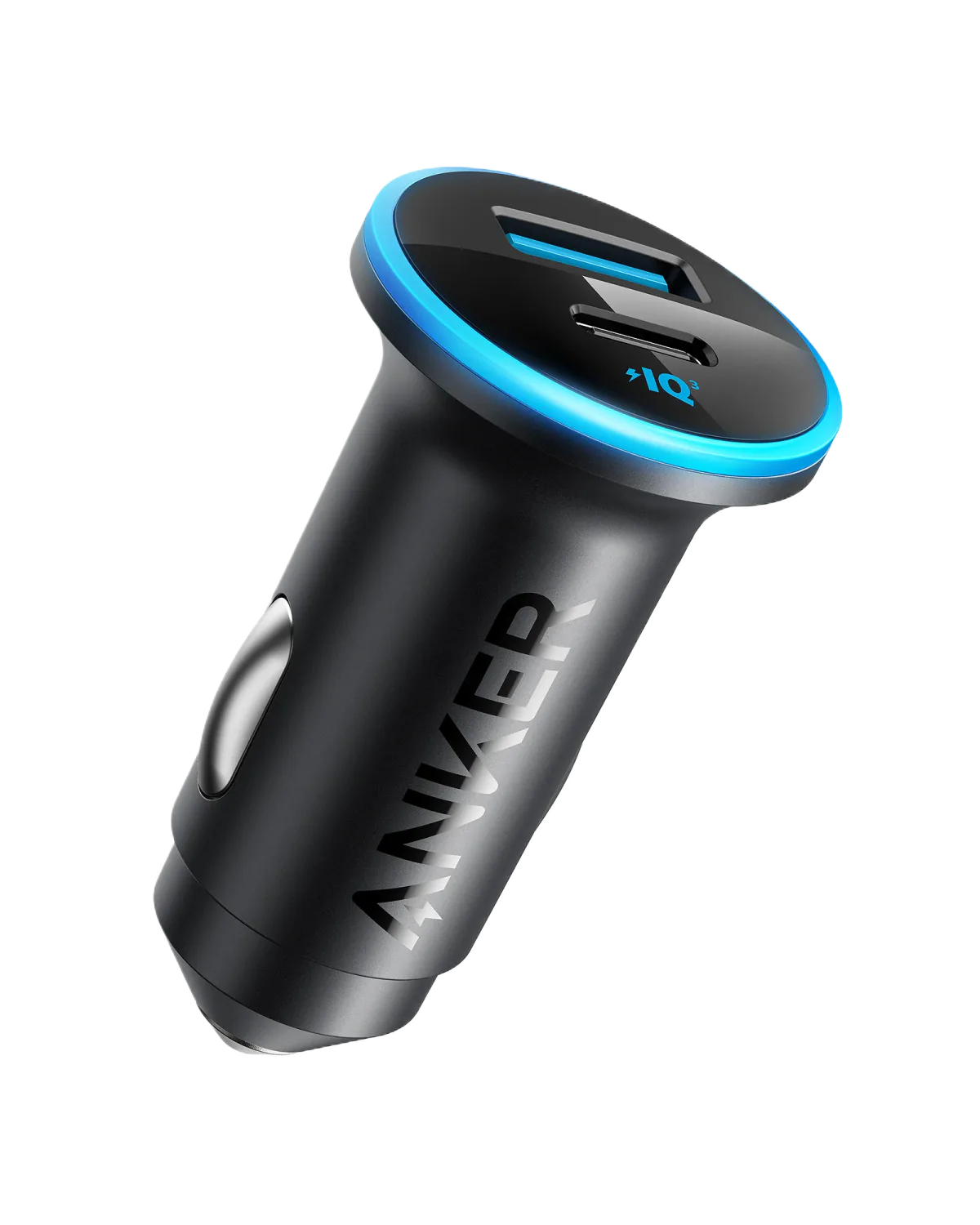
- 🥈 Anker Car Charger Dual USB: Two USB-A ports with Anker-listed MultiProtect protection, suited to older USB-A cables. Its compact shape sits flush, making it perfect for the Toyota Corolla. It delivers 24W total output via dual USB-A ports.
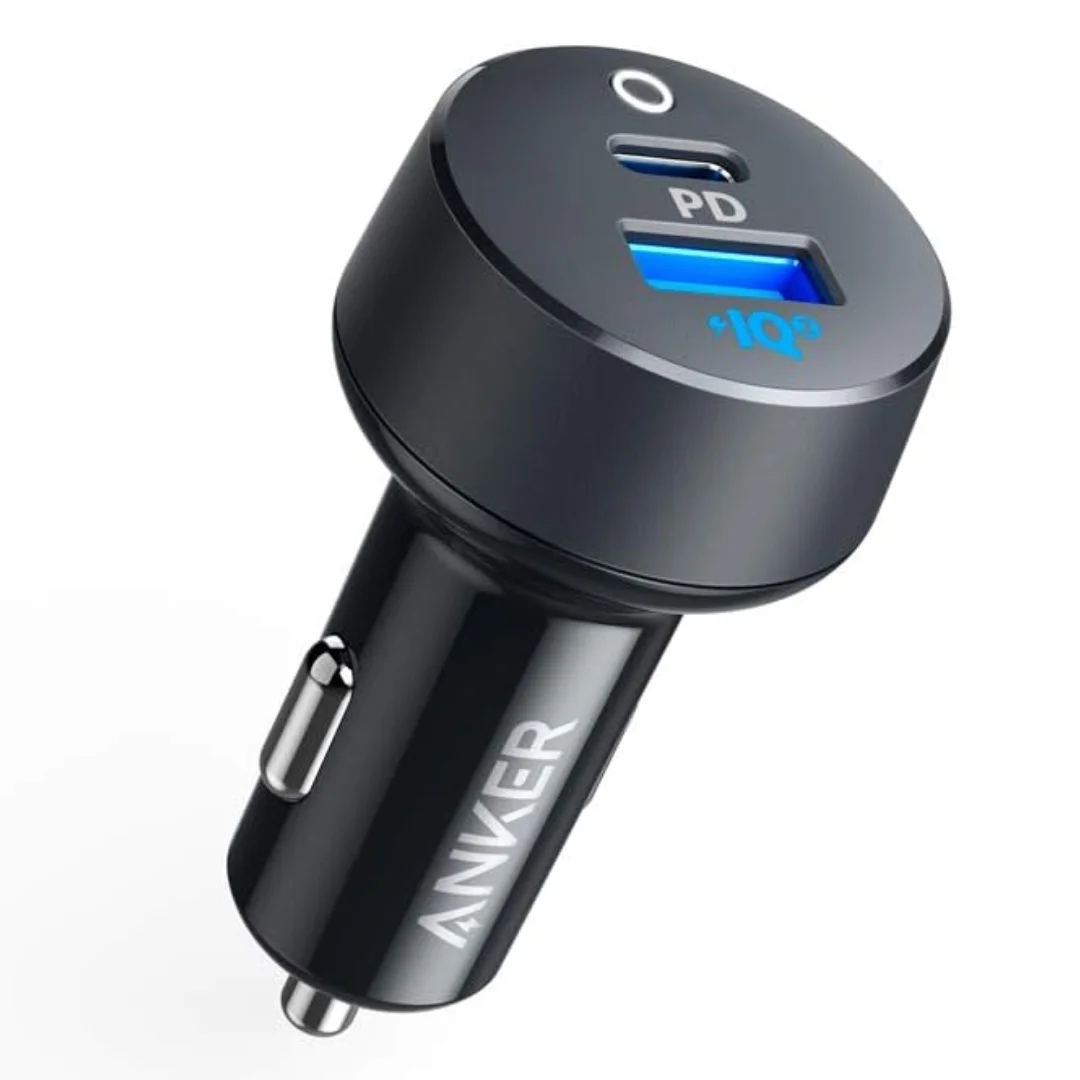
- 🥉 Anker 35W Car Charger (A2732): A balanced charger featuring a 20W USB-C PD port and a 15W USB-A port. Its carbon-fiber textured design and longer positive pin make it excellent for the Kia Cerato's deep socket.
- 🏅 Anker 30W Mini (A2741): A very small charger: we measured it protruding just 30 mm from the socket in a 2018 Toyota Corolla, with up to 30W on USB-C. A good fit for Toyota Corolla owners who want to close their console drawer.
🔬 Practical Fit Summary
Based on each charger's dimensions, design, and the manufacturers' published specifications, here is what to expect in models like the Toyota Corolla 2021, Hyundai Tucson 2023, and Kia Cerato 2019: The Anker A2741 (30W)'s small body sits fully inside the Corolla's tight console and allows the drawer cover to close completely. The Joyroom JR-CCL05's built-in cables save you cable clutter in the Tucson when you charge several devices. And the Anker 35W's long positive pin and spring mechanism maintain constant contact in the Cerato's deep socket despite rough speed bumps.
Compatibility & Specifications Table for Corolla, Tucson, and Cerato
This table summarizes the mechanical and electrical differences for each car model and the scientifically matching charger:
| Technical Metric | Toyota Corolla | Hyundai Tucson | Kia Cerato |
|---|---|---|---|
| Socket Geometry | Compact space, located inside a closing console drawer | Wide and open in the central dashboard area | Deep socket surrounded by raised plastic borders |
| Common Mechanical Issue | Long chargers block the drawer and lose physical contact | Slow built-in USB ports (5W) barely keeping phone alive | Charger vibration and contact loss on speed bumps |
| Lighter Fuse Capacity | 15 Amps (approx. 180W maximum capacity) | 15 Amps (approx. 180W maximum capacity) | 15 Amps (approx. 180W maximum capacity) |
| Recommended Charger | Anker A2741 30W (compact) | Joyroom JR-CCL05 (4-in-1) | Anker 35W Dual Port (Metal) |
| Key Mechanical Advantage | Allows complete drawer closure and 100% stability | Two built-in cables + two ports for several devices | Deep positive pin preventing disconnection on bumps |
Critical Mistakes to Avoid When Charging in Your Car
To protect your new charger, your phone, and your vehicle's wiring, avoid these 4 common mistakes:
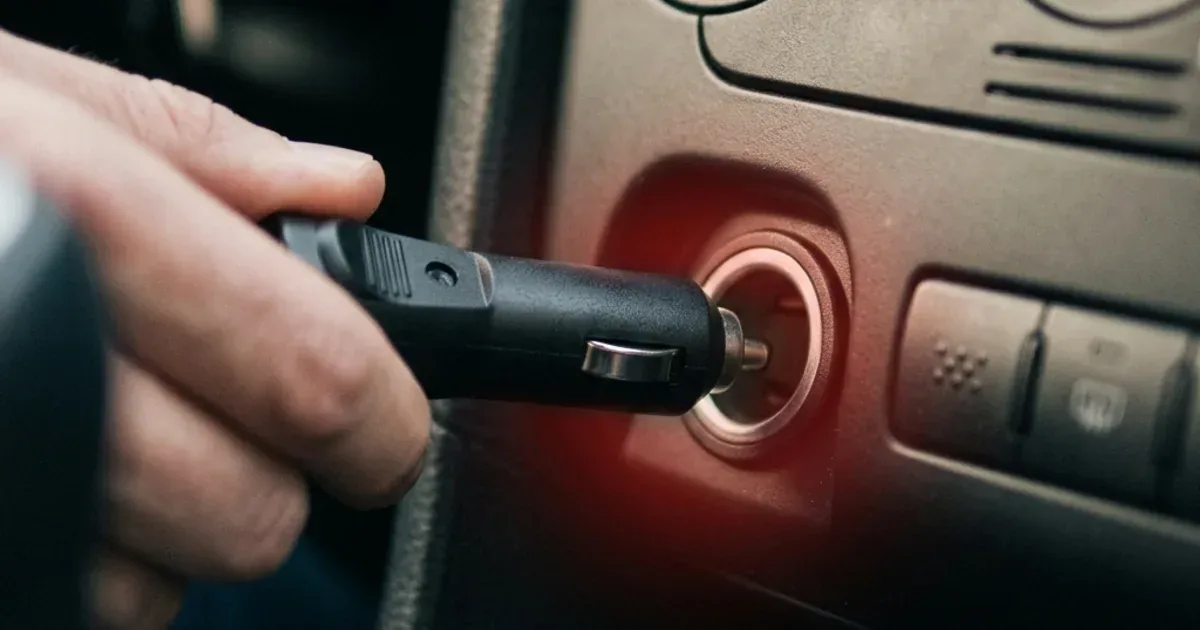
- ❌ Leaving the Charger Connected During Ignition: A common cause of car charger failures. The voltage spike (load dump spike) from the alternator during engine startup flows directly into the charger, risking damage. Always make it a habit: start your engine first, then plug in the charger.
- 🔌 Using Uncertified Cheap Cables: Cables left on the dashboard are exposed to temperatures up to 70°C. Cheap cables dry out, experience micro-tears in the copper cores, and cause resistance fluctuations that force the phone to throttle charging speeds. Always use a high-quality certified cable like the Anker Powerline Cable.
- 💨 Plugging Tire Inflators Directly into the Socket: Most portable tire compressors draw a starting current exceeding 16A. If your cigarette lighter fuse is rated at 15A, it will blow instantly. Always connect tire inflators directly to the car battery using alligator clips, and reserve the lighter socket for phone chargers.
- 🥤 Neglecting Liquid Spills: Cup holders in the Tucson, Cerato, and Corolla are positioned right next to the cigarette lighter socket. Spills (tea, coffee, soda) entering the socket cause copper oxidation, degrading electrical conductivity and leading to short circuits.
Troubleshooting Lighter Socket Issues: Step-by-Step
If your charger suddenly stops working in your Corolla, Tucson, or Cerato, follow this troubleshooting sequence before assuming the charger is dead:
- Step 1: Test with a different cable: Swap the cable first. Cable failure is the culprit in most charging issues.
- Step 2: Test the charger in another car: If the charger works in another vehicle, the problem is with your car's socket or fuse.
- Step 3: Check and replace the fuse: Open your car's fuse panel (usually under the dashboard on the driver's side). Find the 15A fuse labeled CIG or LTR. If the metal filament inside is broken, buy a replacement fuse for 10-20 EGP and swap it.
- Step 4: Clean the socket contacts: Turn off the engine, remove the key, and use a wooden toothpick to gently clean any lint or debris from the bottom contact. (Warning: ❌ NEVER use metal tools for cleaning to avoid short-circuiting the system).
The Final Verdict & Engineering Advice
Matching your car charger to your specific vehicle model is essential for a stable, safe charging process that protects both your phone's battery and your car's wiring. A Toyota Corolla requires a flush-fit charger for clearance, a Hyundai Tucson needs a thermally robust multi-port charger for summer heat, and a Kia Cerato requires a charger with strong mechanical springs to handle bumps. Always invest in an original charger with a certified warranty, and avoid cheap unbranded options for your safety and peace of mind.
✅ Available on CairoVolt
All our car chargers from Anker and Joyroom are 100% original and covered by CairoVolt's written store warranty (duration shown on each product page). Browse our Joyroom Car Chargers and Anker Car Chargers to charge safely during the Egyptian summer. Delivery is available to all governorates (commonly 1–6 business days depending on governorate), with cash on delivery.

CairoVolt Editorial Team
Content team reviewing specifications and buying guides
The CairoVolt team reviews model numbers, specifications, and compatibility, and updates information when better data is available. Estimates are labeled as calculations, and readers can report information that needs correction.
Frequently Asked Questions
Do built-in USB ports in Corolla or Tucson replace the need for a car charger?▼
The lighter socket in the Corolla is loose, causing the charger to slip out on bumps. What is the fix?▼
Can a 60W or 100W car charger burn the electrical harness of a Tucson or Cerato?▼
Why does the phone stop charging momentarily when the AC kicks in on Corolla or Tucson?▼
Ready to Buy?
Browse available products and review specifications and CairoVolt warranty terms before ordering
Related products
Anker 30W Mini Car Charger (A2741) | USB-C 30W PD + USB-A 22.5W | Ultra-Compact
Joyroom JR-CCL05 Retractable 4-in-1 Car Charger 69W | 2 Cables + 2 Ports
Anker PowerDrive PD+ 2 Car Charger 35W (A2732) | USB-C PD + USB-A
Anker PowerDrive 2 Car Charger | 24W Dual USB | PowerIQ
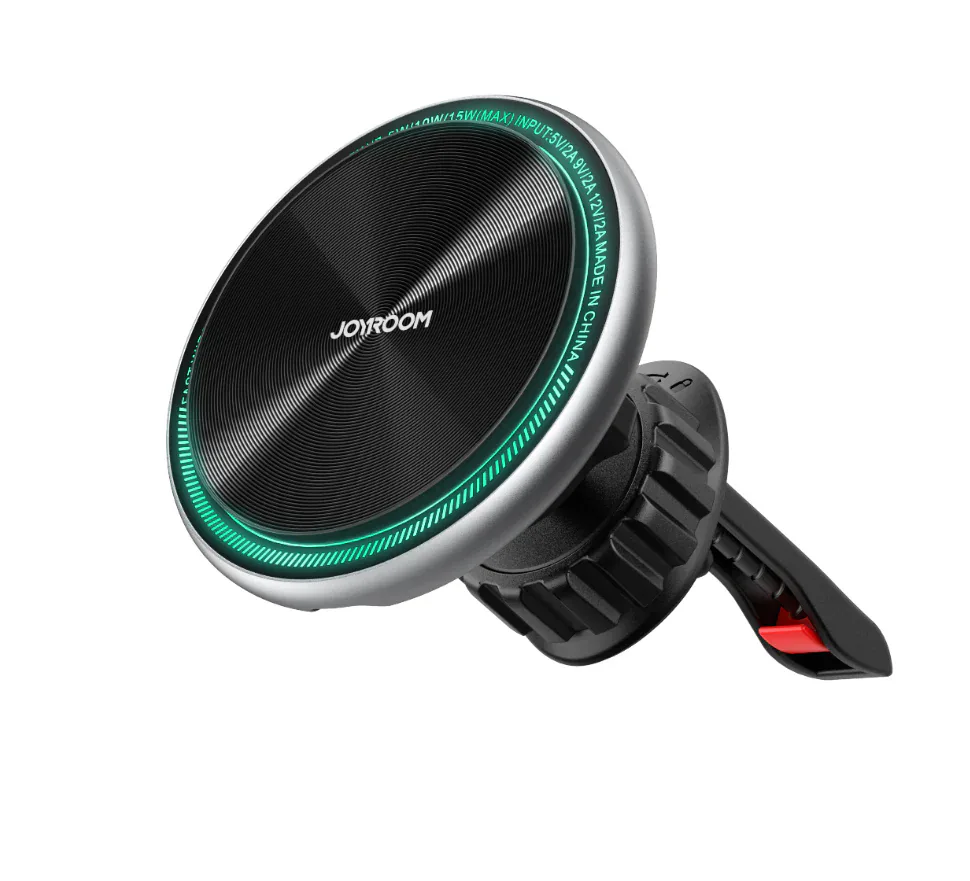
Joyroom Magnetic Car Mount ZS290 | N52 Magnets | MagSafe | 360°