 CairoVolt Team
Apple Charger Guide Egypt: Choosing the Right Wattage for iPhone, iPad, and MacBook
Confused between 20W and 30W chargers for your new iPhone? We break down the exact wattage requirements for all Apple devices, including prices and budget alternatives.
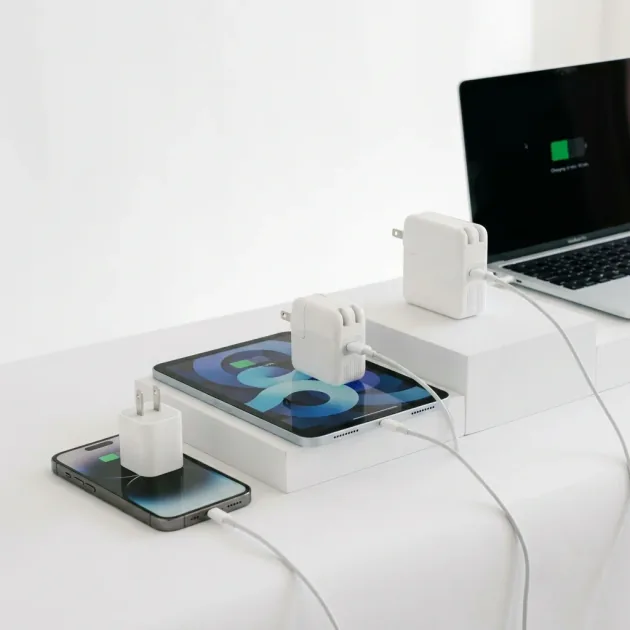
Quick Take: For iPhones (iPhone 12 to 16), a 20W or 30W charger is ideal. For iPads, a 30W or 35W adapter is recommended. MacBooks require at least 30W (MacBook Air) or 70W to 140W (MacBook Pro). Charging iPhones with a MacBook block is safe as the device regulates intake.
Since Apple decided to remove charging adapters from iPhone boxes to minimize carbon emissions, consumers have had to purchase wall plugs separately. This policy has not only added an extra expense but has also forced users to understand electrical specifications—specifically wattage—to ensure they select compatible and safe adapters for their devices.
Many Apple users in Egypt ask: Is a standard 20W USB-C charger enough for an iPad? Can you use a 96W MacBook Pro charger to power an iPhone 15 or 16 without damaging its battery cells? What do genuine Apple adapters cost in Egypt compared with genuine third-party alternatives? In this technical guide, the CairoVolt lab addresses these questions to help you choose the right adapter safely and cost-effectively.
💡 Tech Summary: An Apple 30W charger or a certified equivalent, like the Anker Nano 30W, is the most versatile option. It can fast-charge iPhones at maximum speeds, power iPads efficiently, and provide enough current to run a MacBook Air.
1. Apple's No-Charger Policy & Current Charging Profiles
Apple introduced its charger-free packaging with the iPhone 12 series. All modern Apple devices support the **USB Power Delivery (USB-PD)** standard. This means you do not have to buy Apple-branded adapters; any certified adapter that supports USB-PD and provides the correct voltage and current profiles will charge your device safely.
2. Selecting the Right Charger for iPhones
Each iPhone generation has a specific maximum power intake capability that determines its charging speed:
- iPhone 8 through iPhone 11: These models support fast charging up to a maximum of **18W**. A standard 20W charger is perfect and will default to 18W when connected.
- iPhone 12 through iPhone 14: These models fast-charge at a maximum rate of **20W to 23W**. The official Apple 20W USB-C power adapter is the standard option for these devices.
- iPhone 15 and iPhone 16: These newer generations support power intake up to **27W to 30W** under load. We recommend using a **30W** charger to achieve maximum charging speeds and reduce charging times by up to 20 minutes compared to a 20W adapter.
3. Choosing the Right Adapter for iPads
iPads have much larger batteries than iPhones and require higher wattages to charge efficiently:
- Standard iPad and iPad mini: These models ship with or support up to a **20W** adapter, which is sufficient for their battery size.
- iPad Air and iPad Pro (M2 / M4 models): These high-performance tablets support power intake up to **30W to 35W**. Using a standard 20W iPhone plug will result in very slow charging, taking over 3 hours. We recommend using a **30W or 35W Dual USB-C port** adapter to charge them at full speed.
4. Selecting MacBook Charger Wattages
Apple laptops require continuous power and rely on USB-C ports for charging. The requirements vary by model:
- MacBook Air (M2 / M3): Requires a minimum of **30W** to charge while in use. It also supports fast charging up to **70W**, allowing you to charge the battery to 50% in 30 minutes.
- MacBook Pro 14-inch (Base M3 / M4): Requires a **70W** power adapter as a balanced standard.
- MacBook Pro 14 and 16-inch (Pro / Max chips): These pro laptops require **96W to 140W** adapters to maintain performance and charge the battery during heavy workloads.
5. Can You Charge an iPhone with a MacBook Charger?
Yes, **you can safely charge an iPhone, iPad, or AirPods with a MacBook charger (70W, 96W, or 140W)**. Thanks to the USB-PD protocol, the charger and phone communicate when connected. The charger detects the phone's maximum power limit and adjusts its voltage and current down to match the device's profile. The phone's internal power management IC controls the intake, preventing damage from excess current.
6. Genuine Apple Charger Prices in Egypt
CairoVolt does not sell Apple chargers, so these are prices for genuine Apple chargers in the Egyptian market (approximate market range, varies by seller):
- Apple 20W USB-C Adapter: Retails between 1,100 and 1,400 EGP.
- Apple 30W USB-C Adapter: Retails between 1,600 and 1,950 EGP.
- Apple 35W Dual USB-C Port Adapter: Priced between 2,400 and 2,800 EGP (ideal for charging two devices simultaneously).
- Apple MacBook 70W / 96W Adapter: Priced between 3,200 and 4,200 EGP.
7. Genuine Third-Party Alternatives to Apple Chargers
If you prefer not to buy original Apple chargers, these genuine alternatives support the USB-C PD standard that iPhones and iPads use, cost less, and come with CairoVolt's written store warranty (duration shown on each product page):
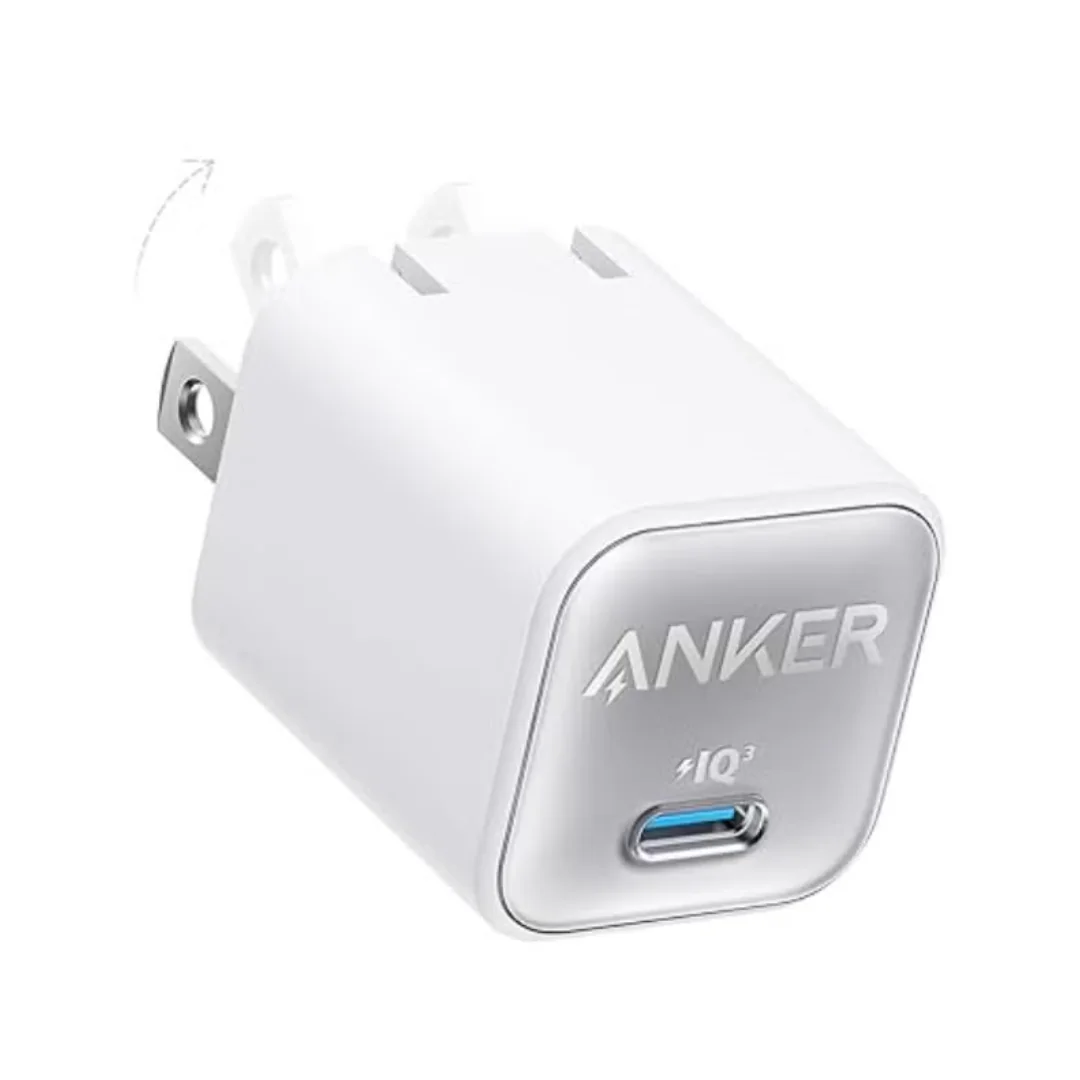
- Anker 511 Nano 3 30W (A2147): A GaN alternative to Apple's 30W adapter that we measured at 28.4 × 28.5 × 35.1 mm, priced at EGP 490. In our test it charged an iPhone 15 up to Apple's ~20W cap.
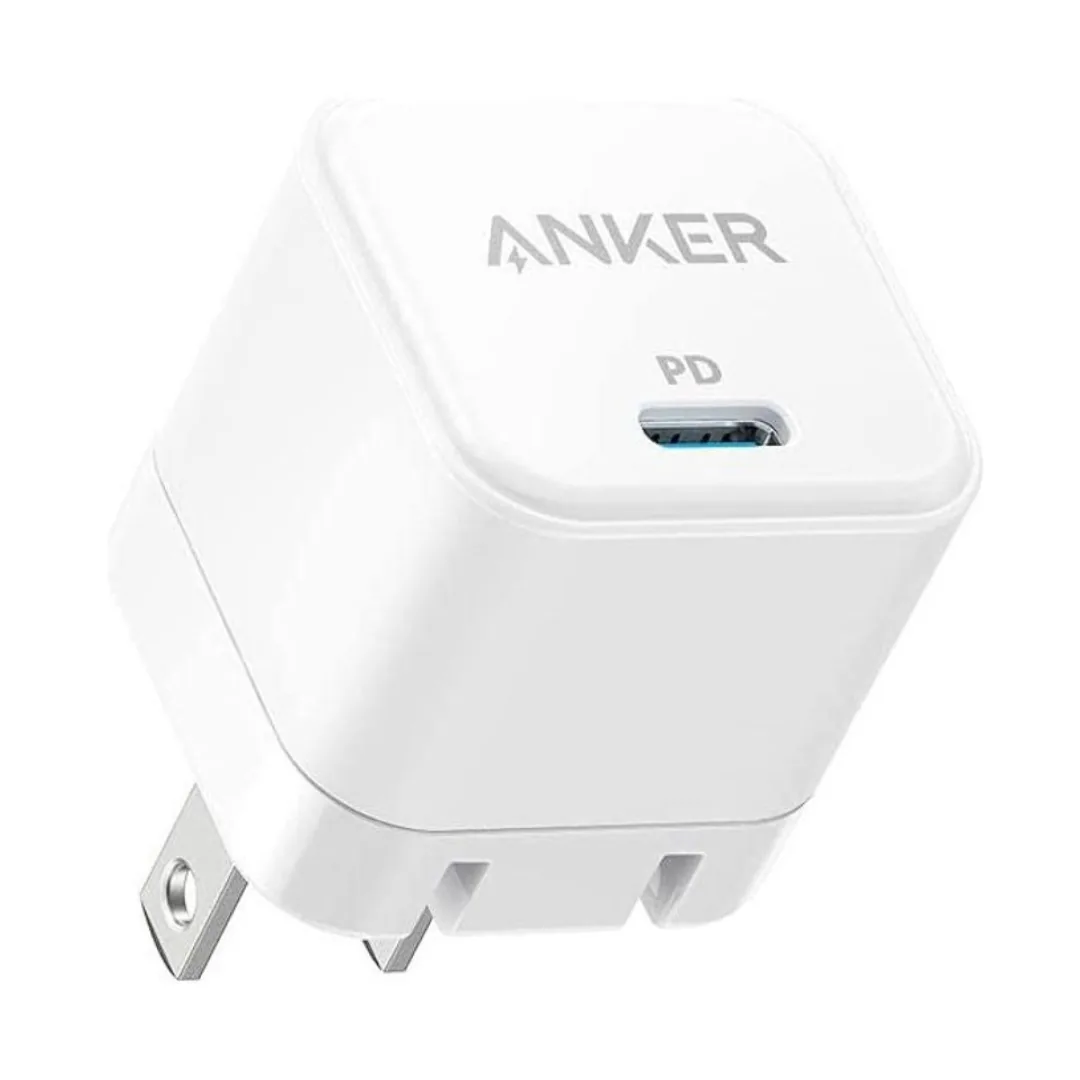
- Anker PowerPort III 20W: A compact 20W PD cube for iPhones — a genuine alternative to Apple's 20W adapter, priced at EGP 520.
- Joyroom 25W / 30W chargers: a budget option — the Joyroom 25W (JR-TCF23) at EGP 342, and the Joyroom 30W (JR-TCF30) with one USB-C and one USB-A port at EGP 280. In our tests both reached the iPhone's ~20W ceiling.
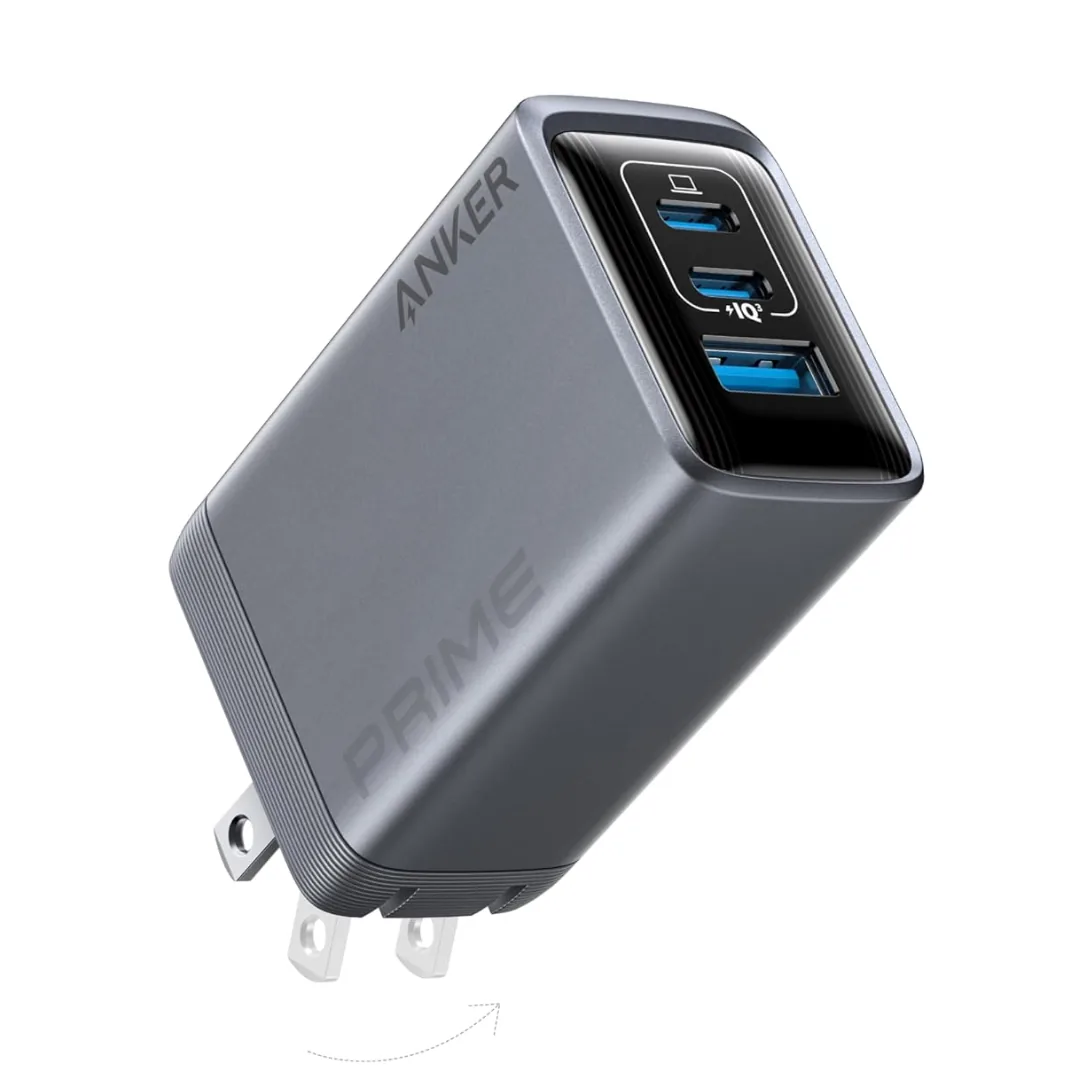
- Anker Prime 67W (A2669): a 3-port GaN charger that can charge a MacBook Air, an iPad and an iPhone together, priced at EGP 1,970 — a practical alternative to MacBook adapters.
- Anker Prime 100W: A 100W GaN charger with 3 ports, capable of charging a laptop and two phones simultaneously — a practical alternative to Apple's 96W MacBook adapter, priced at EGP 1,999.
8. Spotting Counterfeit Apple 20W Chargers
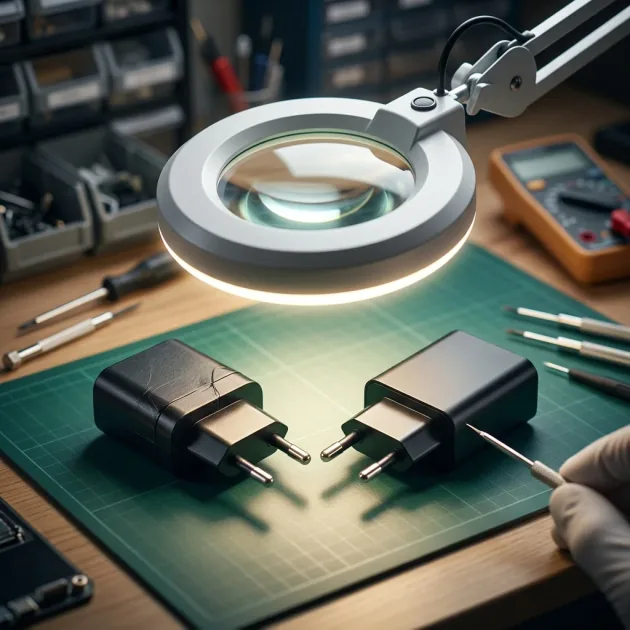
Counterfeit Apple chargers are common in Egypt. Use these tests to verify authenticity:
- Weight: counterfeit chargers are often noticeably lighter because they contain fewer components. Weight alone is not proof, but it is a warning sign.
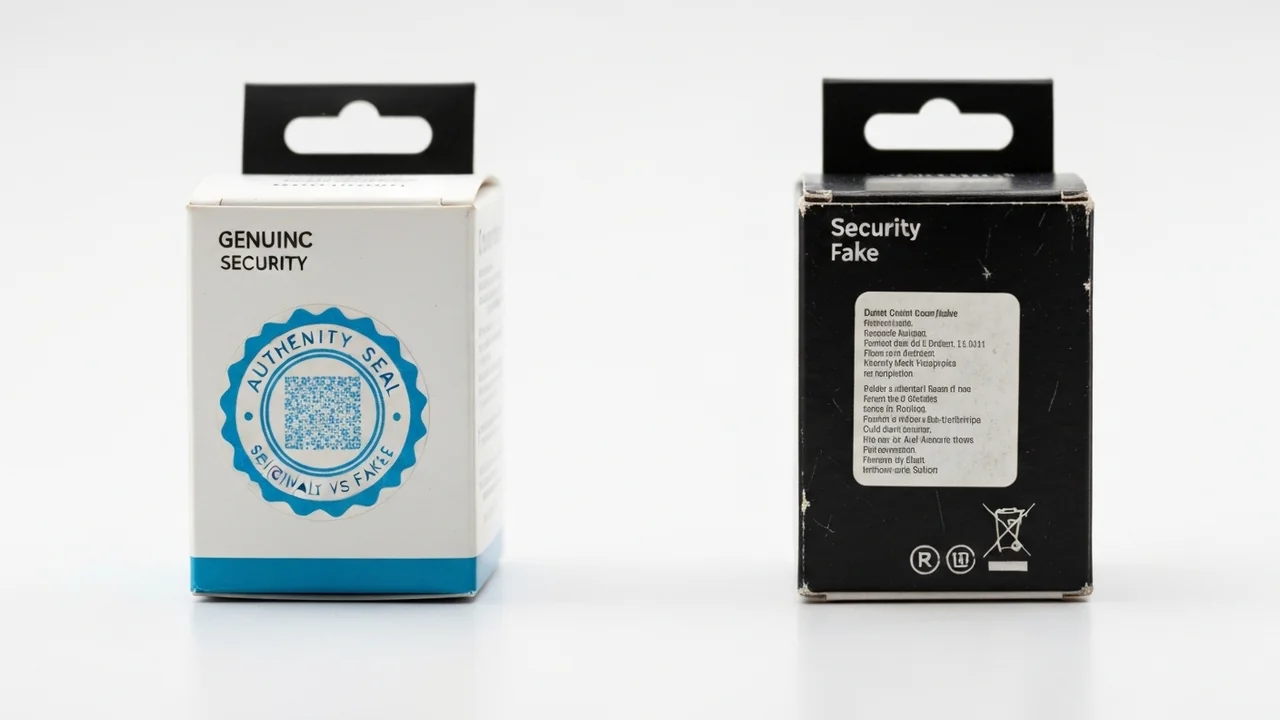
- Buy from a Known Source: iOS provides no way to verify a wired charger's authenticity. A standard USB-C power adapter never appears in Settings> General> About — that screen shows your iPhone's own model and serial number, not the charger's. Only MagSafe chargers and MagSafe Battery Packs show up there, because they carry an accessory-identification chip; a wired adapter uses USB Power Delivery, which only negotiates voltage and wattage and transmits no identity data to iOS. Since a genuine charger also won't appear in the menu, do not rely on this test — buy from a seller that issues an invoice and a written warranty naming its legal identity, and match the model and ratings to Apple's documentation. Packaging or a barcode alone does not prove authenticity.
- Check the Printing: Original chargers feature light grey laser engraving, while fakes use dark ink that smudges easily.
9. Electrical Surge Protection in Apple Chargers
The electrical grid in Egypt can experience voltage spikes, particularly when power returns after a blackout. Original Apple chargers and premium third-party alternatives (like Anker) contain thermal fuses and metal-oxide varistors that absorb these surges to protect your phone. Counterfeit adapters lack these components, passing voltage spikes directly to your device and risking damage to its charging circuit. We recommend unplugging chargers during power outages.
10. USB-C and Lightning Cable Requirements
A high-quality charger requires a compatible cable to deliver maximum current efficiently. For older iPhones (iPhone 14 and earlier), use a cable with **MFi (Made for iPhone)** certification to ensure hardware compatibility and avoid iOS lockouts. For USB-C devices, use a standard 3A-rated cable for up to 60W charging. For devices requiring more than 60W (such as MacBook Pro models), use a 5A-rated cable containing an E-Marker chip to allow safe, dynamic power delivery. High-quality cables ensure stable transmission and protect your ports from micro-arcing.
11. CairoVolt Lab Practices for Apple Battery Health
Follow these guidelines to extend your Apple device's battery lifespan:
- Enable Optimized Battery Charging: This setting on iOS and macOS delays charging past 80% based on your daily routine, minimizing the time the battery spends at high voltage stress levels.
- Avoid Heavy Usage While Charging: Using your device for intensive tasks like gaming or video calls while fast charging generates double the thermal load (processor heat and battery charging heat combined), degrading lithium cells rapidly.
- Remove Thick Cases: Heavy protective cases can trap heat inside the phone's chassis during charging. Removing them during fast charging allows for better heat dissipation and cooler battery temperatures.
12. Thermal Management and Ambient Temperature Throttling in Egypt
Egypt's high ambient temperatures during summer can severely impact the charging performance of Apple hardware. If your iPhone or iPad detects its internal battery temperature rising above 35°C, the operating system will temporarily pause the charging process at 80% and display a temperature warning. This is a built-in safety feature to prevent battery degradation. To ensure consistent fast-charging speeds, always charge your devices in well-ventilated or air-conditioned rooms, and place them on hard, flat surfaces that allow heat to dissipate naturally.
13. Future-Proofing Apple Device Charging Infrastructure
Investing in a high-quality GaN charger that supports USB Power Delivery 3.1 and multiple USB-C ports is the smartest way to future-proof your tech accessories. With future devices requiring higher power profiles, a multi-port charger from a reputable brand like Anker or Joyroom can charge your iPhone, iPad, and MacBook simultaneously. This eliminates the need to carry separate power bricks and ensures that your charging setup remains compatible with future Apple hardware updates.
Additionally, buying multi-port chargers reduces overall accessory clutter in your travel bag and home workspace. Instead of carrying three separate charging blocks for your iPhone, your iPad, and your laptop, you can simplify your setup by using a single, certified GaN brick that splits power dynamically among all three connected devices. This approach keeps your setup organized, cuts down on cable clutter, and ensures that your electronics are charged using optimal power levels. Modern multi-port chargers are built with internal microcontrollers that detect which devices are connected and dynamically route the maximum safe wattage to each port, prioritizing high-draw devices like MacBooks first.
In conclusion, choosing a charger with the correct wattage and purchasing from trusted sources is the best way to protect your Apple device's battery and maintain long-term performance. Spending a little extra on certified power adapters pays off by preserving battery health and reducing the need for expensive battery replacements in the future.
CairoVolt Team
Tech Editor
Frequently Asked Questions
Can I use a 20W charger for a MacBook Air?▼
Does charging an iPhone with a 96W block degrade the battery?▼
What is the price of a genuine Apple 20W charger in Egypt?▼
Are Anker chargers fully compatible with Apple devices?▼
Ready to Buy?
Browse available products and review specifications and CairoVolt warranty terms before ordering
Related products
Anker 511 Nano 3 GaN Charger 30W (A2147) | USB-C PD | IQ3
Anker PowerPort III 20W Cube A2149P21 — USB-C PD | Check Device Profile
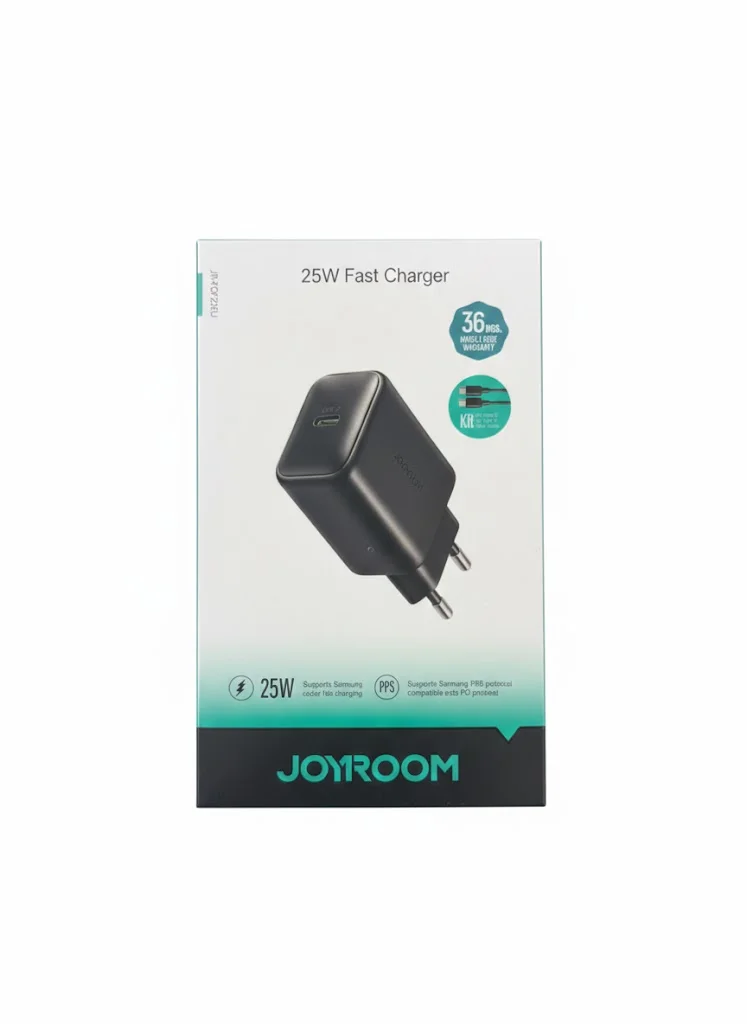
Joyroom 25W USB-C PD Charger (JR-TCF23) | iPhone and Samsung Compatibility
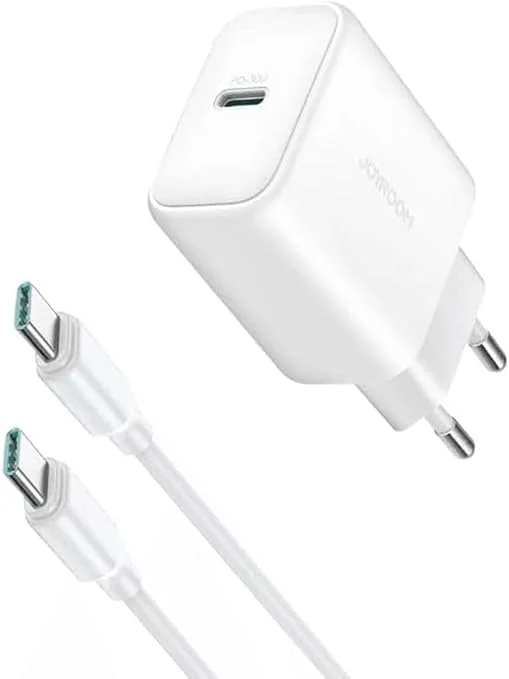
Joyroom 30W PD+QC Wall Charger | Dual USB-C and USB-A Ports
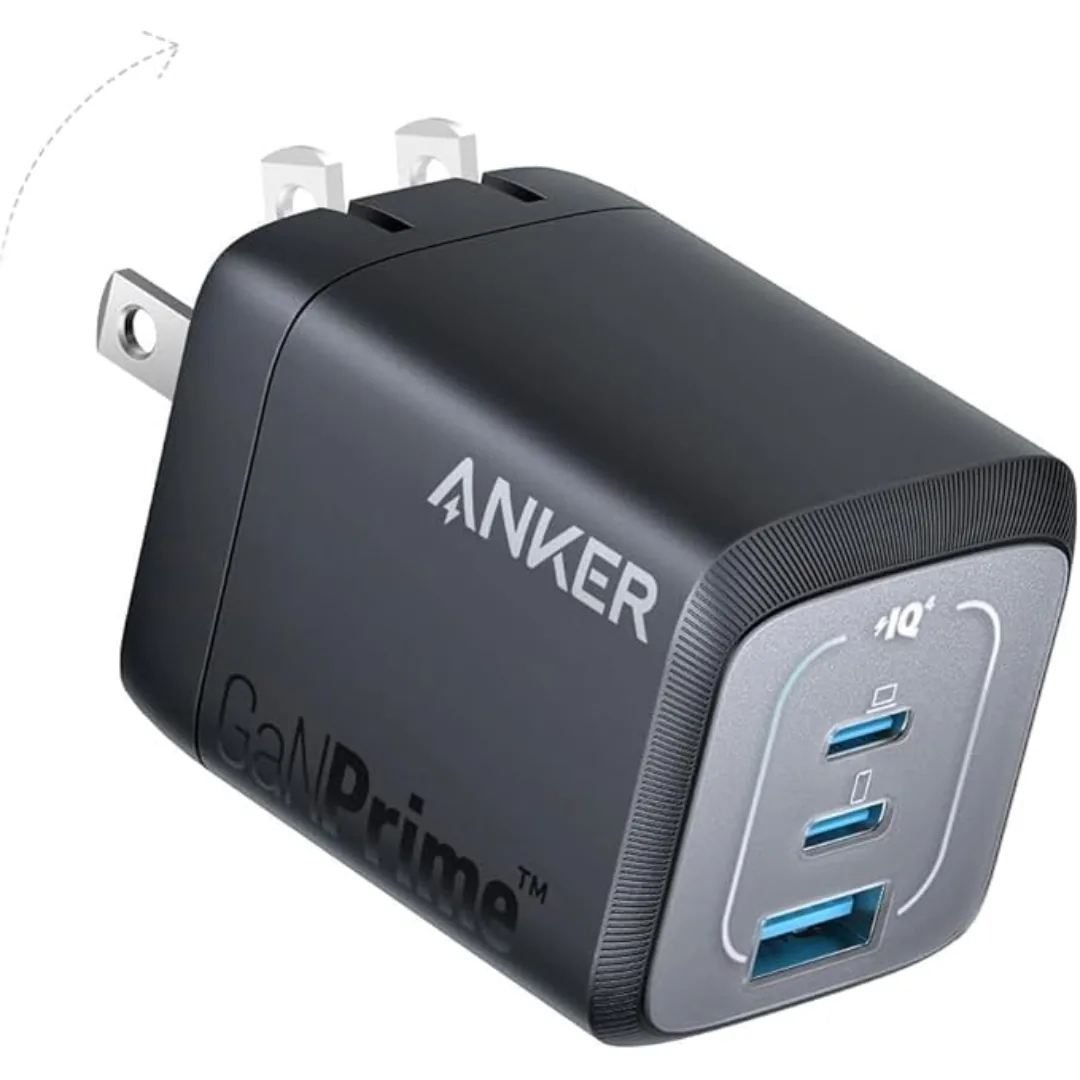
Anker Prime 67W GaN Wall Charger (A2669) — 3 Ports (2 USB-C + USB-A) | GaNPrime + PowerIQ 4.0