 CairoVolt Team
Magnetic Wireless Power Bank — Is It Practical for iPhone and Android in Egypt?
A magnetic power bank attaches to your phone without a cable — but the 7.5W wireless output versus 20W wired means charging takes 2.7 times longer. When is it worth the premium and for whom?
In short: Magnetic power banks work instantly with iPhone 12 and later. Android needs a magnetic ring (included with some models). Wireless charging at 7.5W is 2.7× slower than wired at 20W. Worth it if your lifestyle benefits: gym use, bedside charging, in-car use with one hand.
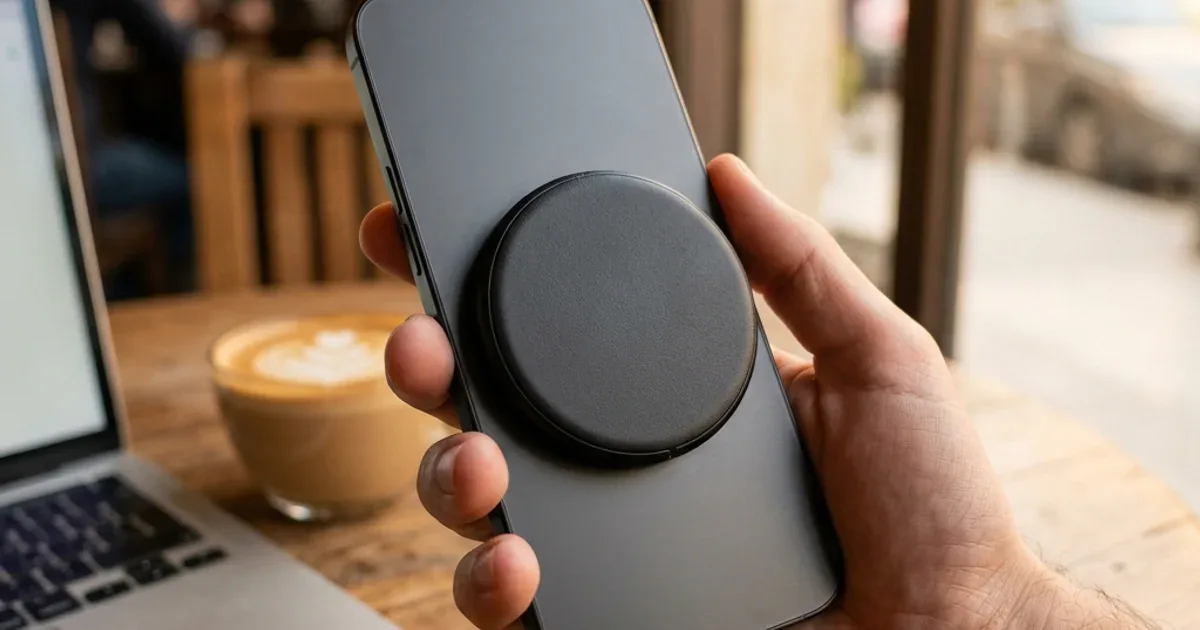
The idea behind a magnetic power bank is simple and appealing: place your phone on it, it snaps on magnetically, and charging begins without inserting a cable. But before you buy, there are important details to understand — especially if you have an Android phone or need fast charging.
💡 Summary: iPhone 12 and later → works instantly, no accessories needed (MagSafe). Android → needs a magnetic ring on the phone back (included with Joyroom Magnetic). Wireless at 7.5W is 2.7× slower than wired at 20W. Worth it if your use case calls for hands-free attachment.
How Magnetic Power Banks Work
Apple's MagSafe technology is a ring of magnets integrated into the iPhone 12 and later models. When you place the phone on a MagSafe-compatible power bank, the magnets self-align and wireless charging starts immediately.
The Qi2 standard (an evolution of MagSafe) launched in 2023 and brought the same capability to Android and other devices — but the problem: most Android phones sold in the Egyptian market do not have a built-in magnetic ring. The ring is simply not part of their design.
Compatibility — What Works and What Needs Extras
| Device | Works? | Charging Speed | What You Need |
|---|---|---|---|
| iPhone 12 / 13 / 14 | ✅ Instantly | 7.5W MagSafe | Nothing |
| iPhone 15 / 16 / 17 | ✅ Instantly | 7.5W MagSafe | Nothing |
| Samsung S26 / S25 / S24 | ⚠️ With extra | 5W only (standard Qi) | Magnetic ring |
| Xiaomi / Oppo / Realme | ⚠️ With extra | 5W only (standard Qi) | Magnetic ring |
| iPhone 11 and older | ❌ No | — | No solution (no Qi support) |
The magnetic ring is a small adhesive disc placed on the phone back or inside the case. The Joyroom Magnetic 10,000mAh includes one ring in the box. The catch for Android: with the ring, charging runs at 5W (standard Qi), not the 7.5W MagSafe protocol — because Android devices do not support Apple's proprietary protocol.
⚡ 7.5W Wireless vs 20W Wired — Real Time Difference
iPhone 17 (3,561mAh / 13.72Wh): full charge at 7.5W wireless = approximately 2 hours 45 minutes. At 20W wired = approximately 1 hour 5 minutes. Difference: 100 minutes — wireless is 2.53× slower. If you are charging overnight, it does not matter. If you need a quick top-up in 30 minutes — use the cable.
The Physics of Wireless Loss: Why 30% of Energy is Wasted as Heat
Wireless charging is governed by electromagnetic induction. An alternating current flows through the transmitter coil inside the power bank, creating a localized magnetic field that crosses the air gap to excite a receiver coil in the phone. Unfortunately, this physical conversion process is far less efficient than direct copper-to-copper wire transfer. While wired charging achieves 85-90% efficiency, wireless transfer maxes out around 70-75%.
The remaining 25-30% of energy is not simply lost; it is transformed directly into thermal heat. This temperature rise warms both the power bank and your phone, triggering the phone's protective thermal throttling algorithms to lower the charging speed. As a result, users receive fewer complete phone charges wirelessly than they would using a standard USB-C cable.
The Thermal Reality: Heat Generation and Battery Health
In hot climates, particularly during Egyptian summer months, the additional thermal load from wireless charging is a critical consideration for battery longevity. Inductive charging pushes phone temperatures up to 42°C or 44°C. Continuous exposure to such heat accelerates the chemical degradation of the phone's lithium battery, permanently lowering its maximum capacity over time.
CairoVolt technical experts strongly advise against running resource-heavy applications (such as high-brightness GPS navigation or 3D games) while charging magnetically. The combination of CPU and wireless coil heat triggers safety shutdowns, halting charging completely until the device cools down.
Dynamic Safety: MultiProtect and FOD (Foreign Object Detection)
A crucial safety technology integrated into high-quality wireless power banks is Foreign Object Detection (FOD). Once the inductive field is active, the controller monitors the electromagnetic resonance. If a metallic object (such as coins, keys, or standard metal phone rings) is placed between the charger and the phone, the induction field will heat it up rapidly, posing a severe burn or fire risk.
Anker and Joyroom power banks automatically cut off power immediately upon sensing any abnormal impedance changes, indicating a foreign object is present. This safety mechanism triggers a blinking warning light and protects your smartphone from thermal overload.
Phone Cases and MagSafe: The Impact of Thickness on Magnetic Strength
Magnetic force operates on the physical inverse square law, meaning the magnetic grip drops exponentially with every additional millimeter of physical spacing between the coils. Utilizing a standard thick protective case without built-in alignment magnets drastically degrades the grip strength of the power bank, causing it to slip easily or interrupt charging.
To avoid this, we strongly recommend utilizing certified MagSafe cases featuring integrated magnetic arrays that channel and focus magnetic flux lines. Avoid cases containing metallic support rings or kickstands, as induction fields will cause these metals to heat up rapidly, creating a fire hazard or damaging the battery cells.
Magnetic Strength and Practical Safety: Can You Trust the Snap?
Many users worry if the magnetic bond is secure enough to carry while walking. Apple's MagSafe guidelines require a pull force between 8 and 12 Newtons to prevent accidental detachment. Premium accessories from brands like Anker and Joyroom leverage powerful Neodymium magnets that match this requirement.
A smaller vertical orientation magnet located below the main ring aligns the power bank, preventing it from spinning or shifting sideways while holding the phone. This provides a rock-solid, single-unit feel in the hand or pocket during active daily usage.
Future Standards: Qi2 and What It Means for Android Users
The Wireless Power Consortium (WPC) recently introduced the Qi2 wireless charging standard, incorporating Apple's Magnetic Power Profile (MPP) architecture. Qi2 aims to unify wireless charging standards across all platforms, offering built-in magnetic alignment and faster charging speeds for compatible Android devices.
By standardizing these magnetic arrays, Qi2 power banks will deliver up to 15W wireless charging speeds to compatible non-Apple devices without requiring specialized adhesive rings or third-party cases. This promises to reshape the universal charging accessory landscape in Egypt in the coming years.
Joyroom Magnetic 10,000mAh — Real Numbers
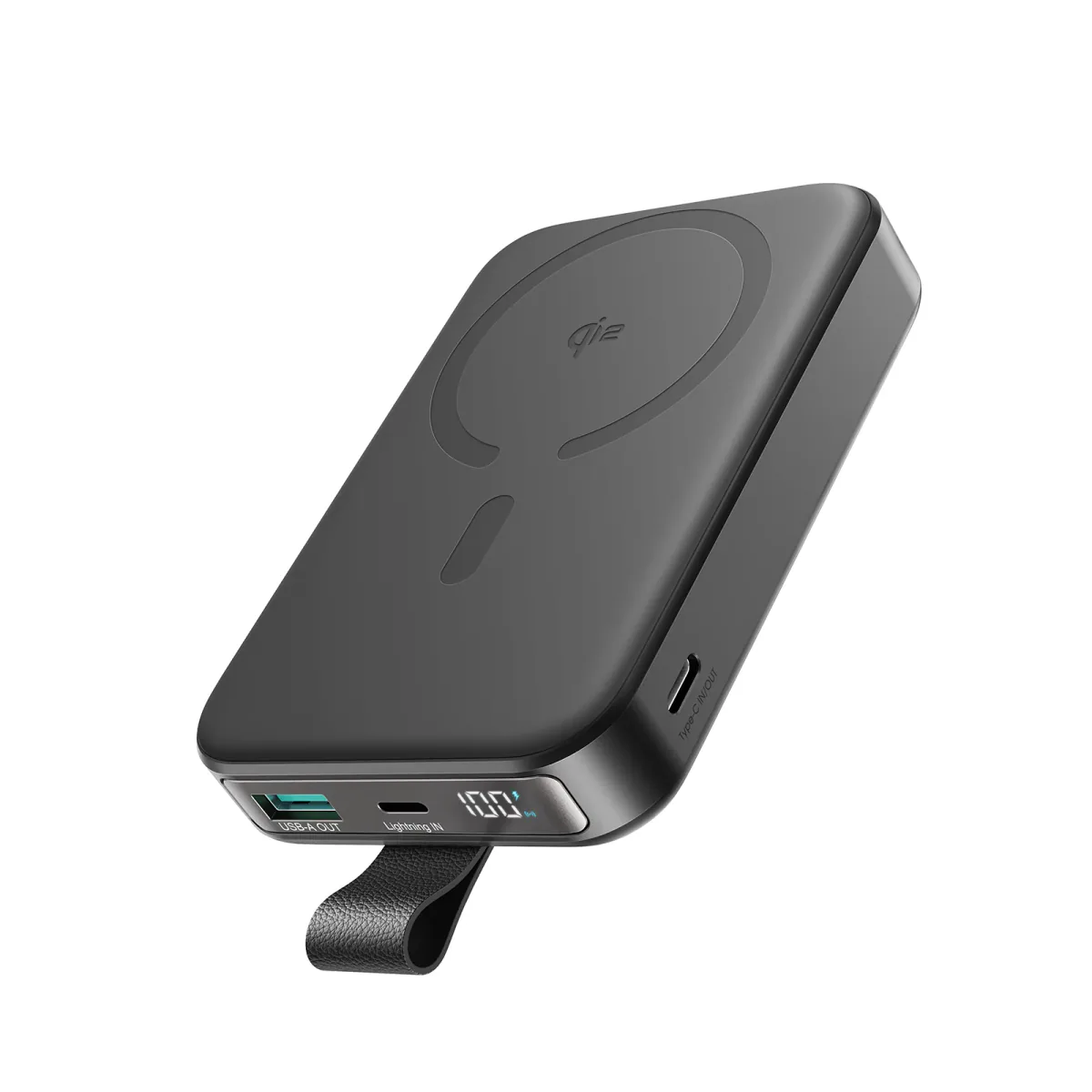
10,000mAh capacity (37Wh nominal). In the CairoVolt lab we measured 32.1Wh usable over USB-C and about 24.0Wh delivered wirelessly into an iPhone 13 (sample CV-PB-JRW050-001). Wireless charging on the iPhone settled at 7.3–7.5W — the pack is MagSafe-compatible (magnets + Qi) but not Qi2 — and wired PD peaked at 19.4W. It weighs about 232g, heavier than a standard 10K pack because of the wireless components.
iPhone 17 charges (est., battery about 13.72Wh): wirelessly about 24.0Wh ÷ 13.72Wh ≈ 1.7 times, and by cable about 32.1Wh × 0.85 ÷ 13.72Wh ≈ 2 times. Cable charging is always more efficient, even if you own a wireless power bank.
When Does a Magnetic Power Bank Make Sense?
In specific scenarios, magnetic attachment genuinely beats a cable:
- Gym and exercise — you hold the phone and need the power bank clinging to its back.
- Bedside — no fumbling for the USB-C port in the dark.
- In the car — phone on the mount with the power bank attached, no cable to tangle.
- One-handed use — power bank snapped to the phone back, both operating as a single unit.
But if fast charging matters and you have time constraints — the 20W cable is significantly faster.
Joyroom Magnetic vs Other Options in Egypt
| Option | Capacity | Max Wireless | Max Wired | Price |
|---|---|---|---|---|
| Joyroom Magnetic 10K | 10,000mAh | 7.3–7.5W on iPhone (measured) — not Qi2 | ~19.4W USB-C PD (measured) | EGP 850 |
| Anker Zolo A110D 10K (no wireless) | 10,000mAh | ❌ None | 22.5W | EGP 1,270 |
The Joyroom Magnetic at EGP 850 adds magnetic wireless charging (we measured 7.3–7.5W on iPhone); compare its price with wired 10,000mAh packs such as the Anker Zolo A110D (EGP 1,270) on each product page. If you have an iPhone 12 or later and do not already own a power bank, the Joyroom Magnetic is an easy choice for daily convenience.
✅ Joyroom Magnetic 10,000mAh Available on CairoVolt
Joyroom Magnetic 10K — EGP 850 with CairoVolt's written store warranty (duration shown on the product page). Includes magnetic ring for Android. Delivery to all governorates + cash on delivery.
CairoVolt Team
Tech Editor
Frequently Asked Questions
Does a magnetic power bank charge Android phones without a magnetic ring?▼
Does wireless charging damage phone batteries more than wired charging?▼
Can I charge wirelessly and wirelessly (two devices) at the same time?▼
How many times does the Joyroom Magnetic 10K charge an iPhone 17 Pro wirelessly?▼
Ready to Buy?
Browse available products and review specifications and CairoVolt warranty terms before ordering
Related products
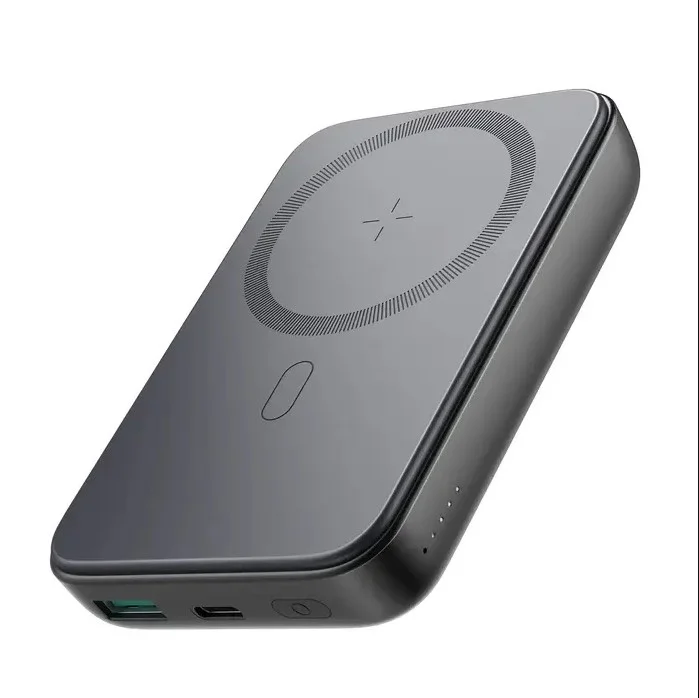
Joyroom MagSafe Power Bank 10000mAh | 15W Wireless + 20W Wired | Kickstand
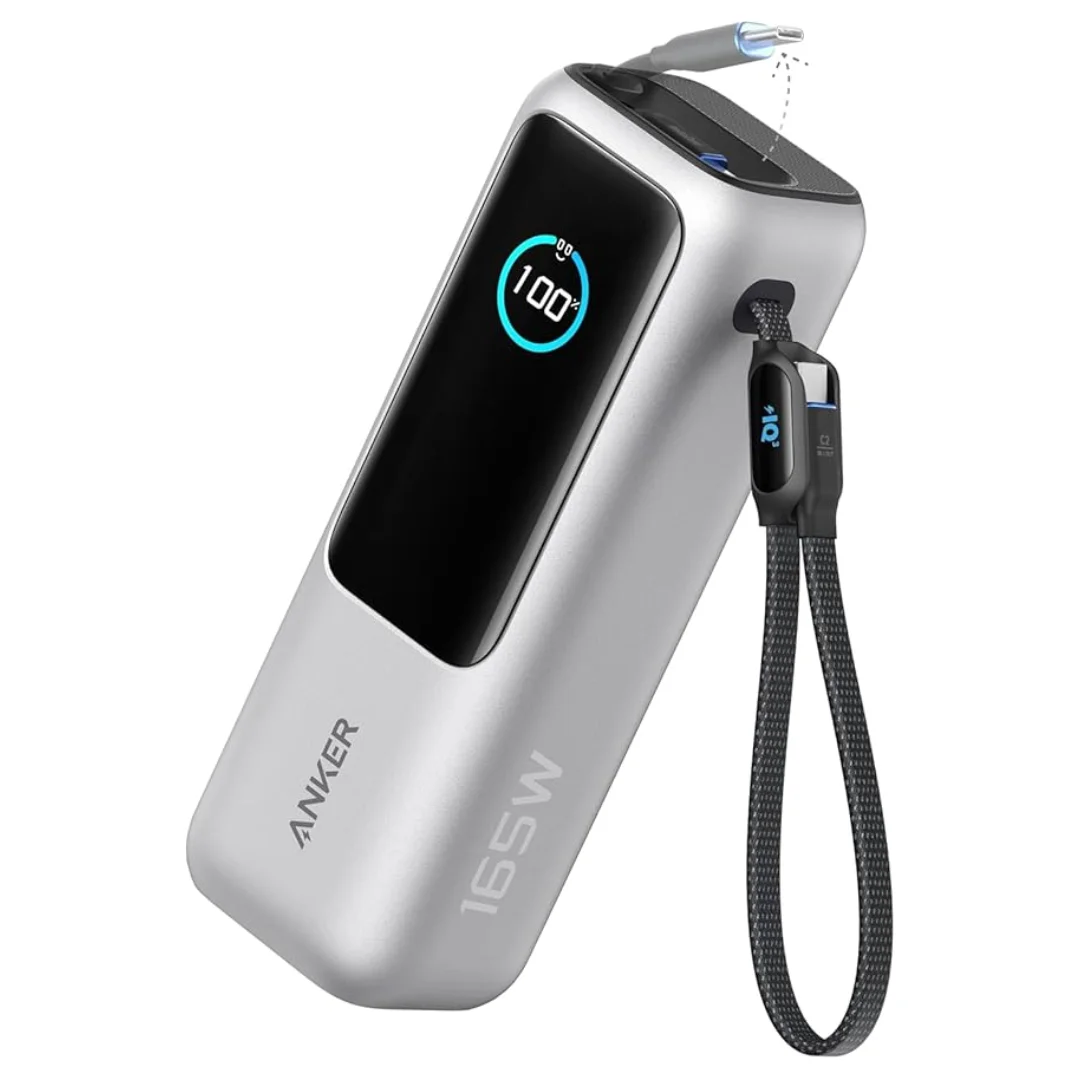
Anker Zolo Power Bank 25,000mAh 165W — Built-In Dual Cables | MacBook Charging
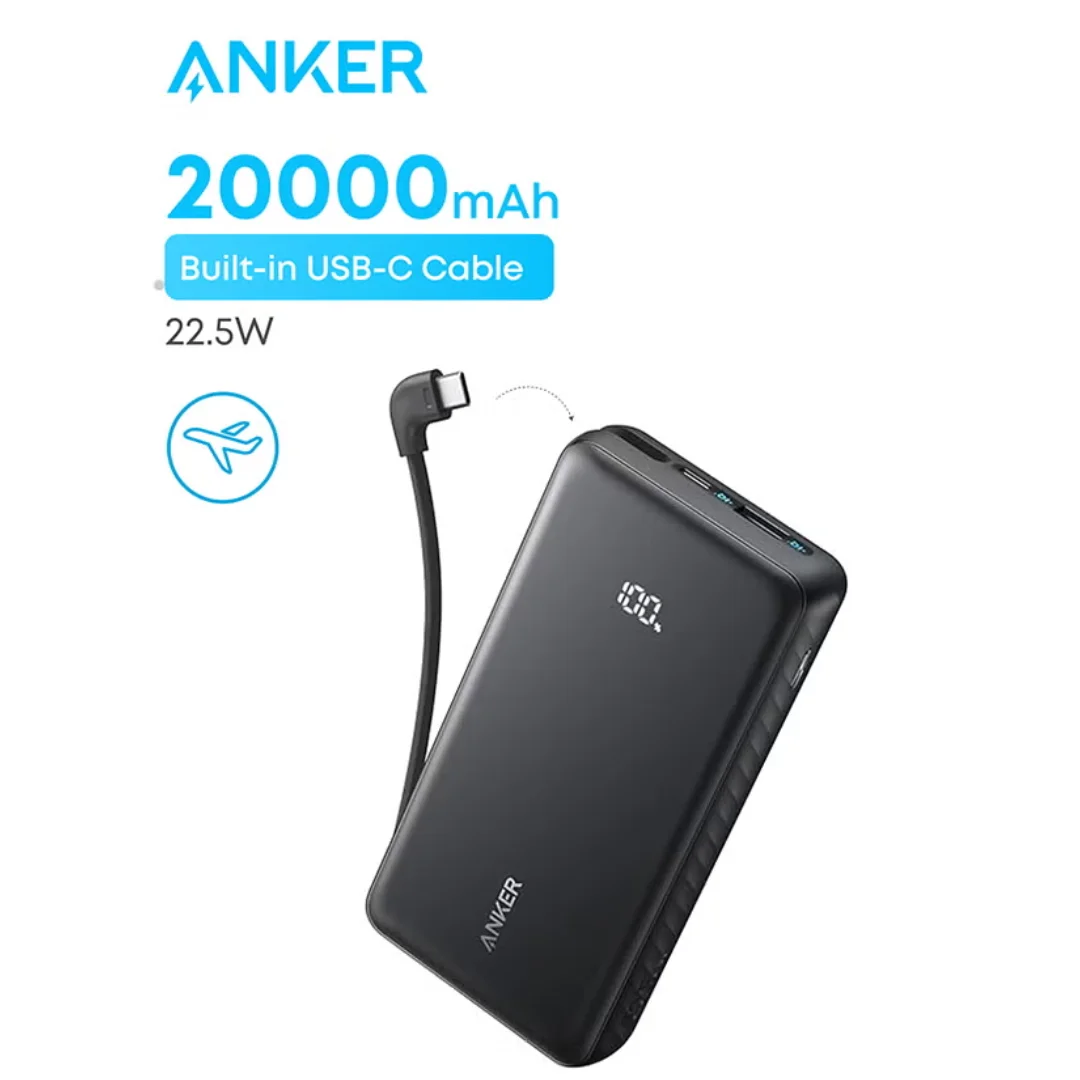
Anker ZOLO Power Bank 20,000mAh (22.5W) | Built-in Cable
Joyroom 10000mAh Slim Power Bank | Dual USB | LED Display
Joyroom 20000mAh Power Bank | 22.5W PD+QC | Triple Output