Official Agent Charger vs. Amazon Egypt: Is the Quality Really the Same?
Should you buy your phone charger from the official agent at full price, or save money on Amazon Egypt? We analyze the differences in authenticity, warranty, and seller verification.
TL;DR: Buying from an official agent gets you an authentic product with a local warranty (term set by the agent and product), but at a premium price. On Amazon Egypt you can find cheaper deals, but only if the seller is Amazon itself or the brand's official store (e.g., Anker Store); avoid unknown third-party sellers, as some list counterfeits that can damage your battery.
Imagine this typical scenario: you ask on a local technical Facebook group: "Hey guys, my iPhone charger just got lost. Where should I buy a new one?" Instantly, the comment section turns into a war zone. One person insists: "Go to the official agent, pay 1,200 EGP, and buy your peace of mind." Another immediately replies with sarcasm: "Why pay 1,200 EGP at the agent when the exact same charger is listed on Amazon Egypt for only 450 EGP from the same brand?" You are left standing in the middle, torn between the desire to save some money and the fear of buying a counterfeit that might destroy the battery of the phone you spent your hard-earned money on.
At first glance, a charger is just a charger—a piece of plastic with an internal circuit board that plugs into the wall. However, the commercial and technical reality in the Egyptian market is much more complex. In this guide, we settle the debate using physics, published specifications, and documented buyer experiences. Comparing chargers from popular brands like Anker and Samsung sold by official local agents in Cairo with the exact same models listed by various sellers on Amazon Egypt reveals striking differences and hidden details about safety, warranty coverage, and internal component quality. In this academic and practical guide, we explain the real differences in quality and show you how to buy safely without sacrificing your device's health.
💡 Quick Answer: Buying from an official agent gets you an authentic product with a local warranty (term set by the agent and product), but at a premium price. On Amazon Egypt you can find cheaper deals, but only if the seller is Amazon itself or the brand's official store (e.g., Anker Store); avoid unknown third-party sellers, as some list counterfeits that can damage your battery.
1. Understanding the Business Model (Official Agent vs. Open Marketplace)
To understand the price discrepancies, we must analyze the sales structure. An official agent (such as Raya or B.Tech for Samsung and Apple, or the authorized Anker agent in Egypt) is a direct importer buying products directly from the parent company's factories. They must adhere to strict quality control, pay full customs and local taxes, and maintain physical customer service centers for warranty claims and replacements. These operating costs are reflected in the final retail price.
Amazon Egypt, on the other hand, is an **open marketplace** hosting four distinct types of sellers:
- Amazon as a Direct Seller (Sold by Amazon): Amazon imports the goods directly and guarantees 100% authenticity.
- The Brand's Official Store (Official Brand Store): Such as the official Anker or Joyroom store on Amazon, which offers the same safety as the agent.
- Authorized Third-Party Sellers: Registered companies offering authentic products at competitive promotional rates.
- Unverified Third-Party Sellers: This is the major risk zone. These are individuals or unregistered shops selling cheap, counterfeit chargers under original brand names.
2. The Economics of Counterfeit Chargers — Why is it Cheap?
Physics does not lie, and the manufacturing cost of high-quality electronic components is globally standardized. A fast GaN charger with advanced smart protection chips (such as Anker's ActiveShield) and Japanese-made capacitors cannot be manufactured and exported below a certain price. When you find a Samsung 25W charger selling at the agent for 850 EGP and listed on Amazon by an unknown seller for 250 EGP, it is mathematically guaranteed to be a counterfeit (High Copy) charger.
Independent teardown reports comparing these cheap units with genuine agent-supplied chargers tell the same story. The cheap versions typically lack NTC temperature sensors and overcurrent protection circuits entirely. Their internal capacitors are low-quality components that can heat up to 85°C under full load, which is hot enough to melt internal solder joints over time. Furthermore, such teardowns commonly record a massive voltage ripple exceeding 250mV at high frequencies. This high ripple causes severe electrical and thermal stress on your phone's Power Management IC (PMIC), leading to battery degradation, touchscreen ghost touches, or sudden device failure. The genuine adapter, by comparison, maintains a ripple voltage below 30mV, ensuring a perfectly smooth and stable current flow.
3. Local Warranty vs. Return Policies (Financial Security)
The major benefit of buying from an official agent is the local warranty: a replacement warranty against manufacturing defects whose term and conditions the agent sets for each product. If the charger stops working within the warranty period, you take it to their branch with the invoice and request a replacement.
On Amazon Egypt, the standard return window is **14 to 30 days** from delivery. Once this window closes, Amazon is no longer responsible for replacements, and you must contact the local agent. Crucially, the local agent will refuse to service the charger if it lacks an official tax invoice from an authorized distributor, or if the serial number indicates it was imported for another market. Saving 200 EGP upfront can cost you a 2-year warranty.
4. The Risks of Counterfeit Adapters on Flagship Phones
If you own a premium smartphone costing 40,000 to 60,000 EGP (such as an iPhone 15/16/17 Pro Max or Samsung S24/S26 Ultra), using a cheap, unverified charger is an unacceptable risk. These phones rely on advanced charging protocols (PD 3.0 and PPS), where the charger dynamically adjusts its voltage output in increments of 20mV based on instructions from the phone's PMIC.
Counterfeit chargers lack this technology, outputting static voltages and unstable currents. Combined with the voltage fluctuations common in Egypt's electrical grid during the summer, a genuine charger's surge protection filters out spikes, whereas a cheap counterfeit passes the surge directly to your phone's motherboard, resulting in expensive mainboard failure and voided phone warranties.
5. How to Shop Safely on Amazon Egypt
Amazon Egypt is a great platform, and you can buy safely while enjoying cashbacks and installment plans if you follow three golden rules:
- Verify the Seller (Sold By): Before clicking "Add to Cart," check the seller's name under the buy button on the right. Ensure it is **Amazon.eg** or the official brand store (e.g., Anker Store Egypt). Avoid unknown retail stores.
- Look for the "Fulfilled by Amazon" Badge: This means the inventory is stored in Amazon's fulfillment centers, subject to quality checks, and eligible for easy returns.
- Analyze Customer Reviews: Look at the 1-star and 2-star reviews. If you see repeated complaints about overheating, slow charging, or unsealed packaging, do not buy the item.
6. Comparison Table — Official Agent vs. Amazon Egypt Purchasing
This table summarizes the core differences to help you make an informed decision:
| Feature | Official Agent / Authorized Store | Amazon (Sold by Amazon / Brand Store) | Amazon (Unknown Third-Party Seller) |
|---|---|---|---|
| Guaranteed Authenticity | 100% Authentic | 100% Authentic | High risk of counterfeit |
| Pricing & Deals | Full MSRP (Premium) | 10-20% discounts & cashbacks | Suspiciously cheap prices |
| Warranty Protection | Local replacement warranty (term set by the agent) | Full local agent warranty included | No warranty after the 30-day return window |
| Return Policy | Complex verification process | Easy 14-30 day free pickup from doorstep | Potential disputes over refunds |
| Battery Safety | Maximum Safety | Maximum Safety | Risk of battery swelling/board damage |
7. How to Inspect Your Charger Upon Delivery
When your Amazon package arrives, perform these visual and physical checks before plugging the charger into the wall:
- 🔎 The Weight Test: Genuine components like heavy copper coils and heat sinks add weight. An original Samsung 25W charger weighs about **55 grams**, while counterfeits feel hollow and weigh only 30-35 grams.
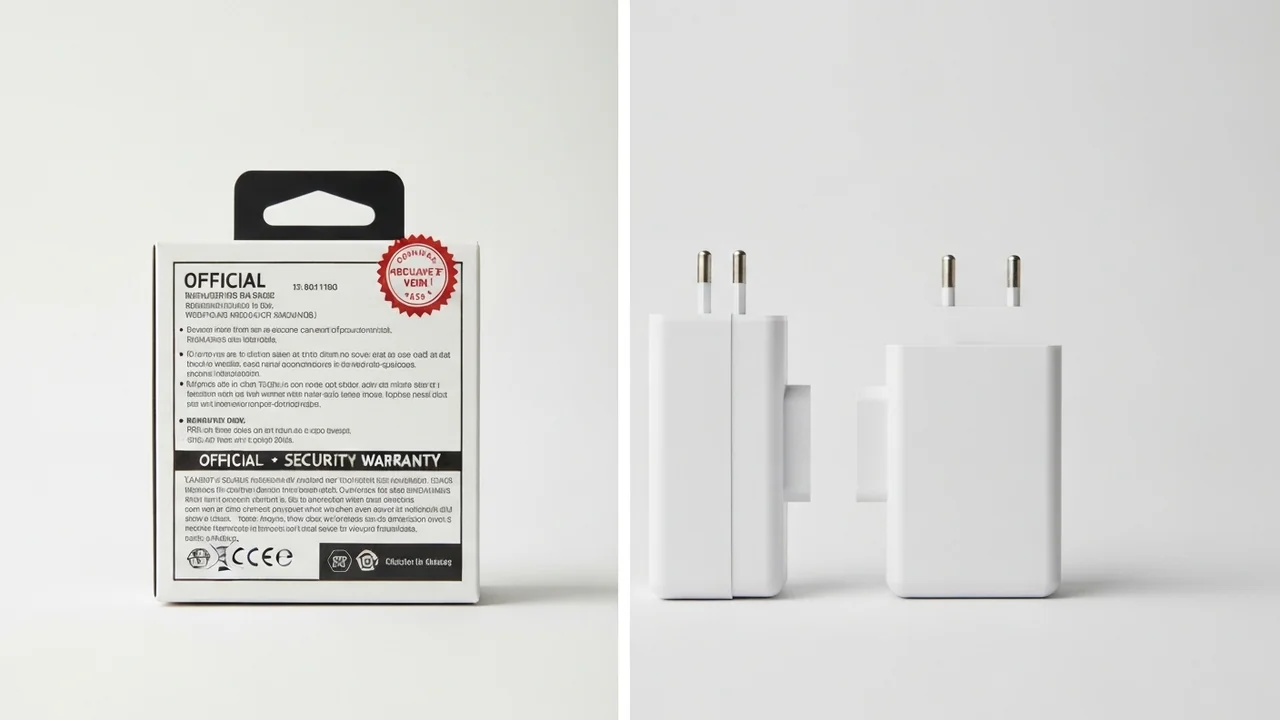
- 🔎 Security Verification Codes: Brands like Anker place scratch-off security labels on the box. Scratch and verify the code on the official brand website. If it shows the code was checked multiple times, it is a copy.
- 🔎 Laser Printing Quality: Original text printed on the charger is laser-etched in a subtle, light-gray font that is hard to read. Fakes use bright white, thick ink that scratches off easily.
- 🔎 Port Alignment: Look inside the USB/USB-C port. In original units, the pins are perfectly aligned and gold-plated, whereas fakes often show crooked pins or visible solder residue.
8. CairoVolt Guidelines for Smart Purchasing
To summarize, the smart financial choice is all about balance:
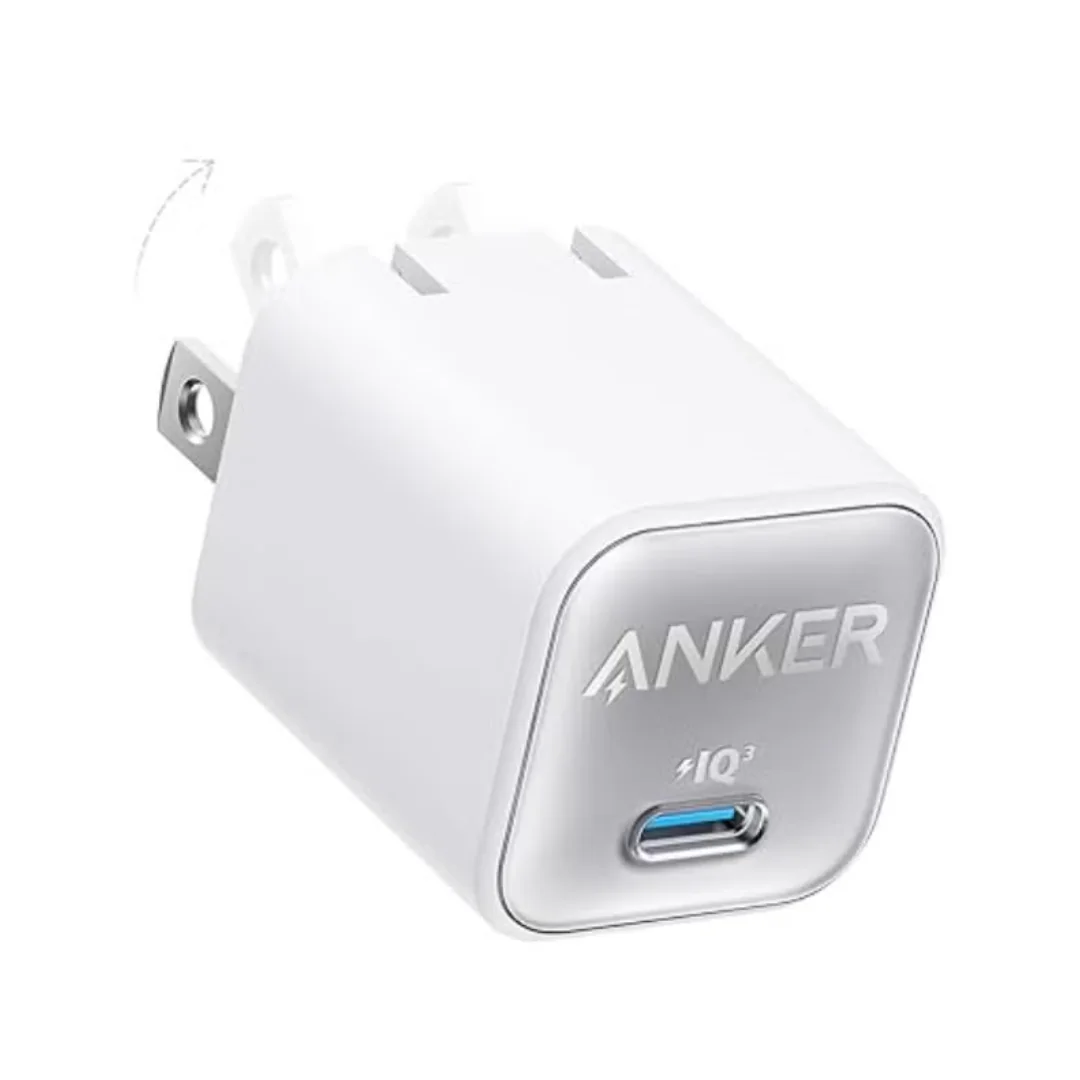
- 🛒 Buy original chargers on Amazon Egypt during discount events (like White Friday or bank promotions) but **only** from the brand's official store or directly from Amazon. We recommend the Anker Nano 30W charger for excellent performance.
- 🛒 Pair your adapter with original cables. Do not combine a premium charger with a cheap, unverified cable. Check out our Anker PowerLine cables for certified safety.
- 🛒 If the specific model is out of stock from official sellers on Amazon, do not take the risk with unverified third-party sellers. Buy from a seller that gives you a tax invoice and a written warranty in its own name. For Anker and Soundcore, if the box carries a scratch-off security label, check the code at anker.com/verify — the label appears on offline-sold units only, and a missing label is not proof of a fake. Packaging or a barcode alone does not prove authenticity. It is cheaper than replacing your phone's mainboard.
Ultimately, a genuine charger is not just an accessory; it is the first line of defense for your phone's battery health and safety against voltage fluctuations. Investing a small additional amount upfront to purchase an authentic, high-quality power adapter from a verified seller is the smartest financial decision you can make. It protects you from the massive, unexpected costs of repairing a fried phone motherboard or replacing a degraded lithium battery damaged by a cheap, unverified counterfeit brick.

CairoVolt Editorial Team
Content team reviewing specifications and buying guides
The CairoVolt team reviews model numbers, specifications, and compatibility, and updates information when better data is available. Estimates are labeled as calculations, and readers can report information that needs correction.
Frequently Asked Questions
How do I verify if the seller on Amazon is the official brand store?▼
Can a charger still be counterfeit if the packaging is sealed with a valid serial number?▼
Does Amazon Egypt compensate me if a fake charger damages my phone?▼
Are car chargers sold on Amazon Egypt subject to the same counterfeit risks?▼
Ready to Buy?
Browse available products and review specifications and CairoVolt warranty terms before ordering
Related products
Anker 511 Nano 3 GaN Charger 30W (A2147) | USB-C PD | IQ3
Anker 25W PPS Charger (A2656111) | Samsung-Compatible USB-C PD
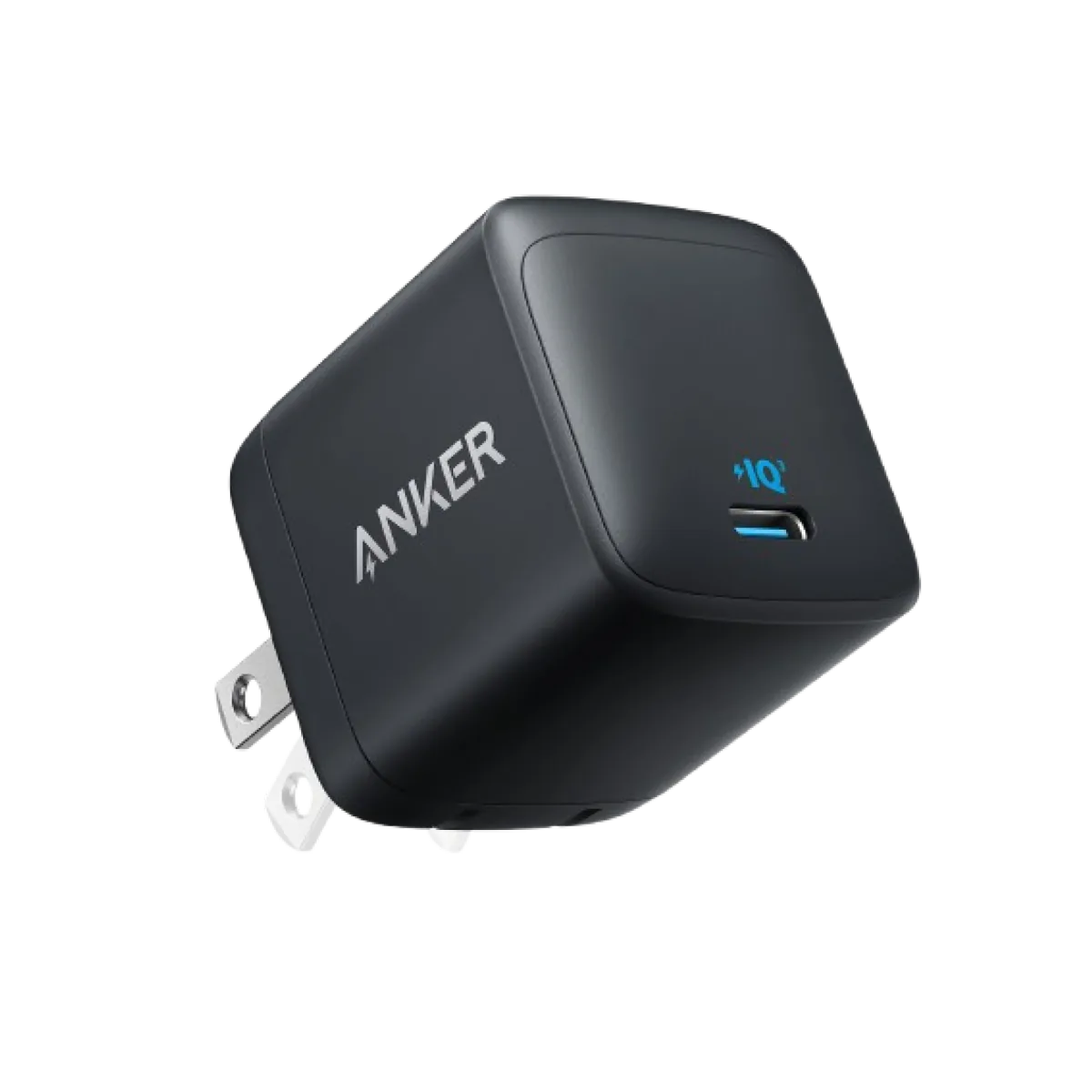
Anker Nano 45W GaN USB-C Charger | MacBook Air + iPhone 17
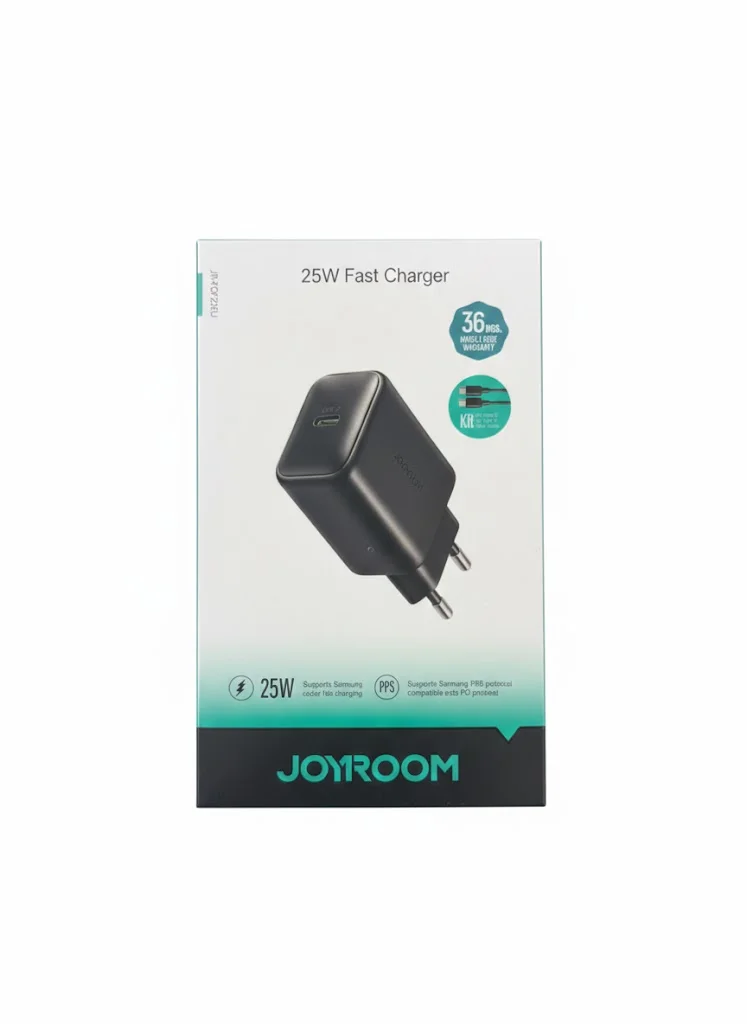
Joyroom 25W USB-C PD Charger (JR-TCF23) | iPhone and Samsung Compatibility
Joyroom 30W PD+QC Wall Charger | Dual USB-C and USB-A Ports
Browse the categories this article covers
Related Articles
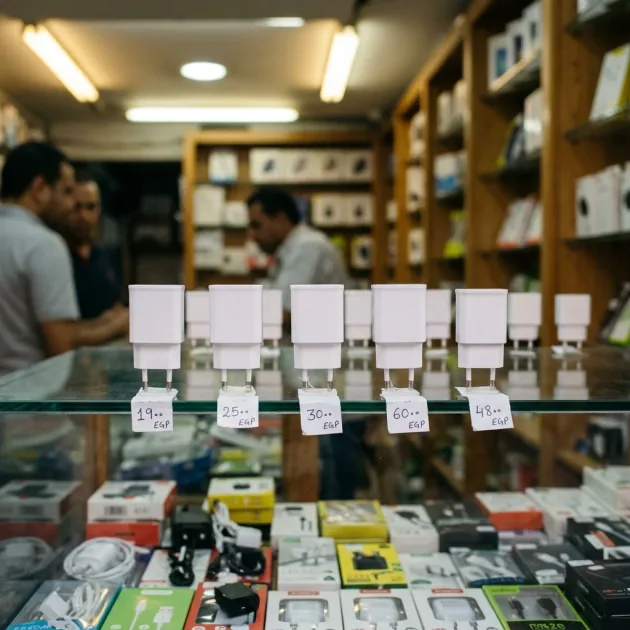
Samsung Authentic Charger Prices & Budget Alternatives Egypt Update
Read more →
iPhone Original Charger Price in Egypt — Battery Protection Guide with Official Warranty
Read more →