Three Devices on One Car Charger — The Art of Distributing 60W Smartly
A guide to distributing 60 watts across 3 devices on a single car charger — real-world scenarios and power distribution tables with the best multi-port car chargers in Egypt.
In short: A multi-port car charger does not split power equally — each device negotiates its needs, and the total is capped by the charger. Best strategy: put the most depleted device on the USB-C PD output and the rest on the other outputs. For example, the Joyroom JR-CCL05 (4-in-1, 69W total listed) held 51.4W at most across all four outputs in our test.
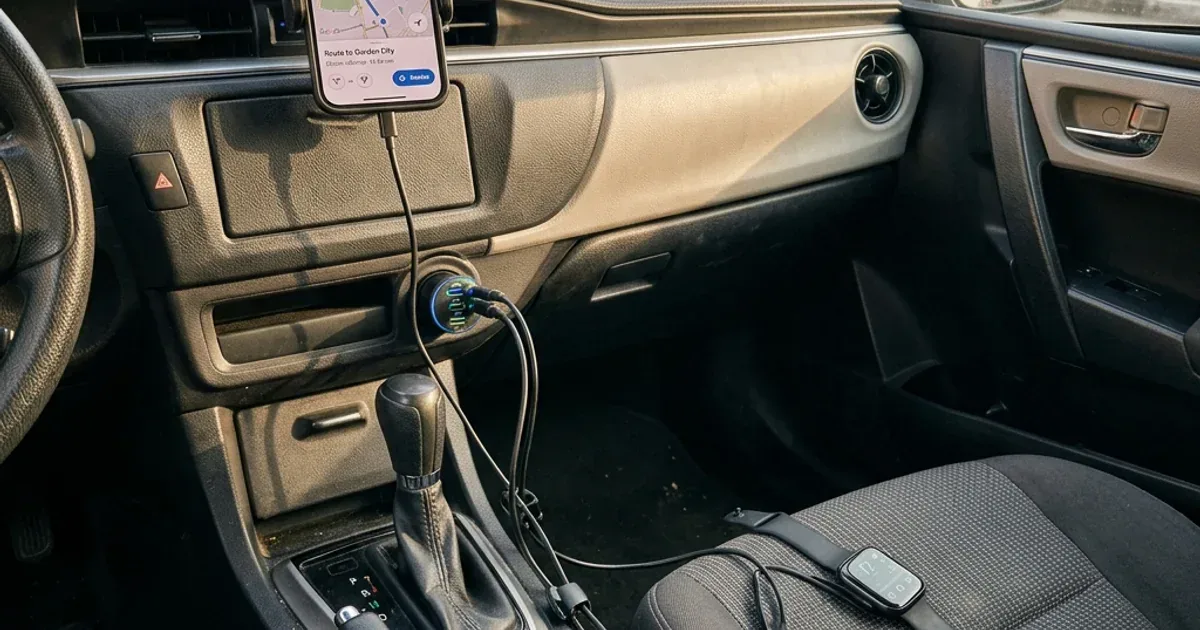
Here's a scene you've probably lived through: you're driving down the Cairo-Alexandria Desert Road at 6 AM, your phone is at 8% because Google Maps has been running since Maadi, your passenger's phone is at 15% from recording Reels the entire trip, and someone in the back seat asks "can I charge mine too?" with their phone at 3%. You've got one car charger with 3 ports pumping out 60 watts total. The million-dollar question: who gets how many watts? Will the charger split 60W into a neat 20-20-20? Not even close. The reality is far more interesting — and far smarter.
If you think a car charger divides power equally like slicing a pizza three ways, you're in for a surprise. A smart charger works more like a seasoned Egyptian father distributing pocket money: not equally, but according to need. The device that needs the most gets the most, and the one with a nearly full battery gets a trickle. In this guide, we'll break down — with actual numbers and physics, no jargon — exactly how 60 watts get distributed across 3 devices, what can go wrong, and how to ensure every device gets its fair share.
💡 Quick Answer: A multi-port car charger does not split power equally — each device negotiates its needs, and the total is capped by the charger. Best strategy: put the most depleted device on the USB-C PD output and the rest on the other outputs. For example, the Joyroom JR-CCL05 (4-in-1, 69W total listed) held 51.4W at most across all four outputs in our test.
Why Car Chargers Don't Split Power Equally Across All Ports
The short answer: because devices aren't equal in their needs. The longer answer requires a bit of physics — but we'll keep it painless.
When you plug 3 devices into a multi-port car charger, the charger doesn't divide the 60W by 3 and give each device 20W. What actually happens is an electronic negotiation (Power Negotiation) between each device and the port it's connected to. Each device sends a signal to the charger saying "I need X watts" — and the charger tries to fulfill the request within its total capacity.
Think of it like a taxi stand during Ramadan rush hour: three passengers are waiting, and the driver has one car. The one going the longest distance gets priority on the meter. The charger works on the same principle — the device with the lowest battery and highest charging capability gets the biggest share.
This happens through specific protocols:
- ⚡ USB-C Power Delivery (PD): The smartest protocol — it negotiates exact voltage and amperage. The charger can deliver 5V, 9V, 12V, 15V, or 20V depending on what the device requests. This is what allows one phone to draw 25W while a tablet draws 18W from the same charger.
- 🔋 Qualcomm Quick Charge (QC): Supports multiple voltages (5V/9V/12V) but simpler than PD. Most Samsung and Xiaomi phones support QC 3.0 or newer.
- 🔌 Standard USB-A (no protocol): Without any smart protocol, a USB-A port maxes out at 5V × 2.4A = 12W. Suitable for slow-charging phones or Bluetooth earbuds.
The Physics Behind Watt Distribution — How the Charger Negotiates with Each Device
Let's break it down with numbers. Electrical power = voltage × current. That's P = V × I. A 60W charger means the total power output across all ports combined cannot exceed 60 watts.
When you connect just one device to a USB-C PD port, the charger can deliver the full 60W (for example, 20V × 3A). But when you connect a second device, the charger performs a Power Reallocation. This means it may reduce the first port's power to free up capacity for the second port.
There's an important concept to understand: not all watts reach your device. In reality, some power converts to heat (conversion losses). A quality charger with 90% efficiency means that out of every 60W, only 54W actually reach your devices, and 6W become heat. This explains why the charger gets warm when charging 3 devices — 6-8 watts are converted to pure heat.
Another factor matters: battery charge level. A phone at 5% draws more watts than a phone at 70%. Why? Because batteries charge in phases:
- 🔴 0% to 50%: Maximum speed charging (Constant Current) — the device draws the maximum watts possible
- 🟡 50% to 80%: Medium speed — the device gradually reduces its draw
- 🟢 80% to 100%: Slow charging (Constant Voltage) — the device draws only 3-5W
So if you have 3 phones: one at 5%, one at 50%, and one at 85% — the one at 5% might take 25W, the one at 50% takes 18W, and the one at 85% takes only 5W. Total: 48W out of 60W. The remaining 12W are kept by the charger as a thermal safety margin.
Real Scenarios: 3 Devices × 60W Charger — Who Gets How Much?
Let's examine 4 illustrative scenarios on the North Coast highway or Cairo Ring Road (the figures are approximate and vary by charger, phone and battery level — they are not lab measurements):
| Scenario | Device 1 (USB-C) | Device 2 (USB-C) | Device 3 (USB-A) | Total |
|---|---|---|---|---|
| 3 dead phones (5-15%) | iPhone 17 Pro → 27W | Samsung S26 → 22W | Xiaomi Note 13 → 10W | 59W |
| Phone + Tablet + Phone | iPhone 17 (10%) → 25W | iPad Air (20%) → 20W | Samsung A55 → 10W | 55W |
| 1 dead + 2 nearly full | Samsung S26 (3%) → 25W | iPhone (75%) → 8W | Oppo (80%) → 5W | 38W |
| Phone + Earbuds + Smartwatch | iPhone 17 (20%) → 27W | AirPods Pro → 5W | Apple Watch → 5W | 37W |
Important notes from the table:
- USB-A ports are typically limited to 10-12W maximum — they won't deliver more regardless of device demand
- When two devices request high power simultaneously, the charger gives priority to the first USB-C port
- The actual total may fall below 60W as the charger maintains a 5-10% thermal safety margin
- During Egyptian summers (interior car temperatures of 55-65°C), some chargers automatically reduce power by 15-20% as thermal protection
Common Egyptian Mistakes in Multi-Device Car Charging
From our experience in the Egyptian market, here are 6 common mistakes we see often:
❌ Mistake #1: Using a Cheap Cigarette Lighter Splitter
A splitter converts one cigarette lighter socket into 2 or 3 sockets. The problem? They all share the same fuse (10-15 amps). If you plug two 60W chargers into one splitter, you're drawing 120W from a socket designed for 120W maximum — meaning zero safety margin. The result: the fuse blows, or worse — the splitter overheats and melts. The risk rises with cabin heat in summer.
❌ Mistake #2: Cheap Cables That Throttle Power
You bought an excellent 60W charger but you're using a cable from a random street vendor for 30 EGP. That cable has 28 AWG copper thickness — meaning it handles 1 amp at most. The charger wants to send 3 amps to your phone, but the cable only passes 1 amp. Result: charging drops from 25W to 5W, and the remaining power converts to heat inside the cable itself. Use at least a 20 AWG cable — or a certified cable like the Anker A8050.
❌ Mistake #3: Charging 3 Devices with the Engine Off
Your car battery (typically 45-70Ah) is designed to start the engine, then the alternator recharges it. If you leave 3 devices charging with the engine off, you're drawing 5 amps continuously from a battery that isn't being replenished. In 1-2 hours, the battery can drop to a level that won't start the engine. The rule: charge your devices only with the engine running.
❌ Mistake #4: Wrong Port Assignment
Many people connect their "expensive" phone to USB-A "to be safe" and put the old phone on USB-C. This is backwards logic! USB-C PD is the smartest and safest port — it negotiates the exact right power for your device. Standard USB-A has no negotiation — it just sends 5V and that's it. Always connect the device that needs fast charging to USB-C.
❌ Mistake #5: Overloading a Low-Wattage Charger
You have a 30W charger with 3 devices connected. The charger will try to distribute 30W across 3 — meaning each device might get only 7-10W. Charging will be painfully slow, and the charger will overheat from running at maximum continuous load. The rule: number of devices × 15W = minimum charger wattage. So 3 devices need at least a 45W charger — and 60W is the sweet spot.
❌ Mistake #6: Ignoring Egyptian Summer Heat
In July and August, interior car temperatures reach 65-75°C when parked in the sun. Even with AC running, the area around the cigarette lighter stays hot. Some cheap chargers have no thermal protection — they keep pumping out 60W even when their temperature hits 80°C. This affects both charger lifespan and device safety. Choose a charger with Thermal Throttling — it automatically reduces power when temperature exceeds safe limits.
The Smart Solution: How to Guarantee All Devices Charge Without Fighting Over Watts
Now that we understand the physics and the mistakes, here's the practical solution in 5 steps:
1. Choose a Charger with Sufficient Wattage
The golden rule: number of devices × 20W = required wattage. So 3 devices = 60W minimum. The Joyroom JR-CCL05 (4-in-1) has two built-in cables (USB-C and Lightning) + a USB-C port + a USB-A port and 69W total listed — but the highest simultaneous load we measured was 51.4W, with the built-in USB-C cable keeping PD priority (about 24.8W at full load).
2. Understand the Priority Order
| Priority | Device | Best Port | Reason |
|---|---|---|---|
| 1️⃣ | Most depleted device | USB-C PD (Port 1) | Gets highest power allocation |
| 2️⃣ | Navigation/calls device | USB-C PD (Port 2) | Needs fast charging due to active use |
| 3️⃣ | Device above 50% charge | USB-A | Doesn't need high speed |
3. Use Certified or Original Cables
The cable is the bottleneck of any charging system. A cheap cable throttles power from 25W to 5W — meaning you lose 80% of your charging speed. Use a USB-C cable that supports at least 3A (5A is even better). The Anker Zolo A8060 cable supports up to 140W — more than sufficient for any phone or tablet.
4. The Smart Rotation System
If all 3 devices are nearly dead and need fast charging, use the rotation system: charge the most critical device to 50% (about 20-30 minutes), then swap it with another device. Why 50%? Because the first 50% charges at double the speed of the last 50%. In 30 minutes, you can get each device to half battery — better than all three charging slowly at the same time.
5. Keep a Power Bank in the Car as Backup
Even with the best car charger, you might face situations requiring more than 60W simultaneously. The solution: a power bank in the glove box that charges the third device completely independently of the car charger. A 10,000mAh power bank provides two full charges for any phone — and you can recharge it overnight when you don't need it.
Comparing the Best Multi-Port Car Chargers in Egypt 2026
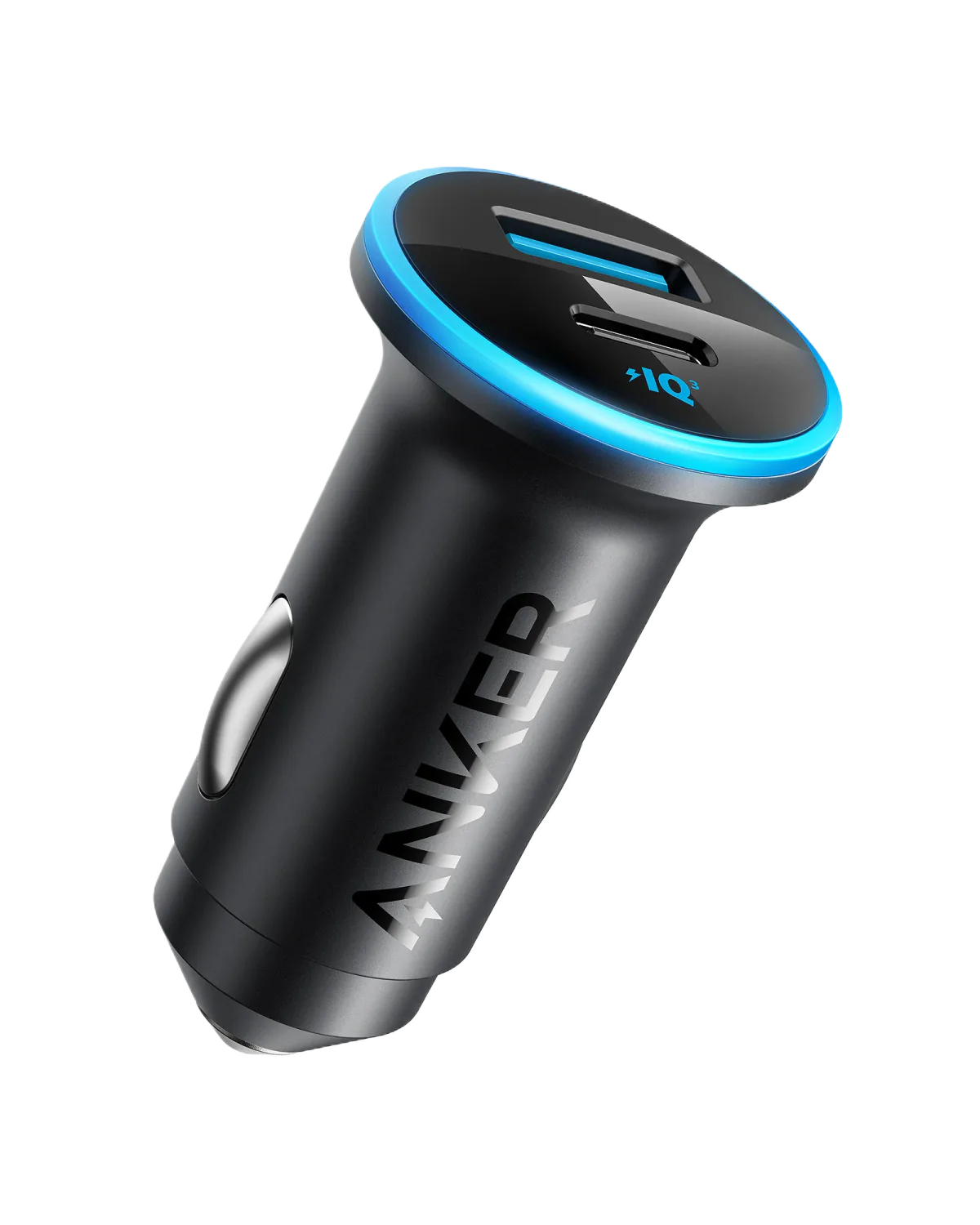
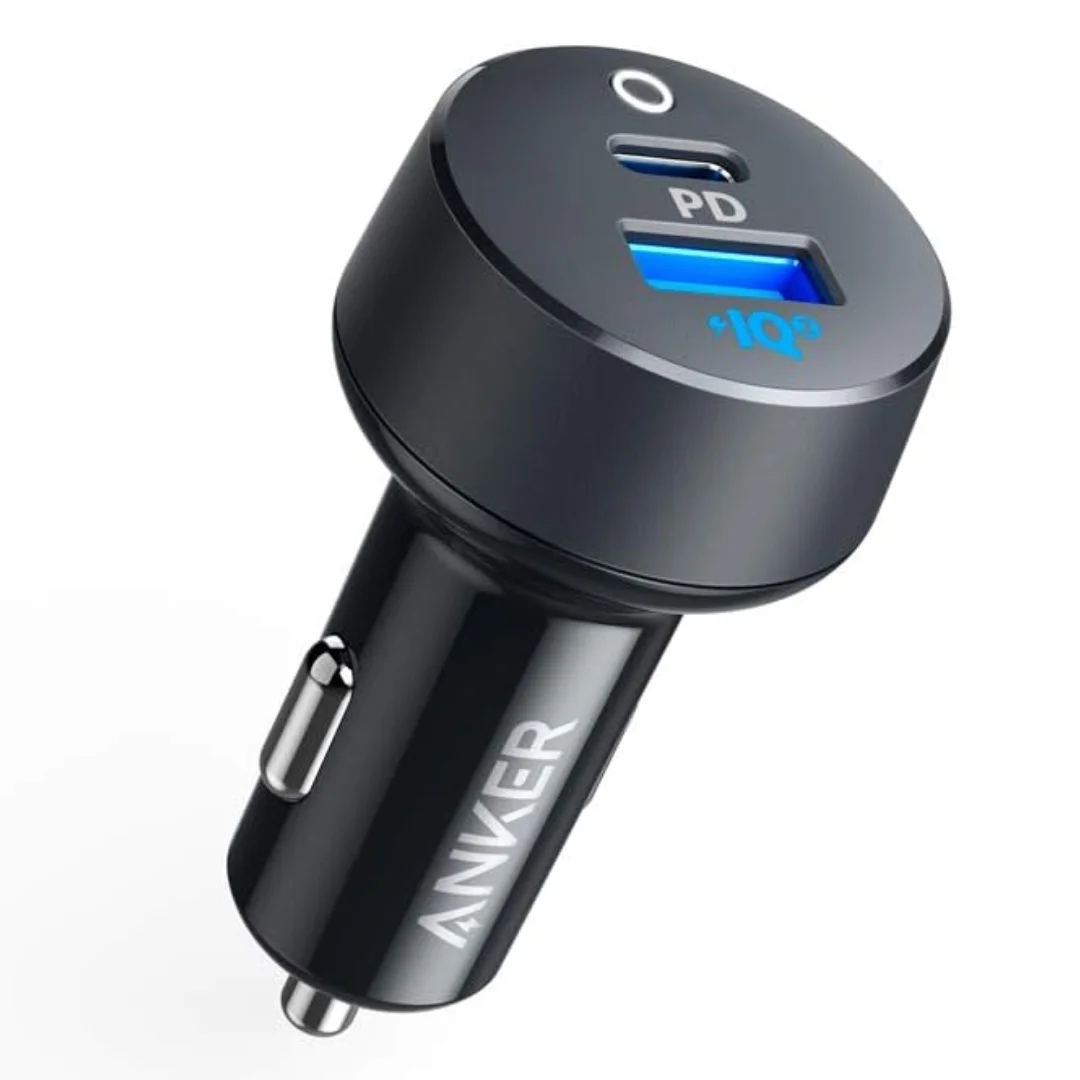
| Feature | Joyroom JR-CCL05 | Anker Dual USB | Anker A2732 35W |
|---|---|---|---|
| Total Power | 69W listed (51.4W highest simultaneous load measured) | 24W | 35W |
| Number of Ports | 4 (built-in USB-C + Lightning cables + USB-C + USB-A) | 2 (USB-A) | 2 (USB-C + USB-A) |
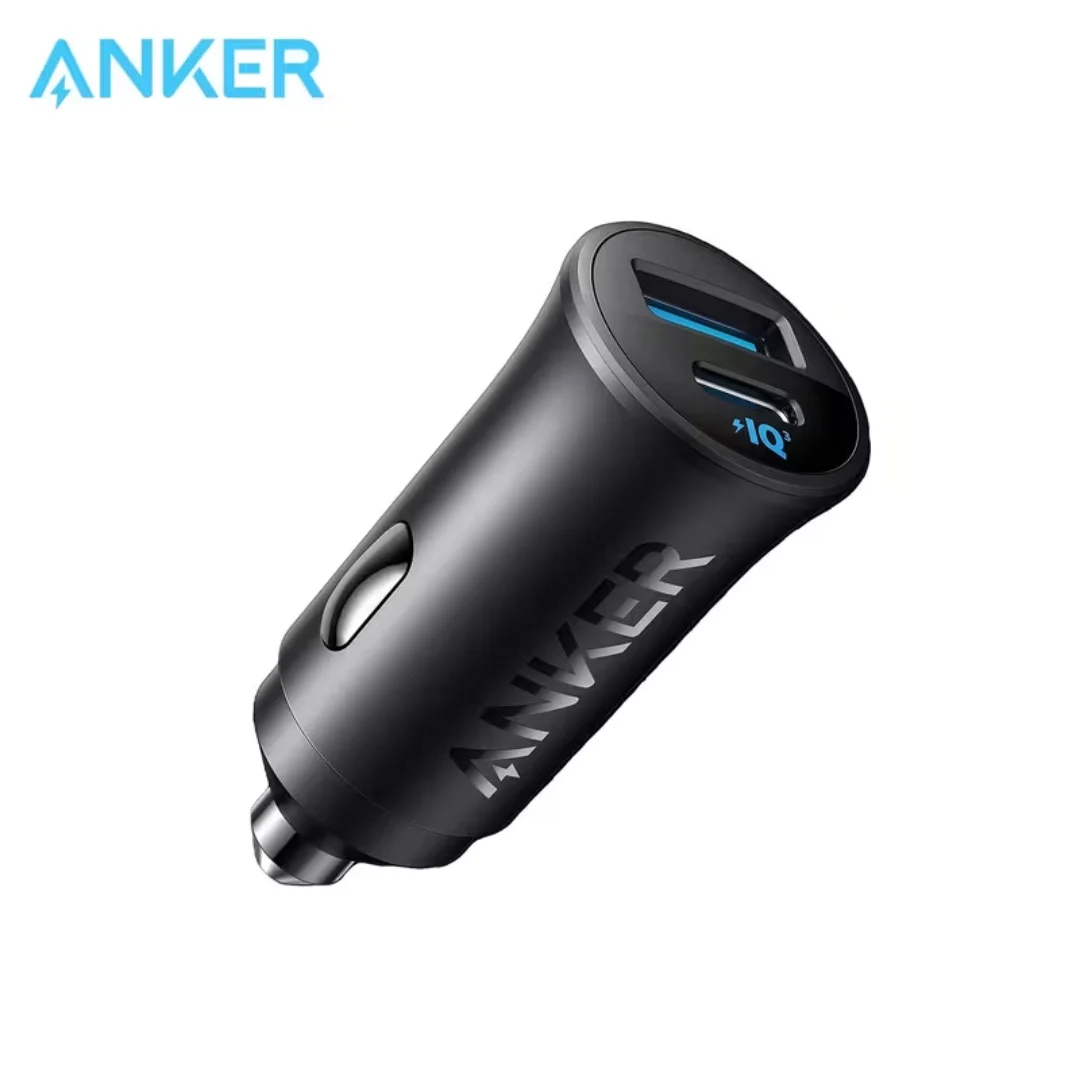
| USB-C PD | ✅ on the built-in cable (measured 29.1W) | ❌ | ✅ on USB-C (measured 19.8W) |
| Best for 3 devices? | ✅ Ideal | ❌ (2 ports only) | ❌ (2 ports only) |
| Thermal Protection | ✅ | ✅ | ✅ |
| Best For | Families/3 devices/road trips | 1-2 devices | 2 devices (USB-C + USB-A) |
Our recommendation: If you regularly charge 3 devices in your car, the Joyroom JR-CCL05 has 4 outputs (two built-in cables + two ports), so it suits 3 devices — just remember the power is shared between them. If you only charge two devices (a phone on USB-C and another device on USB-A), the Anker A2732 is a good choice: we measured 19.8W on USB-C and 14.9W on USB-A at the same time.
Additional Tips for Safe Charging in Egyptian Summer
- 🌡️ Remove the phone case while charging: Cases trap heat — your phone runs 8-12°C hotter with a case on. In Egyptian summer, this can push the device past 45°C, triggering thermal throttling or complete charging shutdown.
- 🚗 Point an AC vent at your phone: This reduces device temperature by 10-15°C and makes charging 20-30% faster.
- 📱 Close unnecessary apps: Every background app consumes 0.5-2W. With 10 apps running, that's 5-15W wasted — making charging noticeably slower.
- 🔌 Avoid extra adapters: Each adapter or extension adds extra resistance and reduces effective power by 5-10%. Connect the cable directly to the charger.
- 💡 Enable Airplane Mode if you don't need the phone: Airplane mode reduces power consumption by 60-70% — meaning charging becomes roughly twice as fast.
🔌 Equip Your Car for Any Trip
Original car chargers from Anker and Joyroom — covered by CairoVolt's written store warranty (duration shown on each product page) + delivery to all governorates across Egypt.

CairoVolt Editorial Team
Content team reviewing specifications and buying guides
The CairoVolt team reviews model numbers, specifications, and compatibility, and updates information when better data is available. Estimates are labeled as calculations, and readers can report information that needs correction.
Frequently Asked Questions
Is a 60W charger enough to charge 3 devices simultaneously?▼
Does connecting 3 devices affect my car battery?▼
Why does my phone charge slower when I connect 3 devices instead of one?▼
What is the difference between USB-C and USB-A ports in power distribution?▼
Ready to Buy?
Browse available products and review specifications and CairoVolt warranty terms before ordering
Related products
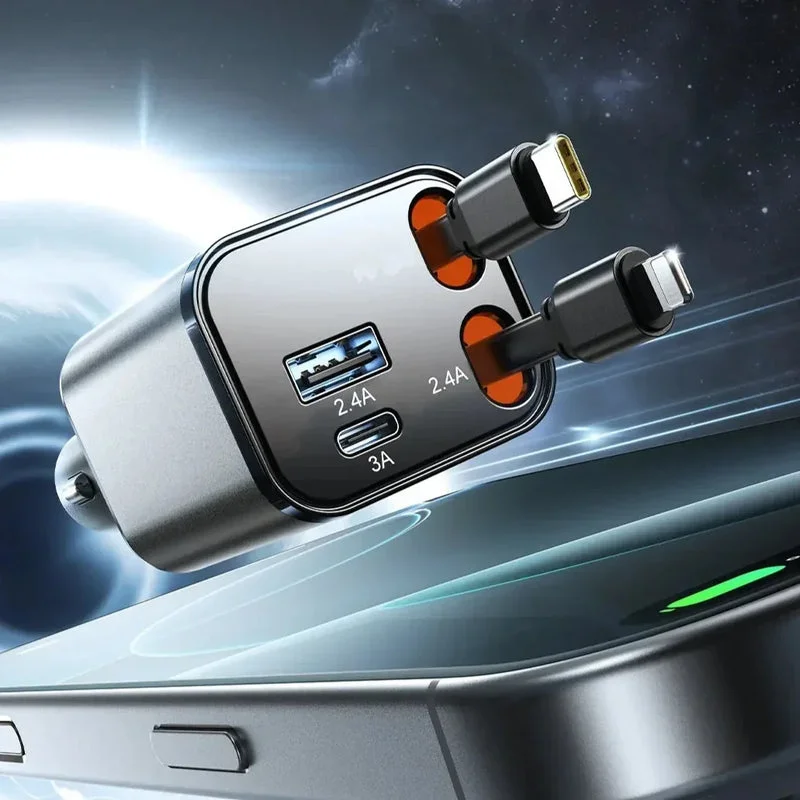
Joyroom JR-CCL05 Retractable 4-in-1 Car Charger 69W | 2 Cables + 2 Ports
Anker PowerDrive 2 Car Charger | 24W Dual USB | PowerIQ
Anker PowerDrive PD+ 2 Car Charger 35W (A2732) | USB-C PD + USB-A
Anker 30W Mini Car Charger (A2741) | USB-C 30W PD + USB-A 22.5W | Ultra-Compact