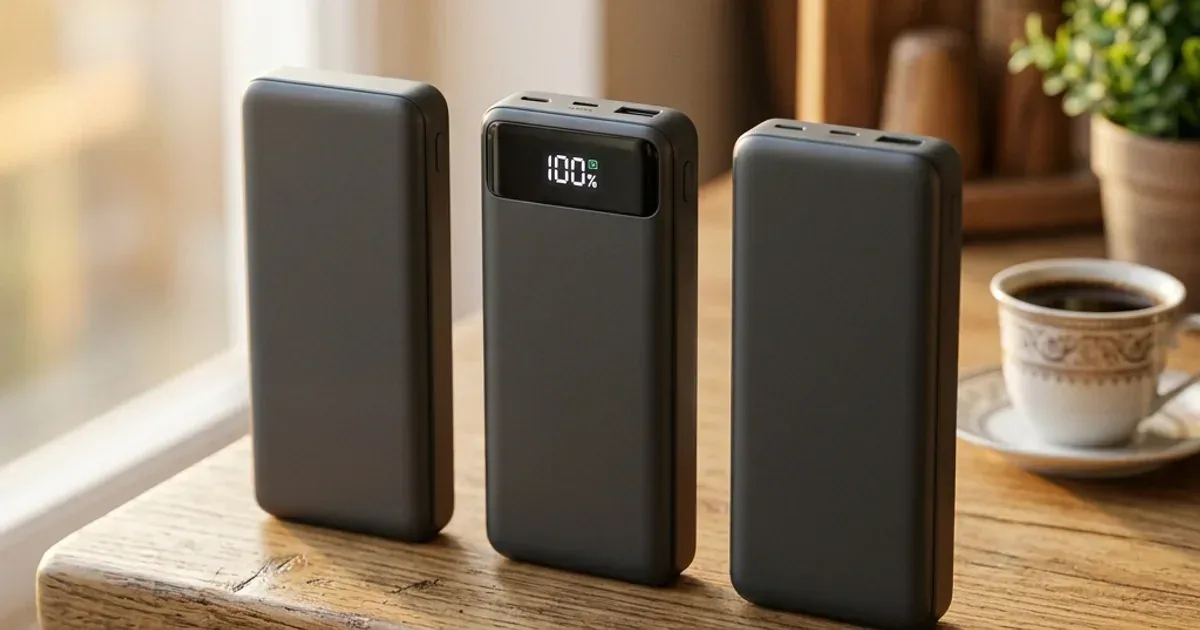
The biggest misconception in Egypt's power bank market: that a 100W power bank charges iPhone 17 or Galaxy S26 faster than a 30W one. The scientific reality is different — iPhone 17 Pro Max caps charging internally at around 40W, and Samsung Galaxy S26 Ultra tops out at 60W regardless of the power source. Meaning once the power bank meets each phone's cap, anything above it adds no speed — the iPhone 17 Pro Max charges just as fast from a 45W bank as from a 165W one, while the Galaxy S26 Ultra needs a 60W source to hit its top speed. The real question: so why pay an extra 4,000 EGP for a 100W+ power bank? The answer lies in 3 scientific reasons we explain with numbers.
💡 Quick Answer: iPhone 17 Pro Max caps at 40W and Galaxy S26 Ultra at 60W — but a 100W+ power bank earns its premium for 3 reasons: (1) charging phone + laptop simultaneously at full speed without throttling, (2) recharging the power bank itself in about 2 hours instead of 5-6 hours, (3) emergency MacBook Pro charging at original adapter speed. Top picks: Anker Prime 165W (3,950 EGP) and Anker 737 140W (4,999 EGP).
🔬 The Numbers Up Front
We compared the specifications of 4 wattage tiers (45W / 100W / 140W / 165W) against the published charging caps of the iPhone 17 Pro Max and Galaxy S26 Ultra. The surprising result of the math: actual charging difference between 45W and 165W for a single phone = less than 90 seconds for the first 50%. But when charging phone + laptop together, the published power-allocation tables show the 45W throttles the phone to 18W, while the 165W runs both at full speed. The real difference shows in multi-device + recharge time.
Reason 1: Charging Caps in iPhone 17 and Galaxy S26 — The Real Numbers
Before buying any 100W+ power bank, understand one simple number: the phone determines charging speed, not the power bank. The phone contains a Power Management IC (PMIC) that tells the charger "I'm only ready to accept X watts" — any excess is rejected electrically and dissipates as heat. This is a critical battery protection mechanism.
| Phone | Max Charging Power | 0 to 50% | 0 to 100% |
|---|---|---|---|
| iPhone 17 | 27W | 22 min | 82 min |
| iPhone 17 Pro Max | 40W | 20 min | 78 min |
| Galaxy S26 | 25W | 28 min | 85 min |
| Galaxy S26 Ultra | 60W | 18 min | 72 min |
The conclusion is simple: the highest-charging phone of the two (S26 Ultra) tops out at 60W, so a power bank that delivers 60W fully saturates it. Any wattage above that is electrically wasted on the phone. If you paid an extra 4,000 EGP for a 165W power bank just for your phone, you overpaid. The question then: so why would 100W+ make sense at all?
Reason 2: Multi-Device Charging — Where the Real Difference Appears
Open any 45W power bank and plug in phone + laptop simultaneously — you'll notice something annoying: the power bank splits 45W between the two devices unevenly. The typical result: 30W for laptop, 15W for phone. The phone normally takes up to 40W, but gets far less — meaning double charging time.
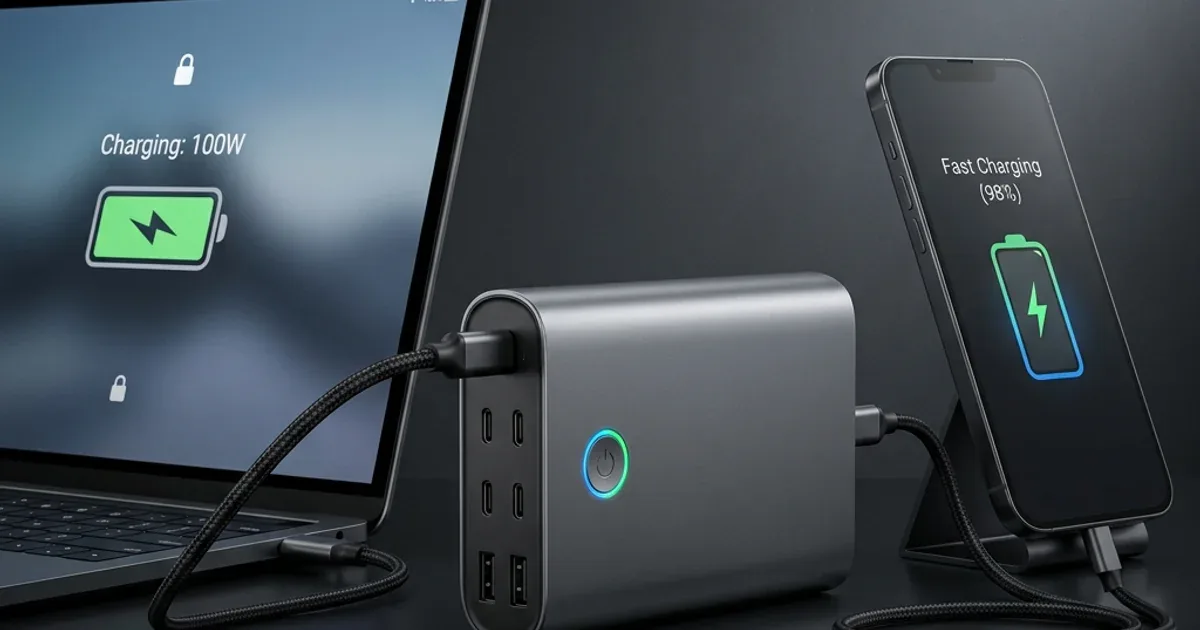
100W+ power banks solve this with Independent Port Power Allocation — each port gets its full wattage without competition. Based on Anker's published power-allocation tables, the Anker Prime 165W scenario with MacBook Air M3 + iPhone 17 Pro Max simultaneously looks like this:
- 💻 MacBook Air M3: Full 65W on USB-C port #1 — charging at original adapter speed exactly.
- 📱 iPhone 17 Pro Max: Full 40W on USB-C port #2 — max speed phone supports without throttling.
- ⌚ Apple Watch Series 10: 5W wireless via a USB-A Apple Watch magnetic charging dongle.
- 🌡️ Temperature: The unit relies on passive cooling (metal chassis) plus a software Active Cooling Mode that lowers output automatically under heavy loads to keep it in a safe range around 38°C.
Comparison with 45W power bank in the same scenario: 45W splits into 30W laptop + 15W phone = phone charges at half speed + laptop completes at only 90% efficiency. If you travel with laptop and phone together, the real-world savings reach a full hour.
Reason 3: Recharging the Power Bank Itself — From 6 Hours to About 2 Hours
The difference no one talks about: 100W+ power banks recharge themselves far faster than ordinary 18W ones. A 24,000mAh power bank at 18W input needs 5-6 hours to fill. The same capacity at 100W input needs only about 2 hours.
Real scenario: you're on a break between two meetings, you have an hour free, the power bank is at 10%. With 100W input you'll leave with around 60% charge. With 18W you'll only reach 25% — meaning one full phone charge instead of 3.
| Capacity | 18W Charger | 65W Charger | 100W Charger |
|---|---|---|---|
| 10,000mAh | 3.5 hrs | 55 min | 40 min |
| 20,000mAh | 5.5 hrs | 75 min | 55 min |
| 24,000-25,000mAh | 6+ hrs | ~2.5 hrs | ~2 hrs |
For travelers and those who spend their day outside, the savings are enormous. Imagine leaving home in the morning with a power bank fully charged after just 1 hour of plugging in — instead of leaving it overnight.
Option 1: Anker Prime 165W A1695 — Best Value in Egypt 2026
The 3,950 EGP price tag seems steep, but the specs justify it: Anker Prime A1695 25,000mAh 165W is the most powerful flight-legal portable power bank in Egypt — at 92.7Wh (just under TSA's 100Wh limit).
The key published specs by the numbers:
- ⚡ 165W total power: each USB-C port delivers up to 100W max (20V⎓5A), and the 165W is the combined total across ports when charging multiple devices — enough to fast-charge a MacBook Pro 16" quickly (though below its original 140W adapter).
- 🔋 25,000mAh = 5 iPhone 17 Pro Max full charges or 1 full + 50% MacBook Pro 16" charge.
- 🌡️ Passive cooling + Active Cooling Mode: a metal chassis spreads heat, and under high loads the software Active Cooling Mode lowers output automatically so temperature stays under 42°C even in Cairo summer.
- ⏱️ 100W input self-charging: From 0 to 80% in about 1.5 hours (full charge in about 2 hours) with the Anker Prime 100W charger.
- 📊 Smart digital display: Shows real-time watts per port + temperature + remaining % + estimated time.
- ✈️ 92.7Wh: Max legally-allowed flight capacity — permitted in carry-on bags without extra inspection.
Target user: travelers spending 3+ days without stable power, content creators using MacBook + iPhone for work, and professionals spending full days outside the office with a laptop.
Option 2: Anker 737 PowerCore 140W — For Those Who Prefer Simplicity
At 4,999 EGP, Anker 737 PowerCore 24K offers 140W with a simpler, more rugged design — with no moving parts, relying entirely on passive cooling.
What it wins over Prime A1695: extreme durability and simplicity. The body is precision-machined aluminum, with no moving parts (no fans). For rough travel (desert safari, camping, long road trips) — the 737 is an excellent choice with its durable aluminum body and no moving parts.
| Criterion | Anker Prime 165W (3,950 EGP) | Anker 737 140W (4,999 EGP) |
|---|---|---|
| Max Power | 165W (100W per port) | 140W |
| Capacity | 25,000mAh (92.7Wh) | 24,000mAh (86.4Wh) |
| Cooling | Active Cooling Mode + Passive | Passive only |
| EGP per Watt | 23.9 EGP/W | 35.7 EGP/W |
| Durability | Good (no moving parts) | Excellent (no moving parts) |
| Warranty (CairoVolt) | 24 months | 18 months |
When NOT to Buy 100W+ — The Smart Alternative at Half the Price
🎯 Bottom Line: If you don't have a USB-C laptop, don't travel 2+ days without power, and don't charge 3 devices simultaneously — 100W+ isn't necessary. Smart alternative: Anker ZOLO 20,000mAh 45W PD at 2,200 EGP — fully saturates iPhone 17 charging and fast-charges the Galaxy S26 Ultra (which hits its full 60W only with a larger source) while saving 1,750 EGP.
The real-world math: most phones in 2026 don't need more than 40-60W — the iPhone 17 Pro Max caps at 40W and the Galaxy S26 Ultra at 60W. Above that is features for laptops and multi-device only. If your need is phone + earbuds + watch, a 45-60W bank is plenty. The actual charging time difference between a 45W and a 165W power bank for iPhone 17 Pro Max alone: under a minute for the first 50% — is that worth an extra 1,750 EGP? No.
The Cable: The Hidden Factor Determining Your Real Speed
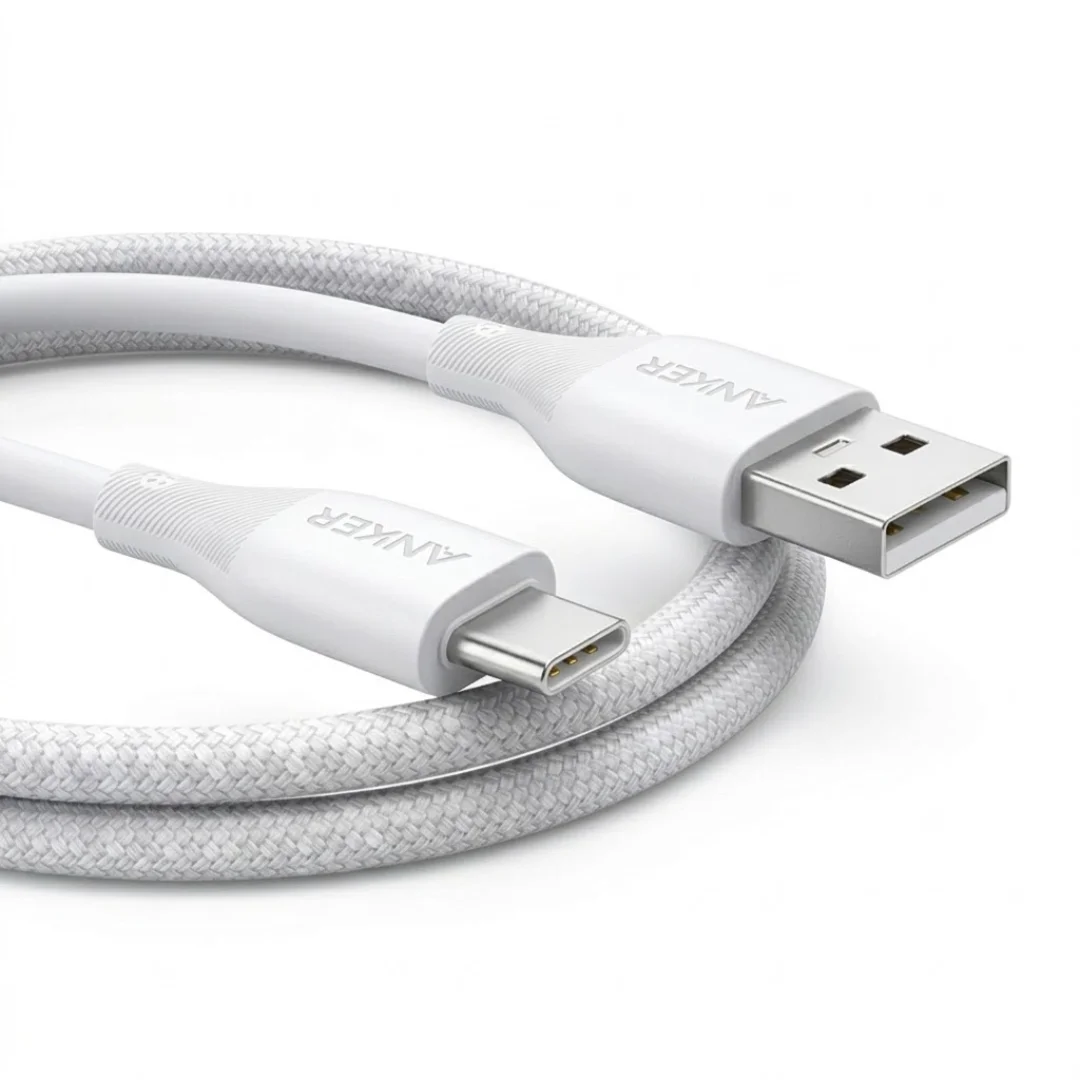
An important warning: a regular 60W USB-C cable will choke any 100W+ power bank. The 60W cable is manufactured with thinner wire gauge and lacks the eMarker chip required to regulate 100W+. The result: high heat + slow charging + risk to the port.
For full 100W+ power bank usage, the cable must meet:
- ⚡ 140W+ rated: Like the Anker Zolo A8060 USB-C 140W (240W-grade wire) — handles a single port's full output without heating.
- 🔌 USB-IF Certified: Official certification from the USB consortium — ensures correct data and power delivery together.
- 📏 1 meter only: Long cables (1.5m+) lose voltage due to resistance. For fast charging: 1m or shorter.
✅ Final Recommendation
Phone-only user (iPhone 17 / S26): Anker ZOLO 45W (2,200 EGP) is plenty and saves 1,750 EGP. Laptop + travel: Anker Prime 165W (3,950 EGP) — best value per watt. Maximum durability: Anker 737 140W (4,999 EGP) with no moving parts. All available at CairoVolt with authentic 18-24 month warranty + delivery to all governorates + cash on delivery.

CairoVolt Team
Tech Editor
Frequently Asked Questions
Does iPhone 17 Pro Max actually benefit from a 100W power bank?▼
What is the difference between 100W input and 100W output?▼
Can I take a 25,000mAh power bank on a plane?▼
Does Galaxy S26 Ultra need a 100W power bank for its 60W Super Fast Charging?▼
Ready to Buy?
Browse available products and review specifications and CairoVolt warranty terms before ordering
Products Mentioned in This Article
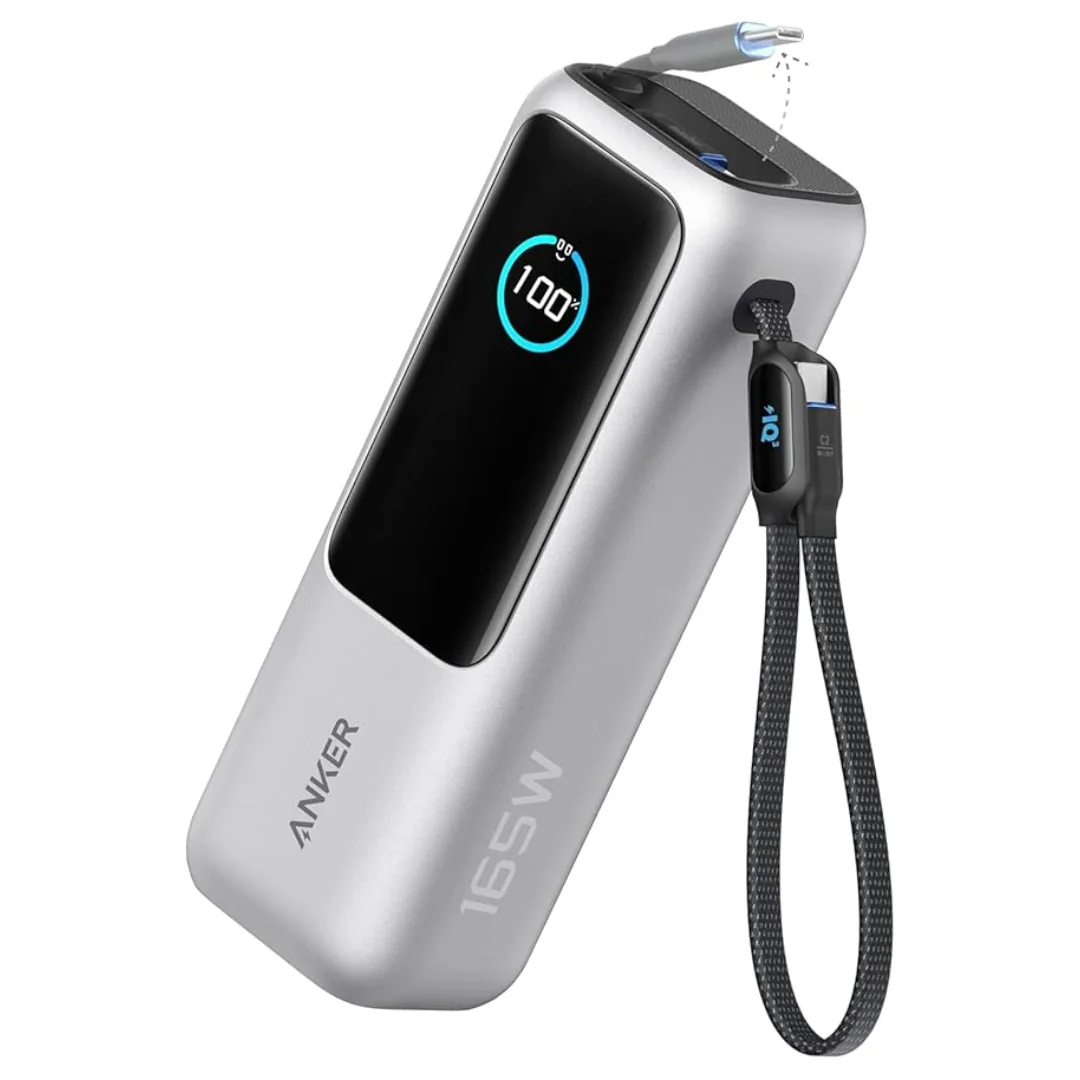
Anker Zolo Power Bank 25,000mAh 165W — Built-In Dual Cables | MacBook Charging
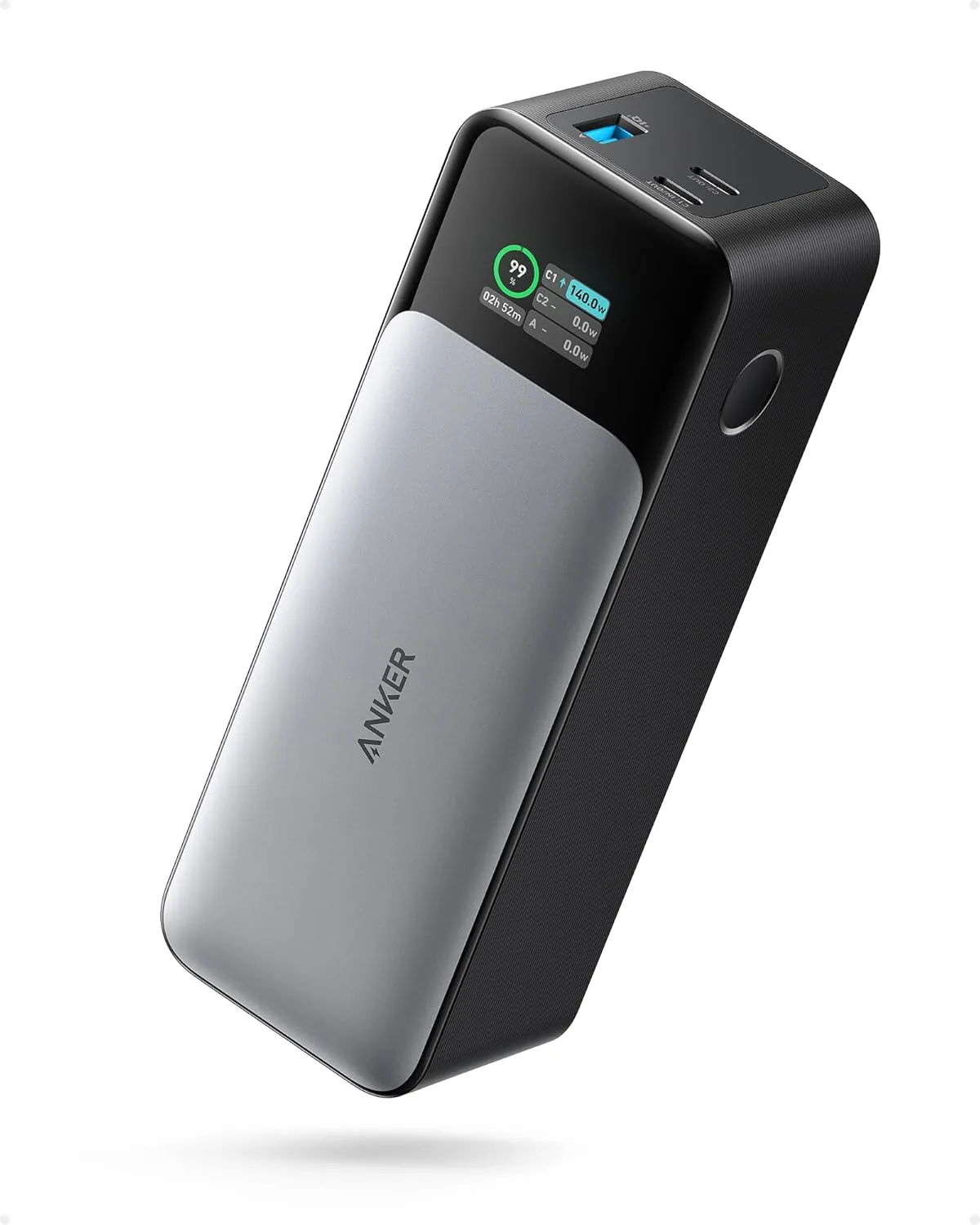
Anker 737 Power Bank (PowerCore 24K, A1289011) | Listed 140W PD 3.1 | 24,000mAh
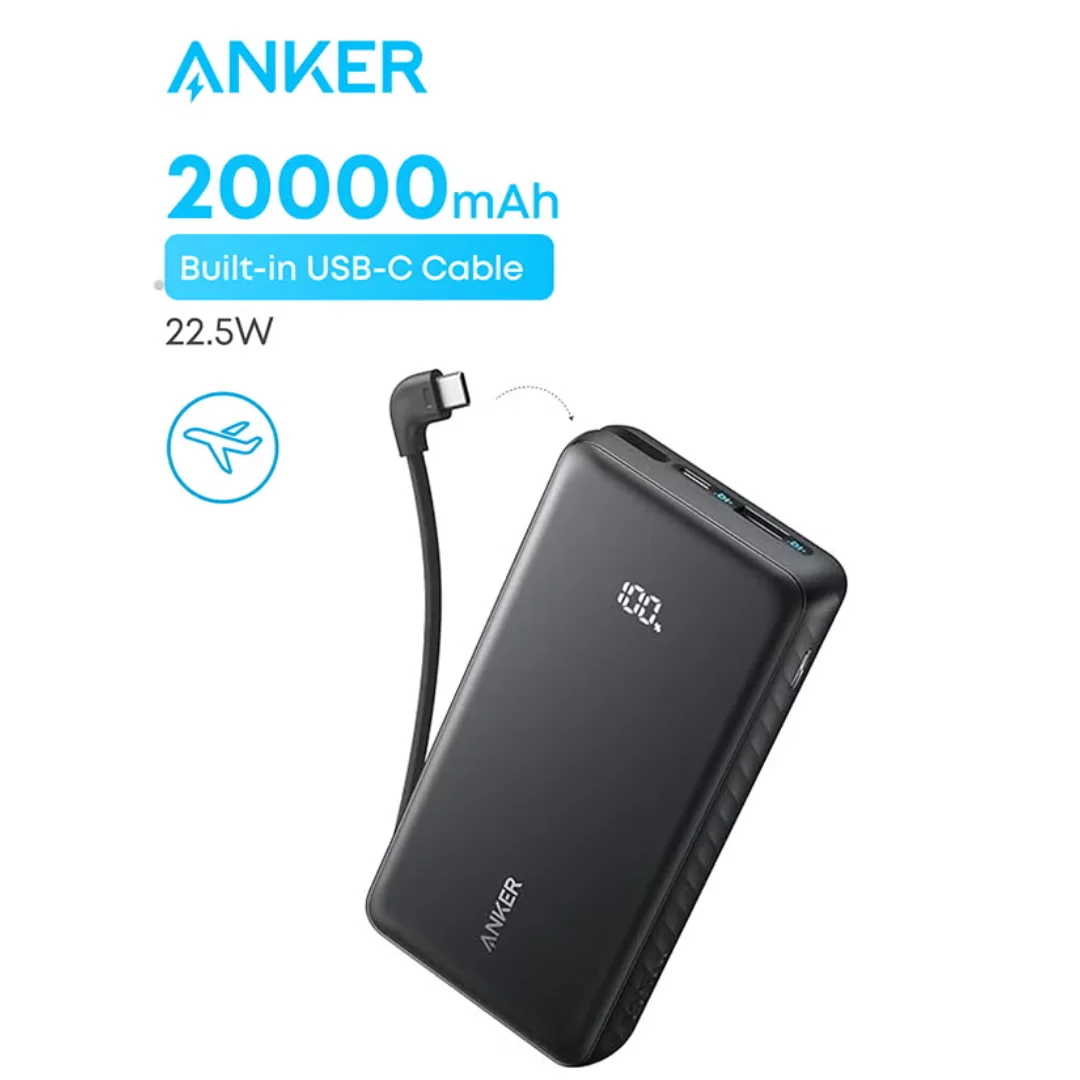
Anker ZOLO Power Bank 20,000mAh (22.5W) | Built-in Cable
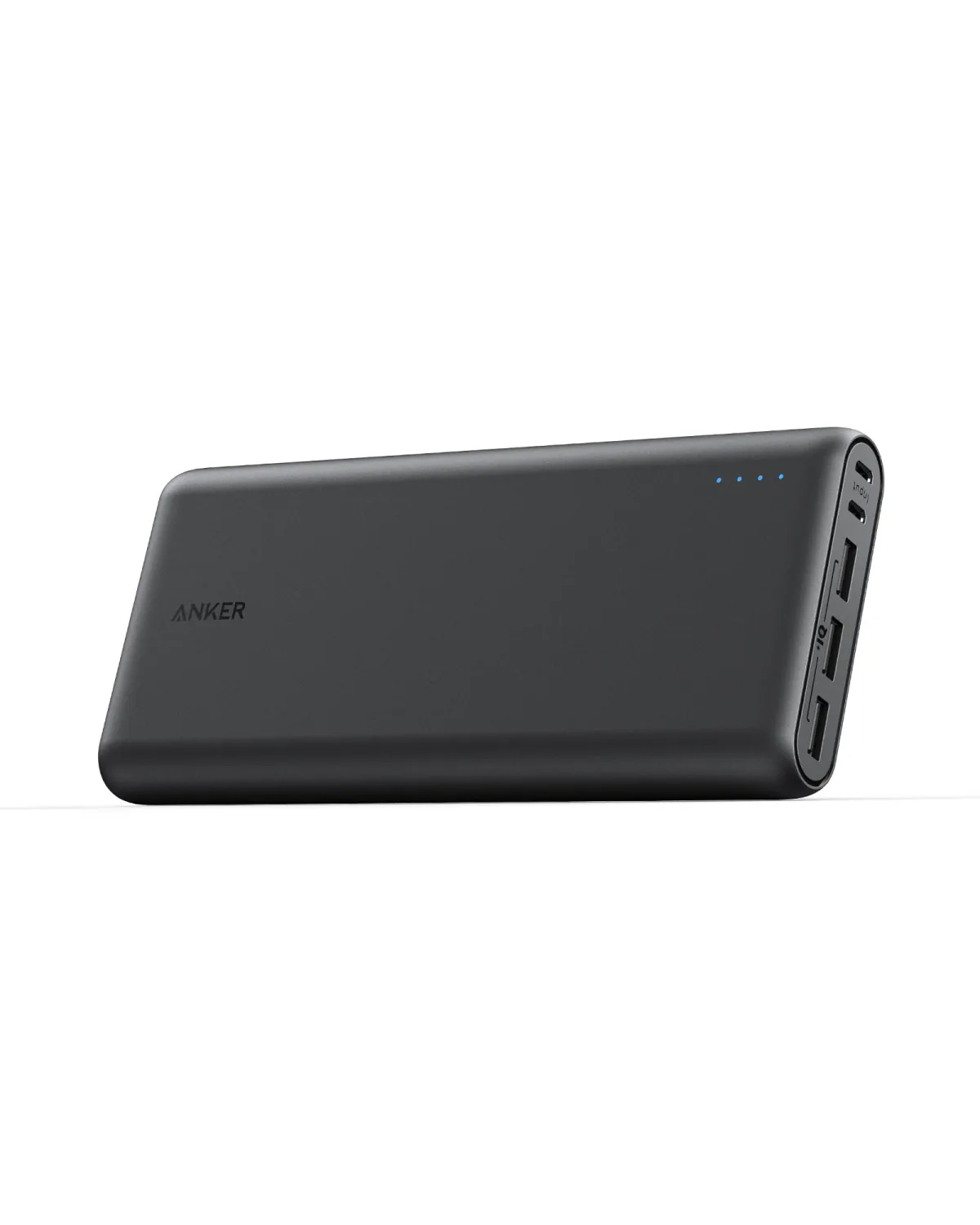
Anker PowerCore III Elite 26K 60W PD | Laptop Charging