
Samsung Charger Head — Guide to Authentic Packaging and Barcode Verification for Every Model
How to identify genuine Samsung charger packaging from counterfeits — a visual guide for every model with barcode verification steps.
TL;DR: Every genuine Samsung charger comes in a white matte box printed with the model number (e.g., EP-TA800) + a unique verifiable barcode on Samsung's website. The box includes a holographic security seal + QR code + serial number. Counterfeits copy the exterior but the barcode won't verify on Samsung's official website — making it the quickest authenticity test.
When you go to buy a Samsung charger — the first thing you see is the box. And that box is your first line of defense against counterfeits. The problem is that counterfeit manufacturers have become extremely skilled at copying the packaging — to the point where even experienced buyers sometimes get confused. In this article, we'll give you a detailed guide for every Samsung charger model — the authentic box design, barcode, seals, and every detail that will help you spot a fake in seconds.
Important note: This article complements our article about 5 differences that expose fake chargers — there we focused on the charger itself (weight, print quality, plastic). Here we focus on the packaging, barcode, and security seals.
Anatomy of a Genuine Samsung Charger Box — Essential Elements
Every genuine Samsung charger box — regardless of model — contains these elements:
- Color and material: White matte box — not glossy. Counterfeits often use glossy paper or their white has a slight yellowish tint
- Samsung logo: Printed with high precision — letters are even and spacing is uniform. In counterfeits, letters may be thicker, thinner, or unevenly spaced
- Model number: Clearly printed (e.g., EP-TA800XBEGWW). Every character is legible and sharp
- Barcode: Unique barcode for each unit — not repeated. Below it is a unique serial number
- QR Code: Links to the product page on Samsung's website
- Holographic seal: On the plastic wrap — changes color between silver and gold under different lighting
- Origin information: "Made in Vietnam" or "Made in India" — Samsung doesn't manufacture chargers in China for the official market
Box Guide — Each Model Individually
EP-TA200 — 15W AFC Charger
The oldest charger in the current lineup. The box:
- Small rectangular — approximately 8×5×3 cm
- Labeled "Travel Adapter" + "Adaptive Fast Charging"
- Port: USB-A (the large rectangular one)
- Comes with a Micro-USB or USB-C cable depending on the version
- Barcode on the right side
EP-TA800 — 25W PD 3.0 + PPS Charger
The most popular Samsung charger in Egypt. The box:
- Rectangular — approximately 9×6×3.5 cm
- Labeled "25W" in large clear font + "Super Fast Charging"
- Charger only in the box — no cable included (since 2022)
- Contains a cardboard insert protecting the charger
- Barcode + QR on the side — not the bottom
EP-T2510 — 25W PD 3.0 + PPS Charger
The newer generation 25W charger. The box:
- Slightly smaller than the EP-TA800 — more square design
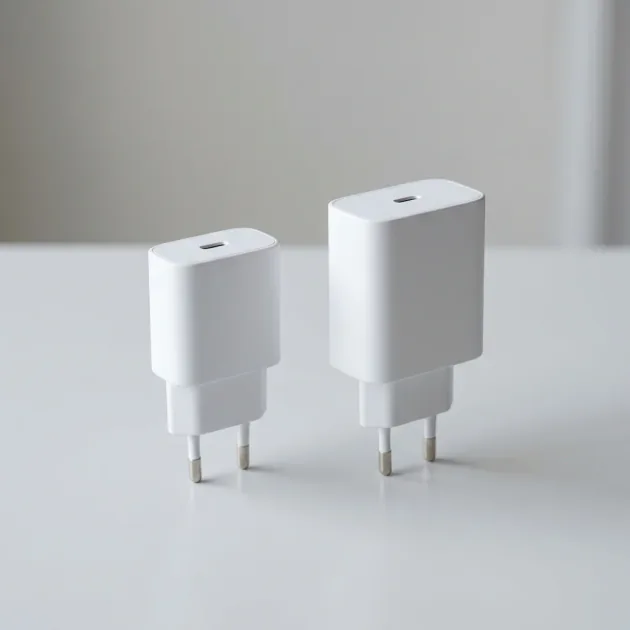
- Labeled "25W" + "Super Fast Charging" — the real difference from the EP-TA800 is its GaN internals (smaller and lighter). Both models are PD 3.0 + PPS, so PPS isn't what sets them apart
- Box made from recycled paper (different texture — more rough)
- "Eco-Conscious Packaging" environmental seal on the box
- Larger QR Code than older models
EP-TA845 — 45W PD 3.0 + PPS Charger
Samsung's most powerful charger. The box:
- Largest box in the lineup — approximately 10×7×4 cm
- Labeled "45W" + "Super Fast Charging 2.0"
- The charger is physically larger, so the box must be bigger — if the box is small = counterfeit
- Total box weight (with charger) approximately 120-130 grams
How to Verify the Barcode — Step by Step
This is the most important skill you'll learn from this article. Barcode verification exposes 95% of counterfeits:
- Step 1: Find the barcode on the side of the box — below it is a serial number of 11-15 digits
- Step 2: Go to samsung.com/eg/support → select "Product Verification"
- Step 3: Enter the Serial Number or IMEI
- Step 4: If the product appears with the correct name and model = genuine ✅
- Step 5: If an error message or "product not registered" appears = counterfeit ❌
⚠️ Important Warning:
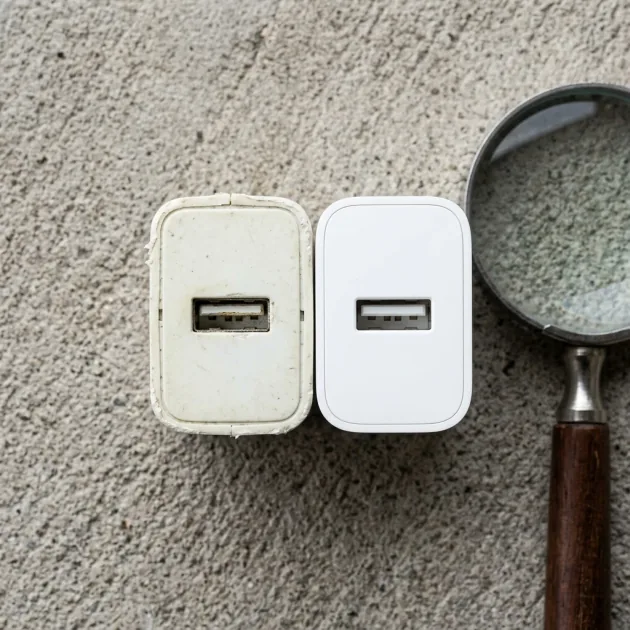
Some advanced counterfeits use stolen genuine barcodes — meaning the barcode works on the website but the charger inside is fake. In this case, you must inspect the charger itself: weight (52g for the 25W), print quality, and plastic texture. See our article about 5 differences for details.
5 Signs That Instantly Expose a Counterfeit Box
- Glossy paper: Genuine Samsung boxes are matte. Any glossiness = counterfeit
- Faded colors: Original printing is sharp and vivid. Counterfeits have lower color saturation
- Spelling errors: Samsung never has printing mistakes. Even one misplaced character = guaranteed counterfeit
- Printed seal (not holographic): The genuine seal changes color with viewing angle. If the color is static = counterfeit
- "Made in China": Official Samsung chargers for the Egyptian market come from Vietnam or India — not China
Difference Between the Original Cable Inside the Box and Counterfeits
Some older Samsung charger boxes (EP-TA200) came with a cable included. The original cable has distinctive markers:
- Samsung logo: Printed on the plastic connector — not a sticker. Counterfeits use stickers that peel off after a week
- Thickness: The original cable diameter is about 3.5mm — consistent from end to end. Counterfeits are thinner at the ends and thicker in the middle
- Flexibility: The original is flexible without cracking — withstands repeated bending. Counterfeits are either too stiff or too limp
- Weight: A genuine 1-meter USB-C cable weighs about 28-32 grams. Counterfeits weigh 18-22 grams — the difference is due to less copper inside
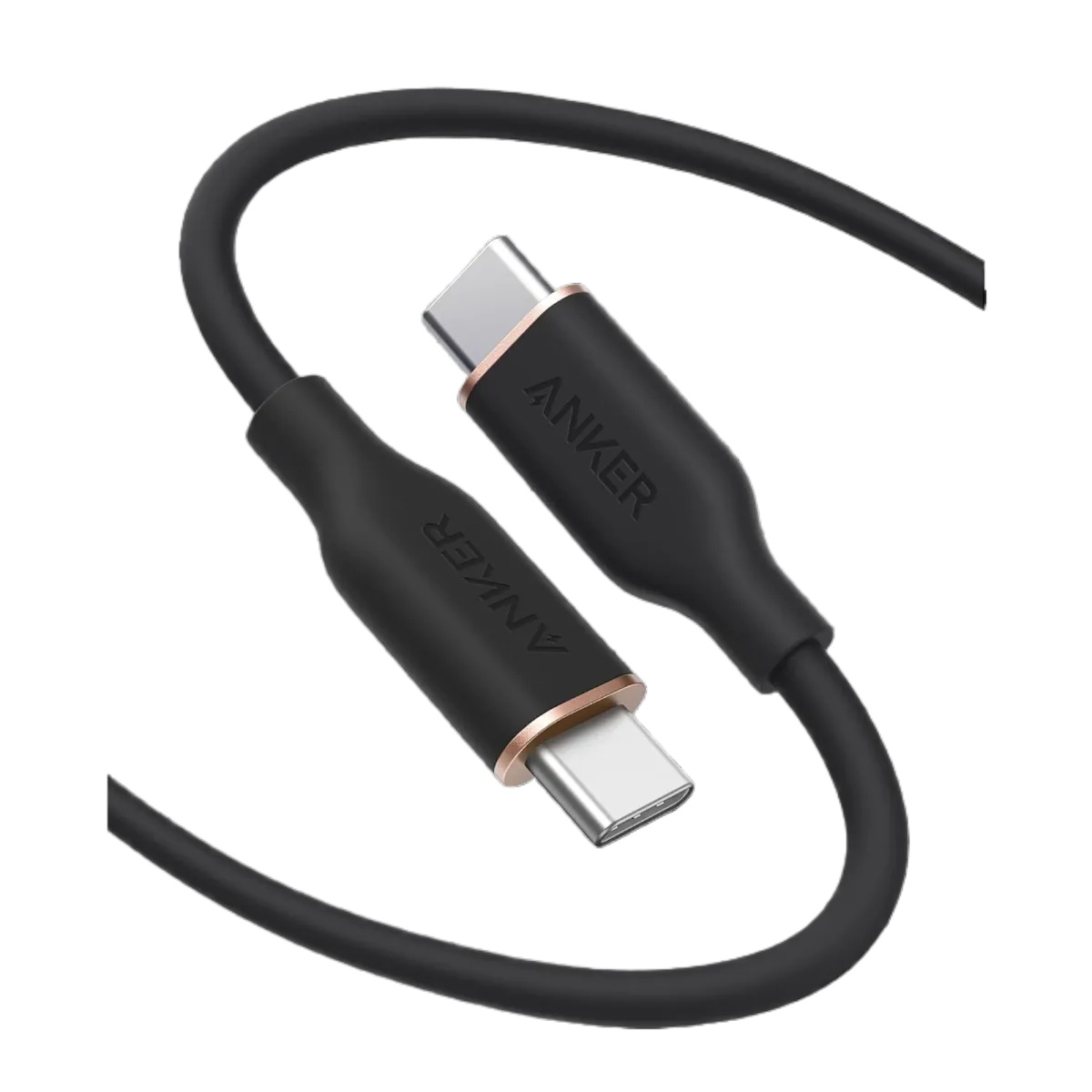
And if you're buying a cable separately — a sound 3A USB-C to USB-C cable such as the Anker PowerLine III (listed up to 60W) at EGP 590 is enough for 25W charging. 45W Super Fast Charging needs a 5A cable with an E-Marker chip.
Why Box Verification Alone Isn't Enough
The box is your first line of defense — but not your last. Here's why:
- Empty box market: In Egypt, there's an entire market for selling empty genuine Samsung boxes. People buy an original charger and sell just the box for 30-50 EGP. Shops buy these boxes, insert a counterfeit charger, and sell it as "original"
- Advanced copies: Factories in Shenzhen produce boxes that are an exact match — same paper, same printing, same barcode (but the barcode isn't registered with Samsung). That's why you must verify the barcode online
- Repackaging: Some shops buy used genuine chargers, clean them, put them in new boxes, and sell them as "brand new original." The charger is technically genuine but used — and performance may be degraded
That's why the golden rule is: inspect the box + the barcode + the charger itself. Not one of the three — all three together.
Quick Comparison: Genuine Samsung Box vs. Counterfeit
| Element | Genuine ✅ | Counterfeit ❌ |
|---|---|---|
| Paper surface | Matte finish | Glossy finish |
| Barcode | Unique per unit | Repeated or random |
| Security seal | Holographic changing | Flat printed static |
| Country of origin | Vietnam / India | China or unlisted |
| Box + charger weight (25W) | ~80 grams | ~55 grams |
Does Samsung Change Box Design by Region?
Yes — and this is important to know. Samsung charger boxes intended for the Egyptian market (codes ending in EG or WW) may differ from boxes intended for the Indian or European markets in language and some details. The charger itself is identical — but if you find a box written in Korean at a shop in Egypt — it doesn’t necessarily mean counterfeit, but it means the product was imported from another market and the Egyptian warranty may not cover it.
Common codes on Samsung boxes and their meanings:
- XBEGWW: Global market — accepted in Egypt
- XBEGEG: Egyptian market specifically
- XBSGIN: Indian market — works in Egypt but warranty not covered
The tip: an EG or WW code on the box helps you tell which market it was made for — but ask the seller about the warranty and keep the invoice. And if you don’t want to decode region codes at all — get the Anker 25W PPS at EGP 550 with CairoVolt's written store warranty (duration shown on the product page).
Practical Tip: Inspect at the Store Before Paying
Don't wait until you get home. Perform these checks in front of the seller:
- Ask to open the box and inspect the charger
- Scan the barcode with your phone (any barcode scanner app)
- Weigh the charger if you have a small scale (or compare it to another genuine charger)
- Smell the plastic — counterfeits have a noticeable chemical odor
If the seller refuses to let you open the box or scan the barcode — that itself is a sign they know the product is counterfeit. Authorized stores never fear inspection.
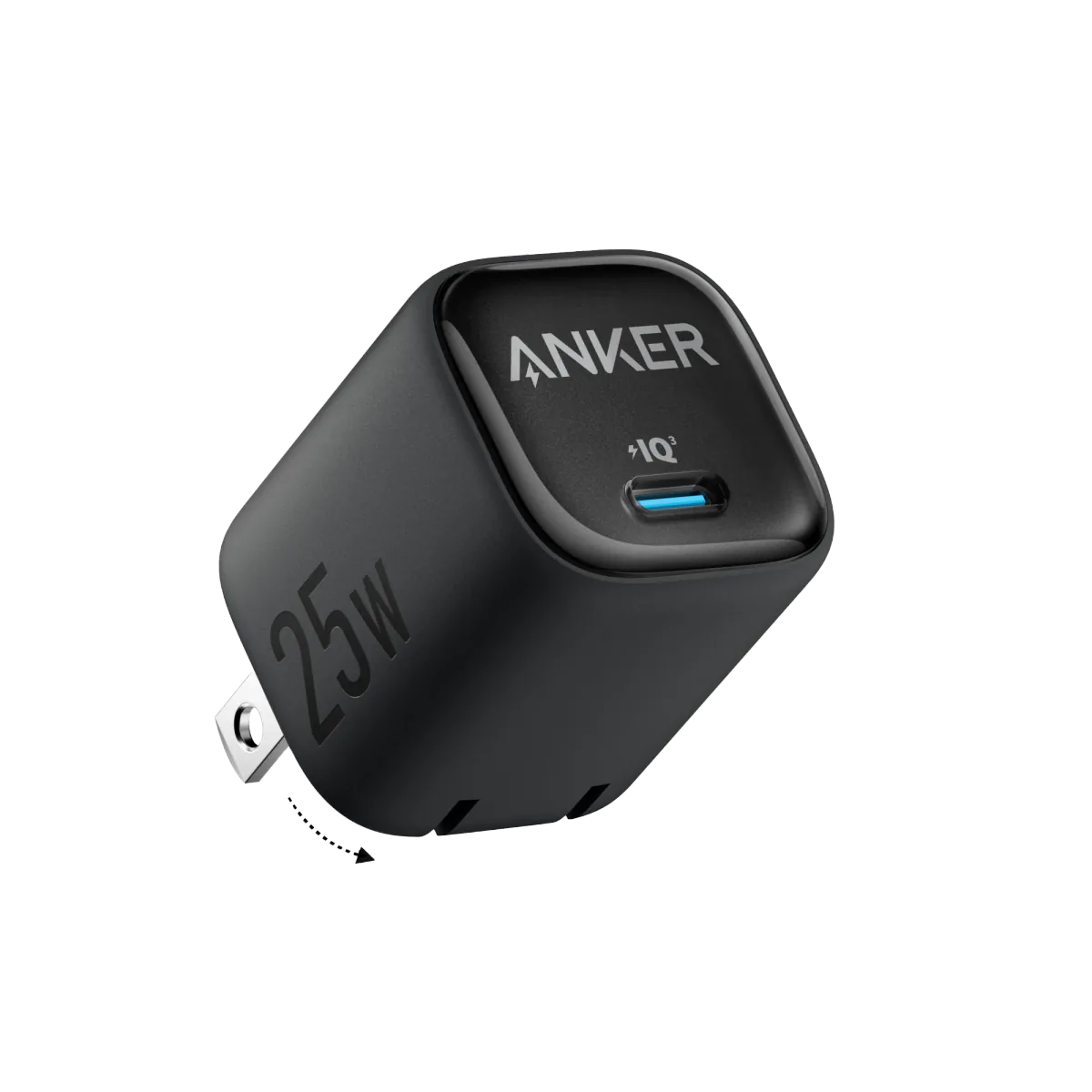
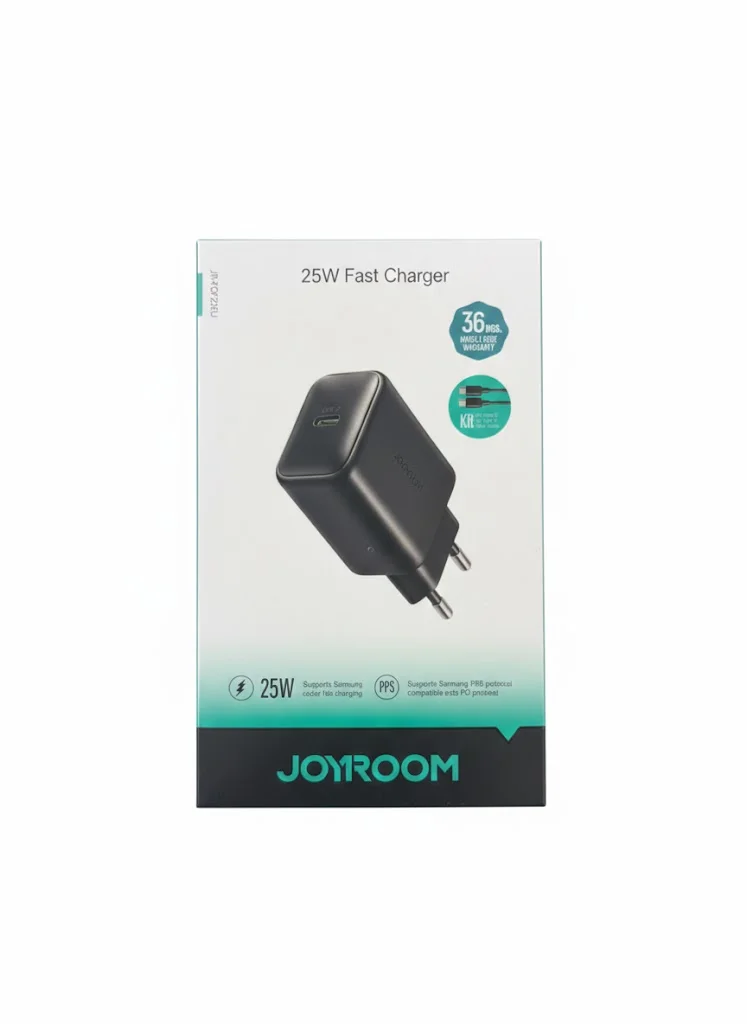
And if you want to avoid the original-vs-fake game entirely — the easiest solution is to buy a known brand from a seller that issues an invoice and a written warranty. The Anker 25W PPS (A2656111), for example, costs EGP 550, engaged Super Fast Charging on a Galaxy S24 at a ~24.3W peak in our test, and carries CairoVolt's written store warranty. The Joyroom 25W at EGP 342 is a budget option that peaked at ~24.1W on the same phone. And don't forget the cable — a 3A USB-C to USB-C cable such as the Anker PowerLine III.
🛒 Related Products from CairoVolt:
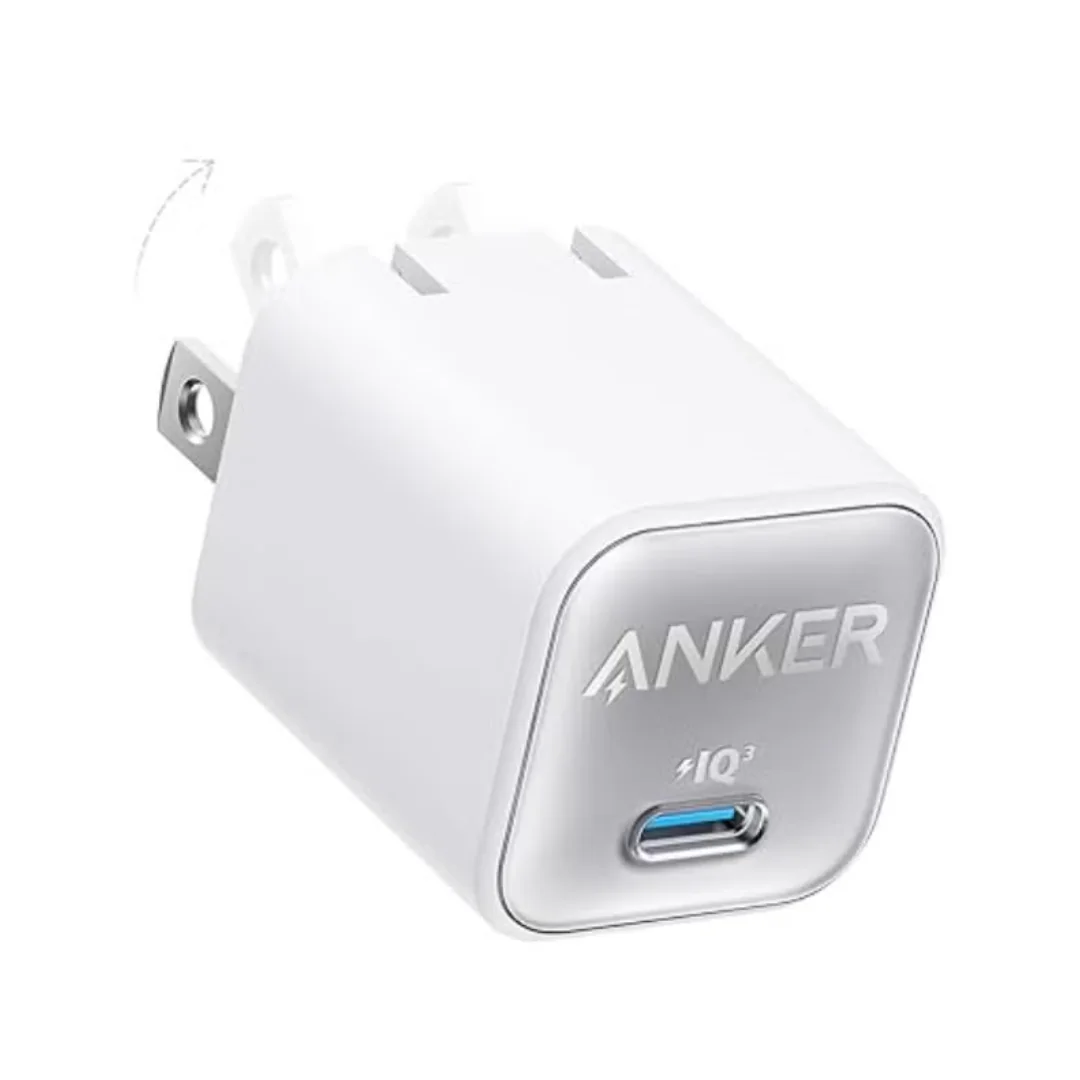
Genuine alternatives with a written store warranty: Anker PowerPort 25W · Anker 511 Nano 3 (30W) · Joyroom 25W · Anker PowerLine III USB-C Cable.

CairoVolt Editorial Team
Content team reviewing specifications and buying guides
The CairoVolt team reviews model numbers, specifications, and compatibility, and updates information when better data is available. Estimates are labeled as calculations, and readers can report information that needs correction.
Frequently Asked Questions
How do I verify a Samsung charger barcode?▼
What's the difference between EP-TA800 and EP-T2510 packaging?▼
Can the box look genuine but contain a fake charger?▼
Does a genuine Samsung charger have a security seal?▼
Ready to Buy?
Browse available products and review specifications and CairoVolt warranty terms before ordering
Related products
Anker PowerLine III USB-C to USB-C | 60W | iPhone 17 & Samsung S26
Anker 25W PPS Charger (A2656111) | Samsung-Compatible USB-C PD
Joyroom 25W USB-C PD Charger (JR-TCF23) | iPhone and Samsung Compatibility