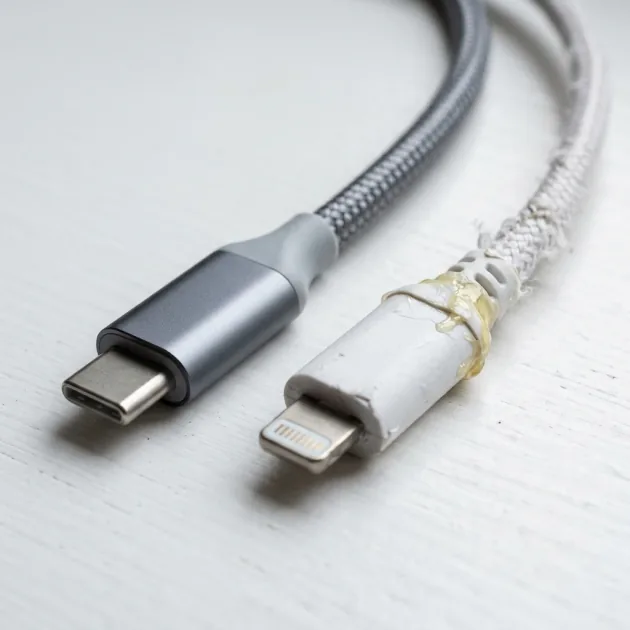
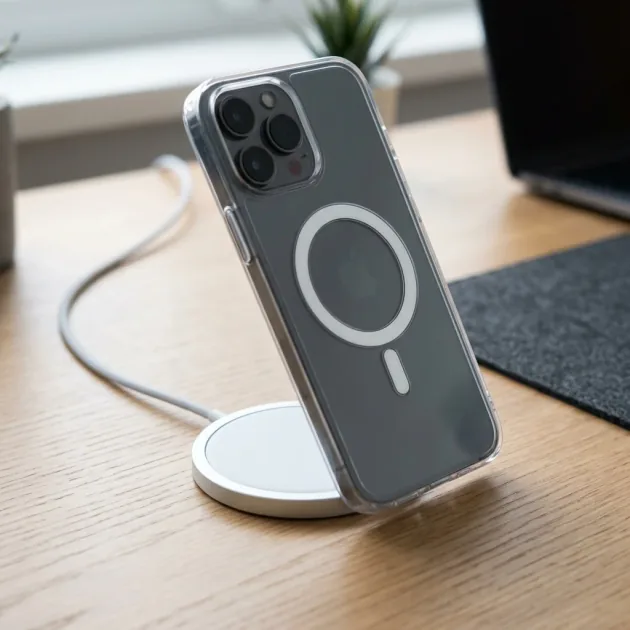
MagSafe Wireless Charging — Does It Really Overheat iPhone and Reduce Battery Health?
Scientific analysis of MagSafe charging impact on iPhone battery with wired charging comparison.
In short: MagSafe does not destroy the battery, but wireless charging produces more heat than wired, and heat is what speeds up battery wear. MagSafe reaches up to 15W on iPhone 15 and earlier, and up to 25W on iPhone 16/17 with the newer MagSafe charger and a 30W+ adapter (per Apple). The cheaper wired alternative: the Anker 20W charger at 490 EGP.
MagSafe wireless charging from Apple has become a phenomenon among iPhone users in Egypt. But with its spread — important questions have emerged: does it really overheat the phone? Does it reduce battery health long-term? And is it worth the money compared to regular wired charging? In this article, we answer all these questions with real numbers and scientific analysis based on energy transfer physics and available data — not just personal opinions.
How MagSafe Works — Simple Physics
MagSafe uses electromagnetic induction — a copper coil in the charger generates a changing magnetic field, and another coil in the iPhone converts that field into electrical current that charges the battery. The fundamental physics problem: transfer efficiency isn't 100%. In wired charging — efficiency reaches 95%+. In wireless charging — efficiency is only about 80-85%. This means from every 15W entering the charger — ~12W reaches the battery and ~3W converts to heat. That's the core reason iPhone gets hotter with MagSafe compared to wired charging.
The Extra Heat — Real Numbers
Here are the typical iPhone 15 Pro temperatures during charging with the two methods — based on published measurements and manufacturer specs:
| Measurement | MagSafe (15W) | Wired USB-C (20W) |
|---|---|---|
| Max surface temperature | ~40°C | ~35°C |
| Time 0→50% | ~45 minutes | ~30 minutes |
| Time 0→100% | ~2:30 hours | ~1:45 hours |
| Thermal throttling | After 15 minutes | Rarely |
The difference is clear: MagSafe is 40-50% slower and 5°C hotter. Above 35°C — lithium cells start degrading at an accelerated rate. iPhone has a smart protection system that slows charging when temperature rises — but that means charging takes even longer. In Egypt's summer (room temperature already 30-35°C) — iPhone can reach 45°C with MagSafe and the protection system intervenes almost constantly.
Impact on Battery Health — By the Numbers
Apple states the battery is designed to retain 80% capacity after 1,000 full charge cycles. But heat accelerates degradation. Available data from real users shows:
- Daily wired charging (20W): Battery Health after one year ≈ 92%
- Daily MagSafe charging (15W): Battery Health after one year ≈ 88%
- MagSafe + phone use during charging: Battery Health after one year ≈ 85%
The difference is 4-7% per year — not catastrophic but noticeable. If you plan to keep your iPhone for 3 years — the cumulative difference will be larger. And the reality is that battery replacement in Egypt costs 3,000-5,000 EGP — so every extra year of battery life = real savings. Wired charging with Anker 20W preserves battery better and charges faster.
When MagSafe Is Worth It — And When Wired Is Better
MagSafe is worth it if:
- You value convenience above everything — just place the phone on the charger
- You charge at your desk while working — speed isn't a priority
- You have an open budget (2,000+ EGP for charger and adapter)
Wired charging is better if:
- You need fast charging — 30 minutes to 50% instead of 45 minutes
- You want to preserve battery health as long as possible
- You want to save money — Anker 20W at 490 EGP vs about 2,000+ EGP for MagSafe (approximate market price)
- You charge in Egypt's hot summer — the extra heat with MagSafe makes things worse
Cost Analysis — MagSafe vs Wired Charging
| Item | MagSafe (EGP) | Wired Anker (EGP) |
|---|---|---|
| Charger | ~1,700 | 490 |
| Power adapter / Cable | ~800 | 570 |
So MagSafe costs clearly more than wired charging and runs hotter — the difference can buy other accessories. (Apple prices here are approximate and vary by seller.)
MagSafe vs Regular Qi — What's the Difference?
Many people think any wireless charger is MagSafe — that's incorrect. Regular Qi charges iPhone at only 7.5W (half the speed of MagSafe). Without magnets — the phone can slide off position and lose connection, causing charging to stop and start throughout the night. MagSafe is better than regular Qi because magnets hold the phone in place and speed is double. But both are slower and hotter than wired charging.
Qi2 — The Future of Wireless Charging
Qi2 is the new wireless charging standard that adopts MagSafe's magnet technology but as an open global standard. This means in the near future — you'll find magnetic wireless chargers at much cheaper prices than Apple's. But even with Qi2 — the heat and efficiency problems will persist because they're physics problems, not technology problems. Wireless charging is inherently less efficient than wired — that's a law of physics that won't change.
Common Wireless Charging Myths
- "MagSafe charges at the same speed as wired": Wrong — 15W vs 20W, and effective power is ~12W due to heat loss. 40% slower
- "Wireless charging is safer than wired": Both are safe if the product is genuine. But wireless generates more heat — which isn't safer
- "Leaving the phone on MagSafe overnight is fine": Not recommended — continuous heat accelerates battery degradation. Charge to 80% and remove
- "MagSafe charges faster than other wireless chargers": True — MagSafe is faster than regular Qi (15W vs 7.5W). But still slower than wired
- "Wireless charging damages the phone": No — but it degrades the battery slightly faster long-term due to heat. It won't damage the phone itself
The Right Choice Based on Your Usage
If you charge once at night before sleep — MagSafe is acceptable as long as you use Optimized Battery Charging. If you charge multiple times a day (heavy user) — wired charging is much better because every charge cycle at high temperature affects the battery. And in Egypt's summer without air conditioning — avoid wireless entirely and stick with Anker 20W wired.
Tips If You Use MagSafe
- Remove the case during charging: Cases trap heat and increase phone temperature by 3-5°C
- Enable Optimized Battery Charging: From Settings → Battery → Battery Health — protects the battery above 80%
- Don't use the phone during MagSafe charging: Usage + charging doubles the heat
- Charge in a cool place: Not next to a sunny window and not on a pillow
iPhone Battery Replacement Cost in Egypt — The Full Financial Picture
Replacing an iPhone battery at the official service center (iStyle/Tradeline) costs 3,000-5,000 EGP depending on the model. If MagSafe causes Battery Health to reach 80% after 2 years (instead of 3 years with wired) — you'll need a battery replacement a year earlier. This adds 3,000+ EGP to the Total Cost of Ownership. MagSafe doesn't just cost more upfront — it costs more in maintenance long-term too.
StandBy Mode — Smart Use of MagSafe
From iOS 17 onwards — Apple added StandBy mode that turns iPhone into a smart clock or photo frame while on the charger. This mode only activates when the phone is horizontal on MagSafe (or any charger). Nice feature but the screen stays on — adding even more heat. If using StandBy — enable Always-On Display with low brightness to reduce the extra heat from the screen during wireless charging.
Daily Usage Scenarios
- University student: Fast wired charging is best — charges in 30 minutes before heading out. Anker 20W at 490 EGP is a good fit
- Office worker: MagSafe is acceptable — place the phone on the desk and it charges slowly. But remove at 80%
- Heavy user (gaming/social media): Wired charging is essential — battery drains faster and needs quick charging
- Car use: MagSafe car mount is convenient — holds the phone as navigation and charges simultaneously. But in summer the car heats up — keep the AC on
The Smarter Alternative — Wired Charging with Anker
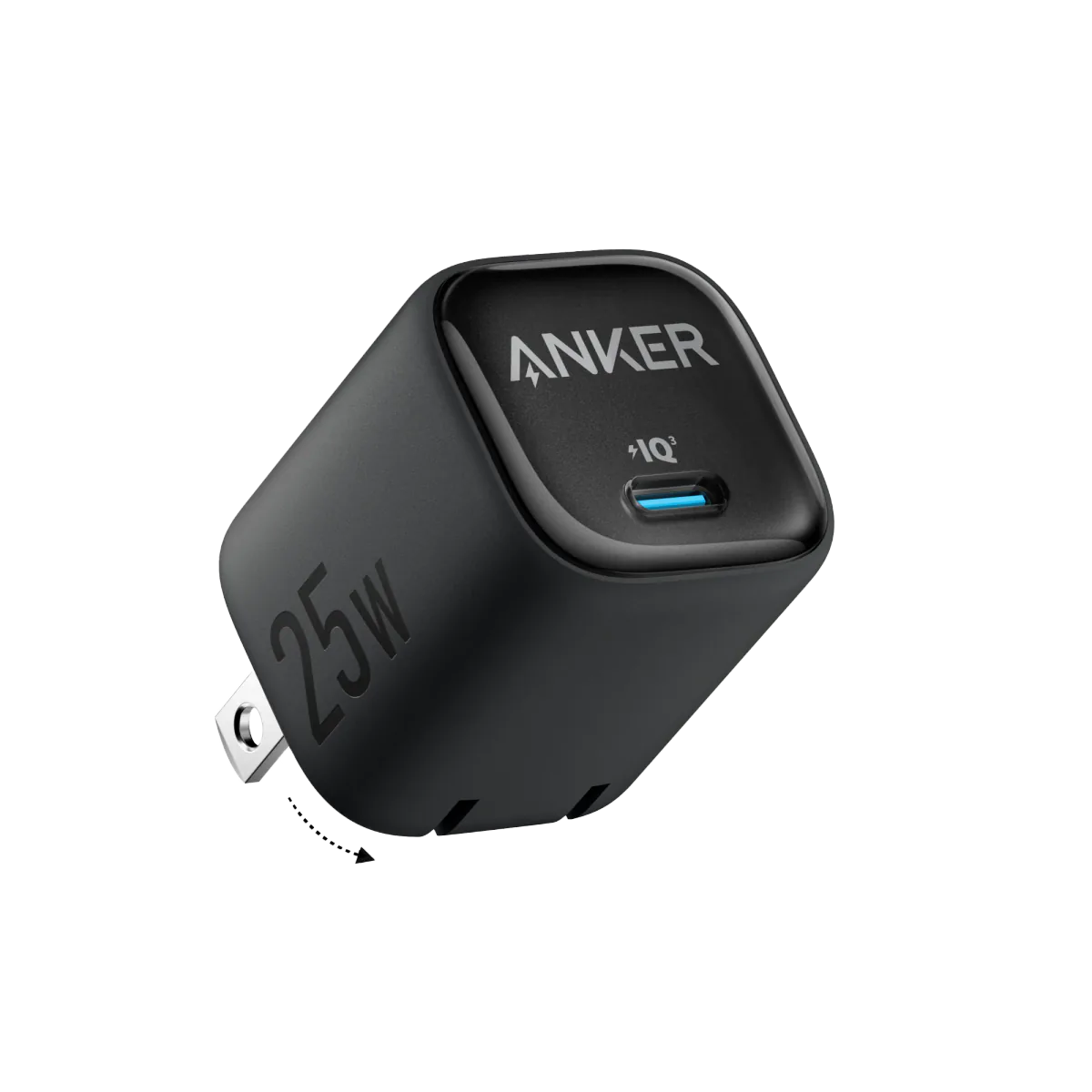
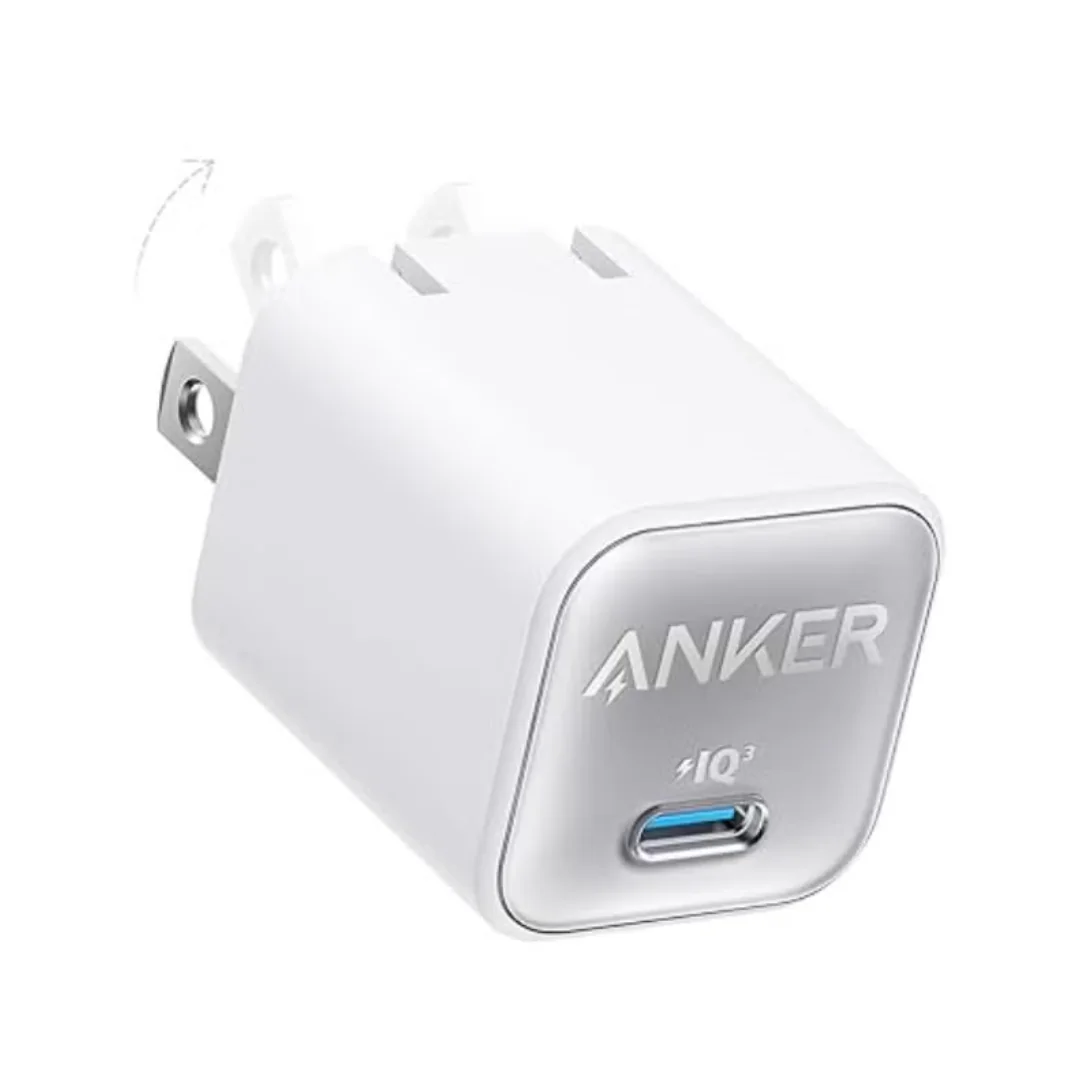
If your goal is fast, safe charging at minimum cost — Anker 20W + Anker USB-C cable is a practical combo (490 EGP for the charger and 570 EGP for the cable) with CairoVolt's written store warranty, charging with less heat than MagSafe. If you want more power — Anker 25W at 550 EGP or the Anker Nano 30W GaN at 490 EGP.
🛒 Related Products from CairoVolt:
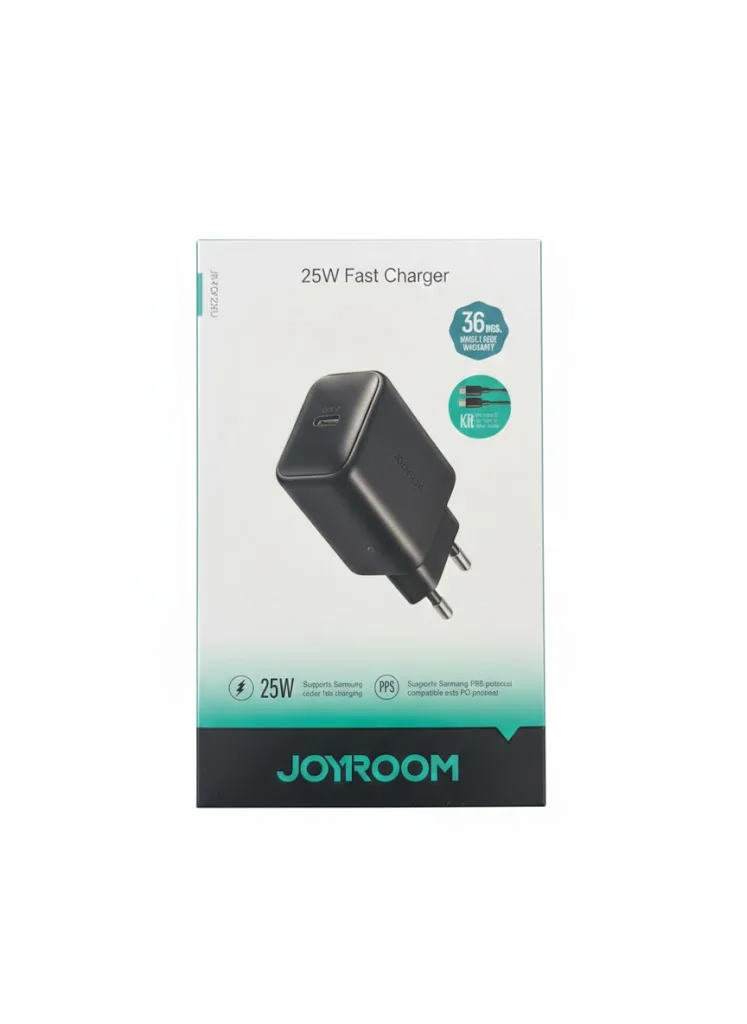
Faster wired charging alternatives: Anker 20W · Anker 25W · Anker 30W GaN · Anker USB-C Cable · Joyroom 25W.

CairoVolt Editorial Team
Content team reviewing specifications and buying guides
The CairoVolt team reviews model numbers, specifications, and compatibility, and updates information when better data is available. Estimates are labeled as calculations, and readers can report information that needs correction.
Frequently Asked Questions
Does MagSafe damage iPhone battery?▼
What temperature does iPhone reach during MagSafe charging?▼
Is wired or wireless charging better for iPhone?▼
How much does the original MagSafe charger cost in Egypt?▼
Ready to Buy?
Browse available products and review specifications and CairoVolt warranty terms before ordering
Related products
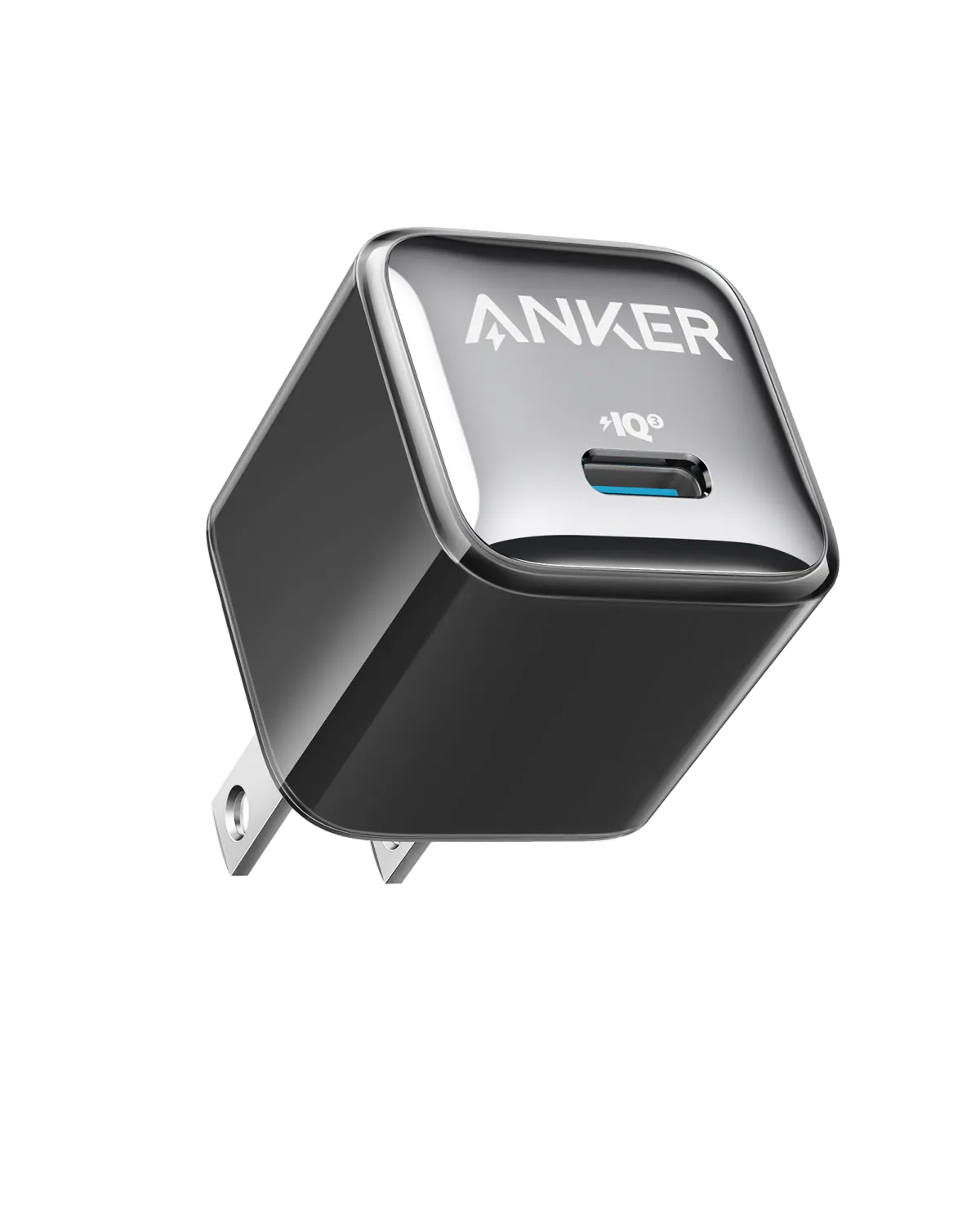
Anker A2347K11 20W USB-C PD Charger | Check Device Profile and Plug
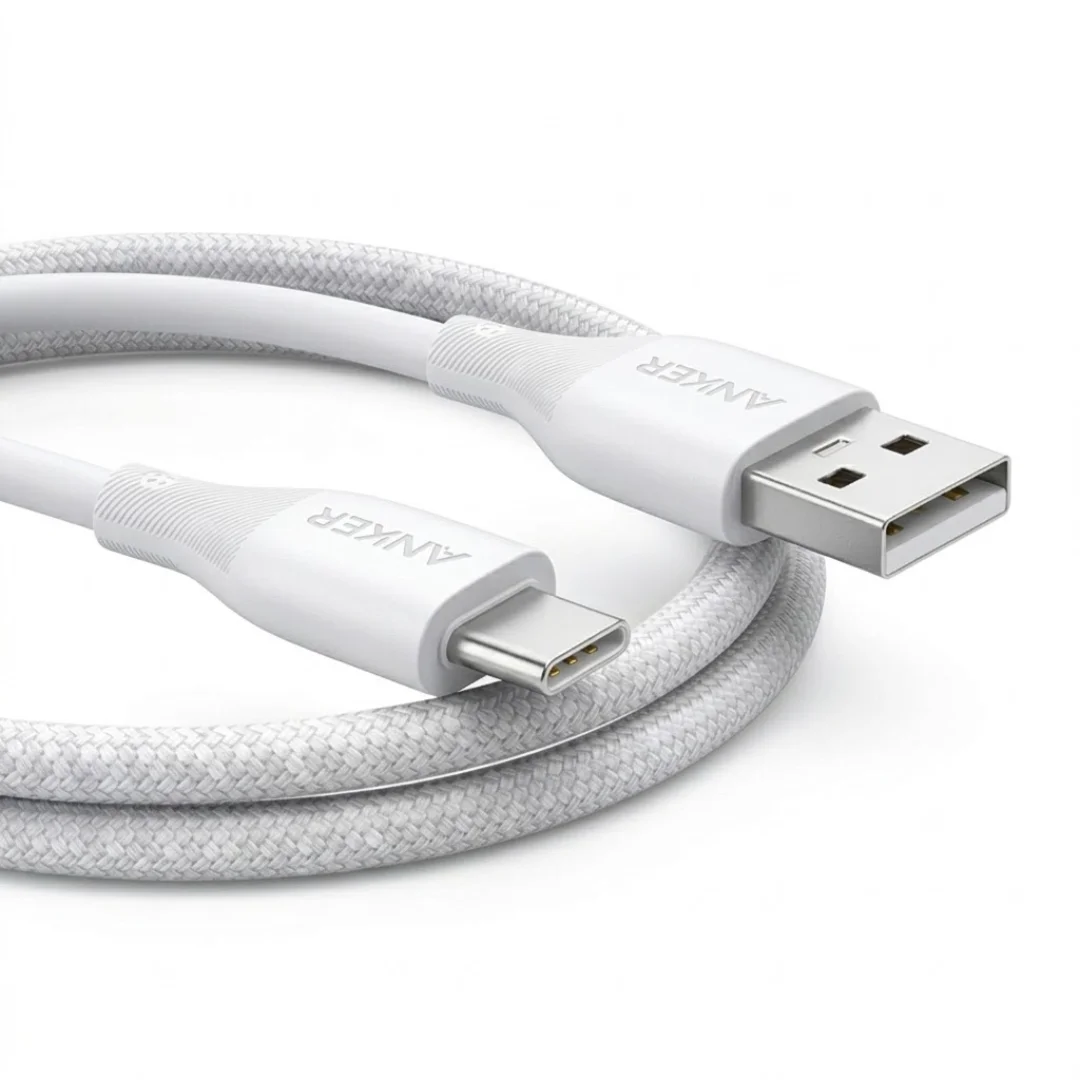
Anker USB-A to USB-C Cable (A8050) | Braided Nylon 1.8m | Fast Charging
Anker 25W PPS Charger (A2656111) | Samsung-Compatible USB-C PD
Anker 511 Nano 3 GaN Charger 30W (A2147) | USB-C PD | IQ3
Joyroom 25W USB-C PD Charger (JR-TCF23) | iPhone and Samsung Compatibility
Browse the categories this article covers
Related Articles
iPhone Original Charger Price in Egypt — Battery Protection Guide with Official Warranty
Read more →
iPhone 20W Charger Head — Comparing Authorized Retailer Prices in Egypt
Read more →